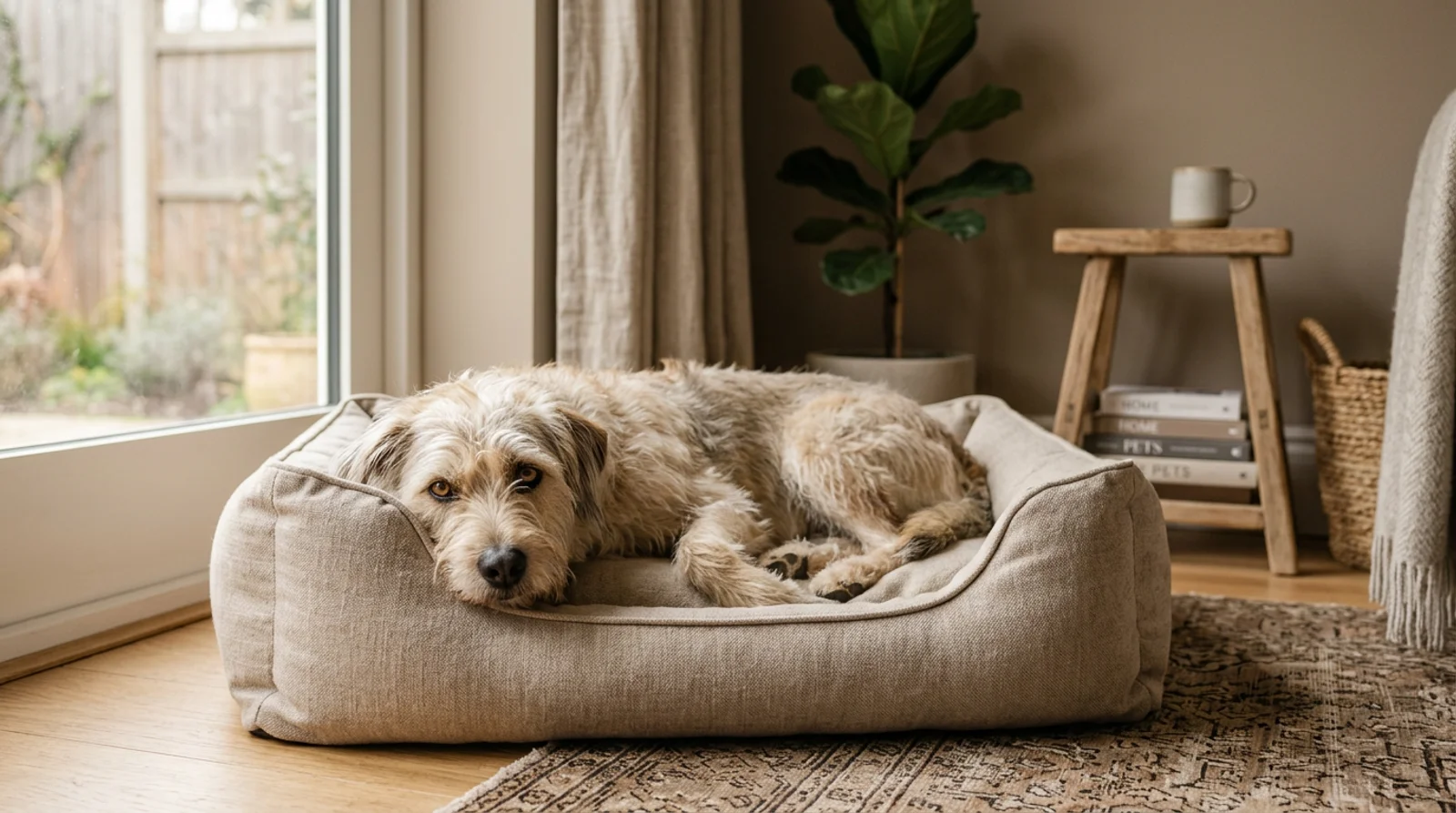
Calming Dog Anxiety Naturally: Signs, Triggers, and 10 Proven Solutions
Calming Dog Anxiety Naturally: Signs, Triggers, and 10 Proven Solutions
Calming dog anxiety naturally means identifying triggers, then building an environment and routine that helps your dog feel safe. The short answer: most anxious dogs respond beautifully to environmental changes, predictable routines, and patient desensitization work—often before you need supplements or medication.
We've lived through this. One of us has a noise-phobic Border Collie who used to tremble through every thunderstorm. Another spent months working through separation anxiety with a rescue Beagle who'd destroy door frames when left alone. Anxiety in dogs isn't one-size-fits-all—your Labrador might panic during fireworks but stay calm when you leave for work, while your neighbor's Cavalier does the opposite.
Before reaching for medication, try the behavioral and environmental strategies below. They often make the biggest difference.
Recognizing the Signs of an Anxious Dog
Dogs show stress through behavior, not words—and the signals aren't always obvious.
Panting when it's not hot, pacing in circles, whining, or trembling are the classic signs. But we've also seen subtler indicators owners miss. A dog who suddenly licks their paws obsessively, yawns repeatedly when not tired, or tucks their tail and pins their ears is often anxious. Some dogs freeze and go stiff. Others become hypervigilant, scanning the room constantly.
Destructive behavior is a red flag. If your Terrier mix chews the door frame only when you're gone, that's not spite—it's panic. Excessive barking, house soiling in a house-trained dog, and even aggression can stem from anxiety rather than defiance.
One of our team has a Shih Tzu who drools and sheds heavily during car rides—both autonomic stress responses. Pay attention to what's normal for your dog. Anxiety looks different on a calm Golden Retriever than on a naturally wound-up Australian Cattle Dog.
Common Triggers of Dog Anxiety
Most canine anxiety falls into a few categories, though every dog has individual triggers.
Separation anxiety tops the list. Dogs are social animals. Some—especially those who've been rehomed, under-socialized, or over-attached—genuinely panic when left alone. It's not spite. It's distress.
Noise phobias rank second. Thunderstorms, fireworks, construction, even a smoke detector beep can send some dogs spiraling. The unpredictability matters more than the volume.
Changes in routine or environment unsettle many dogs. A move, a new baby, a shift in your work schedule, or rearranged furniture can trigger anxiety in sensitive individuals. We had a Poodle who needed two full weeks to adjust every time we moved a couch.
Past trauma is harder to pinpoint but very real. Rescue dogs may carry invisible baggage—fear of men in hats, panic around brooms, terror of crates.
Medical issues can mimic or cause anxiety. Pain, cognitive decline in seniors, thyroid imbalances, and neurological conditions should be ruled out by your vet before assuming the problem is purely behavioral.
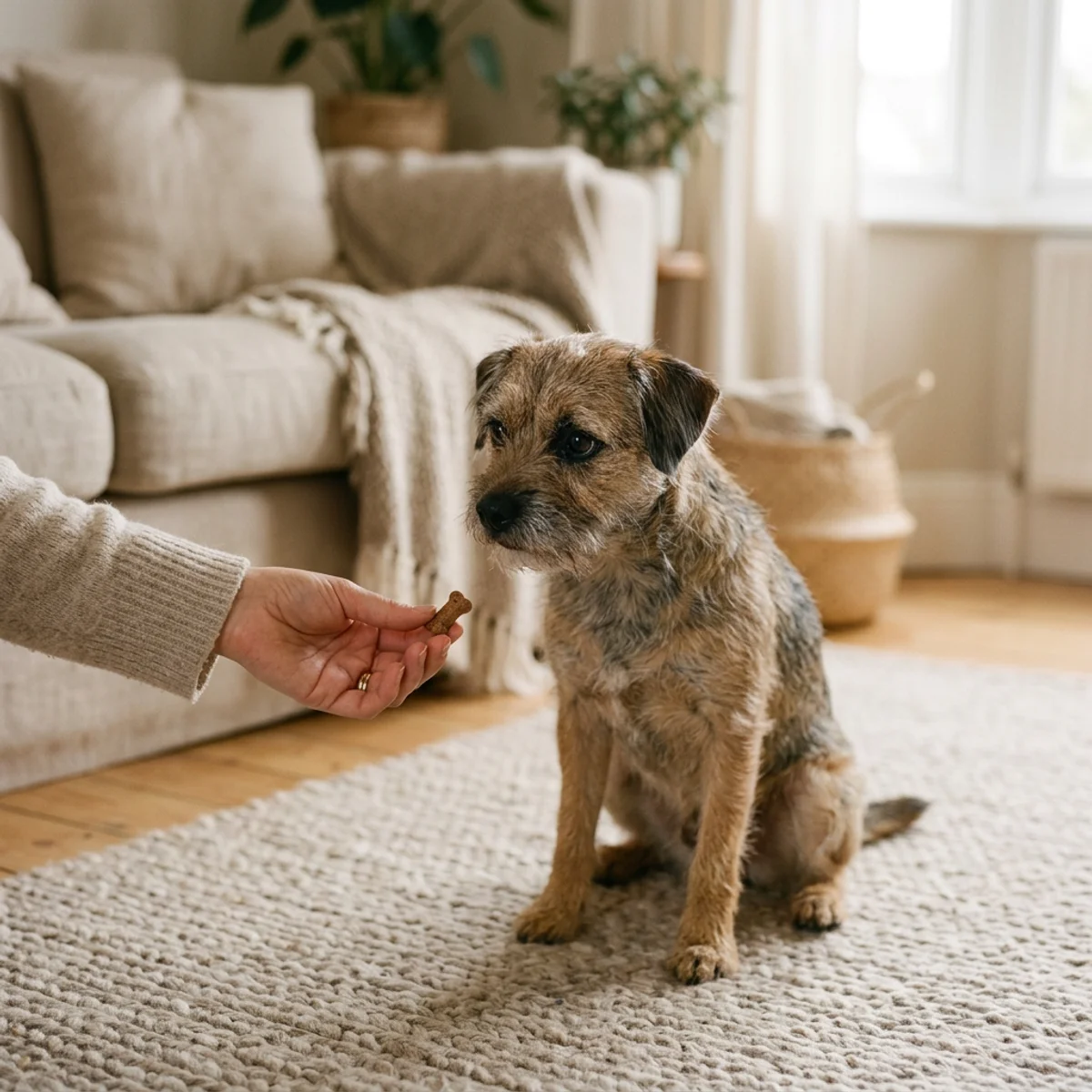
10 Natural Solutions to Calm an Anxious Dog
1. Create a Dedicated Safe Space
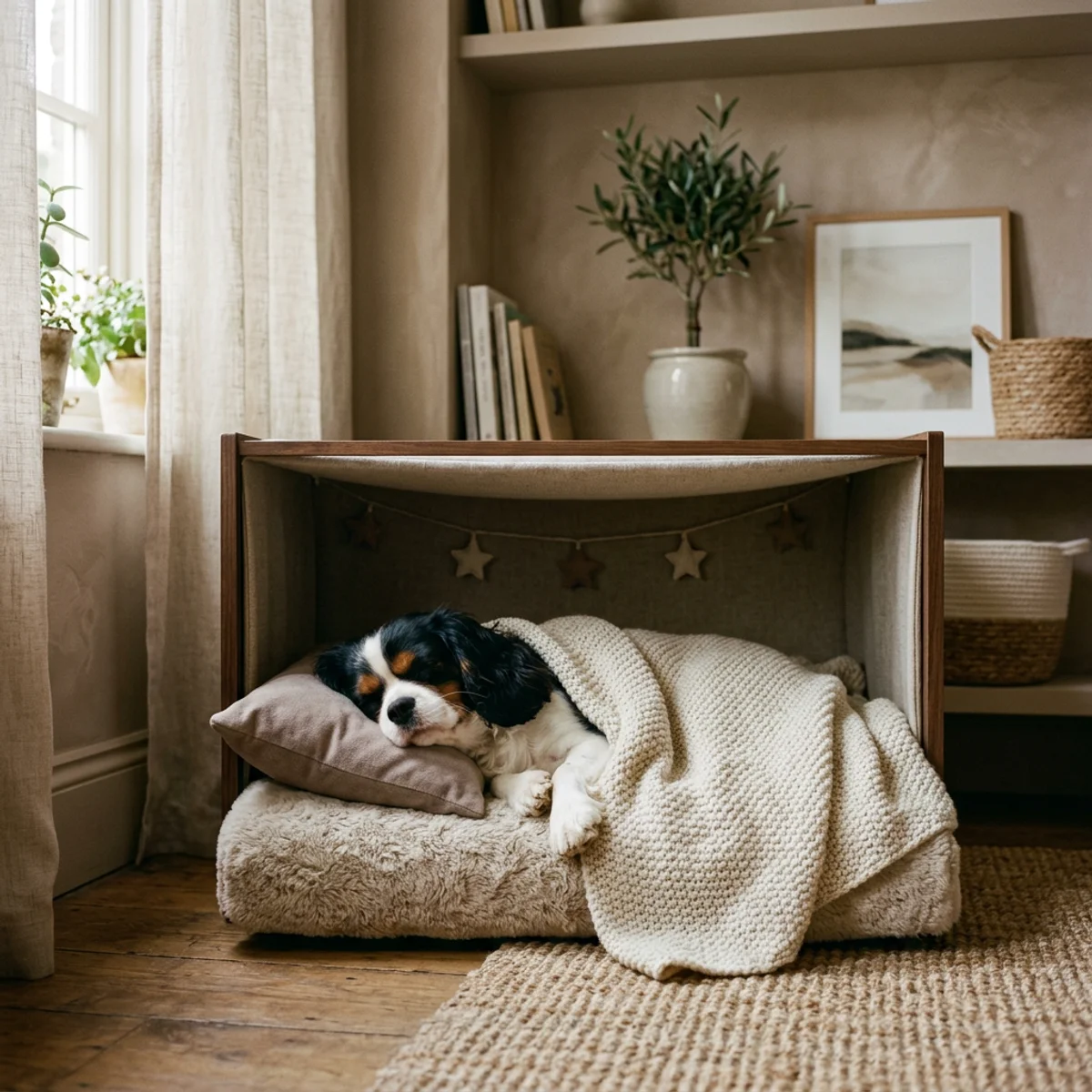
Every anxious dog needs a refuge—a spot that's predictably quiet, cozy, and theirs alone. For some dogs, that's a crate with a blanket draped over it to create a den. For others, it's a corner of your bedroom with a plush bed and low lighting.
We've seen fearful dogs transform when given a safe space they can retreat to voluntarily. The key: it's never used for punishment and always available. During thunderstorms, our Border Collie would disappear into her crate in the closet. We learned to leave her there rather than coaxing her out.
2. Stick to a Predictable Routine
Dogs thrive on predictability. Feed at the same times, walk the same routes (at least on weekdays), and keep your departure and arrival routines consistent.
If your Schnauzer knows breakfast happens at 7 a.m., a walk follows at 8, and you leave at 8:45 with the same low-key goodbye, the world feels safer. Erratic schedules—especially around departures—heighten separation anxiety.
3. Desensitize Departure Cues
Dogs with separation anxiety often start panicking the moment you pick up your keys or put on your coat. Break that association by doing those actions randomly throughout the day without leaving. Put on your shoes, then sit on the couch and read. Jingle your keys, then go make a snack.
When you do leave, keep it boring. No long goodbyes, no baby talk, no eye contact. Just leave. Same on return—wait a few minutes before greeting your dog so arrivals and departures lose their emotional charge.
4. Practice Gradual Alone-Time Training
If your dog panics when you're gone, rebuild their confidence in tiny increments. Leave the room for 10 seconds. Come back. Repeat. Gradually extend the time, moving from seconds to minutes to hours over weeks.
Pair your departures with something wonderful—a frozen Kong stuffed with peanut butter that only appears when you leave. The goal: your dog associates your absence with good things, not abandonment.
5. Increase Physical and Mental Exercise
A tired dog is a calmer dog. Obvious, but true. A 30-minute sniffy walk where your Beagle investigates every lamppost does more for anxiety than a quick lap around the block.
Mental enrichment counts too. Puzzle feeders, scent games, and short training sessions burn energy and build confidence. We've seen anxious dogs settle noticeably after adding 15 minutes of daily nose-work games.
6. Use Calming Background Noise
For noise-sensitive dogs, a white-noise machine, a fan, or calming music designed for dogs can muffle sudden sounds that trigger panic. We leave classical music or dog-specific playlists on for dogs with thunderstorm anxiety—it won't solve the problem, but it takes the edge off.
Some dogs also respond well to the sound of a human voice. A talk-radio station or audiobook can provide comfort when you're away.
7. Try Pressure Wraps or Anxiety Vests
Gentle, constant pressure—like a snug hug—can calm some anxious dogs. Anxiety wraps work on the same principle as swaddling a baby. They won't work for every dog, but we've seen them help during thunderstorms and fireworks.
Fit matters. The wrap should be snug but not restrictive. Introduce it during calm moments first, paired with treats, so your dog builds a positive association.
8. Provide Appropriate Chewing Outlets
Chewing is self-soothing. A durable chew toy, a bully stick, or a frozen Kong gives an anxious dog something productive to do with their nervous energy. Just make sure whatever you offer is safe and appropriately sized—no cooked bones, nothing small enough to choke on, and supervise anything new.
9. Use Calming Scents
Some dogs respond to species-specific pheromone diffusers that mimic the calming signals a mother dog gives her puppies. These plug into a wall outlet and release a scent humans can't detect. Results vary, but they're safe and worth trying, especially for situational anxiety like moving house or introducing a new pet.
Lavender and chamomile (in dog-safe formulations) may also have mild calming effects, though evidence is mostly anecdotal. Never apply essential oils directly to your dog or use them in high concentrations.
10. Work with Positive Reinforcement
Punishing an anxious dog makes things worse. Always. If your dog is barking, pacing, or destroying things out of fear, they're not being defiant—they're in distress.
Reward calm behavior instead. When your dog settles on their bed, quietly give a treat. When they stop barking and look at you, mark it with a "yes" and reward. Over time, you're teaching your dog that calm earns good things.
If the anxiety is severe or you're not seeing progress, a certified professional dog trainer or veterinary behaviorist is worth the investment.
Dog Separation Anxiety: A Closer Look
Separation anxiety deserves its own attention because it's so common and so distressing. True separation anxiety means your dog experiences panic—not just boredom or frustration—when left alone.
It often shows up as destructive behavior focused on exit points (clawing at doors, chewing window sills), self-harm (excessive licking, chewing paws until raw), or intense vocalization. Some dogs won't eat or drink when alone, even if food is available.
The treatment is systematic desensitization combined with counter-conditioning, as outlined above, but it takes time. We're talking weeks or months, not days. In severe cases, your vet may recommend anti-anxiety medication as short-term support while you work on the behavior—and that's okay. Medication isn't failure. It's a tool.
Never use punishment-based tools like citronella collars or shock collars for separation anxiety. They don't address the fear and often make it worse.
Thunderstorm Anxiety in Dogs: Special Considerations
Thunderstorm anxiety is tricky because dogs sense storms long before we do—changes in barometric pressure, static electricity, even the smell of rain. By the time you hear thunder, your dog may already be in full panic.
Strategies that help:
- Create a safe room in the most insulated part of your home (a basement or interior bathroom), where sound and pressure changes are minimized.
- Let your dog self-soothe. If they want to hide in the bathtub or under your bed, let them. Forcing them out increases panic.
- Stay calm yourself. Dogs read our emotions. If you're anxious and hovering, they'll pick up on it.
- Desensitization training during calm weather—playing recordings of thunder at very low volume while pairing it with treats and play—can help, but it's a long-term project.
For dogs with severe storm phobia, talk to your vet about short-term anti-anxiety medications you can give before a predicted storm.
When to Consult Your Veterinarian
Natural remedies and behavior modification work beautifully for many dogs, but not all anxiety is purely behavioral. If your dog's anxiety appeared suddenly, is worsening despite your efforts, or is accompanied by other symptoms (lethargy, appetite changes, limping, confusion), a vet visit is essential.
Cognitive dysfunction in senior dogs, pain from arthritis or injury, and hormonal imbalances can all cause or worsen anxiety. Blood work and a physical exam can rule out medical causes.
If your dog's anxiety is severe—self-harming, unable to settle even briefly, or making your life unmanageable—don't tough it out alone. A veterinary behaviorist can create a comprehensive treatment plan that may include medication. That's not a sign you've failed. Some dogs simply need more support.
FAQ
How long does it take to calm an anxious dog naturally?
It depends entirely on the dog, the trigger, and the severity. Mild situational anxiety might improve in a few weeks with consistent routines and environmental changes. Deep-seated separation anxiety or severe noise phobias can take months of patient, incremental training. We've worked with dogs who showed noticeable improvement in two weeks and others who needed six months. The key is consistency and realistic expectations.
Can I leave an anxious dog alone while I'm at work?
It depends on severity. If your dog is mildly anxious but not destructive or self-harming, you can work on building their tolerance gradually while managing the environment (crate training, safe space, calming music, puzzle toys). If your dog is in genuine distress—injuring themselves, not eating, or destroying your home—you'll need interim solutions: a dog walker, doggy daycare, a pet sitter, or working from home part-time while you work on the behavior. Leaving a severely anxious dog alone for eight hours isn't fair and won't improve on its own.
Are calming supplements safe for dogs?
Many are, but quality and ingredients vary wildly. Look for products with research-backed ingredients like L-theanine, chamomile, valerian root, or colostrum, and buy from reputable brands that provide third-party testing. Always check with your vet first, especially if your dog is on other medications or has health issues. Supplements can be a helpful piece of the puzzle, but they're not magic—they work best alongside behavior modification and environmental changes.
Should I comfort my dog when they're anxious, or will that reinforce the fear?
You cannot reinforce an emotion. Fear is not a behavior; it's a feeling. If your dog is scared, comforting them won't teach them to be more scared. That said, over-the-top coddling or anxious energy from you can communicate that there is something to fear. The best approach is calm, quiet reassurance—let your dog seek comfort if they want it, but stay matter-of-fact and relaxed yourself. Your steady presence is the reassurance, not the fussing.
Building Confidence, One Day at a Time
Calming dog anxiety naturally is less about finding a single magic solution and more about layering small, consistent changes that add up over time. A safe space, a predictable routine, gradual desensitization, and plenty of patience will take most anxious dogs a long way.
We've seen fearful rescues blossom into confident companions and storm-phobic dogs learn to settle during July thunderstorms. It takes time, and some days will feel like setbacks, but progress is possible.
If you're looking for tools to support your anxious dog—from cozy beds to durable chew toys—we curate thoughtful, design-forward options that make daily life with dogs calmer and more beautiful. Browse our collection and find what fits your home and your dog's needs.
Sources
- Cornell University College of Veterinary Medicine — Anxious Behavior: How to Help Your Dog Cope
- PetMD — Dog Anxiety: Signs, Causes, and Treatment
- VCA Canada Animal Hospitals — Fears, Phobias, and Anxiety in Cats and Dogs
- VCA Canada Animal Hospitals — Signs Your Dog is Stressed and How to Relieve It
- PetMD — How To Calm Your Dog Naturally