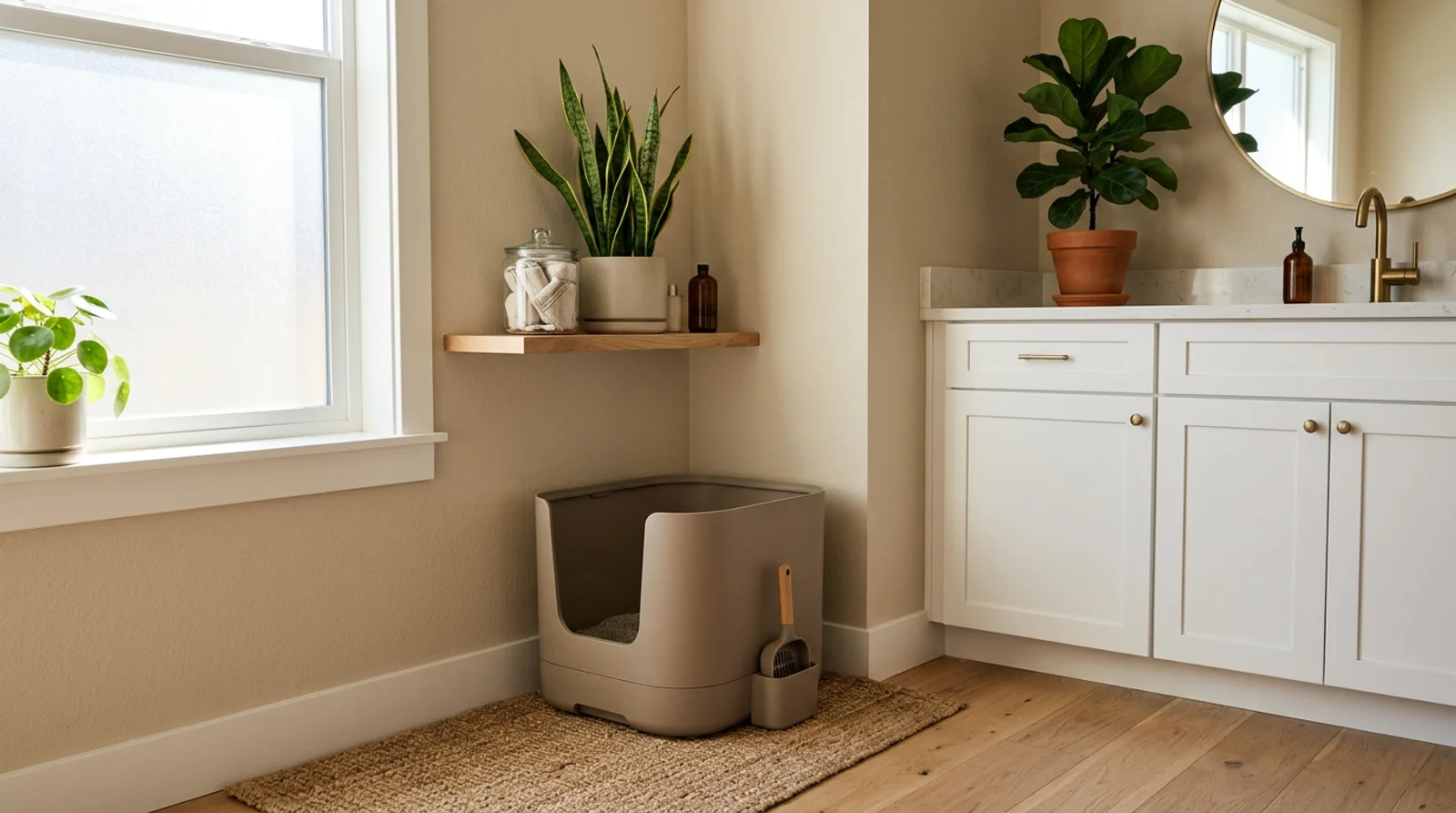
Litter Box Setup and Maintenance: Keep Your Cat Happy and Your Home Fresh
Litter Box Setup and Maintenance: Keep Your Cat Happy and Your Home Fresh
Proper litter box setup means choosing the right number of boxes, placing them where your cat actually wants to use them, and keeping them clean enough that you'd use them yourself. Get this wrong and you'll face accidents, stressed cats, and a home that smells like ammonia no matter how many candles you light.
We've watched too many cat parents struggle with litter box problems that trace back to setup mistakes made on day one. Here's something critical to know upfront: any change in litter box habits — whether sudden or gradual — warrants a veterinary examination to rule out medical causes before assuming the issue is behavioral or setup-related. Urinary tract infections, bladder stones, kidney disease, and other health issues often show up first as elimination problems. Once medical causes are ruled out, most litter box issues are completely fixable once you understand what your cat actually needs.
Best Litter Box Location: Where Your Cat Will Actually Use It
Cats are both vulnerable and fastidious when they eliminate. They need privacy, but not isolation — a distinction most of us miss when we stick the box in the darkest, furthest corner we can find.
The best spot is quiet but accessible. A spare bathroom works beautifully. So does a low-traffic corner of a bedroom or home office. What doesn't work: next to the washing machine (too loud), in a closet with a door that swings shut (too trap-like), or next to their food bowls (cats won't toilet where they eat).
Our placement checklist:
- At least one box per floor in a multi-level home
- Away from noisy appliances (furnaces, washers, dryers)
- Easy escape routes — never a dead-end corner where a dog or another cat can block the exit
- Low foot traffic but not completely isolated
- Well-ventilated (that unfinished basement corner with no airflow will smell foul fast)
If you have a large home or a senior cat with arthritis, closer is better. We've seen 14-year-old cats with mild joint pain start avoiding a box that requires climbing stairs. Add a second box on the main floor and the problem vanishes.
Multi-cat households need boxes on different floors and in different rooms. Cats are territorial. One pushy cat can guard a single location and effectively block another cat from using any box there, even if you've placed two side by side.
How Many Litter Boxes Does Your Cat Really Need?
The formula is simple: one box per cat, plus one extra. Two cats? Three boxes. Four cats? Five boxes.
Yes, that sounds like a lot. But in our experience, this is the single most effective way to prevent litter box avoidance. Cats don't like using a box another cat has just soiled, and some cats prefer to urinate in one box and defecate in another.
We lived with three cats in a two-bedroom condo for years. Four boxes felt excessive until we realized our middle cat — a 5-kg domestic shorthair with anxiety — would hold her bladder for hours rather than use a box our confident tabby had just claimed. The fourth box solved it overnight.
Box size matters more than most people realize. The general rule: the box should be at least 1.5 times your cat's length from nose to base of tail. A small covered box from the grocery store might work for an 8-week-old kitten, but that kitten will be full-grown in under a year. A 5.5-kg adult cat needs a box at least 45–50 cm long. Larger cats — Ragdolls, Maine Coons, Norwegian Forest Cats — need even bigger.
Uncovered boxes are almost always better. Covered boxes trap odour (unpleasant for the cat) and limit escape routes (stressful for anxious or bullied cats). The only exception: if you have a cat who sprays standing up or kicks litter with Olympic-level enthusiasm, a high-sided open box beats a covered one.
Litter Box Maintenance: Your Cleaning Routine Makes or Breaks This
Cats have 200 million scent receptors. You have 5 million. If you can smell the box, your cat has been suffering for days.
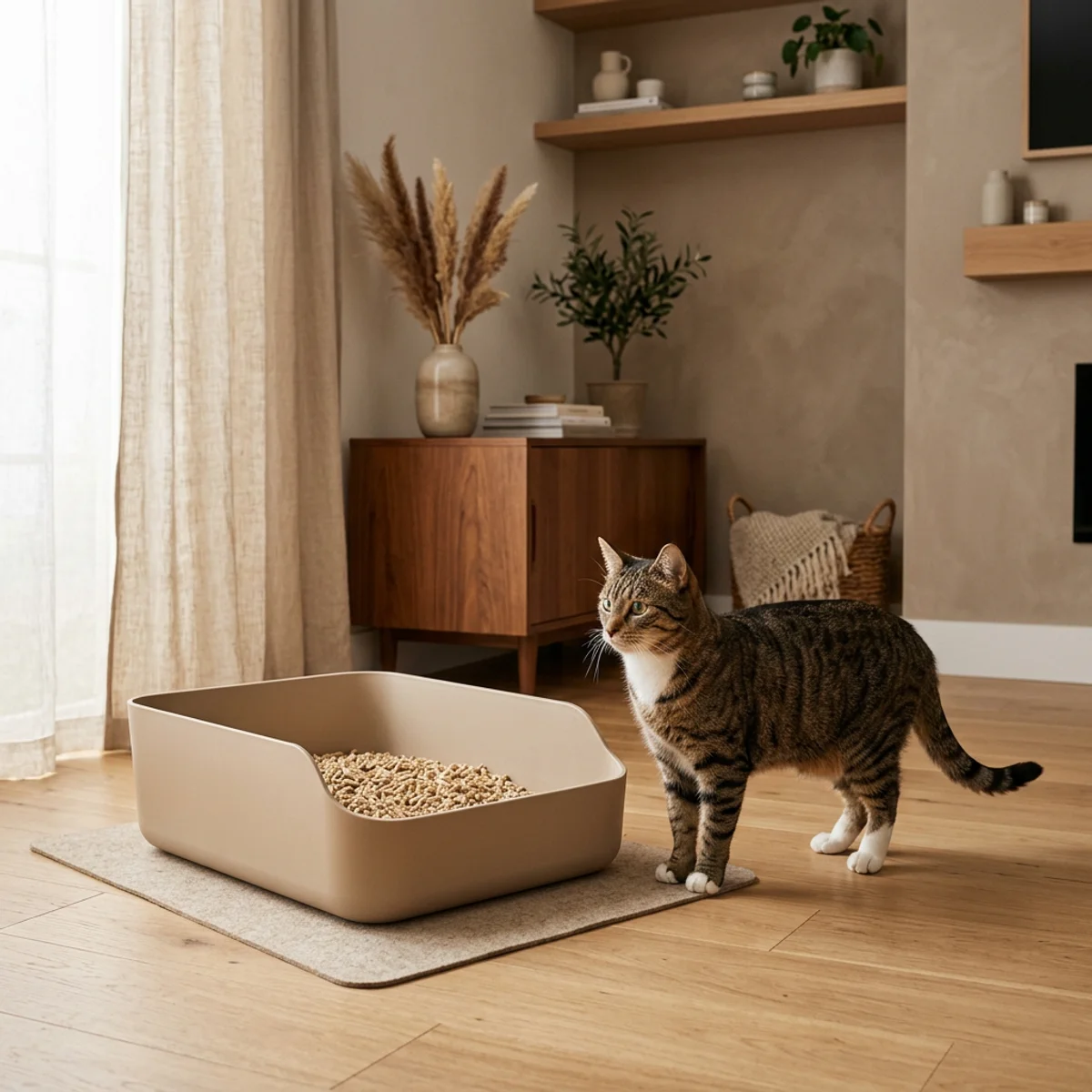
Daily: scoop every box at least once, ideally twice. This takes under five minutes for a two-cat household and prevents 90% of odour issues. We keep a small scoop and a lidded pail near each box. Morning and evening scoops become automatic fast.
Weekly: top up litter to maintain 5–7 cm depth (about 2–3 inches). While it might seem like deeper litter would be better for burying, most cats actually prefer and perform better with this shallower depth. Wipe down the box edges where litter dust accumulates.
Monthly (clumping litter): dump everything, scrub the box with unscented dish soap and hot water, dry completely, refill with fresh litter. Some cats are sensitive to residual scents, so skip heavily fragranced cleaners or anything with ammonia (which smells like urine to a cat and can actually encourage them to pee outside the box).
Monthly (non-clumping litter): full changes need to happen more often — every 1–2 weeks depending on the cat and litter type. Non-clumping litter absorbs urine but doesn't isolate it, so the entire box becomes saturated faster.
If you're scooping daily and the box still smells, the litter itself might be the problem. Cheap clay litters do a poor job of odour control. You'll use more product and change the box more often, which usually negates any cost savings.
Choosing the Right Litter: What Actually Works
There's no single "best" litter. There's only what works for your cat and your household.
Clumping clay is the workhorse. Sodium bentonite forms tight clumps when wet, making scooping efficient and keeping the rest of the litter fresh. It's dusty (a real concern for cats and humans with asthma), heavy, and not environmentally friendly, but it controls odour well and most cats accept it readily.
Non-clumping clay is cheaper and less dusty, but you can't remove urine — only feces. The whole box gets damp and smelly, so you'll replace it more often. We rarely recommend it unless budget is a major constraint.
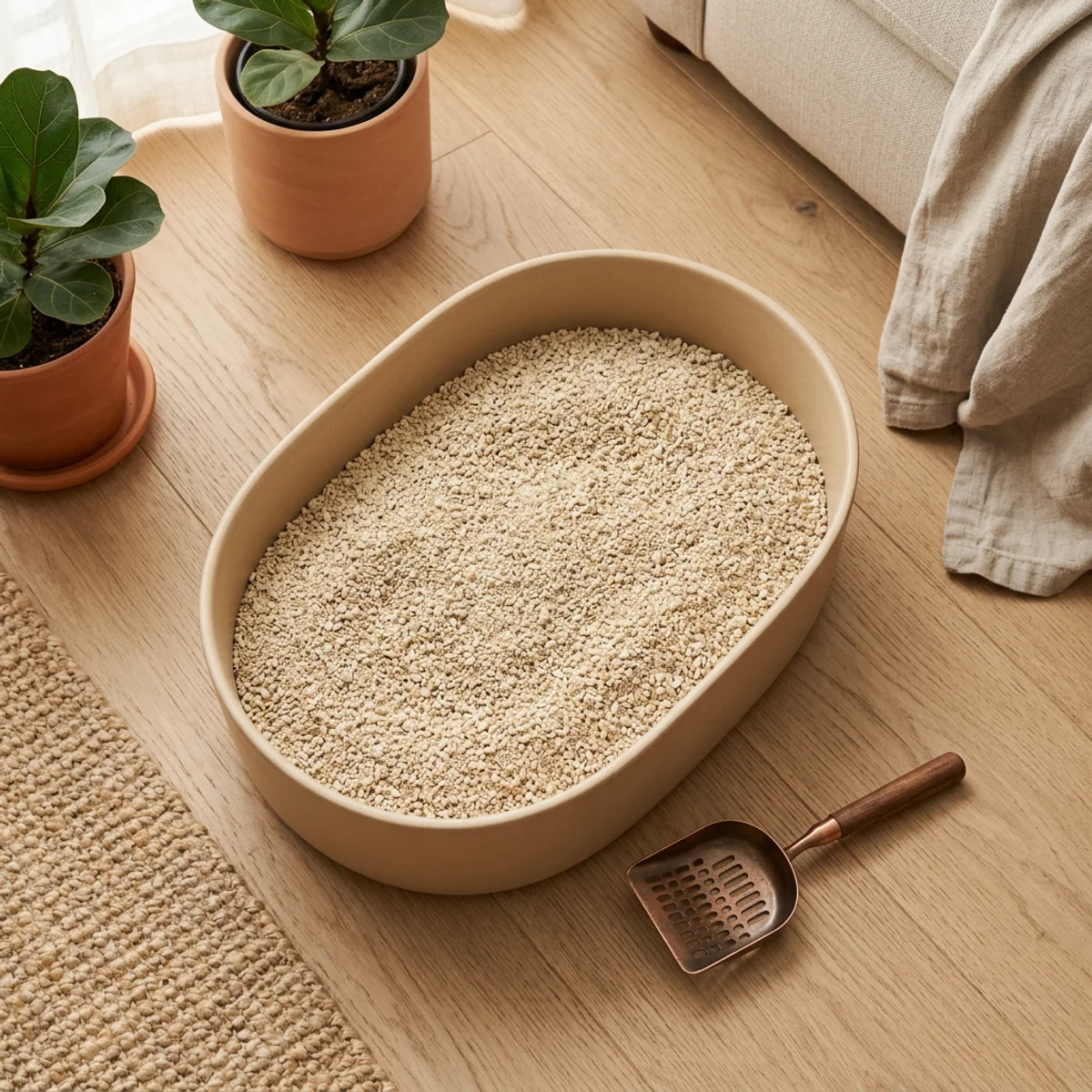
Natural/plant-based litters (wood, corn, wheat, walnut, paper) are lighter, often less dusty, and biodegradable. Performance varies wildly. Some clump beautifully and control odour as well as premium clay; others fall apart or smell like a barn. Our team has had good luck with wood-based pellets for cats who don't mind a different texture and with tofu litters for low dust and solid clumping.
Crystal/silica gel absorbs moisture and controls odour for weeks without clumping. You remove solid waste daily and stir the crystals. It's low-maintenance and very low-dust, but some cats dislike the feel, and it's pricey. If your cat accepts it, it's a strong option for busy households.
Texture and scent matter. Most cats prefer unscented, fine-grained litter that mimics sand or soil. Heavily perfumed litters can repel cats (remember those 200 million scent receptors). If you're switching types, do it gradually — mix 25% new litter with 75% old for a few days, then 50/50, then transition fully. Abrupt changes sometimes trigger avoidance.
Common Cat Litter Box Problems and How to Fix Them
Peeing outside the box: first, rule out medical issues. Urinary tract infections, bladder stones, and kidney disease all cause inappropriate elimination. See your vet before you assume it's behavioural — this applies whether the change is sudden or gradual.
Once health is cleared, audit your setup. Is the box too small? Too dirty? In a stressful location? Did you recently switch litter? Add a new cat or dog? Cats communicate stress through their bathroom habits. We once consulted with a client whose cat started peeing on the sofa the day after they adopted a rambunctuous puppy. The solution: baby-gating the litter box area so the cat could access it without encountering the dog.
Litter tracking everywhere: bigger boxes with higher sides help. So do litter mats placed directly outside the box to catch granules stuck in paw pads. Large-grain or pellet litters track less than fine clay. You'll never eliminate tracking completely, but you can reduce it to a manageable scatter rather than a trail through three rooms.
Odour despite daily scooping: you likely need more boxes, better litter, or more frequent full changes. Also check box material — cheap plastic becomes porous and holds odour even after washing. Replace boxes annually, or sooner if you notice scratches or a persistent smell.
Cat kicking litter out enthusiastically: some cats are just diggers. High-sided open boxes (at least 20–25 cm walls) contain most of it. Top-entry boxes work for athletic cats, though senior or arthritic cats can't manage them.
How Often to Clean Litter Box: Real-World Schedules
We've covered the ideal routine above, but let's be honest about what's realistic.
Minimum for one cat: scoop daily, full change and wash every 3–4 weeks with clumping litter. Miss a day of scooping occasionally and you'll probably be fine. Miss three days and you risk avoidance.
Minimum for two cats: scoop daily (this is non-negotiable now), full change every 2–3 weeks. Two cats generate twice the waste in the same space. The math is unforgiving.
Three or more cats: scoop twice daily if possible, full changes every 1–2 weeks. This is where automatic boxes start to make sense for some households, though they're not magic — you still need to maintain the machine, empty the waste drawer, and deep-clean periodically.
If you travel frequently or work long hours, consider an automatic box or ask a friend to scoop every other day. Cats will tolerate a lot, but a box that hasn't been scooped in four days is asking for accidents.
FAQ
How deep should litter be in the box?
5–7 cm (about 2–3 inches) is ideal for most cats. While humans might think deeper litter is better for burying, cats actually prefer shallower litter and perform better with it. Too deep and it's wasteful, plus some cats dislike the instability of walking on a deep layer. For kittens or senior cats with mobility issues, start around 5 cm.
Can I use baking soda to control odour?
A light sprinkle on the bottom of a clean box before adding litter can help, but don't overdo it. Some cats are sensitive to the texture or scent. If your box smells even with baking soda, the real issue is probably scooping frequency or litter quality, not a lack of deodorizer.
My cat used to be fine with the litter box but suddenly stopped. What changed?
Cats are creatures of habit. Sudden avoidance usually means something shifted: a health issue (always rule this out first), a stressful event (new pet, new baby, moving furniture, construction noise), a dirty box, or a negative experience in or near the box (got startled by a loud noise, got cornered by another pet). Retrace the last few weeks and look for changes, no matter how small.
Do I really need one box per cat plus one?
In a perfect world, yes. In reality, some multi-cat households get away with fewer boxes if the cats are relaxed, the boxes are large and impeccably clean, and they're placed in different areas. But every time we've consulted on a multi-cat household with elimination problems, adding boxes solved it. It's the lowest-effort, highest-impact fix we know.
Setting Up for Long-Term Success
Litter box problems are fixable, but prevention is easier than troubleshooting. Start with enough boxes in good locations, choose a litter your cat accepts, and commit to a cleaning routine you can actually maintain long-term.
Your cat won't thank you out loud, but you'll see it in their behaviour: confident use of the box, no accidents, no stress posturing. And your home will smell the way you want it to — like nothing at all.
If you're setting up for a new cat or kitten, get the boxes and litter sorted before bringing them home. It's one less stressor during adjustment, and it sets the tone for years of good habits. Browse our curated selection of premium, design-forward litter solutions that work as hard as they look good in your space.