Best Cat Carriers for Stress-Free Travel and Vet Visits
Best Cat Carriers for Stress-Free Travel and Vet Visits
The best cat carriers balance security, ventilation, and ease of access while giving your cat enough room to turn around and lie down comfortably. A well-chosen carrier transforms stressful vet visits and travel into manageable experiences—for both of you.
We've seen it all: carriers that collapse mid-trip, zippers that fail under pressure, and designs so awkward that getting a frightened cat inside feels like wrestling an octopus. After years of curating pet gear and living with cats who range from placid to perpetually indignant, we know exactly what separates a carrier that works from one that lives forgotten in the basement.
Why Your Cat Carrier Choice Matters More Than You Think
Your cat reads a carrier as either a safe den or a flimsy trap. Cats are sensitive to instability, poor airflow, and the anxiety you telegraph through fumbling latches. A carrier that feels secure—one that doesn't flex, tip, or emit strange creaking sounds—helps your cat settle faster.
Size matters, too. Measure your cat from nose to base of tail and add 5–8 cm for the interior length. Your cat should be able to stand, turn around, and lie comfortably on their side. Weight alone doesn't determine carrier size—a stocky 5 kg cat may need more space than a lean 6 kg cat. Too small and your cat can't shift position during a long wait at the vet. Too large and they slide around on car trips, which amps up anxiety.
We also care about your experience. A carrier with top and front access lets you lift a reluctant cat out without tipping the whole thing upside down. Carriers with removable bases let the vet examine your cat inside the familiar bottom half, which has saved us countless scratches and at least one escape attempt in a clinic parking lot.
Soft-Sided vs. Hard-Sided vs. Backpack Carriers: A Cat Carrier Guide
There's no single "best" carrier type—what works depends on your cat's temperament, your mode of travel, and how often you'll use it.
Hard-Sided Carriers
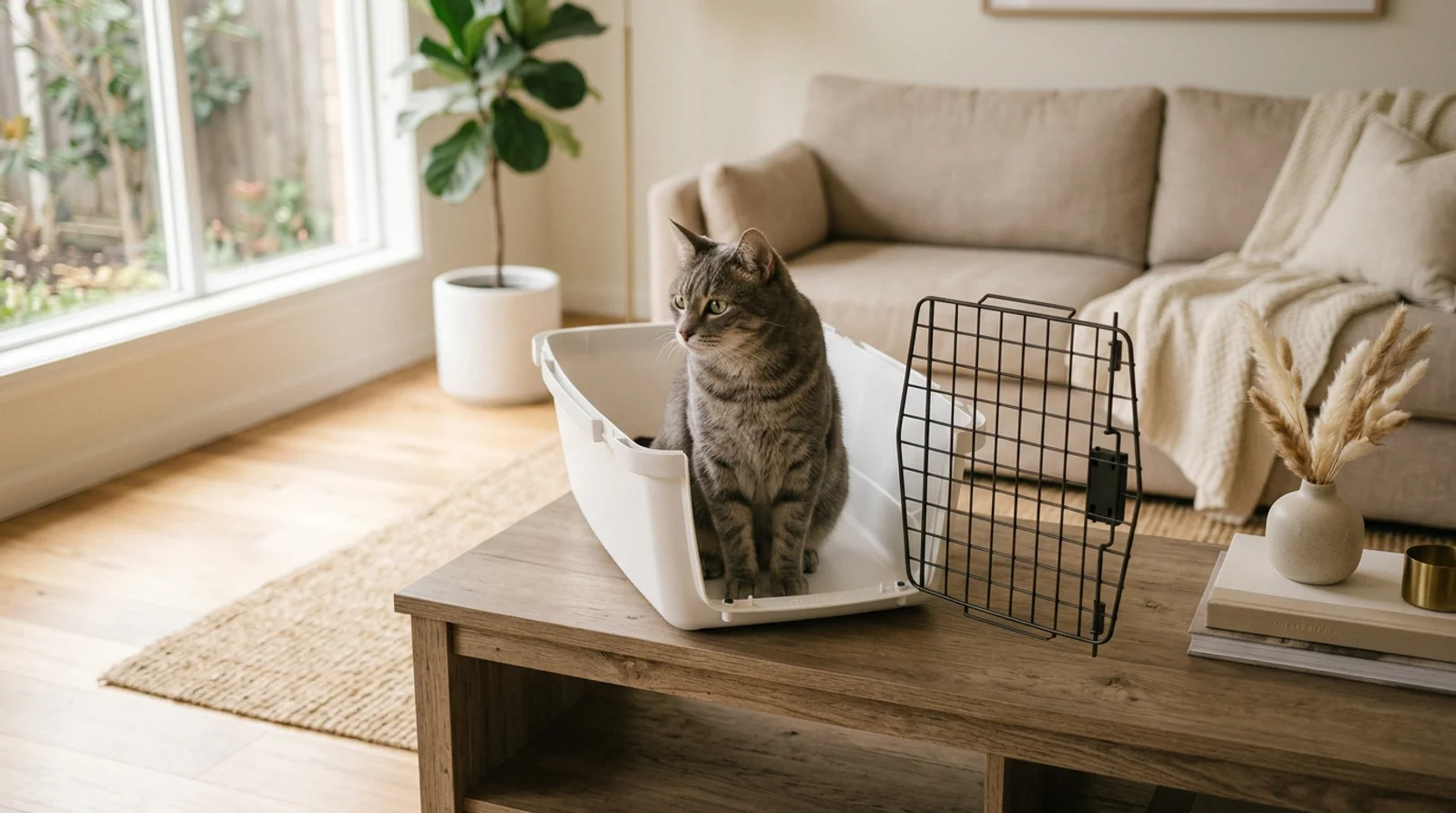
These are our workhorses for vet visits and car travel. Hard plastic carriers (often called "pet taxis") are sturdy, easy to clean, and offer excellent ventilation through wire doors and side vents. Most come apart at the waist, so you can remove the top half and let a nervous cat stay in the bottom during an exam.
Pros:
- Extremely secure; a panicked cat can't claw through plastic
- Stable in the car; won't tip if you brake hard
- Easy to disinfect after accidents (and there will be accidents)
- Many meet IATA standards for airline cargo, though few cats fly in-cabin in hard carriers due to size
Cons:
- Bulky to store
- Heavy when empty (important if you're carrying a 6 kg cat up three flights of stairs)
- Front-only access can make it hard to coax a frightened cat out
Our take: if you have one carrier, make it a hard-sided model with both top and front doors. It's the most versatile.
Soft-Sided Carriers
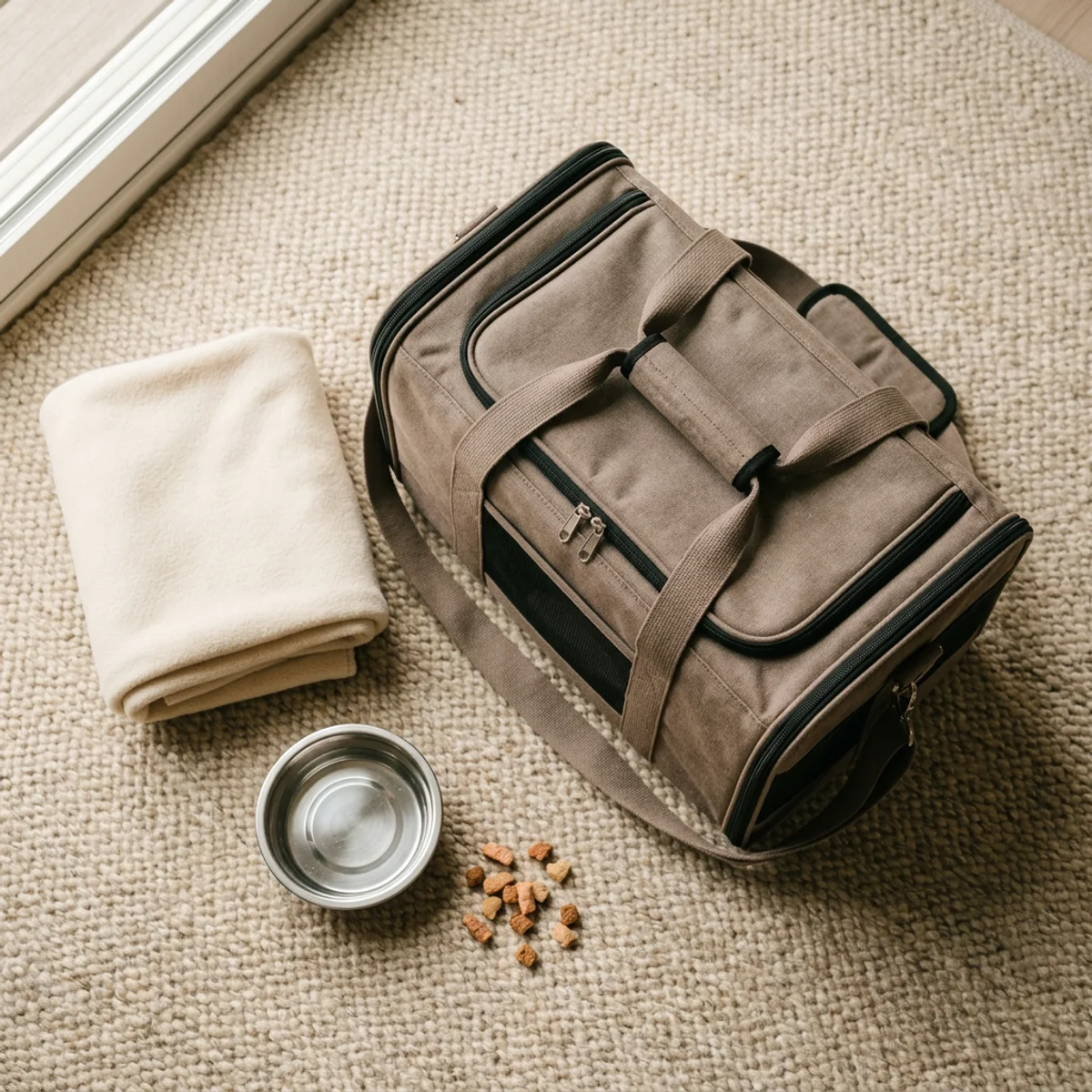
These fabric carriers (usually nylon or polyester over a collapsible frame) are lighter and easier to tuck under an airline seat, which is why they dominate in-cabin air travel. Good ones have mesh panels on multiple sides for airflow and visibility.
Pros:
- Lightweight and often collapsible for storage
- Fit under most airline seats (check your carrier's exact dimensions against your airline's rules)
- Top and side entry points are common
- Cats often find the fabric walls less visually stimulating than hard plastic, which can be calming
Cons:
- A determined cat can chew or claw through mesh (we learned this the hard way with a young Bengal)
- Fabric absorbs urine and is harder to fully sanitize
- Less stable; can tip if placed on a seat
- Not ideal for cats over 7 kg—most soft carriers max out around 6–7 kg
When to choose soft-sided: if you're flying in-cabin, taking transit, or have a mellow cat under 6 kg who doesn't panic-claw. Pair it with a familiar towel or T-shirt inside to anchor the scent.
Backpack Carriers
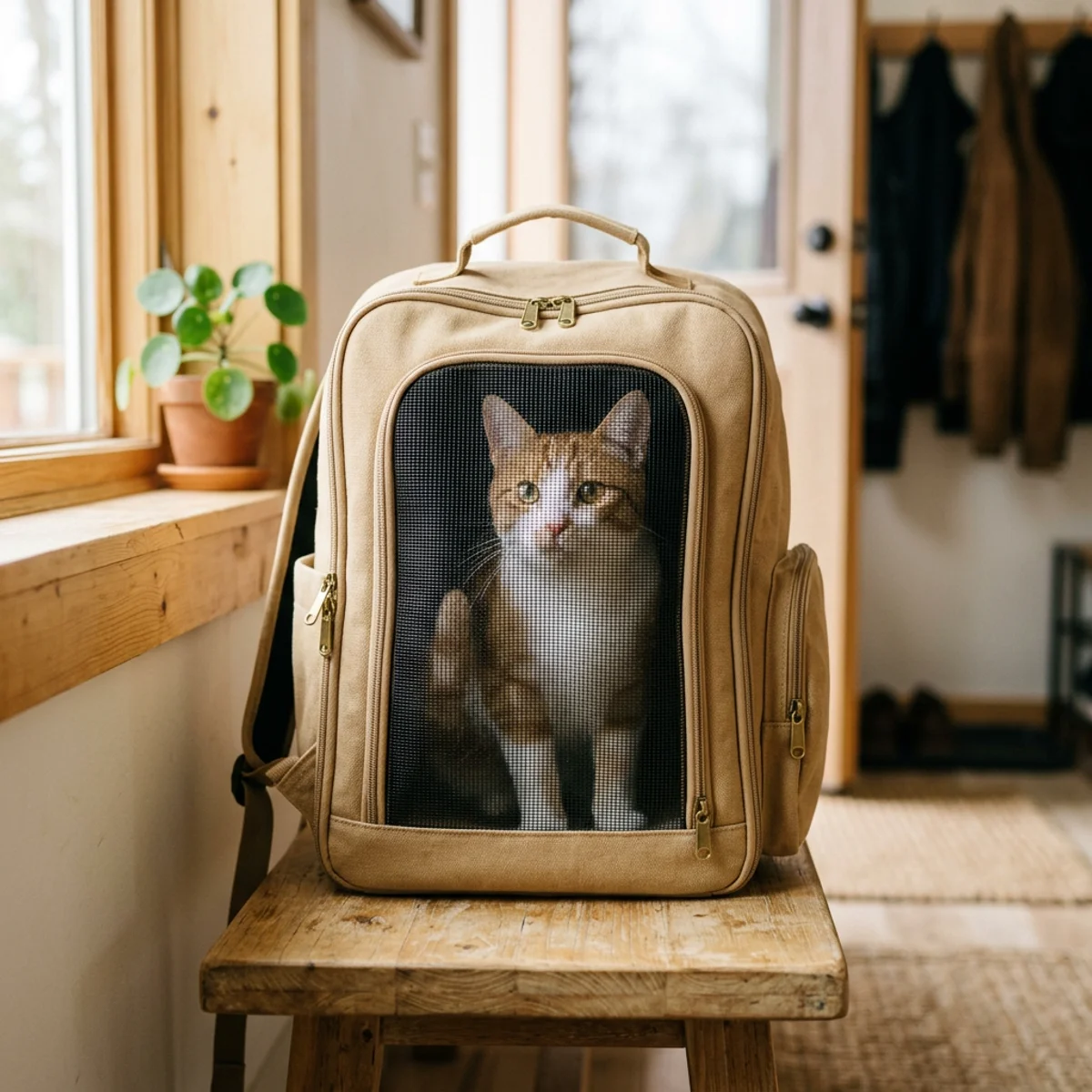
Backpack-style carriers have surged in popularity, and we understand why: they free your hands and distribute weight evenly. Most feature a bubble window or mesh panels and are designed for cats up to about 7 kg.
Pros:
- Hands-free; great for walking, cycling, or navigating crowded spaces
- Cats sit upright and can see out, which some find enriching (others find terrifying—know your cat)
- Airline-compliant models exist, though they're less common
Cons:
- Limited ventilation if the design prioritizes the bubble aesthetic over airflow
- Heavier on your back than a tote-style soft carrier in your hand
- Not practical for vet visits where you need to set the carrier down and open it on an exam table
- Size restrictions: few fit cats over 7 kg comfortably
Our verdict: backpack carriers are specialty items. If you hike, bike, or want to bring your cat on errands, they're fantastic—but don't make one your only carrier. We keep a backpack for our adventurous tabby and a hard-sided carrier for the vet.
What to Look for When Choosing the Best Cat Carriers
Ventilation and Visibility
Cats need airflow on at least two sides—preferably three. Carriers with only a front wire door can feel stuffy, especially in summer. Mesh panels should be reinforced at stress points (corners, zippers) so claws can't snag and tear.
Some cats feel safer with limited visibility; others panic if they can't see you. If your cat is anxious, drape a light towel over part of the carrier to create a den-like space while leaving airflow intact.
Security: Zippers, Latches, and Locks
We've seen cheap zippers fail under pressure. Look for double zippers that you can lock together with a small carabiner or twist-tie. Hard-sided carriers should have metal locking pins or sturdy plastic latches—press-fit clips alone aren't enough.
Test the door before you buy. Can your cat push it open from the inside? If yes, keep shopping.
Size and Interior Comfort
Your cat should be able to stand, turn around, and lie on their side. Measure your cat from nose to base of tail (not including the tail itself) and add 5–8 cm. That's your minimum interior length.
For width and height, your cat should be able to sit upright and shift positions without their head brushing the top. A cramped carrier isn't just uncomfortable—it's unsafe if your cat overheats.
Line the bottom with a washable fleece pad or towel. Avoid anything slippery; cats dig their claws in when they're nervous, and sliding around makes it worse.
Access Points
Top-loading carriers are a gift when you're dealing with a cat who refuses to walk into a front door. You can lower them in gently, or—if they're willing—let them step down into the carrier themselves. Front-and-top dual access is ideal.
Side-loading works well for carriers you'll place next to you on a seat (bus, plane), but it's awkward for lifting a reluctant cat.
Cleaning and Maintenance
Cats vomit, urinate, and shed in carriers. Hard plastic wipes clean in seconds. Soft fabric carriers need removable, machine-washable liners at minimum. If the liner isn't removable, assume you'll be scrubbing it in the bathtub at some point—or replacing the whole carrier.
Airline-Approved Cat Carriers: What You Need to Know
If you're flying in-cabin with your cat in Canada, your carrier must fit under the seat in front of you. Dimensions vary by airline, but most allow carriers up to about 43 cm L × 28 cm W × 23 cm H. Check your specific airline's pet policy before you buy.
Soft-sided carriers are usually the only option that fits these tight dimensions while still giving your cat enough room. Look for models labelled "airline compliant," but always verify measurements yourself.
Your cat must be able to stand and turn around inside the carrier, even when it's compressed slightly under the seat. Airlines will deny boarding if the carrier is too small or if your cat is visibly distressed.
A few tips from our team's flying experience:
- Book early and notify the airline that you're bringing a cat; most limit the number of pets per cabin.
- Freeze a small water dish the night before and clip it inside the carrier; it melts slowly and won't spill during takeoff.
- Line the carrier with an absorbent pad, not litter. (Yes, we've seen people try.)
- Sedation for air travel is strongly discouraged by veterinary organizations including the Canadian Veterinary Medical Association and American Veterinary Medical Association due to increased risks of respiratory and cardiovascular complications at altitude. Discuss your cat's specific anxiety concerns with your veterinarian well before your trip to explore safer alternatives.
If your cat is flying cargo, you'll need an IATA-compliant hard-sided crate with specific ventilation, door, and size requirements. Cargo travel is stressful for cats; we recommend it only when absolutely necessary.
Stress-Free Cat Travel: Making Vet Visits Easier with the Right Carrier
The carrier itself is only half the equation. How you introduce it matters just as much.
Leave the carrier out in your home year-round, door open, with a cosy blanket inside. Toss treats in daily. Let it become furniture, not a trap that appears only before vet visits. Our cats nap in their carriers voluntarily now—it took weeks, but it's worth it.
When it's time for the vet, place the carrier on its end (door facing up) if you have a top-loading model. Lower your cat in backward, bum first. It's less confrontational than trying to push their face through the door.
In the car, secure the carrier with a seatbelt so it doesn't slide. Some cats settle faster if you cover part of the carrier with a towel; others want to see you. Pay attention to your cat's body language during the first few trips.
If your cat is extremely anxious, talk to your vet about cat stress signs and whether a calming pheromone spray might help. If recommended, spray the carrier 15-30 minutes before placing your cat inside to allow the carrier to dry. Never spray it directly on your cat or inside an occupied carrier.
Comparison: Carrier Styles at a Glance
| Feature | Hard-Sided | Soft-Sided | Backpack |
|---|---|---|---|
| Best for | Vet visits, car travel, strong/large cats | Air travel, small calm cats, transit | Hands-free errands, hiking, short trips |
| Weight capacity | Up to 10+ kg | 6–7 kg typical | 6–7 kg typical |
| Durability | Excellent; chew/claw-proof | Moderate; mesh can tear | Moderate; depends on materials |
| Ease of cleaning | Very easy (wipe down) | Harder; fabric absorbs | Harder; fabric/mesh panels |
| Storage | Bulky | Collapsible in many models | Bulky (holds shape) |
| Airline in-cabin | Rarely fits | Often compliant | Some models compliant |
| Access points | Front + top (best models) | Front, top, side options | Top-loading typical |
| Price range (approx.) | $40–$90 CAD | $45–$120 CAD | $60–$150 CAD |
FAQ
How do I get my cat into the carrier without a fight?
Make the carrier a safe, familiar space long before you need it. Leave it out with the door open, toss treats and catnip inside, and let your cat explore it on their terms. When it's time to go, try placing the carrier upright (door up) and lowering your cat in backward. If your cat is truly resistant, wrap them gently in a towel and place them inside in one smooth motion—then step back and let them settle.
What size carrier do I need for my cat?
Measure your cat from nose to base of tail (excluding the tail) and add 5–8 cm for the interior length. Your cat should be able to stand, turn around, and lie comfortably on their side. For reference, most average-sized cats (4–6 kg) fit well in carriers around 48–55 cm long, but always measure your individual cat from nose to base of tail and add 5–8 cm rather than relying on weight alone.
Can I use the same carrier for vet visits and air travel?
You can, but only if the carrier meets both your needs. A soft-sided, airline-compliant carrier works for short vet trips and flights, but it's less durable and harder to clean than a hard-sided model. If you fly rarely, we'd recommend a sturdy hard-sided carrier for everyday use and renting or borrowing a soft-sided one for the occasional flight.
Do I need a separate carrier for each cat?
Yes, unless your cats are bonded littermates who actively choose to sleep together. Even friendly cats become stressed in close quarters during travel, and a frightened cat may redirect aggression toward a cagemate. Separate carriers also give each cat their own secure space and prevent injury if you need to brake suddenly.
Our Final Take
The right carrier doesn't eliminate your cat's anxiety entirely, but it radically reduces it—and makes your life easier in the process. We've watched cats who used to yowl for the entire 20-minute drive to the vet settle quietly once we switched to a carrier that felt stable, offered better airflow, and didn't force them through a narrow front door.
Start with a hard-sided carrier that has top and front access if you're only buying one. It's durable, versatile, and works for 90 per cent of situations. Add a soft-sided or backpack carrier later if your travel plans or your cat's personality call for it.
And remember: the carrier is just the container. What fills it—familiarity, your calm energy, a worn T-shirt that smells like home—matters just as much. We're here to help you choose the gear; you bring the patience.
Browse our curated selection of thoughtfully designed carriers, and feel free to reach out if you'd like a recommendation tailored to your cat's needs. We're always happy to talk shop.