Best Elevated Dog Bowls: Benefits & Buying Guide for Canadian Pet Parents
Best Elevated Dog Bowls: Benefits & Buying Guide for Canadian Pet Parents
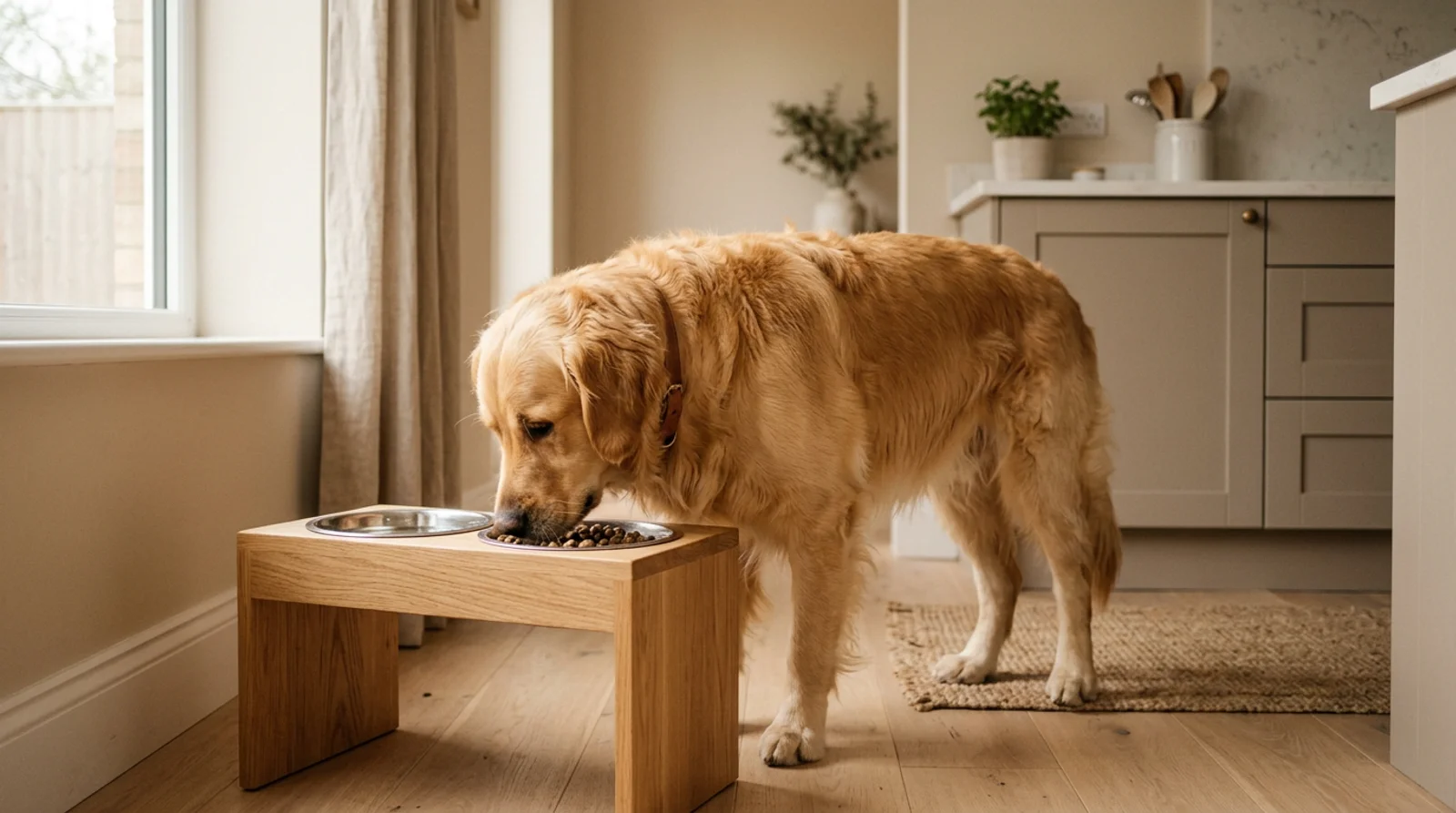
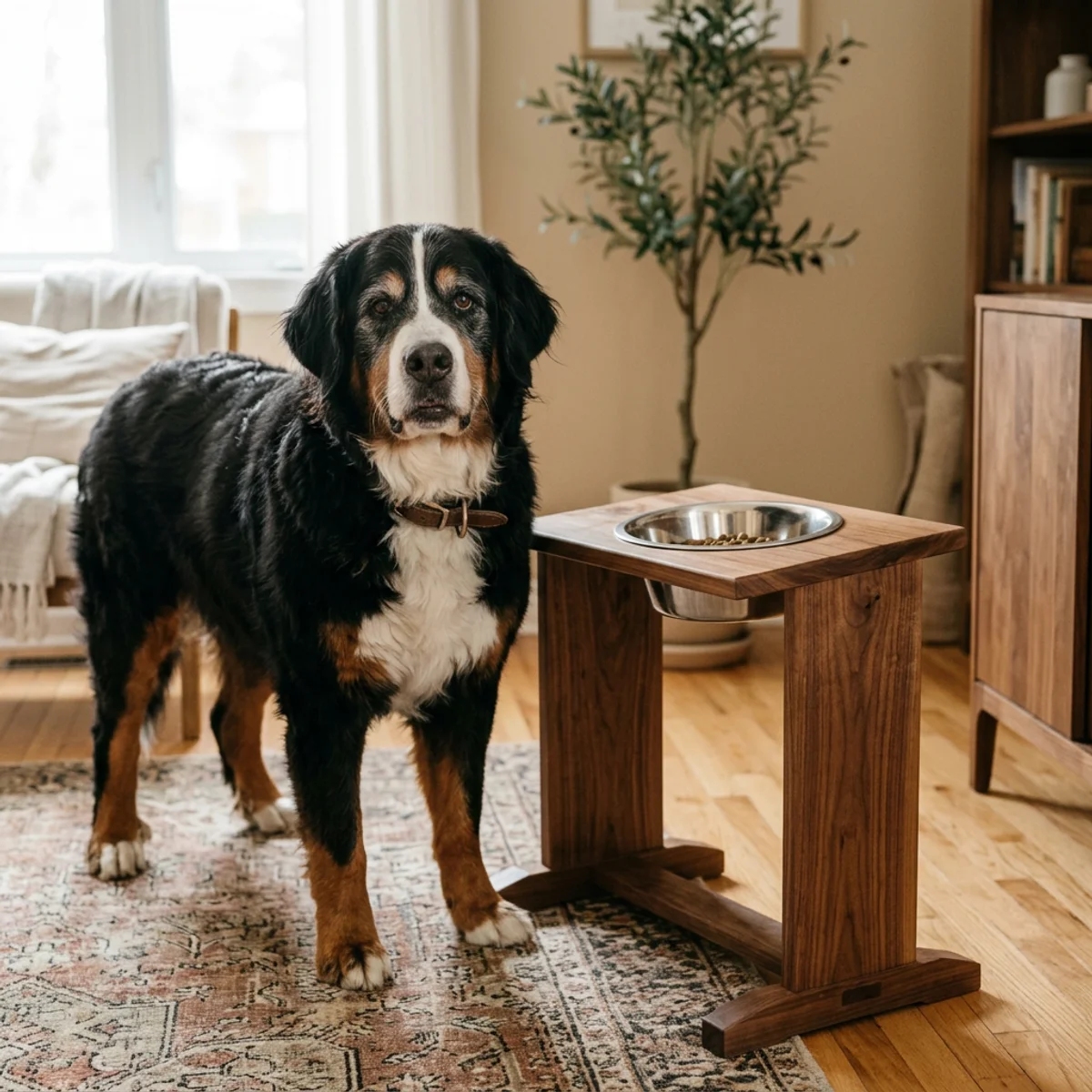
Our 12-year-old Bernese Mountain Dog used to pause before every meal, visibly bracing himself before lowering his greying muzzle to the floor. That hesitation told us everything. Elevated dog bowls make mealtimes more comfortable for large breeds, deep-chested dogs, and seniors with arthritis—but only if you get the height right. The wrong measurement is just as awkward as a floor bowl, and plenty of dogs don't need elevation at all. Here's what actually matters.
Before using an elevated feeder for any dog with a medical condition—including arthritis, hip dysplasia, megaoesophagus, or breeds prone to bloat—consult your veterinarian to ensure it's appropriate for your dog's specific situation.
Why Use Raised Dog Feeders?
The case for elevation is simple: a 35-kg Labrador shouldn't crane his neck to the floor multiple times a day. Many owners and veterinarians believe this repeated bending may contribute to neck and shoulder strain over time, particularly in dogs already dealing with joint issues, though research on this is limited.
Large and giant breeds eat more comfortably. A Newfoundland or Mastiff maintains a neutral spine when the bowl sits at elbow or mid-chest height, instead of hunching and bowing. Over a decade, that posture shift adds up.
Senior dogs with arthritis or hip dysplasia get real relief. We've watched stiff 10-year-olds finish meals without the hesitation they showed at floor level—no squatting, no visible discomfort. If your dog already sees a veterinarian for joint issues, ask whether a raised feeder might help.
Post-surgery recovery is easier. Veterinarians often recommend minimizing bending after spinal, hip, or shoulder procedures. A raised bowl is the simplest way to comply during those critical weeks.
Less mess, sometimes slower eating. Elevated feeders contain spills better than floor bowls. Some dogs—not all—seem to gulp less when they're not crouched low, though this varies wildly by individual.
What About Bloat?
For years, raised feeders were blamed for increasing gastric dilatation-volvulus (bloat) in deep-chested breeds like Great Danes, Weimaraners, and Boxers. A 2000 Purdue University study found elevated feeders were associated with increased bloat risk in large and giant breeds, though the reasons weren't fully clear. More recent research has been mixed, and many veterinarians now focus on eating speed, stress, exercise timing, and genetics as primary risk factors. The relationship between feeder height and bloat remains debated. If your dog belongs to a high-risk breed for bloat, discuss feeding practices—including feeder height—with your veterinarian before making changes.
That said, if your dog gulps or belongs to a high-risk breed, slow-feeder inserts and calm mealtimes matter more than feeder height. When in doubt, ask your veterinarian—especially if bloat runs in your dog's line.
How to Choose the Right Dog Feeding Height
Height is the single most important variable. Too high is as awkward as too low, and most people guess wrong.
Measure your dog standing squarely on all four legs. Measure from the floor to the top of the shoulder blade (withers) or to the bottom of the chest. The bowl rim should sit somewhere between your dog's lower chest and the top of the shoulder—roughly elbow height or slightly higher.
Size-specific starting points:
- Small dogs (under 10 kg): 5–10 cm. Many don't need elevation unless elderly or dealing with neck issues.
- Medium dogs (10–25 kg): 10–20 cm.
- Large dogs (25–40 kg): 20–30 cm.
- Giant breeds (over 40 kg): 30–40 cm or more. A Great Dane may need 45 cm.
Your dog should eat and drink with the head level or very slightly lowered—never reaching up or bending sharply down. The neck and spine should form a relaxed line from nose to tail.
Adjustable vs. fixed. If you have a growing puppy or multiple dogs of different sizes, adjustable feeders justify their extra cost. Fixed-height stands are sturdier and better-looking, but you're locked into that measurement.
Materials and Design: What Works in Real Homes
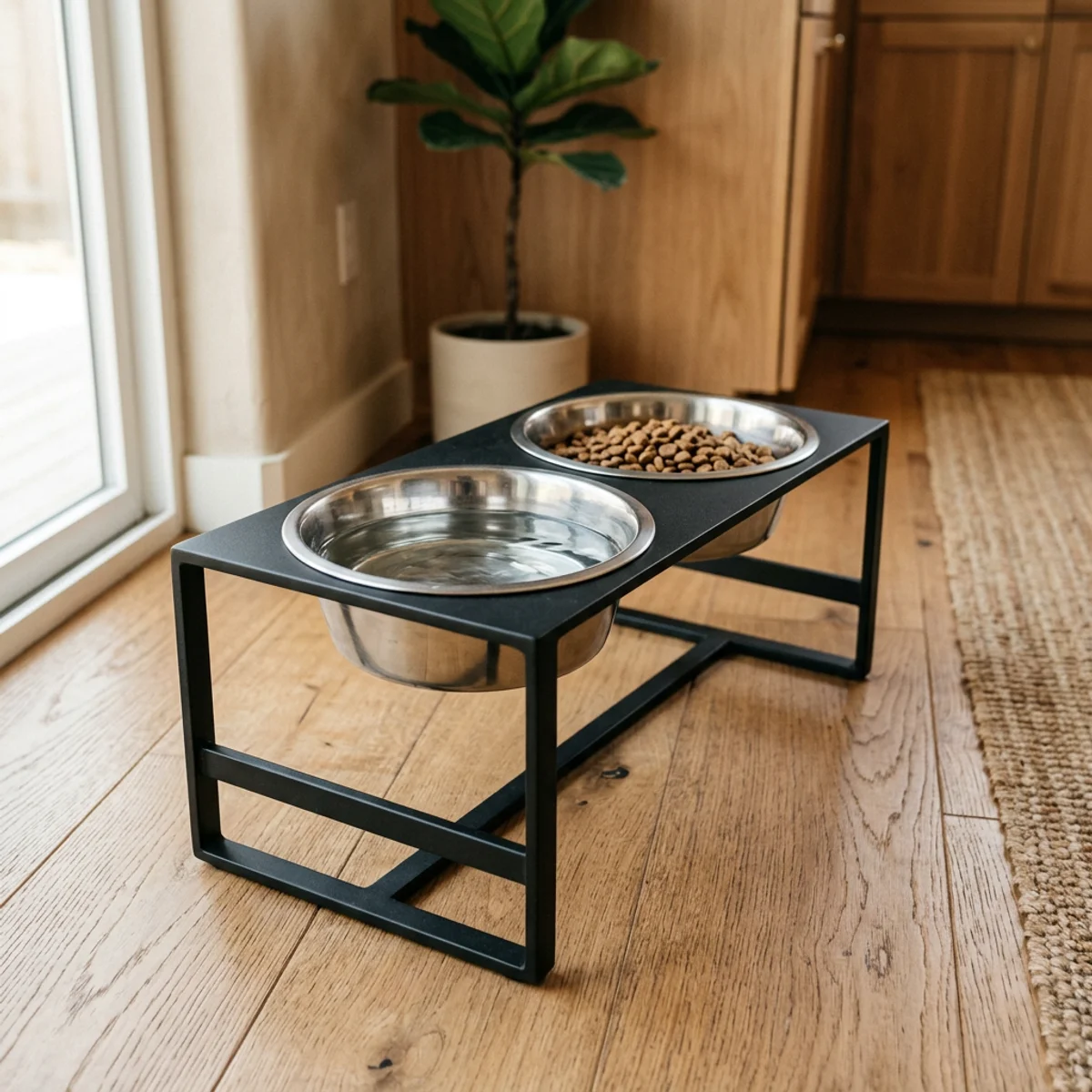
Elevated feeders come in wood, metal, ceramic, and plastic. We're picky—not just for durability, but because these live in your kitchen or mudroom and nobody wants an eyesore.
Wood
Hardwood or bamboo stands are warm, handsome, and heavy enough not to slide. They fit beautifully in design-forward homes. Look for sealed or finished wood that can handle splashes. Cheap plywood or MDF warps and stains quickly.
Pros: Gorgeous, stable, blends with furniture.
Cons: Needs occasional wiping and re-sealing if the finish wears.
Metal (Stainless Steel or Powder-Coated Iron)
Stainless steel is our go-to. It doesn't harbour bacteria, cleans instantly, and looks crisp. Wrought iron or powder-coated stands can be elegant but may chip or rust, especially in humid climates.
Pros: Easy to sanitize, sturdy, long-lasting.
Cons: Can look industrial if the design isn't refined.
Ceramic
Some feeders integrate ceramic or stoneware bowls into a low pedestal. Heavy, stable, and often beautiful—but fragile. We've seen too many shatter when a boisterous dog or toddler bumps the stand.
Pros: Elegant, weighty, easy to clean.
Cons: Breakable, limited height options.
Acrylic and Plastic
Lucite or clear acrylic stands are trendy and nearly invisible. Cheaper plastic feeders are lightweight and affordable but slide around, scratch easily, and rarely age well. We don't stock them.
Bowl material matters, too. Stainless steel bowls are dishwasher-safe, non-porous, and won't leach chemicals. Ceramic is fine if it's lead-free and intact. Avoid plastic bowls long-term—they scratch, hold odours, and can trigger feline acne (yes, some people use raised feeders for cats, too).
Best Elevated Dog Bowls: Features We Look For
We curate elevated feeders the same way we choose any Studio Bleuet product: it has to work flawlessly and look at home in a thoughtfully designed space.
Stability. The stand must not tip when a 30-kg dog shoves his nose into the bowl. Wide bases, rubber feet, and solid construction are non-negotiable.
Removable, dishwasher-safe bowls. Bowls should lift out easily. Built-in bowls that don't come out are a hygiene nightmare.
Capacity suited to your dog. A Chihuahua needs a 250 mL bowl; a Newfoundland may need 2 litres or more. Make sure the feeder accommodates the right size—or comes with appropriate bowls.
Design that doesn't scream "dog product". We love feeders that look like furniture. Minimalist stands in natural wood, matte black steel, or Scandi-style light oak fit beautifully in open-concept kitchens. If it's good enough to photograph for a design blog, it belongs in your home.
Adjustability for growing puppies or multi-dog homes. If you're raising a Bernese or Shepherd puppy, an adjustable feeder will serve you from six months to adulthood. Just be sure the adjustment mechanism is secure—wobbly pins or flimsy clamps are a dealbreaker.
Do All Dogs Need an Elevated Feeder?
No. Small, healthy dogs under 10 kg rarely need elevation unless they're elderly or have specific neck or spinal issues. Medium-sized dogs in their prime may be perfectly comfortable at floor level. Short-nosed breeds (Pugs, French Bulldogs) may find slight elevation more comfortable, though evidence that it significantly improves airflow during eating is limited. If your brachycephalic dog has breathing difficulties, consult your veterinarian about feeding practices.
We recommend elevated feeders most enthusiastically for:
- Large and giant breeds (25 kg and up)
- Senior dogs with arthritis, hip dysplasia, or neck pain
- Dogs recovering from orthopaedic surgery
- Any dog whose owner notices hesitation, discomfort, or slow eating at floor level
If your dog is young, small, and bouncy, save your money. A floor bowl is fine. You can always add elevation later if mobility changes.
Setting Up Your Elevated Feeding Station
Once you've chosen a feeder, placement matters. We tuck ours into a mudroom corner or alongside the kitchen island—somewhere out of the main traffic flow but still convenient.
Use a mat underneath. Even elevated feeders drip. A washable silicone or cotton mat catches spills and protects floors. Our team swears by low-profile silicone mats that don't curl at the edges.
Keep water and food separate if your dog is messy. Some dogs dunk kibble in water or slosh enthusiastically. Two smaller feeders a few inches apart contain the chaos better than one double-bowl stand.
Pair with slow-feeder inserts if needed. If your dog inhales meals in seconds, a raised feeder won't fix that. Drop a silicone slow-feeder insert into the bowl to encourage more deliberate eating—especially useful for dogs prone to regurgitation or digestive upset.
For more ideas on creating a functional, beautiful feeding area, see our guide to feeding stations for cats and dogs.
Cleaning and Maintenance
Elevated feeders are easier to keep clean than floor bowls, but they still need regular attention.
Daily: Remove bowls after each meal, rinse or wash them, and wipe down the stand where food or water has splashed.
Weekly: Wash bowls in hot, soapy water or run stainless steel bowls through the dishwasher. Wipe the feeder frame with a damp cloth and pet-safe cleaner.
Monthly: Check for loose screws, wobbly legs, or cracks (especially in wood or ceramic). Tighten hardware and reseal wood if the finish is wearing.
Stainless steel bowls are easiest to sanitize. If you use ceramic, inspect for chips or cracks—bacteria hide in damaged glaze.
FAQ
Do elevated dog bowls really help with digestion?
Elevated feeders improve posture during eating, which can make swallowing more comfortable and reduce strain on the oesophagus in some dogs. There's no strong evidence they prevent or treat specific digestive disorders, but many owners of large breeds and seniors report less regurgitation and more relaxed mealtimes. If your dog has megaoesophagus or another diagnosed condition, follow your veterinarian's specific feeding recommendations—sometimes extreme elevation (nearly vertical) is prescribed.
Can puppies use elevated feeders?
Yes, but choose an adjustable model or plan to replace it as your puppy grows. A four-month-old Retriever and a two-year-old Retriever need very different heights. Measure every few months and adjust accordingly. For young, healthy puppies, floor feeding is perfectly fine—elevation becomes more valuable as they reach full size or enter their senior years.
Are elevated feeders safe for dogs prone to bloat?
Current veterinary understanding suggests feeder height is not a primary bloat risk factor. Eating too quickly, stress, large single meals, and exercise immediately after eating are bigger concerns. If your dog belongs to a high-risk breed (Great Dane, Weimaraner, Standard Poodle, Boxer), focus on slow feeding, calm mealtimes, and splitting daily food into two or three smaller meals. A properly sized elevated feeder is unlikely to increase risk and may improve comfort. Always discuss bloat prevention with your veterinarian.
What's the best height for a Labrador Retriever?
For an average adult Labrador (25–35 kg, roughly 55–60 cm tall at the shoulder), aim for 20–25 cm feeder height. Measure your individual dog and adjust—some Labs are taller or shorter than average. The bowl rim should sit near elbow height, allowing your dog to eat with a level or slightly lowered head and a straight neck.
Final Thoughts
Elevated dog bowls aren't a must-have for every dog, but for the right dogs—big, aging, or managing joint pain—they're a tangible comfort upgrade. Height, stability, and materials matter far more than brand or price. Measure carefully, choose something that fits your home as well as your dog, and don't overthink it. If your 10-year-old Shepherd finishes dinner without that telltale groan, you've made the right call.
Browse our curated collection of elevated feeders designed to work beautifully in real Canadian homes—and if you need help choosing the right height or style for your dog, reach out. We're always happy to talk through the details.