Feeding Stations for Cats and Dogs: Setup, Height, and Hygiene
Feeding Stations for Cats and Dogs: Setup, Height, and Hygiene
Our senior tabby, thirteen years old with a creaky neck, used to crouch awkwardly over his floor-level bowl every morning. After raising his dishes just ten centimetres, he ate more slowly and stopped vomiting undigested kibble an hour later. That small change taught us how much bowl height, placement, and thoughtful setup actually matter when you're designing a pet feeding station.
A well-planned feeding area isn't about aesthetics alone—though a tidy corner certainly helps. It's about digestion, posture, cleanliness, and peace in multi-pet households. Whether you share your home with a food-guarding terrier, a senior Labrador with arthritis, or three cats who prefer their own space, the right setup makes daily life easier for everyone.
Elevated Dog Bowls: When Height Matters (and When It Doesn't)
Raised feeders spark fierce debate. Some owners swear by them; others worry about bloat risk in deep-chested breeds. Here's what we've learned from veterinary research and our own pack.
Before making changes to your dog's feeding setup, especially for breeds prone to bloat or dogs with health conditions, consult your veterinarian to ensure the setup is safe for your individual pet.
For large and giant breeds—Great Danes, Mastiffs, German Shepherds—elevation may increase the risk of gastric dilatation-volvulus (bloat), especially when dogs gulp their meals. Consult your veterinarian before choosing elevated bowls for large, deep-chested breeds, as bloat is a life-threatening emergency and individual risk factors vary. Current veterinary consensus advises floor-level bowls for these dogs unless a vet recommends otherwise for a specific orthopedic issue.
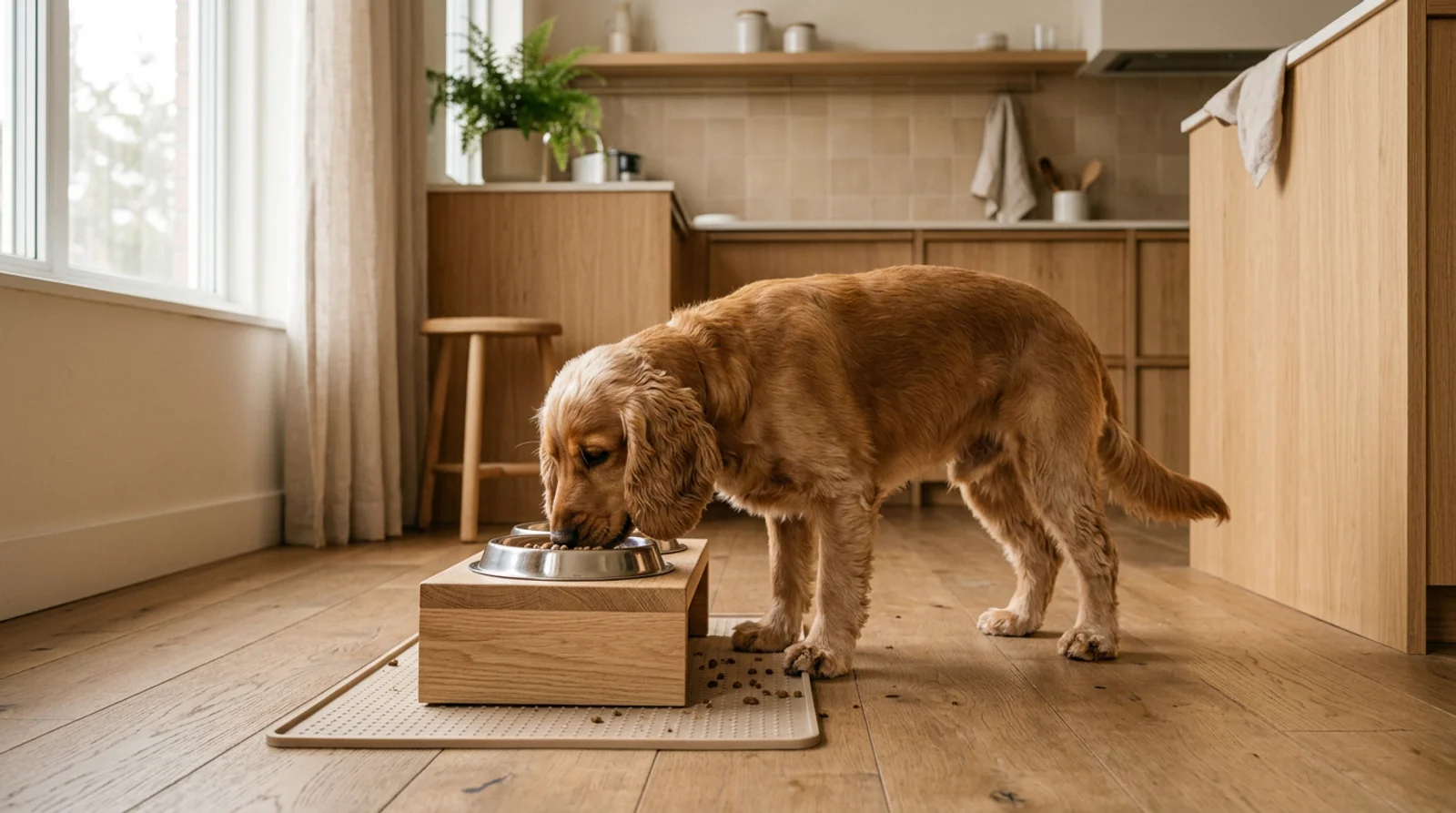
For medium and small dogs, and especially seniors with arthritis or neck pain, a modest lift (roughly to elbow or lower-chest height) reduces strain. Our team's twelve-year-old Cocker Spaniel uses a 10 cm platform, and it visibly eases the effort of eating. Measure from the floor to your dog's shoulder; the bowl rim should sit just below that point when the dog stands comfortably.
For flat-faced breeds—Pugs, French Bulldogs, Bulldogs—a slight elevation (5–8 cm) can make breathing easier while eating, though the evidence is anecdotal. Consult your veterinarian about the best feeding setup for brachycephalic breeds, as their breathing difficulties may require individualized management. Watch your dog. If they seem more relaxed, keep it. If they strain or gulp faster, return to floor level.
Choosing the Right Material and Design
Ceramic and stainless steel are our top picks. Ceramic is heavy—cats and small dogs can't shove it across the floor—and most designs are dishwasher-safe. Stainless steel is nearly indestructible, doesn't harbour bacteria in scratches the way plastic does, and works in any decor.
Avoid plastic bowls for daily use. They scratch easily, trap odour, and some dogs develop contact dermatitis or chin acne, which may improve with material changes, though persistent cases should be evaluated by a veterinarian.
Look for bowls with a wide, shallow shape for flat-faced pets, and a rubberized base or silicone mat underneath to prevent sliding and protect your floors.
Cat Feeding Station: Space, Separation, and Stress Reduction
Cats are not small dogs. They're ambush predators who prefer to eat alone, in quiet, with an escape route visible. A cat feeding station that works acknowledges these instincts.
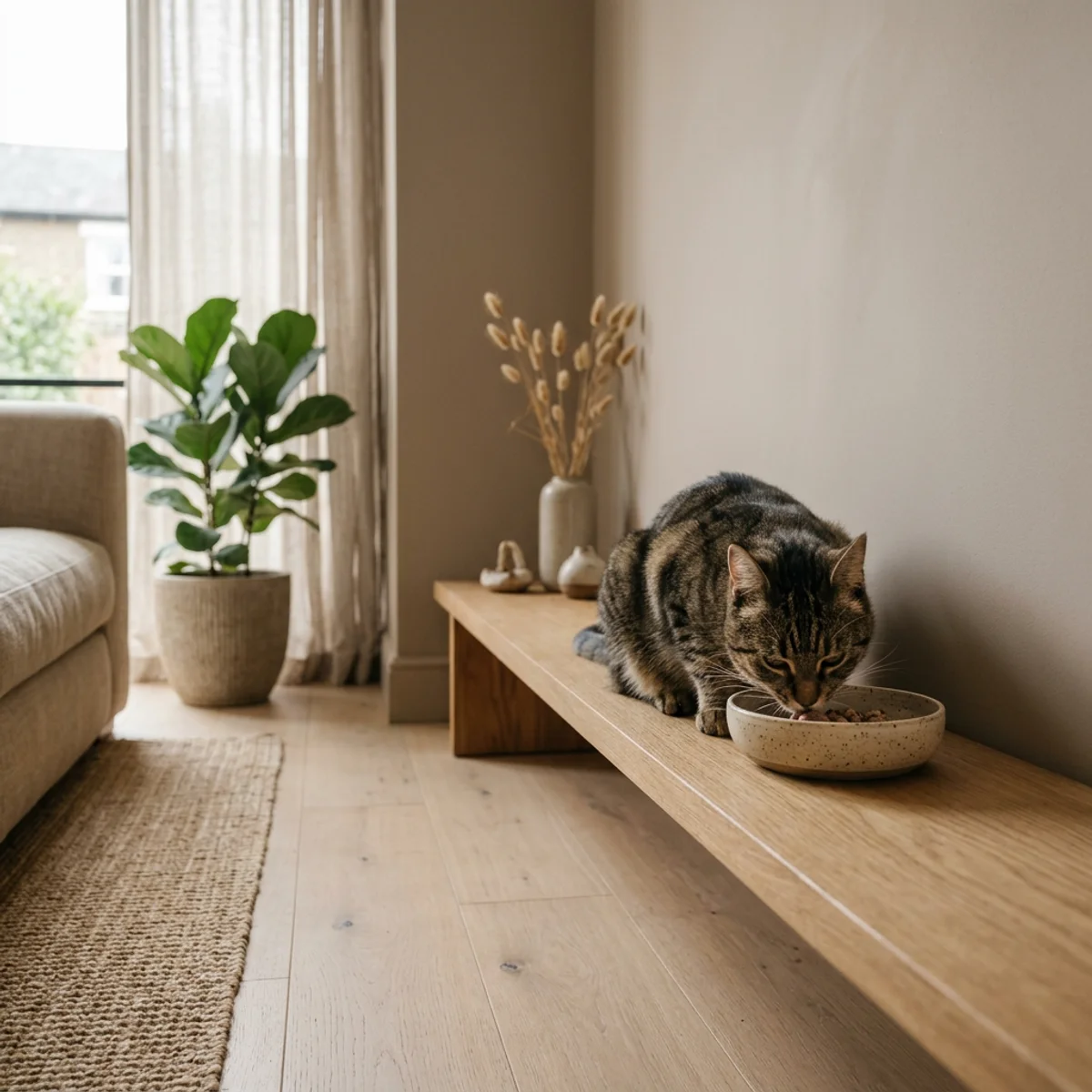
Location matters more than you think. Tuck bowls away from litter boxes (would you want to eat next to a toilet?), away from noisy appliances, and ideally in a corner or along a wall where your cat can see the room. We've had success placing dishes on a low shelf or a dedicated cat-height console table—it keeps them off the floor, away from the dog's nose, and gives the cat a sense of control.
In multi-cat homes, separate feeding zones prevent resource guarding and stress eating. Our household has three cats; each has their own bowl in a different room. The youngest eats in the kitchen, the senior in the bedroom, and our anxious rescue in a quiet hallway. Mealtime anxiety vanished within a week.
Cats also appreciate routine. Feed at the same times, in the same spots. If you free-feed dry kibble, consider puzzle feeders or foraging toys to slow consumption and add enrichment—more on that in our guide to indoor cat enrichment ideas.
Elevated Bowls for Cats: Helpful or Hype?
While the bloat concern doesn't apply to cats, a modest lift (5–10 cm) can ease neck strain in older cats or those with arthritis. Our thirteen-year-old's raised feeder visibly improved his comfort. But most healthy adult cats do fine at floor level. Don't feel pressured to buy a fancy stand unless you notice your cat crouching uncomfortably or vomiting shortly after meals.
Shallow, wide dishes are essential. Whisker fatigue—the overstimulation caused when sensitive whiskers touch bowl sides repeatedly—can make cats reluctant to eat. Use a dish at least 12 cm wide and no more than 3 cm deep.
Slow Feeder Bowls: When Speed Becomes a Problem
Some dogs inhale their meals in under thirty seconds. Our team's young Labrador once ate a full cup of kibble in twelve seconds flat—then vomited it onto the rug five minutes later. Enter the slow feeder bowl.
These bowls feature ridges, mazes, or raised nubs that force your dog to work around obstacles, turning a frantic gulp into a five- to ten-minute activity. The benefits are real: reduced bloat risk, better digestion, less vomiting, and mental stimulation.
We've tested dozens. The best slow feeders have rounded, smooth obstacles (no sharp edges to scrape gums), a stable base, and a design complex enough to challenge your dog without causing frustration. For large gulpers, look for deep grooves and tall dividers. For small breeds or seniors, choose gentler mazes with shallower ridges.
Slow feeders work for some cats, too, particularly those who scarf wet food and immediately throw it back up. Look for designs made specifically for cats—dog versions are often too deep.
One caveat: if your dog becomes anxious or aggressive around the bowl, slow feeders may worsen resource guarding. In those cases, hand-feeding or puzzle toys in a calm, private space work better. For more on easing mealtime stress, see our article on calming dog anxiety naturally.
Pet Food Storage: Freshness, Safety, and Pest Prevention
Kibble left open goes stale, loses nutrients, and attracts pantry moths and rodents. Wet food left out spoils. Proper pet food storage isn't glamorous, but it protects your pet's health and your wallet.
Dry Food Storage
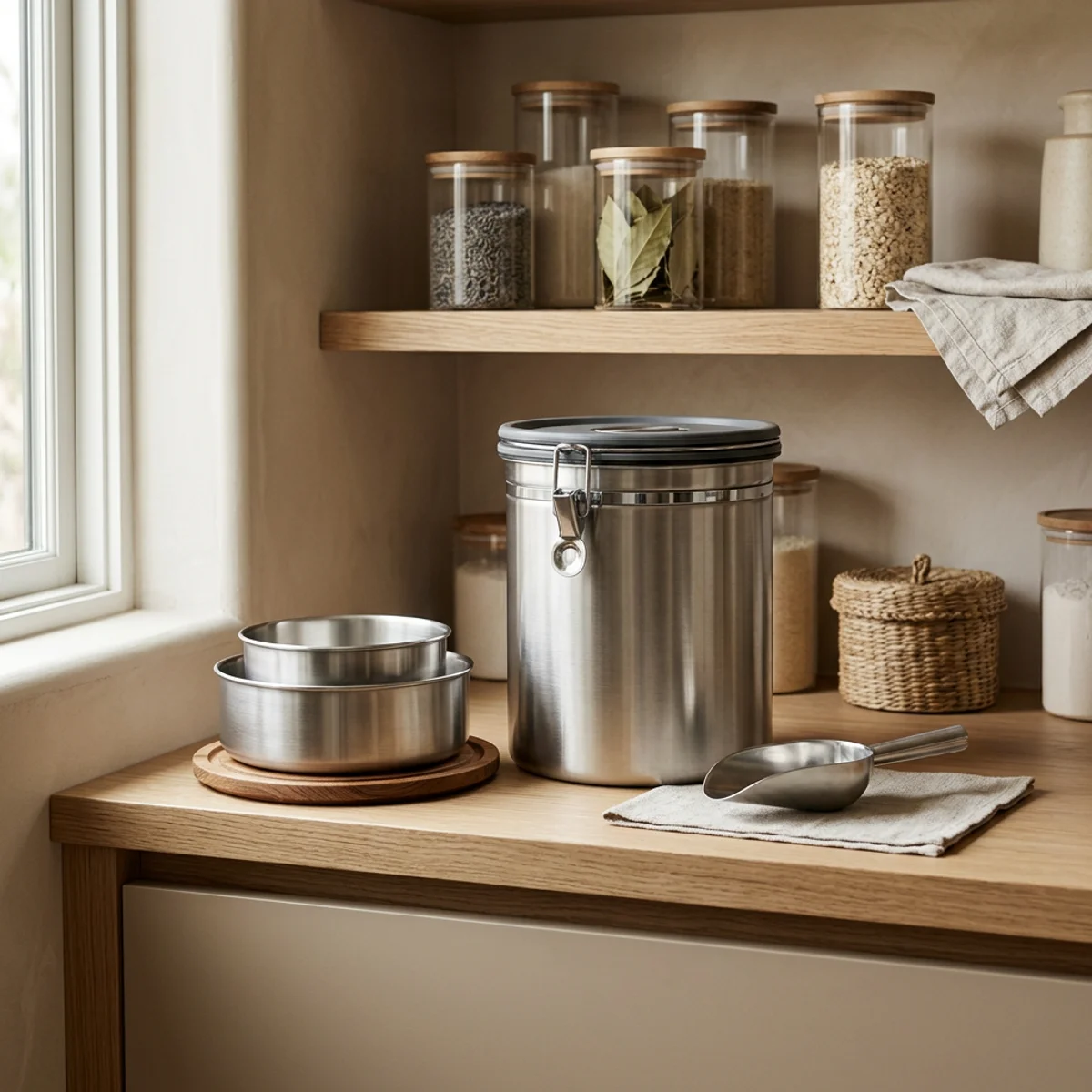
Store dry kibble in an airtight container, ideally with a gasket seal, in a cool, dry place. Keep the food in its original bag inside the container—the bag is designed to preserve freshness, and keeping it intact means you always have the batch code and expiry date if a recall happens.
We prefer BPA-free plastic or food-grade stainless steel containers. Glass works, but it's heavy and breaks. Avoid bins that sit in direct sunlight or near heat sources; warmth accelerates fat oxidation and destroys vitamins.
Buy only what your pet will finish in four to six weeks. That 15 kg bag might seem economical, but kibble loses flavour and nutrition once opened.
Wet Food and Toppers
Refrigerate opened cans or pouches immediately, covered tightly, and use within two to three days. Discard any refrigerated pet food that shows signs of spoilage. Follow safe food handling practices, as pet food can harbor bacteria like Salmonella and E. coli that can affect both pets and people. Let refrigerated food sit at room temperature for ten minutes before serving—most cats and dogs prefer it slightly warm, and cold food can upset sensitive stomachs.
Freeze single-serving portions of wet food in silicone molds or ice-cube trays if you won't use a full can quickly. Thaw overnight in the fridge.
Hygiene: Cleaning Bowls, Mats, and Storage Bins
Bacteria love pet bowls. Saliva, wet food residue, and kibble dust create a biofilm that's invisible but thriving. We wash our dogs' and cats' bowls after every meal—yes, every single one—in hot, soapy water or the dishwasher.
Stainless steel and ceramic bowls are dishwasher-safe; run them on the hot cycle. If hand-washing, scrub with a dedicated brush (not the same sponge you use for your dishes), rinse thoroughly, and air-dry upside down.
Silicone feeding mats collect crumbs, spills, and drool. Shake them outdoors daily and wash weekly with dish soap or toss them in the dishwasher. Replace mats if they develop cracks or permanent staining—those crevices harbour bacteria.
Storage containers need monthly cleaning. Empty the bin, wipe the interior with a vinegar-water solution (1:3 ratio), rinse, and dry completely before refilling. This prevents rancid oil buildup and keeps kibble fresh-smelling.
Water bowls are the worst offenders. That slimy film you feel after a day or two is bacterial biofilm. Rinse and refill water at least once daily, and scrub the bowl every day or two. Our cats drink more water since we started this routine, which is critical for kidney health.
Setting Up Feeding Zones in Multi-Pet Homes
Resource competition stresses pets and can trigger aggression. Separate feeding stations—physically distinct spaces where each animal eats without seeing or being approached by another—solve most mealtime conflicts.
In our home, the dog eats in the kitchen behind a baby gate, one cat eats on a console table in the hallway, another in the bedroom, and the third in the laundry room. Meals happen simultaneously, but everyone has privacy.
If space is tight, try vertical separation: feed cats on counters, shelves, or cat trees while dogs eat at floor level. Timing also works—feed the dog first in a closed room, then release the cats once the dog is finished.
Never leave food down all day in a multi-pet home unless every animal is calm and non-competitive. Scheduled meals (two to three times daily for most adult pets) give you control and reduce anxiety.
FAQ
Do elevated bowls really prevent bloat in dogs?
No—and they may actually increase bloat risk in large, deep-chested breeds like Great Danes and German Shepherds. The research is mixed, but current veterinary consensus leans toward floor-level bowls for breeds prone to gastric dilatation-volvulus unless a vet recommends elevation for arthritis or megaesophagus.
How high should a dog's food bowl be?
For small and medium dogs, roughly elbow height when standing. For large breeds without orthopedic issues, floor level is often safest. Measure your dog's shoulder height and aim for the bowl rim to sit just below that point, so the neck is neutral—not craning down or reaching up.
Can I use a slow feeder bowl for my cat?
Yes, especially if your cat vomits undigested food shortly after eating. Choose a cat-specific design with shallow ridges and a wide diameter to avoid whisker fatigue. Not all cats tolerate them—introduce the bowl gradually and watch for frustration or refusal to eat.
How often should I wash my pet's food and water bowls?
Food bowls: after every meal. Water bowls: rinse and refill daily, scrub every one to two days. Biofilm (that slimy coating) forms quickly and harbours bacteria, yeast, and mould. If you use a dishwasher, run bowls on the hot cycle daily.
Creating a Feeding Station That Works
A thoughtful feeding setup doesn't require expensive gear or a design degree. It requires observation—watch how your dog or cat eats, note any discomfort or stress, and adjust one variable at a time. Raise the bowl a few centimetres and see if your senior cat's posture improves. Move your anxious cat's dish to a quieter room and check if they finish their meal. Swap a plastic bowl for stainless steel and see if that chin acne clears up.
We've seen these small changes—bowl height, material, location, and routine—transform mealtime from a source of stress or mess into a calm, nourishing part of the day. Your pets will thank you, and your floors will, too.
Browse our curated selection of feeding essentials at Studio Bleuet—from elevated stands and slow feeders to airtight storage and easy-clean mats designed for real life with dogs and cats.