Complete Dog Paw Care Guide: How to Keep Your Dog's Paws Healthy
Complete Dog Paw Care Guide: How to Keep Your Dog's Paws Healthy
Last February, our team member Sarah noticed her Border Collie limping after their usual morning walk. The culprit? A tiny ice ball wedged between his pads that had been there since they left the house. We obsess over coats, boots, and gear, but dog paw care — the actual daily maintenance — often gets overlooked until something goes wrong. Your dog's paws are their primary contact with the world, handling everything from scorching summer pavement to salt-crusted winter sidewalks. A solid paw care routine isn't complicated, but it does need to happen consistently.
Here's everything we've learned from years of living with dogs through every Canadian season: daily inspection, proper cleaning, nail and fur trimming, and how to protect paws when temperatures swing 40 degrees between January and July.
Why Dog Paw Health Matters Year-Round
Paw pads are tougher than human skin, but they're not indestructible. We've seen everything from cracked pads in January to chemical burns from lawn treatments in July. The tissue is specialized — thick enough to handle rough terrain, but still vulnerable to extreme temperatures, sharp objects, and caustic substances.
Healthy pads should feel slightly rough and pliable, like a new pencil eraser. If you notice significant changes in pad texture, hardness, or condition that don't improve with basic care, consult your veterinarian. The skin between the toes should be smooth, not red or inflamed. Nails should just clear the ground when your dog stands on a flat surface. When any of these things are off, your dog's gait changes, and that puts stress on joints and ligaments up the entire leg.
Canadian weather makes this especially important. Our 40-degree temperature swings between seasons mean your dog's paws face wildly different challenges depending on the month.
How to Inspect Your Dog's Paws Daily
We do a quick paw check after every walk and a more thorough inspection once a week. It takes thirty seconds and has caught problems early more times than we can count.
The quick post-walk check:
- Wipe each paw with a damp cloth and glance at the pads for cuts, embedded debris, or raw spots
- Feel between the toes for ice balls (winter), burrs, or foxtails (summer)
- Sniff — infected or yeasty paws have a distinct corn-chip or musty smell
The weekly deep inspection:
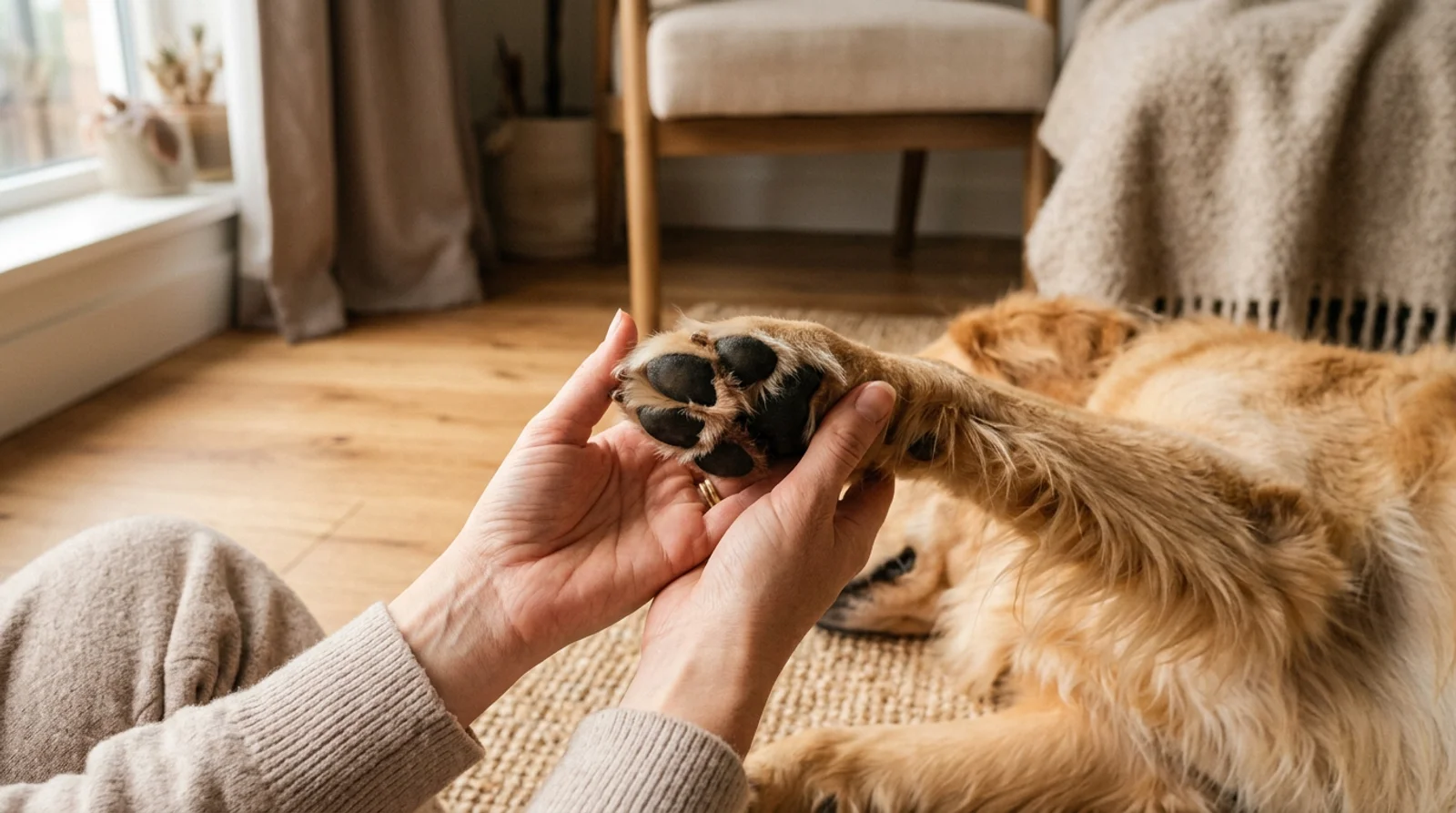
- Have your dog lie on their side in good light
- Gently spread each toe and examine the webbing for redness, swelling, or discharge
- Check each pad for cracks, peeling, or foreign objects
- Look at nail length and the quick (the pink part inside the nail)
- Run your thumb over the pad surface — any rough, hardened areas or soft spots?
Our Cattle Dog mix hates having her feet touched, so we pair paw checks with high-value treats. It took two weeks, but now she offers her paws voluntarily. Start this when dogs are puppies if you can, but it's never too late to build the habit.
How to Clean Dog Paws (Without Making It a Wrestling Match)
City dogs track in everything: salt, de-icer, oil, pesticides, bacteria from other dogs' urine. Even suburban and rural dogs pick up mud, manure, and plant material. Cleaning isn't about aesthetics — it's about preventing ingestion (dogs lick their paws) and irritation.
Our Daily Cleaning Routine
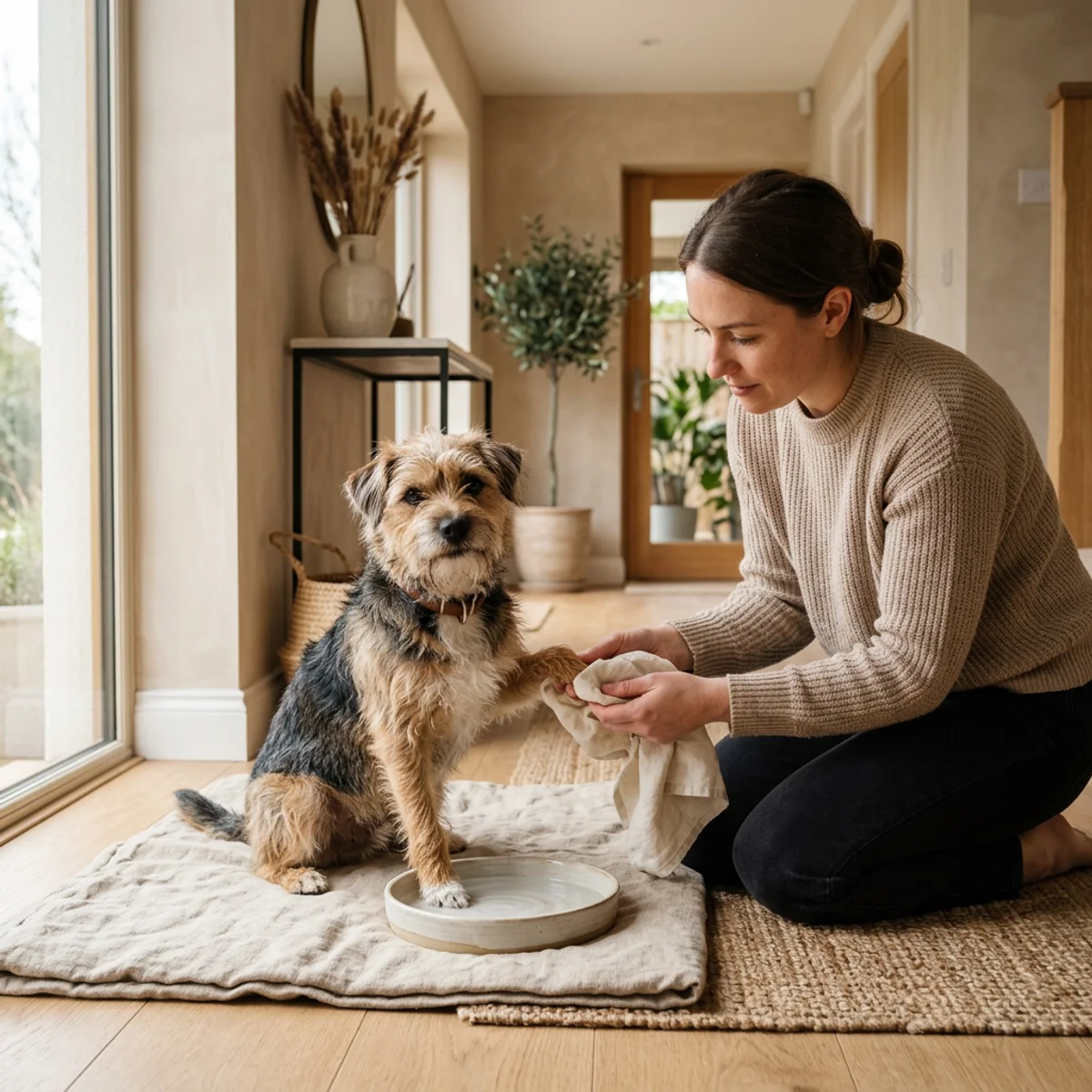
We keep a shallow tray, a stack of old cotton towels, and a bottle of lukewarm water by the door. When the dog comes in:
- Dip each paw in the water tray for 3–5 seconds, swishing gently
- Pat dry with the towel, making sure to get between the toes
- Check for residue — if you see salt crystals or mud, rinse again
In winter, we sometimes add a teaspoon of dog-safe paw wash to the water if we've walked through heavy de-icer. Never use human soap; it strips the natural oils dogs need for pad protection.
When to Do a Deeper Clean
After hikes, beach days, or walks through chemically treated areas, we use a damp cloth with a small amount of veterinary paw cleanser and really get into the spaces between the toes. Then we dry thoroughly — moisture trapped between pads invites yeast and bacteria. If your dog shows signs of distress, excessive drooling, vomiting, or other symptoms after exposure to lawn chemicals or de-icers, contact your veterinarian or pet poison control immediately.
One thing we don't do: wash paws in the bathtub unless absolutely necessary. It's awkward, your dog associates the tub with full baths, and it's overkill for daily maintenance.
Dog Paw Maintenance: Trimming Nails and Fur
Nail trimming is the part of paw care most people dread. We get it. Our first attempt with a Shepherd puppy ten years ago ended with blood, yelping, and a dog who hid under the bed for an hour. But overgrown nails force dogs to walk on the backs of their paws, changing their entire skeletal alignment.
How Often to Trim
Most dogs need nails trimmed every 3–4 weeks. You'll know it's time when you hear clicking on hardwood floors. Dogs who walk on pavement daily may go longer; our Husky mix barely needs trims because city sidewalks file her nails naturally.
Our Trimming Method
We use a scissor-style trimmer for small dogs and a guillotine style for large breeds — it's personal preference, but guillotine trimmers give us more control with a 30-kg Labrador.
- Trim in good light so you can see the quick (the pink living tissue inside the nail)
- Cut small amounts at an angle, following the natural curve
- Stop before the quick — in white nails you can see it; in black nails, stop when you see a grey or pink oval in the center of the cut surface
- File the edges with a nail file or grinding tool to prevent snagging
If you do hit the quick — and we all have — stay calm, apply styptic powder or cornstarch, and apply pressure for a minute. The bleeding typically stops quickly, but if bleeding continues for more than 5-10 minutes or if you notice signs of infection in the following days, contact your veterinarian.
If nail trimming genuinely stresses you or your dog, there's no shame in having a groomer or vet tech do it. It costs $15–25 and preserves your relationship with your dog. Our complete guide to grooming at home covers more on when to DIY and when to outsource.
Trimming Paw Fur
Long-haired breeds — Goldens, Shelties, Cockers, Bernese — grow tufts of fur between their pads that mat, collect ice balls, and reduce traction. We trim this fur every 4–6 weeks with blunt-tip scissors, carefully lifting the foot and cutting anything level with or extending past the pad.
Be conservative. It's easier to trim again than to fix a cut from slipping scissors.
How to Protect Dog Paws in Extreme Weather
Canadian dogs face temperatures from -30°C to +30°C. Both extremes damage paw pads if you're not prepared.
Winter Paw Protection
Salt and chemical de-icers are the biggest winter threats. They burn, crack pads, and are toxic when licked. Ice itself cuts like glass, and frozen ground is abrasive.
Our winter protocol:
- Apply paw balm before walks — we use a beeswax-based formula that creates a barrier against salt and cold
- Rinse paws immediately after every walk to remove all salt and de-icer
- Consider boots for long walks — our older Lab wears them on walks over 20 minutes when it's below -15°C
- Check for ice balls between toes after every outing; they're painful and can cause frostbite
Some dogs tolerate boots, others fight them like their life depends on it. If boots are a non-starter, stick with balm and thorough post-walk rinsing. We wrote an entire guide to winter care for Canadian dogs that covers boots, coats, and cold-weather safety in depth.
Summer Paw Protection
When air temperatures reach 25-30°C, asphalt can heat to 50-60°C or higher, which can burn paw pads. Always test pavement temperature with the back of your hand for seven seconds before walking your dog. If it's too hot for your hand, it's too hot for paws.
Our summer strategy:
- Walk early morning or after sunset when pavement has cooled
- Stick to grass or shaded routes during midday
- Moisturize pads weekly — sun and heat dry them out, leading to cracks
- Rinse after walks on treated lawns — herbicides and pesticides irritate paws and are toxic when ingested
We've also seen pad burns from hot sand at the beach and even from metal surfaces like dock gangways. Always check the surface temperature first.
Building Paw Toughness
Pads do adapt to the surfaces your dog walks on regularly. A dog who goes from zero pavement walks to a 10-km urban hike will end up with sore, possibly blistered paws. Build gradually. Start with short walks on varied terrain and increase distance over 3–4 weeks.
That said, no amount of conditioning makes paws immune to extreme heat, cold, or caustic chemicals. Protection still matters.
Recognizing Signs of Paw Problems
Some paw issues announce themselves — limping, bleeding, obvious swelling. Others are subtle. Here's what sends us to the vet:
- Persistent licking or chewing at one or more paws (sign of pain, allergies, or infection)
- Redness or swelling between the toes or on pads
- Foul odor (usually yeast or bacterial infection)
- Limping or favoring a paw for more than a few hours
- Cracked, peeling, or discolored pads that don't improve with moisturizing
- Discharge or bleeding from paw or nail bed
- Reluctance to walk on certain surfaces
For foreign objects that are deeply embedded or cannot be easily removed, do not attempt extraction yourself. Your veterinarian can safely remove them, often with sedation if needed to prevent further injury.
Our Beagle once developed a grass seed lodged between her toes that we didn't notice for two days. By the time we found it, the area was red and starting to abscess. A quick vet visit, some antibiotics, and she was fine — but it reminded us that small things escalate quickly in paws because dogs can't keep them clean or still.
If your dog suddenly starts limping or fussing with a paw, don't wait it out. Paw injuries that seem minor can become infected or hide deeper problems like fractures or torn pads.
FAQ
How often should I moisturize my dog's paw pads?
For most dogs, once or twice a week is plenty unless you're dealing with extreme weather. We apply balm more frequently in winter (every other day) and after long hikes on rough terrain. However, if you're unsure about the right frequency for your dog's specific needs, consult your veterinarian for guidance. Use a product made specifically for dogs — human lotion contains ingredients that are unsafe if licked.
Can I use baby wipes to clean my dog's paws?
Not unless they're specifically labeled pet-safe and fragrance-free. Many baby wipes contain aloe, fragrances, and moisturizers that can irritate dog skin or cause stomach upset when licked off. We use plain water for daily cleaning and save veterinary paw wipes for situations where we need extra cleaning power, like after walks through muddy trails or chemically treated areas.
My dog hates having their paws touched. How do I get them used to it?
Start slow and pair every touch with something your dog loves — treats, praise, or a favorite toy. Touch one paw for one second, reward, and stop. Gradually increase duration over days or weeks. Never force it or hold the paw in a way that makes your dog feel trapped. Some dogs do better when they're standing rather than lying down. It takes patience, but we've never met a dog who couldn't eventually learn to tolerate paw handling with positive reinforcement.
Should my dog wear boots all winter?
Not necessarily. Boots are great for extended walks in extreme cold, on salted surfaces, or for dogs with existing paw problems. But for short bathroom breaks or dogs with healthy, well-maintained paws, balm and post-walk rinsing are usually enough. Some dogs find boots stressful, and that stress isn't worth it for a five-minute walk around the block. Match the protection to the actual exposure.
Keep Those Paws Healthy
Good paw care isn't about fancy products or complicated routines. It's about consistency: quick daily checks, cleaning after walks, staying on top of nails, and adjusting your approach when the weather gets extreme.
We've found that once paw care becomes habit — like feeding or leash hooks by the door — it takes almost no extra time and catches problems before they become painful or expensive. Your dog's paws carry them through their entire life. A few minutes of maintenance keeps them comfortable, active, and ready for whatever adventure comes next.
Browse our curated collection of paw care essentials, grooming tools, and seasonal protection products — chosen by our team for dogs who actually use them.