
Dog Toy Safety Guide: How to Choose Safe & Durable Toys
Dog Toy Safety Guide: How to Choose Safe & Durable Toys
Last month, one of our team members watched her terrier demolish what looked like a sturdy rope toy in under ten minutes, then spent a panicked hour at the emergency vet making sure no fibres were lodged in his throat. Dog toy safety isn't about being overprotective—it's about understanding that not all toys are created equal, and a poorly chosen one can become a hazard faster than you think. The right toy keeps your dog entertained, supports healthy chewing behaviour, and stays intact through enthusiastic play.
Understanding Dog Toy Safety: What to Look For
When we talk about dog toy safety, we're really talking about three things: materials that won't poison or harm your dog, construction that withstands their play style, and sizing that prevents choking or obstruction.
The baseline is simple. A safe toy should have no small parts that can be bitten off and swallowed, no sharp edges or loose threads, and no toxic coatings or dyes. But beyond that, safety is specific to your dog. A soft plush that's perfect for a 6-kg Cavalier becomes a shredding hazard for a 30-kg Labrador with a determined chewing habit.
We've seen too many toys marketed as "indestructible" fail within days, and plenty of cheap imports that smell like chemicals straight out of the package. Your job is to be skeptical and selective.
How to Choose Safe Dog Toys: Materials Matter
Material choice is where most safety issues begin or end. Here's what we trust—and what we avoid.
Natural Rubber and Food-Grade Silicone
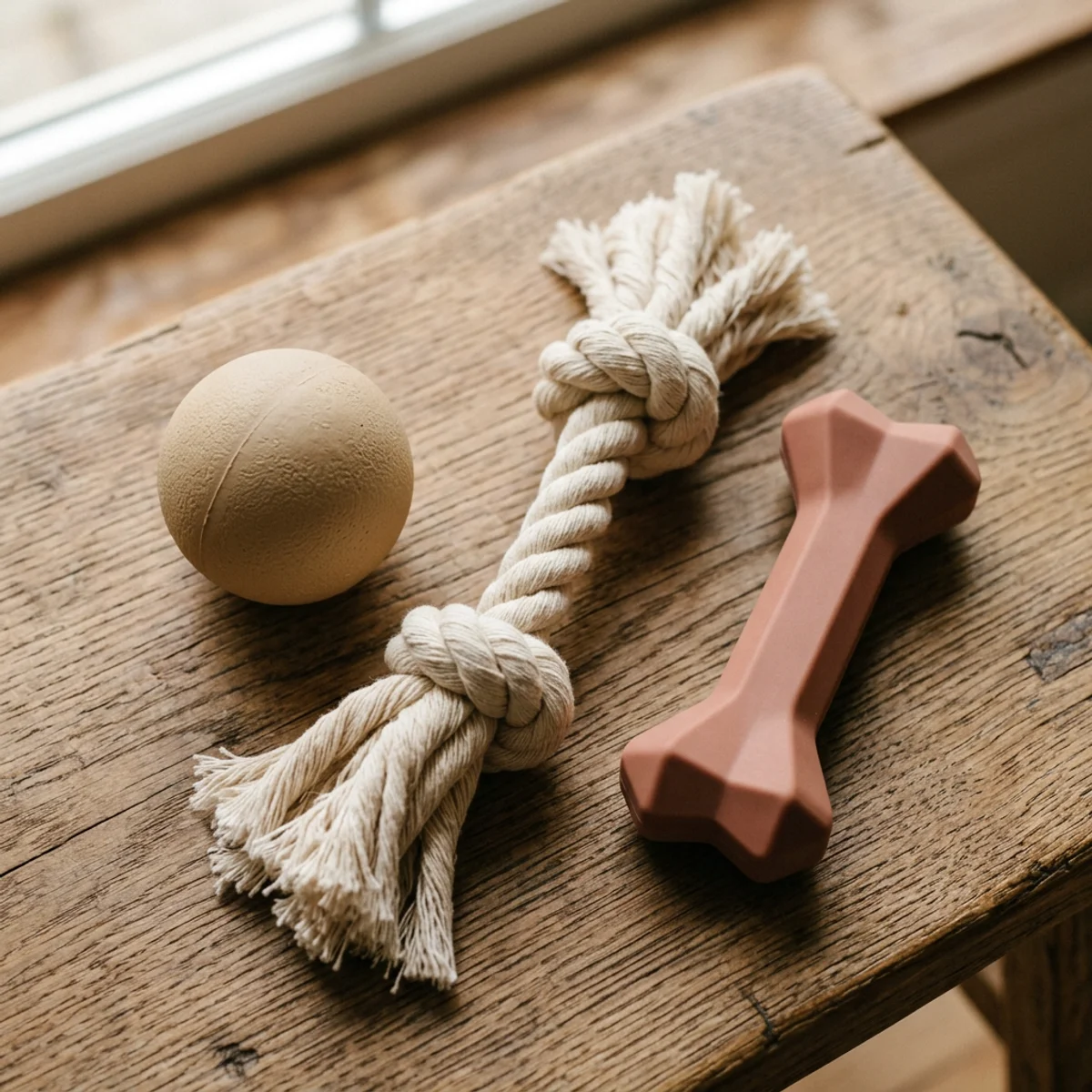
Natural rubber is our go-to for chew toys. It's durable, non-toxic, and flexible enough to give under pressure without splintering. Look for toys made from 100% natural rubber (not synthetic blends) with no added phthalates or BPA. Food-grade silicone is another solid choice, especially for teething puppies—it's soft on developing teeth but still holds up.
Rope and Fabric Toys: Choose Wisely
Rope toys can be great for tug and dental health, but quality varies wildly. We only recommend tightly woven, thick cotton or hemp rope with knotted ends that won't unravel easily. Avoid anything with loose fibres, synthetic materials that could cause intestinal blockages, or dyed rope unless the manufacturer confirms non-toxic, pet-safe dyes.
Plush toys are fine for gentle chewers and supervised play, but they're not meant for dogs who treat every toy like prey. If your dog is a destroyer, skip plush altogether or reserve it for interactive play only.
Hard Plastics and Nylon: Proceed with Caution
Veterinarians commonly warn that hard nylon bones can fracture teeth in some dogs. The thumbnail test—if you can't indent the material with your thumbnail, it's probably too hard—is a guideline many vets recommend. We've seen it happen.
Look for toys labelled as "veterinary-grade" or specifically designed to have some flex. And never give your dog a toy made from brittle plastic that could splinter into sharp shards.
What to Avoid Entirely
- Rawhide: Can become slippery when chewed and poses choking or blockage risks, especially if swallowed in large pieces. Quality and processing methods vary widely. Many veterinarians recommend avoiding rawhide or using it only under close supervision. Discuss with your vet whether rawhide is appropriate for your dog.
- Toys with squeakers or small parts: Unless they're embedded in thick, reinforced rubber and your dog isn't an aggressive chewer, squeakers can be extracted and swallowed.
- Anything that smells like chemicals: If it off-gasses a strong plastic or solvent smell, return it.
- Toys made for children: They're not tested for canine jaws and often contain small parts.
Non-Toxic Dog Toys: Reading Labels and Certifications
The pet toy industry in Canada isn't as tightly regulated as we'd like, so you need to do some homework.
Look for toys that explicitly state they're free from:
- BPA (bisphenol A)
- Phthalates (plasticizers linked to health issues)
- Lead and heavy metals
- Formaldehyde
- Toxic dyes or coatings
Some manufacturers will provide third-party testing certifications or compliance with standards like ASTM F963 (a U.S. toy safety standard) or EN71 (European). While these aren't mandatory for pet products, they're a good sign the company takes safety seriously.
When in doubt, choose brands that are transparent about sourcing and manufacturing. We prefer companies that make their toys in Canada, the U.S., or Western Europe, where safety standards are generally higher. That doesn't mean all imports are unsafe, but it does mean you need to vet them carefully.
Sizing and Choking Hazards: Match the Toy to Your Dog
Size matters more than most people realize. A toy that's too small can lodge in your dog's throat or be swallowed whole, causing an obstruction that requires emergency surgery.
The general rule: the toy should be large enough that your dog can't fit the entire thing in their mouth. For a ball, that means bigger than the width of their open jaw.
Here's how we think about sizing:
These are general guidelines only—individual dogs vary based on jaw size, breed, and chewing behaviour. Consult your veterinarian for specific recommendations for your dog.
- Small dogs (under 10 kg): Toys 5–7 cm in diameter. Avoid anything they could swallow in one gulp.
- Medium dogs (10–25 kg): Toys 7–10 cm. Watch for aggressive chewers who might break down a toy quickly.
- Large dogs (25–40 kg): Toys 10–13 cm. Go bigger if your dog has a wide jaw or powerful bite.
- Extra-large dogs (40+ kg): Toys 13 cm and up. Mastiffs, Great Danes, and similar breeds need truly oversized toys.
Always supervise the first few play sessions with a new toy. If your dog can compress it, bite off chunks, or get their jaw stuck, retire it immediately.
Durable Dog Toys: Matching Toys to Chew Strength and Play Style
Durability isn't about buying the toughest toy on the market—it's about matching the toy to your dog's behaviour.
Assess Your Dog's Chewing Style
- Gentle chewers: Dogs who mouth toys, carry them around, or chew lightly. Plush, softer rubber, and fabric toys work well.
- Moderate chewers: Dogs who chew regularly but don't destroy toys instantly. Medium-density rubber, durable rope, and reinforced fabric toys.
- Aggressive or power chewers: Dogs who see every toy as a challenge to dismantle. Heavy-duty rubber (think thick-walled, solid designs), very large rope toys, or tough nylon designed to flex. Even then, expect to replace toys regularly.
Our team has a Belgian Malinois who can obliterate most "tough" toys in under an hour. For dogs like him, we rely on solid rubber toys with no hollow sections, and we rotate them frequently to keep him interested without giving him time to focus destructively on one item.
Play Style Matters, Too
- Fetch enthusiasts: Choose balls and discs that float (if you're near water) and are easy to spot. Bright colours help. Make sure they're soft enough not to damage teeth on impact.
- Tug lovers: Thick, tightly woven rope or rubber toys with handles. Avoid anything that could snap and recoil.
- Solo chewers: Puzzle toys that dispense treats, durable chew toys that can be stuffed with food, or rubber toys with interesting textures.
- Interactive players: Toys that squeak or crinkle (under supervision), plush toys for gentle games, or toys you can throw and retrieve together.
If your dog shows obsessive chewing behaviour or destroys toys out of anxiety, that's a separate issue. Discuss this with your veterinarian, who may refer you to a veterinary behaviourist or a certified professional such as a Certified Applied Animal Behaviorist (CAAB) or Certified Professional Dog Trainer (CPDT-KA). You might also find our guide on calming dog anxiety naturally helpful.

Inspecting and Maintaining Dog Toys Safely
Even the safest toy won't stay safe forever. We inspect every toy in our dogs' rotation at least once a week, and we toss anything that's compromised.
What to check:
- Cracks, tears, or punctures in rubber or plastic
- Loose stitching or exposed stuffing in plush toys
- Frayed or unravelling rope
- Missing pieces or parts that have been chewed off
- Sharp edges or splinters
- Squeakers that have been exposed or partially extracted
Wash toys regularly—most rubber and nylon toys can go in the dishwasher (top rack), and fabric toys can be machine washed on gentle. This removes bacteria, dirt, and slobber buildup that can harbour germs.
If a toy starts to smell odd, gets sticky, or shows any sign of degradation, replace it. Toys aren't expensive compared to an emergency vet visit.
Red Flags: When to Remove a Toy Immediately
Some warning signs mean it's time to act right away:
- Your dog has bitten off a piece and you can't account for it (contact your veterinarian or emergency clinic immediately—don't wait for symptoms to develop).
- The toy has sharp edges or broken parts.
- Your dog is choking, gagging, or pawing at their mouth.
- The toy has become small enough to fit entirely in your dog's mouth.
- You notice behavioural changes—guarding the toy aggressively, obsessive chewing, or signs of frustration.
If you suspect your dog has swallowed part of a toy, contact your veterinarian or the nearest veterinary emergency clinic immediately. Don't wait to see if it passes—intestinal blockages can be life-threatening.
FAQ
What are the safest materials for dog toys?
Natural rubber, food-grade silicone, and tightly woven cotton or hemp rope are the safest choices. Avoid hard plastics that can crack, synthetic materials that fray into dangerous fibres, and anything with an unpleasant chemical smell. Look for toys explicitly labelled as non-toxic, BPA-free, and phthalate-free.
How do I know if a toy is the right size for my dog?
The toy should be large enough that your dog can't fit it entirely in their mouth. For balls, choose one bigger than the width of their jaw when open. Small dogs need toys around 5–7 cm, medium dogs 7–10 cm, large dogs 10–13 cm, and extra-large breeds 13 cm or more. Always supervise initial play to confirm the fit is safe.
How often should I replace my dog's toys?
Inspect toys weekly and replace them as soon as you see cracks, tears, fraying, or missing pieces. For aggressive chewers, toys might last only days or weeks. Gentle chewers can keep toys for months if they remain intact. Rotation helps—offering three or four toys at a time and swapping them out keeps dogs interested and lets you monitor wear.
Are plush toys safe for all dogs?
No. Plush toys are best for gentle chewers and supervised interactive play. Dogs who shred and ingest stuffing or fabric can develop intestinal blockages. If you suspect your dog has ingested stuffing, fabric, or any toy parts, contact your veterinarian or nearest emergency veterinary clinic immediately. Intestinal blockages are medical emergencies that require prompt professional care. If your dog is a destroyer, skip plush or use it only during games you control, then put it away. Remove any toy immediately if your dog starts pulling out stuffing or swallowing pieces.
Choosing Toys Your Dog Will Love—and That Will Keep Them Safe
Toy safety isn't about eliminating all risk—it's about making informed choices that match your dog's size, chewing habits, and play preferences. We've found that investing in a smaller rotation of high-quality, durable, non-toxic toys saves money and worry in the long run, and our dogs are just as happy (often happier) with three great toys as they would be with a bin full of questionable ones.
Pay attention to what your dog gravitates toward, inspect regularly, and don't hesitate to toss a toy that's past its prime. If you're building out your dog's toy collection and want thoughtfully curated, safe options, we'd love to help—browse our selection at Studio Bleuet for toys we trust with our own pups.