Holiday Safety Tips for Pets: Plants, Foods, and Decor to Avoid
Holiday Safety Tips for Pets: Plants, Foods, and Decor to Avoid
Last December, a customer called us in a panic: her Ragdoll had knocked over the poinsettia, chewed three leaves, and was drooling all over the living room rug. The holidays fill our homes with plants, foods, and decorations that can send pets to the emergency vet. Here are the holiday safety tips for pets every cat and dog owner needs before the season hits full swing—starting with the plants that actually matter.
Toxic Plants for Cats (and Dogs)
Poinsettias get all the bad press, but they're actually only mildly toxic. Your cat will drool and feel nauseated, but it's rarely life-threatening. The real dangers are plants people don't think twice about.
Lilies are the number-one threat to cats. Even a single leaf, a few grains of pollen, or water from the vase can cause acute kidney failure. We're talking about all true lilies: Asiatic, Oriental, Tiger, and Easter. If you have cats, don't bring lilies into your home. Period. Alstroemeria (Peruvian lilies) and calla lilies are less toxic but still cause irritation.
Amaryllis and paperwhites are popular winter bulbs that contain toxins in the bulb and stems. Cats and dogs who chew them can experience vomiting, diarrhea, abdominal pain, and tremors.
Holly and mistletoe both cause gastrointestinal upset. Real mistletoe (not the plastic stuff) can also lead to cardiovascular problems in large doses. We've seen too many dogs grab berries that rolled under the couch.
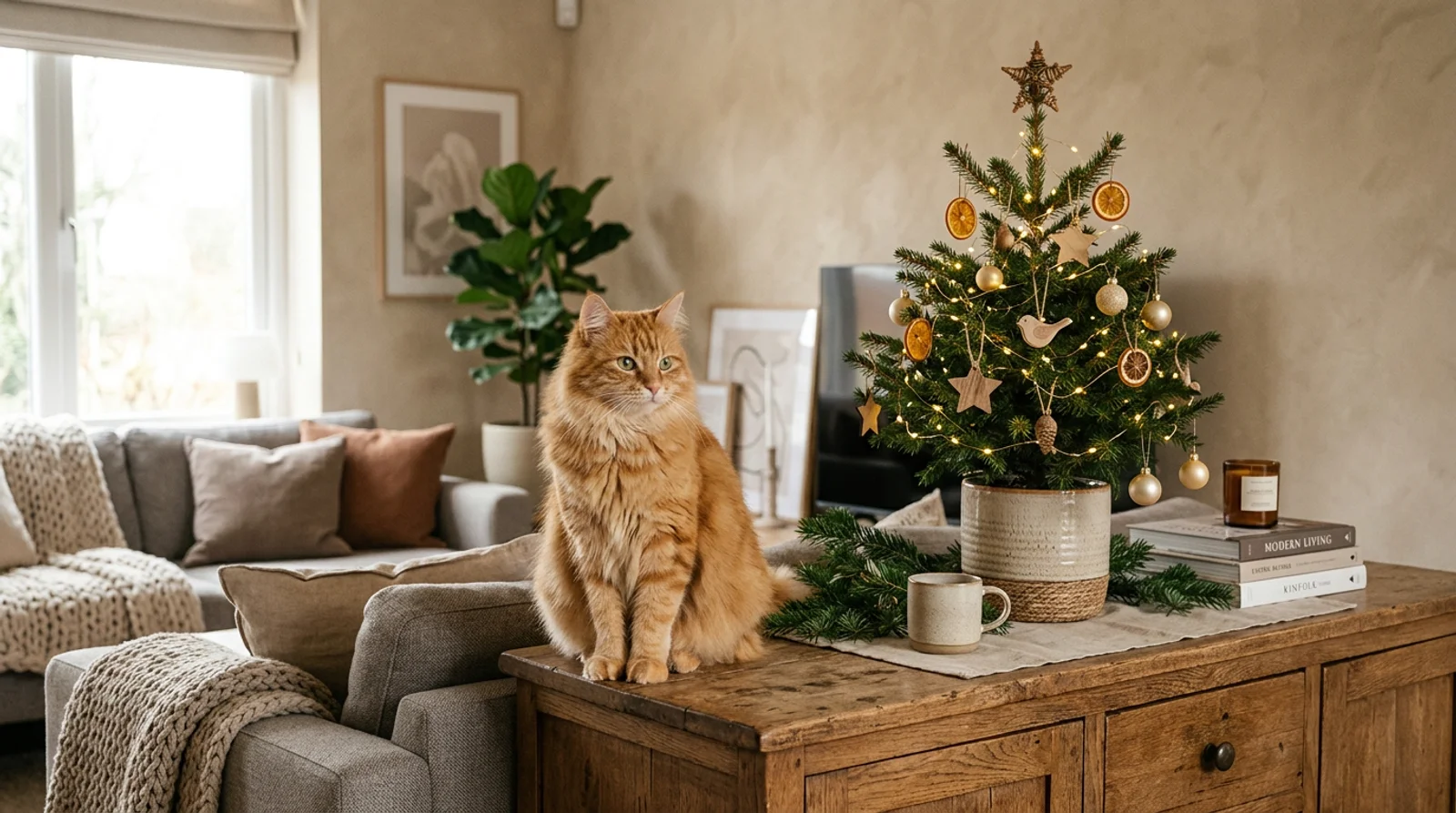
Christmas trees themselves aren't usually toxic, but pine needles are sharp and indigestible—they can puncture intestines if swallowed. Fir tree water often contains fertilizers, bacteria, and preservatives that make pets sick. Cover your tree stand or use a tree skirt that blocks access.
Safer Plant Alternatives
We decorate our own homes (full of cats and a Bernese Mountain Dog) with Christmas cactus, spider plants, and African violets—all non-toxic. Fake plants have come a long way; high-quality silk or dried arrangements look beautiful and last for years. If you receive a toxic plant as a gift, put it in a room your pets can't access, or re-home it to a pet-free friend.
Dog Holiday Food Hazards (and What Cats Shouldn't Eat, Either)
The kitchen is where most holiday emergencies start. Your dog doesn't care that Aunt Marie spent six hours on that butter tart—he'll eat it, wrapper and all, if you turn your back.
Foods That Are Dangerous or Deadly
Chocolate tops every list for good reason. The darker and more bitter, the more toxic. The toxic dose depends on your dog's weight and the type of chocolate. For example, even small amounts of dark chocolate or baking chocolate can be dangerous for a 10-kg dog. If your dog eats any chocolate, call your veterinarian immediately with details about the type and amount. White chocolate has negligible theobromine but is still full of fat and sugar.
Xylitol (a sugar substitute) is in sugar-free baked goods, candy, and even some peanut butters. It causes a rapid insulin spike in dogs, leading to life-threatening hypoglycemia that can occur within 30 minutes to a few hours. Larger doses cause liver failure. If your dog ingests xylitol, contact your veterinarian immediately. Check labels obsessively if you bake with alternative sweeteners.
Raisins, grapes, and currants cause kidney failure in dogs. We still don't know the toxic dose—some dogs eat a few and are fine, others eat one grape and crash. Don't gamble. That includes fruitcake, Christmas pudding, and mincemeat tarts.
Onions, garlic, and chives (in stuffing, gravy, mashed potatoes) damage red blood cells in both dogs and cats. It's dose-dependent and cumulative, so even small amounts over a few days add up.
Alcohol is in rum balls, tiramisu, and bourbon-glazed ham. Dogs and cats metabolize alcohol poorly; even a small amount causes vomiting, disorientation, and respiratory depression.
Fatty foods and bones: turkey skin and ham fat can trigger pancreatitis, especially in dogs prone to it—Miniature Schnauzers, Cocker Spaniels, Dachshunds. Cooked poultry bones splinter and perforate the gut. We know it's tempting to share, but it's not worth the emergency bill.
What You Can Share
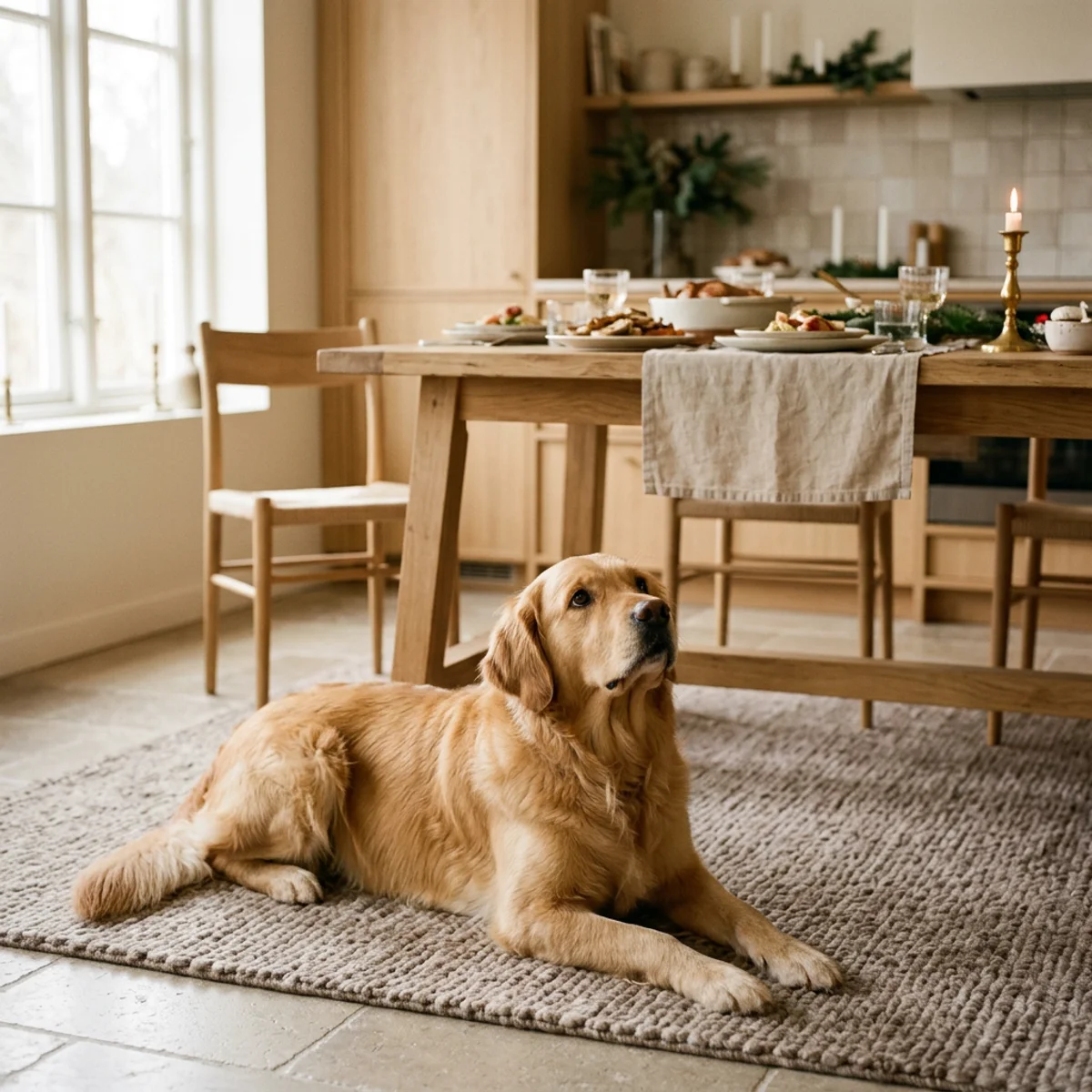
Plain, unseasoned turkey or chicken breast (white meat, no skin) may be acceptable in very small amounts for some pets, but table scraps can cause digestive upset. Consult your veterinarian if your pet has food sensitivities or a history of pancreatitis. A spoonful of plain mashed potato or sweet potato (no butter, garlic, or cream) won't hurt. Plain green beans or carrots are safe. But honestly? Your pets are happier with their regular high-quality food and a safe chew or puzzle toy while you eat. We give our dogs a frozen Kong stuffed with their regular kibble and a smear of pure pumpkin—they're thrilled, and we don't worry.
Pet Safe Decorations: What to Watch and What to Skip
Decorations look magical to us. To a six-month-old kitten or a Labrador puppy, they look like the world's best toys.
Ornaments and Tree Hazards
Glass ornaments shatter into sharp shards. We learned this the hard way when a foster kitten batted a vintage mercury glass ball off the tree at 2 a.m. Use shatterproof plastic or wood ornaments on the lower half of your tree if you have playful pets. Hang fragile heirloom ornaments high up or skip them entirely this year.
Tinsel and ribbon are irresistible to cats. When swallowed, they bunch up in the intestines (vets call it a "linear foreign body") and require emergency surgery. We banned tinsel from our homes years ago. If you love sparkle, use wide fabric ribbon or garland that's harder to swallow, and put it where your cat can't reach.
Electric cords get chewed, especially by kittens and puppies. Unplug lights when you're not home. Run cords behind furniture or use bitter spray deterrents (test first—they don't stop every pet). Battery-operated LED candles are safer than real flames around tails and paws.
Candles, Diffusers, and Scents
Open flames and wagging tails don't mix. We've seen singed fur more than once. Use flameless LED candles or keep real candles in high, stable holders far from pet traffic.
Essential oil diffusers and scented candles often contain oils toxic to cats: tea tree, pine, citrus, cinnamon, peppermint. Cats lack the liver enzyme to metabolize many essential oils. If your cat seems lethargic, drools, or has difficulty walking after you've been diffusing oils, stop using the diffuser immediately and contact your veterinarian or pet poison control. Essential oil toxicity requires prompt medical attention. Dogs tolerate them better but can still have reactions. We stick to unscented or lightly scented beeswax candles.
Secure Your Tree and Décor
Anchor your Christmas tree to the wall or ceiling with fishing line. A 25-kg Shepherd or a determined cat can absolutely bring it down. We use a tree stand with a wide, heavy base and drill an eyelet into the wall behind the tree.
Put breakables and food-shaped ornaments (gingerbread men, felt cookies) out of reach. If you have a climber, consider a tabletop tree on a high surface or even a wall-mounted flat tree. It sounds extreme until you're vacuuming up broken glass at midnight.
Creating a Pet Safe Christmas: A Quick Checklist
Here's what we do in our own homes every year:
- No lilies, amaryllis, or mistletoe. Stick to non-toxic plants or good fakes.
- Lock up chocolate, xylitol, raisins, and alcohol. Don't leave desserts on the counter.
- Cover the tree water. Use a tree skirt or a stand with a built-in cover.
- Skip tinsel. Use wide ribbon or fabric garland instead.
- Anchor the tree. Fishing line to the wall works.
- Shatterproof ornaments on the bottom half of the tree.
- Flameless candles or candles in high, stable holders.
- Unplug lights when you leave the house.
- Give pets a quiet space. A cozy room with their bed, water, and a favourite toy helps anxious animals escape the chaos. (Our guide on calming dog anxiety naturally has more ideas.)
FAQ
What should I do if my dog eats chocolate during the holidays?
Call your vet or an emergency clinic immediately. Consider this an emergency. You can also contact the Pet Poison Helpline or ASPCA Animal Poison Control Center for immediate guidance. Have the wrapper or package ready so you can tell them the type of chocolate (dark, milk, baking) and estimate how much your dog ate. Time matters—if you catch it within two hours, the vet can induce vomiting. Don't wait to see if symptoms appear.
Are poinsettias really that dangerous for cats?
Poinsettias are overrated as a danger. They cause mild irritation—drooling, vomiting, maybe diarrhea—but they're not as toxic as lilies or amaryllis. That said, why risk even mild illness? We skip them. If your cat does chew one, monitor closely for symptoms. If drooling, vomiting, or diarrhea persists beyond a few hours or your pet seems distressed, contact your veterinarian. While not as severe as lily poisoning, any persistent symptoms warrant professional evaluation.
Can I give my dog turkey bones from Christmas dinner?
Never. Cooked bones (turkey, chicken, ham) splinter and can perforate your dog's stomach or intestines. Raw bones carry their own risks including bacterial contamination, tooth fractures, and intestinal blockage—consult your veterinarian before offering any bones. Cooked holiday bones are absolutely dangerous and should never be given. If you want to share, give plain white meat with no skin or seasoning.
How do I keep my cat out of the Christmas tree?
Secure the tree so it can't tip. Use shatterproof ornaments on the lower branches and skip tinsel entirely. Spray the lower branches with a pet-safe bitter deterrent (we like Grannick's Bitter Apple). Some people swear by aluminum foil or double-sided tape around the tree base. For determined climbers, a baby gate around the tree or a tall tabletop tree may be your only option. Honestly, some cats just can't be trusted—we know someone who gave up and did a wall decal tree for two years until her Bengal mellowed out.
Keep the Season Joyful and Safe
The holidays don't have to be stressful if you plan ahead. Swap out a few plants, lock up the baking, anchor your tree, and your pets can enjoy the season as much as you do—without a vet visit. We've been curating pet-safe homes for years, and these tweaks have saved us (and our customers) countless emergencies. Take ten minutes this week to pet-proof, and you'll spend the rest of December actually enjoying the lights, the food, and the warm chaos of the season with everyone you love—two-legged and four.
If you're looking for thoughtful, safe gifts for the pets in your life, we've gathered our favourite cozy beds, durable toys, and elegant feeding solutions at Studio Bleuet. Your dog or cat deserves to celebrate, too.