
How to Trim Your Cat's Nails Safely at Home
How to Trim Your Cat's Nails Safely at Home
You can trim cat nails safely at home by getting your cat comfortable with paw handling, using sharp clippers designed for cats, identifying the pink quick inside each nail, and clipping only the clear, curved tip. Most indoor cats need their nails trimmed every two to four weeks.
Our senior cat Minou taught us this skill the hard way. For years we avoided it, until one of her dew claws grew in a complete circle and nearly punctured her pad. If your cat's nails have become severely overgrown or curved into the paw pad, seek veterinary care immediately as this can cause infection. That vet visit was stressful for everyone. Now we trim nails regularly without drama, and honestly, it takes about five minutes once you know what you're doing.
Why Regular Cat Nail Trimming Matters
Cats who live exclusively indoors don't wear down their claws the way outdoor cats do on rough surfaces. Left untrimmed, nails curl under and can pierce paw pads, causing infection and pain. We've also seen overgrown nails snag in carpet loops and blankets, sometimes tearing the nail bed when the cat pulls away.
Regular trims also protect your furniture and skin. Yes, scratching posts help, and we have a whole guide on how to stop cat scratching furniture, but posts alone don't replace trimming. They maintain the outer sheath but don't shorten the nail itself.
Senior cats and indoor-only cats need the most attention. Older cats often have thicker, more brittle nails, and they groom less efficiently, so they may need help with regular nail trims every two to four weeks to prevent overgrowth.
What You Need to Trim Cat Nails
Don't overthink the equipment. We've tried expensive ergonomic clippers and basic drugstore versions, and honestly, sharp blades matter more than the brand.
Cat nail clippers come in three styles:
- Scissor-style: our preference for most cats. They offer the most control and work well on thick or thin nails.
- Guillotine-style: fine if that's what you have, though they dull faster and can crush the nail if the blade isn't sharp.
- Human nail clippers: acceptable in a pinch for kittens or cats with very thin nails, but they don't cut cleanly on adult cat claws.
Replace clippers once they feel dull or start crushing instead of slicing. A clean cut heals faster and hurts less.
Keep styptic powder or cornstarch nearby. If you accidentally nick the quick, dab powder on the bleeding nail and apply gentle pressure until the bleeding stops. It happens to everyone eventually.
A small flashlight or phone light helps you see the quick, especially on dark nails. We hold it behind the nail so the pink blood vessel shows up more clearly.
Cat Nail Trimming Guide: Step-by-Step
Start with desensitization (if your cat is nervous)
If your cat has never had their nails trimmed, spend a week getting them used to paw handling before you bring out clippers. While they're relaxed on your lap, gently squeeze one paw so a nail extends. Give a treat. Release. Repeat.
Once they tolerate that, introduce the clippers. Let them sniff the tool. Squeeze a paw, touch the clipper to a nail without cutting, treat, done. We did this with our anxious tabby for five days before the first real trim, and now she barely notices.
Don't attempt all four paws in one session if your cat resists. One paw a day is fine. Forcing it creates negative associations that make every future trim harder.
Pick the right moment
Trim nails when your cat is sleepy. After a meal, after playtime, during that drowsy late-morning nap. Never when they're alert and ready to run.
We've had good luck wrapping younger cats gently in a towel (burrito-style) with one paw out at a time, but many cats tolerate it better if you simply wait until they're purring on the couch.
How to identify the quick
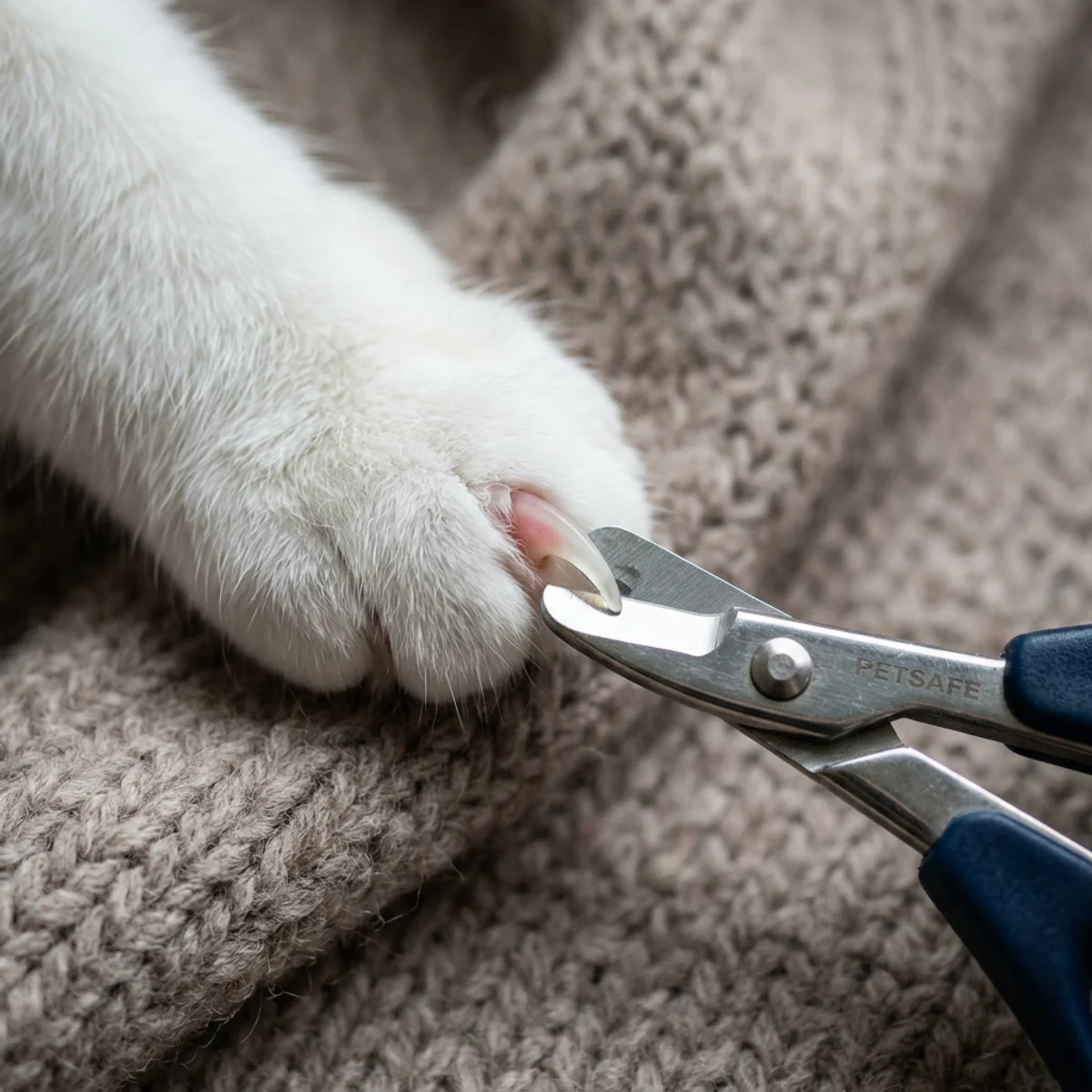
The quick is the pink blood vessel and nerve inside each nail. On light-colored nails, it's obvious. On black nails, shine a light behind the claw or look at the underside—the quick usually stops before the nail starts to curve.
Cut only the sharp, clear tip that curves downward. Leave at least 2 millimeters between your cut and the pink quick. If you can't see the quick, trim less. Better to cut conservatively and trim more often.
The actual cut
Hold your cat's paw gently but firmly. Press the pad so the nail extends. Position the clipper perpendicular to the nail (not at an angle) to avoid splitting.
Cut in one smooth, confident motion. Hesitation leads to a jagged edge. If the nail looks splintered, you can file it lightly with a regular nail file, though most cats won't sit still for that.
Do one nail. If your cat stays calm, continue. If they squirm, pause. Give a treat. Try another nail. Some of our cats tolerate all four paws in one go; others get two nails before they've had enough, and we finish the next day.
If you cut the quick
You'll know—the nail will bleed, and your cat will probably pull away and lick it. Stay calm. Dip the nail in styptic powder or press a pinch of cornstarch against it. The bleeding stops quickly.
Your cat will forgive you. Give them space, offer a treat later, and next time cut farther from the quick. We've all done it.
How Often to Trim Cat Nails
Most indoor cats need a trim every two to four weeks, as recommended by veterinarians. The exact frequency depends on your individual cat's activity level and nail growth rate.
Check the nails. If they're curving sharply or catching in fabric, it's time. You'll develop a rhythm. We keep clippers in the living room and trim nails during Sunday afternoon naps.
How to Cut Cat Claws Safely for Nervous or Aggressive Cats
Some cats simply won't tolerate home nail trims, no matter how patient you are. If your cat bites, scratches, or becomes genuinely distressed (not just annoyed), don't force it.
Try these strategies first:
- Two-person technique: one person gently holds and distracts the cat with treats or a lick mat while the other trims.
- Trim when drowsy but aware: this works well when your cat is relaxed after a meal or in a groggy, sleepy state, but still aware of what's happening. Some cats tolerate gentle handling better during these calm moments.
- Break it into tiny sessions: one nail a day. It takes longer, but there's no fight.
If none of that works, a professional groomer or vet tech can trim nails for about fifteen to twenty dollars. That's not a failure on your part—it's knowing your cat's limits.
For truly aggressive cats, some vets offer sedation for nail trims during annual exams. It's a last resort, but it's better than no trim at all or a cat who now hides every time you walk toward them. Discuss this option with your veterinarian to determine if sedation is appropriate and safe for your cat's specific health situation.
Cat Grooming at Home: Building a Routine
Nail trimming is one piece of home grooming. Pair it with other low-stress handling so your cat learns that being touched isn't always about something unpleasant.
Brush your cat regularly, especially if they're long-haired. Check ears. Look at teeth. Make handling routine. Our guide on how to groom your dog at home covers similar principles, and many apply to cats—frequent, short, positive sessions beat occasional stressful marathons.
If you're introducing a new cat to your household, start nail trimming early in the settling-in period. Our guide to introducing a new cat emphasizes building trust through gentle handling, and nail trims are part of that foundation.

FAQ
Can I just let my cat use a scratching post instead of trimming their nails?
No. Scratching posts help cats shed the outer sheath of their claws and mark territory, but they don't shorten the nail itself. Even cats who use posts daily need regular trims to prevent overgrowth, especially on the dew claws, which don't touch scratching surfaces.
What if my cat has black nails and I can't see the quick?
Shine a flashlight or phone light from behind the nail. The quick often shows as a darker shadow inside the claw. If you still can't see it, trim only the very tip—1 to 2 millimeters—and do more frequent trims. It's safer to cut less and trim every ten days than to risk the quick.
How do I know if I've cut the quick?
The nail will bleed, and your cat will usually vocalize or jerk their paw away. The quick contains nerves, so it's painful (like cutting your own nail too short). If it happens, don't panic. Apply styptic powder or cornstarch, hold gentle pressure, and the bleeding will stop within a minute or two.
Should I trim my outdoor cat's nails?
That depends. Outdoor cats wear down nails naturally on pavement, trees, and rough ground, and they rely on sharp claws for climbing and defense. If your cat is indoor-outdoor and their nails aren't overgrowing or causing problems, you may not need to trim. Check them monthly, especially the dew claws, which don't get worn down.
Making It Routine
Once you've done it a few times, trimming cat nails becomes unremarkable. Pick a consistent time—Sunday mornings, mid-week evenings, whenever your cat is reliably drowsy. Keep clippers accessible. Make it boring.
We trim nails while catching up on podcasts or between episodes of whatever we're watching. The cats barely register it anymore, and that's the goal: a low-stakes routine that keeps everyone comfortable and healthy.
If you're setting up a dedicated grooming area or need tools that fit into a tidy, design-conscious home, we stock grooming essentials that don't clutter your space. Visit Studio Bleuet to explore our curated selection.