How to Stop Your Cat from Scratching Furniture: A Complete Guide
How to Stop Your Cat from Scratching Furniture: A Complete Guide
To stop cat scratching furniture, place appealing alternatives—vertical sisal posts and horizontal cardboard scratchers—directly next to the spots your cat targets, then reward every use with treats or play. Make the furniture temporarily less appealing with double-sided tape or foil while the new habit forms.
Last month, our tabby Margot shredded the corner of a linen armchair in under two weeks. We'd made the classic mistake: placing a scratching post in the spare room where she never went, then wondering why she ignored it. The fix wasn't complicated, but it required understanding why she scratched that particular spot and what would genuinely compete with the satisfying resistance of woven fabric.
Why Cats Scratch: Understanding the Behavior
Cats don't scratch furniture out of spite. They're driven by hardwired needs: maintaining claw health, stretching shoulder and back muscles, and marking territory through visible marks and scent glands in their paws.
When your cat drags her claws down your sofa, she's removing the dead outer sheath of each nail, revealing the sharp new growth underneath. She's also working out the kinks after a nap—watch closely and you'll see the full-body stretch that accompanies most scratching sessions. And she's leaving both a visual flag and her unique scent signature, claiming that space as hers.
Texture matters enormously. Our Siamese mix, Félix, ignores plush carpet-covered posts but will spend five minutes on a tightly-wound sisal rope post. Margot prefers horizontal cardboard scratchers with a bit of give. Some cats want the rigid resistance of wood or wicker. You won't know your cat's preference until you test a few surfaces.
Location is just as critical. Cats scratch when they wake up, when they're excited, and when they're marking high-traffic areas. If the only scratcher sits in a basement corner, it's competing with the sofa arm right next to your cat's favorite sunny nap spot. It will lose.
How to Redirect Cat Scratching to Appropriate Surfaces
Start by observing where and when your cat scratches. Does she attack the sofa arm first thing in the morning? Does she scratch the door frame when you come home? Note whether she prefers vertical or horizontal surfaces, and whether she stretches up high or crouches low.
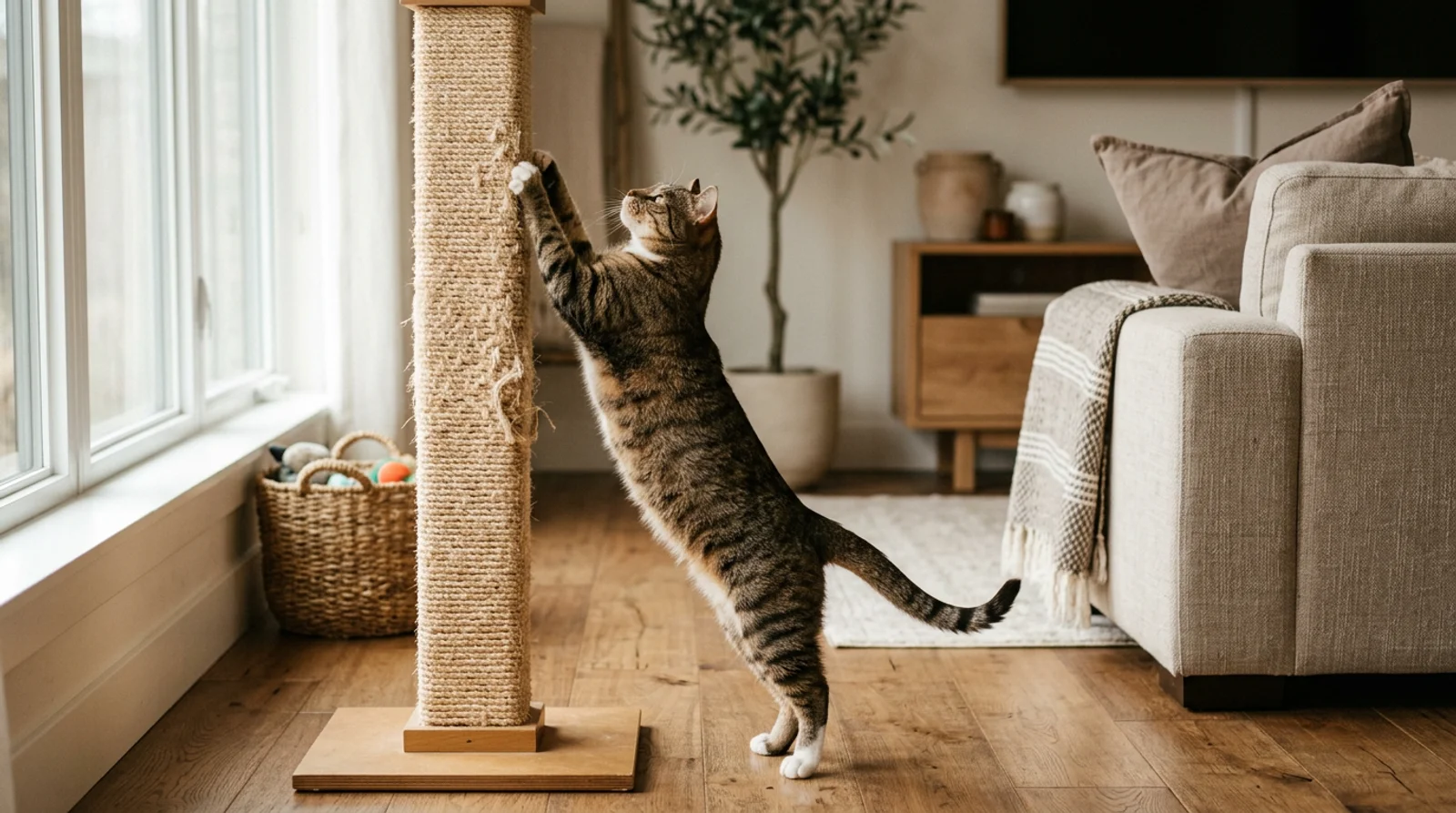
Place an appropriate scratcher directly next to—or even in front of—the furniture she targets. If she loves the corner of your sectional, put a tall sisal post right there. If she scratches the rug, lay a horizontal cardboard scratcher on top of that spot.
The scratcher must be stable. A wobbly post that tips when your 4-5 kg cat leans into it teaches her that the sofa is more satisfying. We anchor tall posts against walls or buy wide, heavy bases. For vertical posts, aim for at least 80 cm tall so an adult cat can stretch fully.
Rewarding the Right Choices
The moment your cat uses the new scratcher—even a single swipe—reward her. We keep a small jar of freeze-dried chicken treats near our scratching posts. A quick "yes!" and a treat within three seconds creates a powerful association.
Some cats respond better to play. If yours ignores food, dangle a feather wand near the scratcher to lure her into using it, then let her "catch" the toy as a reward. Repeat this once or twice daily for the first week.
Catnip and silvervine can help, but they're not magic. Sprinkle a pinch on a new scratcher to draw initial interest, but the texture and location do the real work. Refresh the catnip weekly for the first month, then phase it out.
Making Furniture Less Appealing
While you're building the new habit, temporarily make the furniture unpleasant to scratch. Double-sided sticky tape (sold as "cat training tape") works well on fabric—cats hate the tacky feeling on their paws. Aluminum foil or plastic carpet runners (nub-side up) deter scratching on corners and arms.
We've had good luck with citrus-scented sprays on wood furniture. Cats generally dislike citrus, though test a small hidden area first to ensure it won't damage your finish.
These deterrents aren't permanent solutions. They buy you two to four weeks to establish the scratching-post habit. Once your cat consistently uses the appropriate surface, you can remove the tape or foil.
Cat Scratching Solutions: Choosing the Right Tools
Not all scratching posts are equal. Here's what actually matters based on years of testing products with our own cats and observing hundreds of clients' homes.
| Type | Best For | Pros | Cons |
|---|---|---|---|
| Sisal rope posts | Cats who scratch vertically and love durable texture | Long-lasting, satisfying resistance, most cats love sisal | Can be expensive; must be tall and stable |
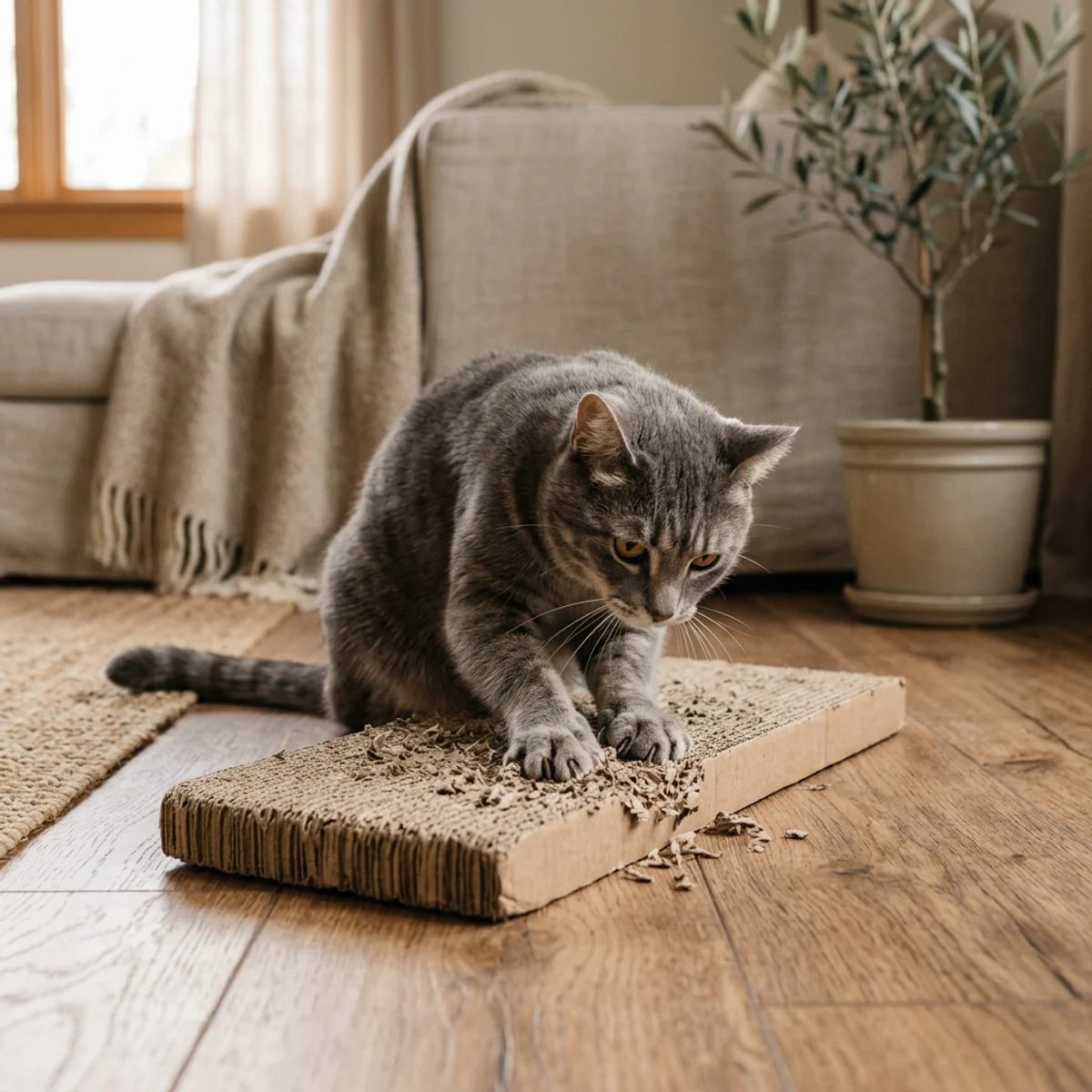
| Cardboard scratchers | Budget-conscious homes, cats who scratch horizontally | Inexpensive, lightweight, many cats prefer the texture | Need replacement every 2–3 months; create debris |
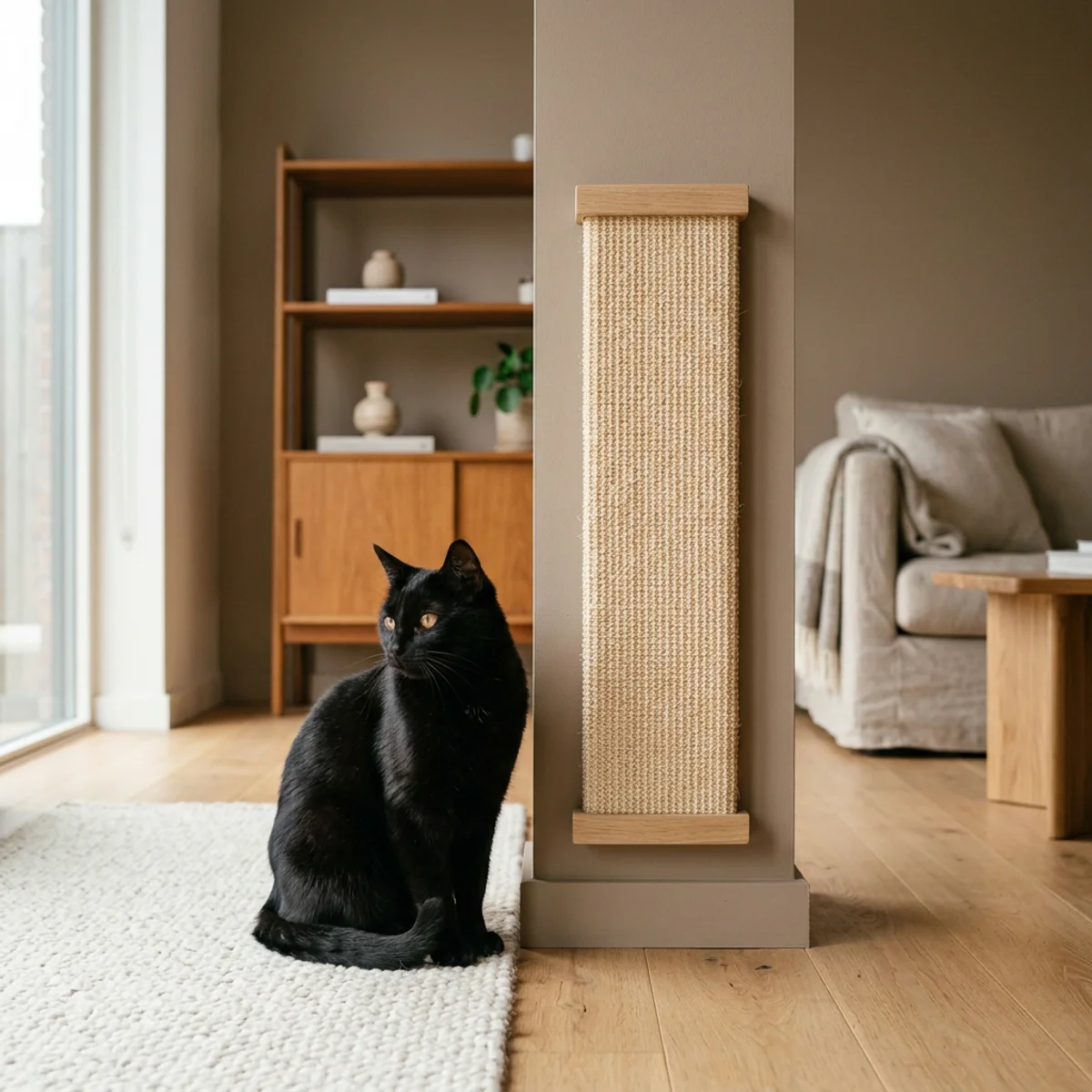
| Sisal fabric panels | Wall-mounted solutions, modern aesthetics | Sleek, space-efficient, great for small apartments | Installation required; less satisfying for some cats |
| Cat trees with integrated scratching surfaces | Multi-cat homes, cats who need climbing + scratching | Combines exercise and scratching; excellent value | Takes up floor space; quality varies widely |
| Natural wood posts | Cats who scratch trees outdoors | Mimics outdoor experience, very sturdy | Heavy, expensive, harder to find |
We keep a mix in our home: a 90-cm sisal post in the living room near the sofa, a horizontal cardboard scratcher by the bedroom door where Margot wakes from naps, and a wall-mounted sisal panel in our small apartment-friendly setup.
For the cardboard scratchers, we replace them when the surface becomes too shredded to provide resistance—usually every six to eight weeks with two cats. The sisal posts last years if you buy quality rope that's tightly wound.
Protect Furniture from Cats: Additional Strategies
Furniture Covers and Throws
If you're still training or living with a stubborn scratcher, washable throws can protect high-risk areas. We drape a canvas drop cloth over our linen chair when we're out—not elegant, but effective. For a more permanent solution, some families add decorative arm covers that match their décor.
Nail Maintenance
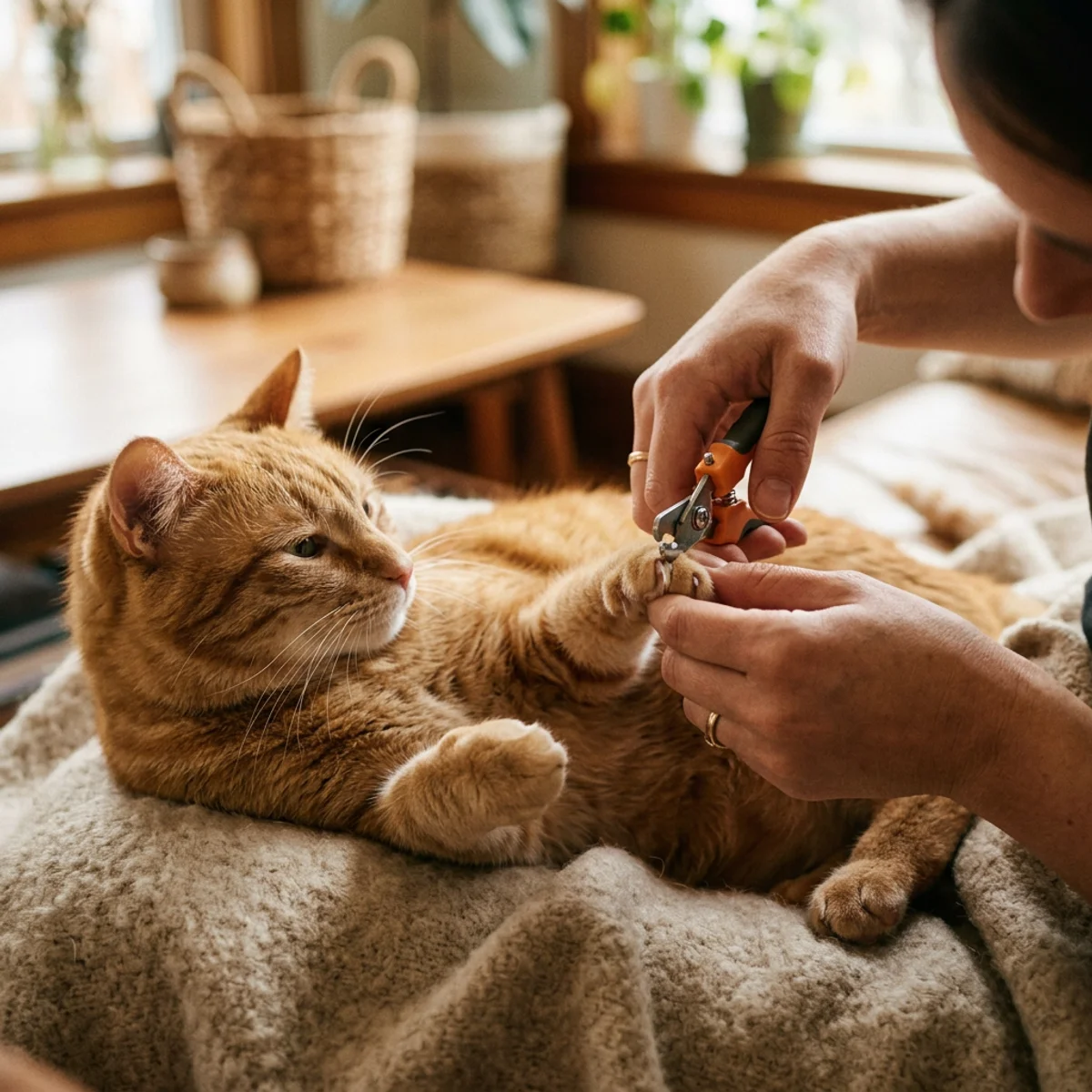
Trimming your cat's claws every two to three weeks reduces the damage from any wayward scratching. We trim just the sharp tip—about 2 mm—using a guillotine-style trimmer. If your cat has clear nails, avoid the pink quick; for dark nails, err on the side of caution and take less. If you're new to trimming your cat's nails, ask your veterinarian to demonstrate the proper technique during your next visit. They can show you how to identify the quick and avoid causing pain or bleeding.
Nail caps (soft plastic sheaths glued over each claw) are an option for cats who scratch destructively despite all training efforts. They last four to six weeks and need reapplication as the nail grows. Consult your veterinarian before using nail caps. They can demonstrate proper application technique and ensure they're appropriate for your cat's specific situation. We've used them during a move when our cats were stressed and scratching frantically. They're not our first choice—we prefer addressing the behavior—but they're humane and can prevent furniture destruction in high-stakes situations.
Declawing is not an option we ever recommend. It involves amputation of the last bone of each toe and can cause chronic pain, behavioral changes, and other complications. It's banned in several Canadian cities and provinces and is opposed by major veterinary organizations including the Canadian Veterinary Medical Association. If you're struggling, consult a veterinary behaviorist before considering anything irreversible.
Environmental Enrichment
A bored or stressed cat scratches more. We've seen dramatic improvements when families add indoor enrichment—puzzle feeders, regular play sessions, window perches. A 10-minute interactive play session before you leave for work can reduce stress-scratching throughout the day.
If scratching suddenly increases, look for stressors. Did you rearrange furniture? Is there a new cat in the neighborhood visible through the window? Address the underlying anxiety and the scratching often diminishes.
Training Techniques That Work (and What to Skip)
What Actually Works
Positive reinforcement and patience. We've never met a cat who responded well to punishment, but we've seen hundreds who learned to love their scratching posts through consistent rewards. It takes two to six weeks for most cats to fully shift their habits.
Placement, placement, placement. A scratcher in the right spot will be used. One in the wrong spot becomes expensive décor. Move the scratcher to where your cat actually spends time.
Multiple scratchers. A single post rarely cuts it. We have five scratching surfaces for two cats in a 90-square-meter space. Overkill? Maybe. Effective? Absolutely.
Redirecting in the moment. If you catch your cat scratching the sofa, calmly pick her up and place her on the scratcher. No yelling, no drama. When she scratches the post—even if you initiated it—reward her immediately.
What Doesn't Work
Yelling, spraying with water, or physically punishing your cat damages your bond and increases stress, which often leads to more scratching. We've consulted with families whose cats started scratching at night or when the humans were out—a direct result of punishment creating anxiety around scratching in general.
Expecting instant results sets you up for frustration. Behavior change takes time. If you're not seeing progress after four weeks of consistent training, reassess your scratcher type, placement, and whether you're truly rewarding every correct use.
Ignoring the problem won't work either. Scratching is self-rewarding—it feels good—so your cat will continue unless you actively redirect the behavior.
FAQ
How long does it take to stop a cat from scratching furniture?
Most cats show improvement within one to two weeks if you place scratchers strategically and reward use consistently. Full habit replacement typically takes four to six weeks. Older cats with years of furniture-scratching history may need eight weeks or more. The key is patience and ensuring the alternative is genuinely more appealing than the furniture.
Will my cat stop scratching if I trim their nails?
No. Nail trimming reduces damage but doesn't address the behavioral need to scratch. Cats scratch to stretch, mark territory, and maintain claw health—not just to sharpen their nails. You need to provide appropriate scratching surfaces alongside nail maintenance.
Can I train an older cat to use a scratching post?
Yes, though it may take longer than training a kitten. We successfully redirected an 11-year-old Persian who'd scratched the same door frame for a decade. The method is identical: place the scratcher where she scratches, make the furniture temporarily unappealing, and reward every use of the post. Older cats can be more set in their ways, so expect six to eight weeks rather than three.
Should I use a spray deterrent on my furniture?
Temporarily, yes—it's a useful tool during the training window. But deterrents alone won't solve the problem because they don't satisfy your cat's need to scratch. Combine a deterrent on the furniture with a highly appealing alternative right next to it, then phase out the deterrent once the new habit is established.
Final Thoughts
The scratched furniture in your home isn't a sign of a bad cat. It's a sign of a normal cat whose natural needs haven't been met in the right way. Once you provide texture she loves, in locations she actually uses, and reward her for making the switch, most cats happily redirect their scratching.
We still have the linen chair Margot shredded. The corner is frayed, but the damage stopped the day we moved a sisal post directly next to it and started rewarding her every time she used it instead. Now she stretches against that post every morning without fail, and the chair has survived untouched for six months.
If you're setting up new scratching posts or looking for well-designed options that won't clash with your home, we curate a selection of functional, beautiful pieces that we'd actually use ourselves. Visit Studio Bleuet to see what we recommend—and feel free to reach out if you'd like help choosing the right solution for your cat's scratching style.