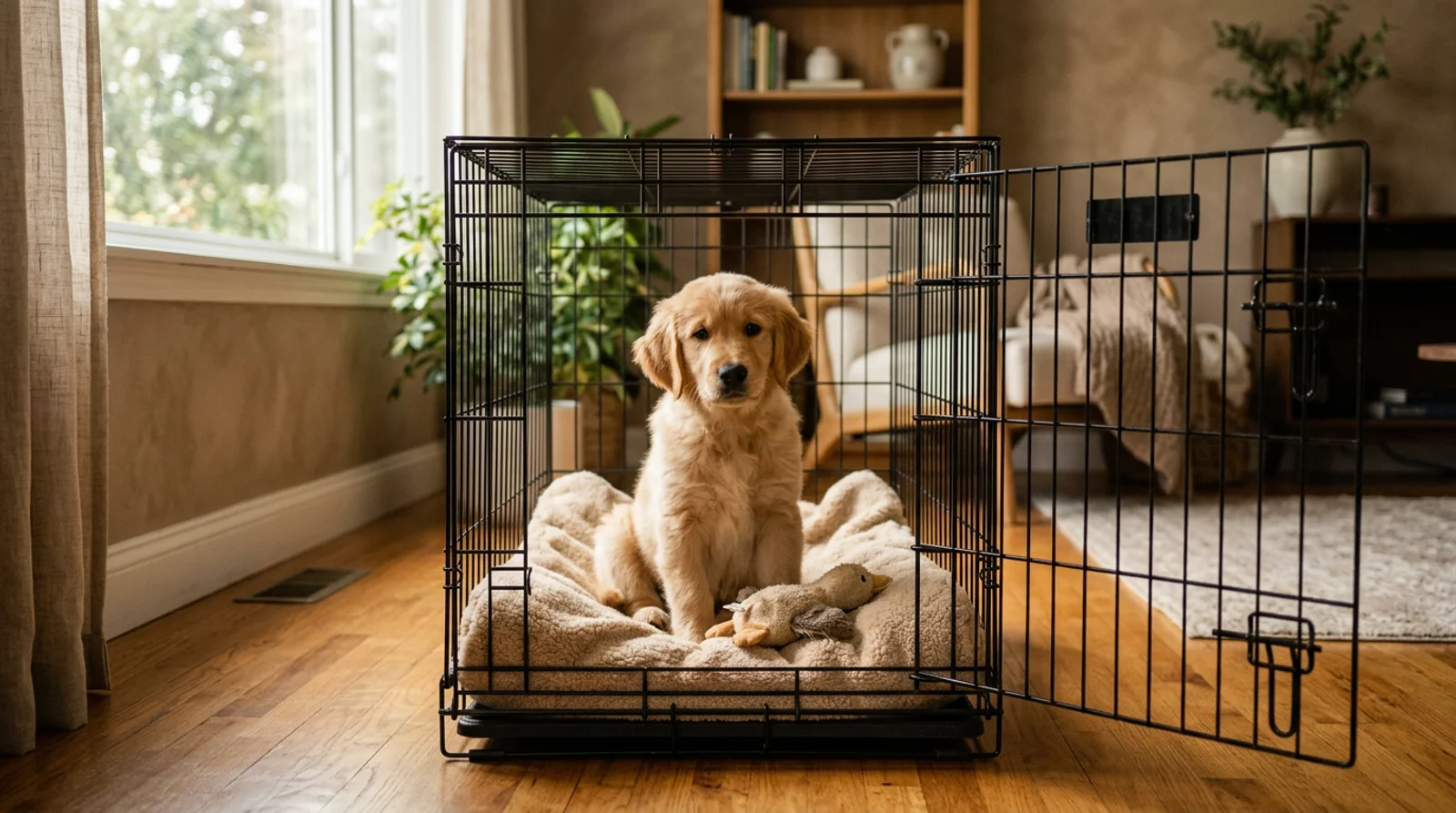
Crate Training Your Puppy: A Step-by-Step Guide
Crate Training Your Puppy: A Step-by-Step Guide
Crate training your puppy teaches your dog to see a crate as a safe, comfortable den—never a punishment—so they settle inside willingly for naps, overnight sleep, and short stretches when you can't supervise. Done well, it accelerates housetraining, prevents destructive chewing, and gives your puppy healthy boundaries from day one.
We've crate-trained border collies who needed structure, golden retrievers who'd devour the baseboards given ten unsupervised minutes, and anxious rescues who craved a quiet cave. The method stays the same: go slow, never force, pair the crate with everything your puppy loves. Rush it and you'll hear 2 a.m. barking for weeks. Take your time, and most pups curl up inside willingly by the end of week two.
Why Crate Training Works (and When It Doesn't)
Dogs are den animals. A properly sized crate taps into that instinct, offering a quiet retreat when the household gets loud or your puppy needs to decompress after play. It also leverages a puppy's natural reluctance to soil their sleeping area, which makes housetraining faster and cleaner.
That said, a crate is not a babysitter. Puppies under four months can hold their bladder roughly one hour per month of age—so a ten-week-old needs a break every two to three hours. Leave them longer and accidents become inevitable, unraveling housetraining progress. We've also seen crate training backfire with dogs who have severe separation anxiety or a history of confinement trauma. In those cases, work with a certified trainer or veterinary behaviorist before proceeding.
Choosing the Right Crate Size and Style
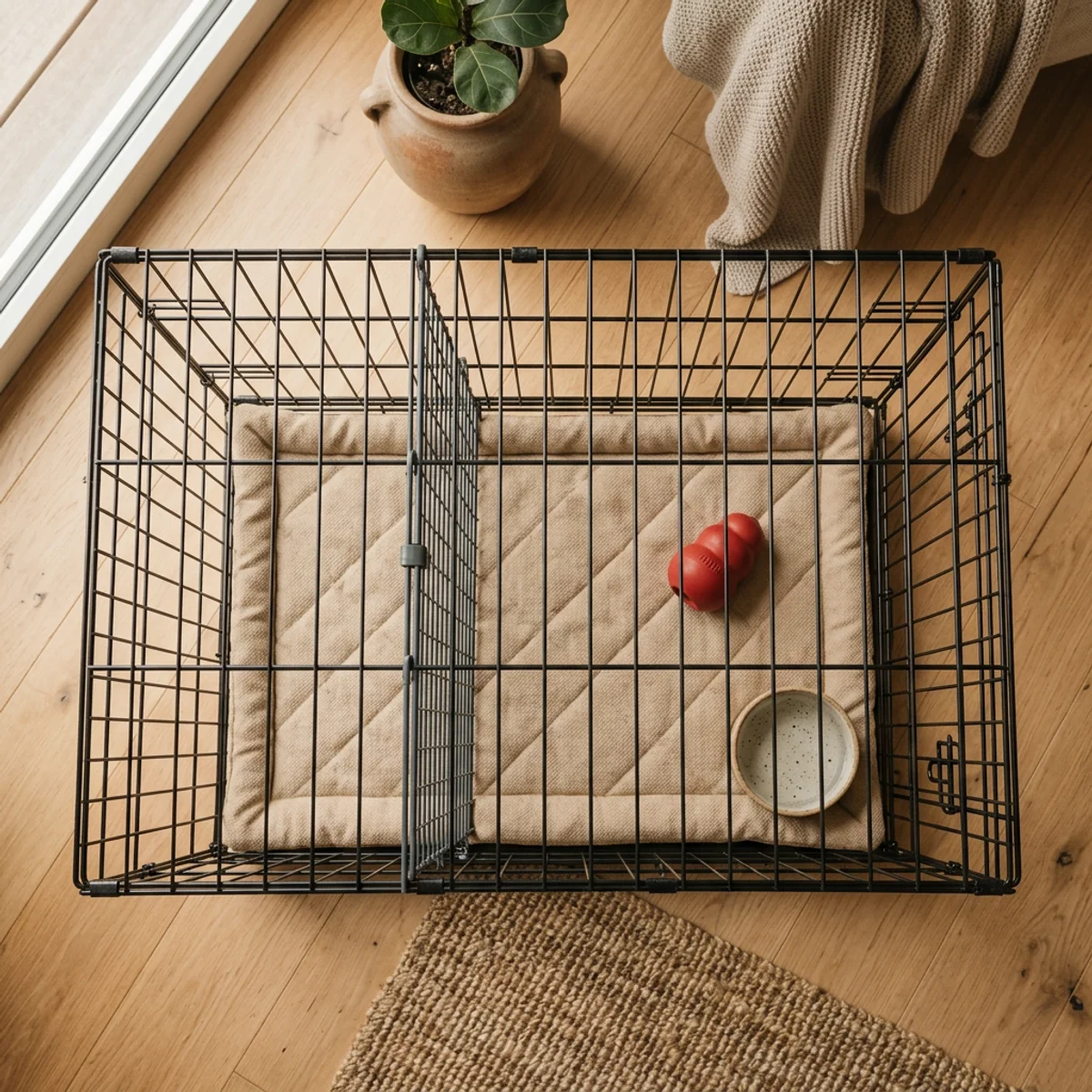
Your puppy should stand, turn around, and lie down fully stretched out—but not much more. Too large and they'll pee in one corner and sleep in the other, defeating the housetraining benefit. For a Lab or shepherd puppy who'll hit 30 kg at maturity, buy an adult-sized wire crate with an adjustable divider panel so you can shrink the space as needed, then expand it as they grow.
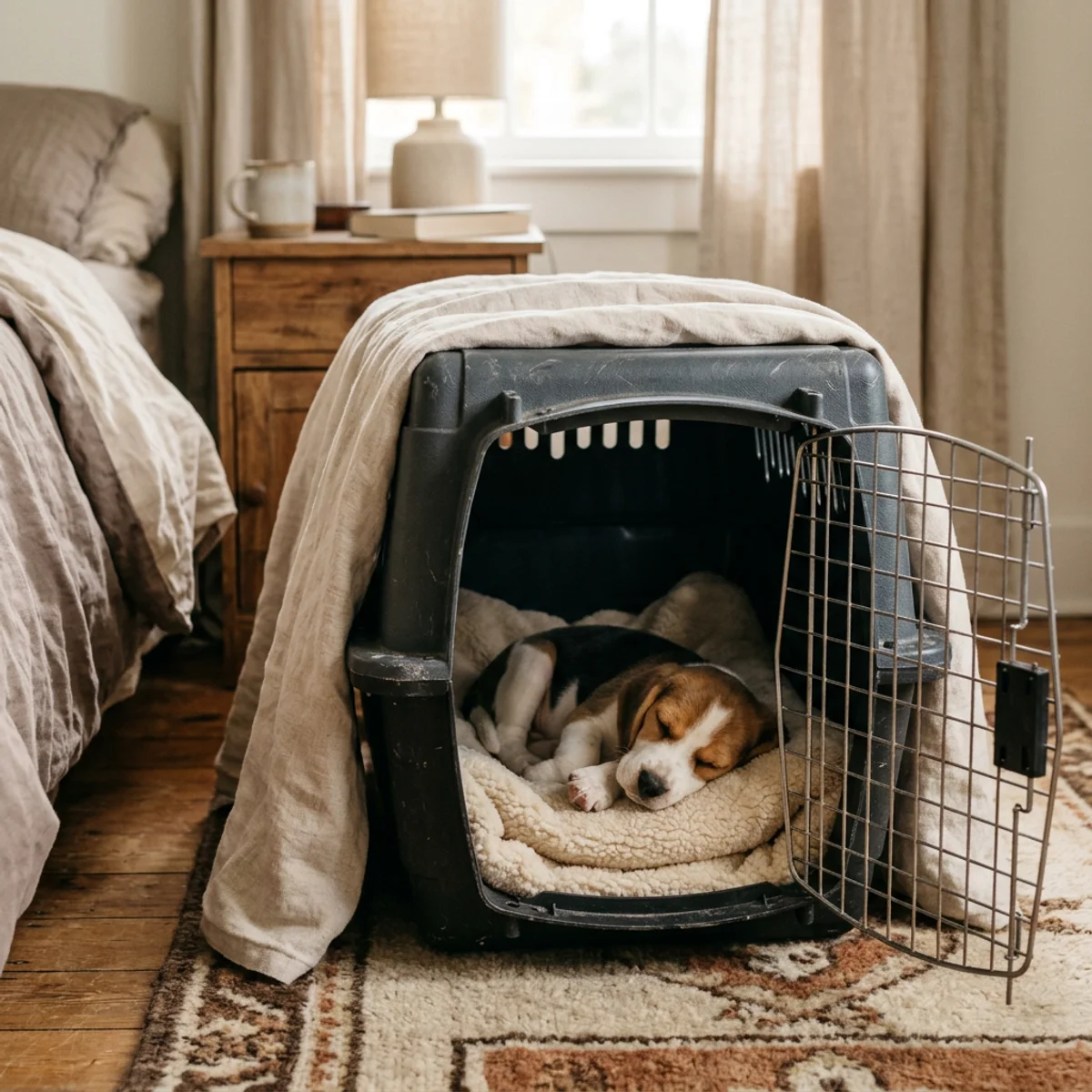
Wire crates offer visibility and airflow. Our high-energy herding breeds like seeing the room. Plastic airline-style crates feel more cave-like and work well for anxious pups or overnight sleep. Soft-sided crates are portable but only suitable once your dog is fully trained and past the chewing phase—one bored beagle can shred mesh in under five minutes.
Skip crates marketed as "furniture" or decorative end tables until your puppy is reliably calm inside. Flimsy panels won't survive a determined digger.
Puppy Crate Training Schedule: Week by Week
The timeline below reflects what we see with most puppies between eight and sixteen weeks. Older adolescents or adult dogs often move faster; very anxious pups may need extra days at each step.
Days 1–3: Introduction
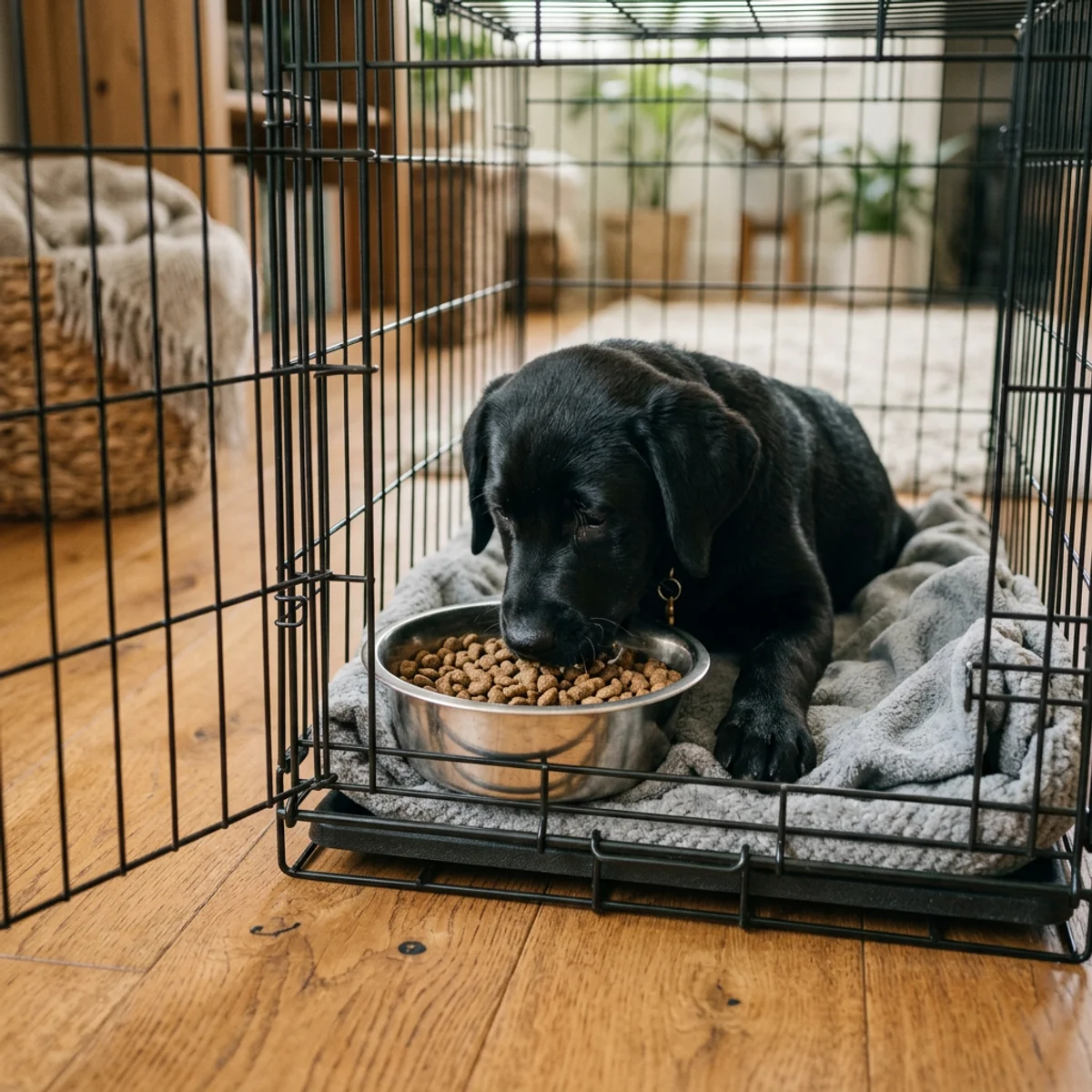
Place the crate in a busy area—kitchen or living room—with the door propped open. Toss a few high-value treats inside (freeze-dried liver, small pieces of cheese) and let your puppy investigate on their own terms. No pressure. Some pups march right in; others need an hour of sniffing the threshold. Feed meals inside the crate with the door still open.
Days 4–7: Short Closures
Once your puppy enters willingly for treats, close the door for ten seconds while you stand beside the crate. Open immediately and reward calmly—no fanfare. Gradually increase to thirty seconds, then one minute, then two. If they whine, wait for a single quiet moment before opening (even one second counts). Opening mid-bark teaches them that noise equals freedom.
Week 2: Building Duration
Stretch the time to five minutes, then ten, while you remain in the room. Practice after play sessions or a short walk when your puppy is naturally tired. A twenty-minute romp in the yard followed by crate time works beautifully. This is also when we start closing the crate for daytime naps—usually two or three times a day.
Week 3: Stepping Away
Close the crate and leave the room for thirty seconds. Return, let them out calmly (wait for quiet if they're fussing), and repeat. Build to five minutes out of sight, then fifteen. Most puppies protest when you first disappear. Consistency matters more than speed here.
Week 4 and Beyond: Longer Intervals
By week four, many puppies accept one to two hours in the crate during the day and six to eight hours overnight (with a midnight potty break for younger pups). Always offer a bathroom trip immediately before and after crating.
How to Crate Train a Dog: Step-by-Step Techniques
The mechanics are simple. The nuance is in your timing and tone.
Make It Comfortable
Line the crate with a washable, flat mat or fleece blanket—nothing thick enough to bunch up and create a pee-hiding spot. We avoid cedar shavings or heavily scented bedding; dogs have sensitive noses. A safe chew toy (rubber Kong stuffed with frozen peanut butter or plain yogurt) keeps jaws busy and builds positive associations. Remove collars to prevent snagging.
Use a Cue Word
Pick a neutral phrase—"crate," "bed," "kennel"—and say it once, cheerfully, as your puppy steps inside. Toss the treat to the back so they walk all the way in. Repeat this every single time. Within days, the word itself becomes a predictor of good things.
Never Use the Crate as Punishment
If your puppy chews your favourite sneaker, resist the urge to march them to the crate in frustration. The crate is Switzerland—always neutral, always safe. Punishment associations take weeks to undo.
Practice Random Short Sessions
Crate your puppy for five minutes while you fold laundry in the same room, or during a calm moment mid-afternoon. This prevents them from linking the crate only to your departure, which reduces separation anxiety down the line.
Crate Training Tips for Common Challenges
Barking and whining: If your puppy cries in the crate, first rule out urgent needs—do they need to pee? Are they overheated? If it's simply protest, wait for any gap in the noise (even two seconds) before opening the door or offering attention. We've found that covering the crate with a light blanket can help anxious pups settle, mimicking a den.
Accidents inside the crate: This usually means the crate is too large, the interval between breaks is too long, or your puppy had water right before bed. For young pups, pick up water bowls ninety minutes before crating overnight. If accidents persist despite appropriate scheduling, consult your vet to rule out urinary issues.
Destructive chewing: A bored puppy will shred bedding, scratch at the pan, or chew the wire. Increase daily exercise—twenty minutes of active play or a sniff-filled walk makes a massive difference—and rotate chew toys to keep them interesting. A frozen Kong buys you at least fifteen quiet minutes.
Refusing to enter: Go back two steps. Toss treats just inside the door without closing it. Feed every meal in the crate for three days. Patience always wins over force. We once worked with a skittish terrier mix who needed two full weeks of treat trails before she'd step inside; by week three she was napping in there voluntarily.
Puppy Sleep Training and Overnight Crating
Most puppies under twelve weeks can't make it through the night without a bathroom break. We place the crate in the bedroom for the first few weeks—hearing you breathe nearby helps them settle—and set a quiet alarm for 3 a.m. No lights, no talking, just a quick trip outside, then back in the crate.
By sixteen weeks, many pups sleep seven or eight hours straight. If yours still wakes at night, double-check their evening routine: a solid play session, a small meal a few hours before bed (not right before), and a final potty break at 10 or 11 p.m. sets them up for success.
Some pet parents worry that crating overnight is cruel. In our experience, puppies sleep better in a crate than loose in the bedroom, where every rustle and shadow becomes an invitation to play. The crate signals "off duty."
Balancing Crate Time with Freedom
A crate is a tool, not a lifestyle. Puppies need socialization, exercise, training, and free play every single day. Our rule of thumb: if your pup spends more than four to six hours in the crate during daytime (excluding overnight sleep), reassess your schedule. Hire a dog walker, enroll in daycare a few days a week, or use a puppy-proofed pen for longer stretches.
As your dog matures and proves reliable with housetraining and chewing, you can start leaving the crate door open and giving them access to a larger space. Some dogs continue to seek out their crate for naps well into adulthood; others outgrow the need entirely. Both are normal.
If you're navigating a small apartment, you'll find more strategies in our guide to small-space solutions for pet owners—many of the same principles apply.
FAQ
How long does crate training a puppy take?
Most puppies accept the crate within two to four weeks if you follow a gradual schedule and avoid forcing them inside. Anxious or older dogs may need six weeks or more. Consistency and positive associations matter more than speed.
Can I crate train an older dog?
Yes. The same method works—start with the door open, use high-value rewards, and build duration slowly. Older dogs often learn faster because they have better bladder control and longer attention spans. If your dog has a history of crate trauma, consult a certified trainer.
Should I cover the crate?
Covering three sides with a breathable blanket can help anxious puppies settle by reducing visual stimulation. Leave the front open for airflow and so your pup doesn't feel trapped. We skip covers for confident, calm dogs who like to watch the room.
What if my puppy hates the crate no matter what I try?
Slow down. Spend a full week just feeding meals inside with the door open. Use higher-value treats (real chicken, cheese, hot dog pieces). If your puppy still panics or shows signs of distress—panting, drooling, frantic escape attempts—stop and consult a veterinary behaviorist. Some dogs do better with exercise pens or baby gates instead of full enclosure.
Building the Right Foundation
Crate training your puppy isn't about confinement—it's about giving them a space that feels safe when the world gets overwhelming, and giving you peace of mind when you can't watch every move. Go at your puppy's pace, keep sessions positive, and remember that a little whining is normal; prolonged distress is not.
If your pup is already settling beautifully and you're tackling other early training goals, our guide to leash training tips for dogs pairs well with crate work—both teach patience and self-control. And when you're ready to set up the rest of your puppy's space, explore our curated essentials at Studio Bleuet. We carry thoughtfully designed crates, mats, and toys that hold up to real puppy life—because your home should look good and function even better.