Small-Space Solutions for Pet Owners: Making Condo Life Work
Small-Space Solutions for Pet Owners: Making Condo Life Work
You can absolutely give your dog or cat a great life in a condo or apartment—even a studio. The secret? Treat every square foot as an opportunity. Furniture that pulls double duty. Walls that become climbing highways. Storage that hides the visual clutter without sacrificing function. We've helped hundreds of pet parents across Canada make small space pet solutions work beautifully, and we live it ourselves—one of our team shares 520 square feet with two cats and more pet gear than she'd like to admit.
Why Small-Space Living Works for Pets (When Done Right)
Small spaces force you to be intentional. That's actually a gift. Our 12-kg terrier mix doesn't care that his owner's Vancouver one-bedroom is 600 square feet; he cares that his bed is cozy, his toys are accessible, and he gets two good walks a day. Cats, meanwhile, measure their territory vertically as much as horizontally—a fact most people in sprawling houses never exploit.
The problems arise when you try to cram full-sized pet furniture into corners, stack bags of kibble against walls, and let leashes tangle in the entryway. That's not a space problem; it's a systems problem.
Multi-Functional Pet Furniture That Earns Its Footprint
Every piece of furniture in a small home should justify itself. Pet furniture is no exception.
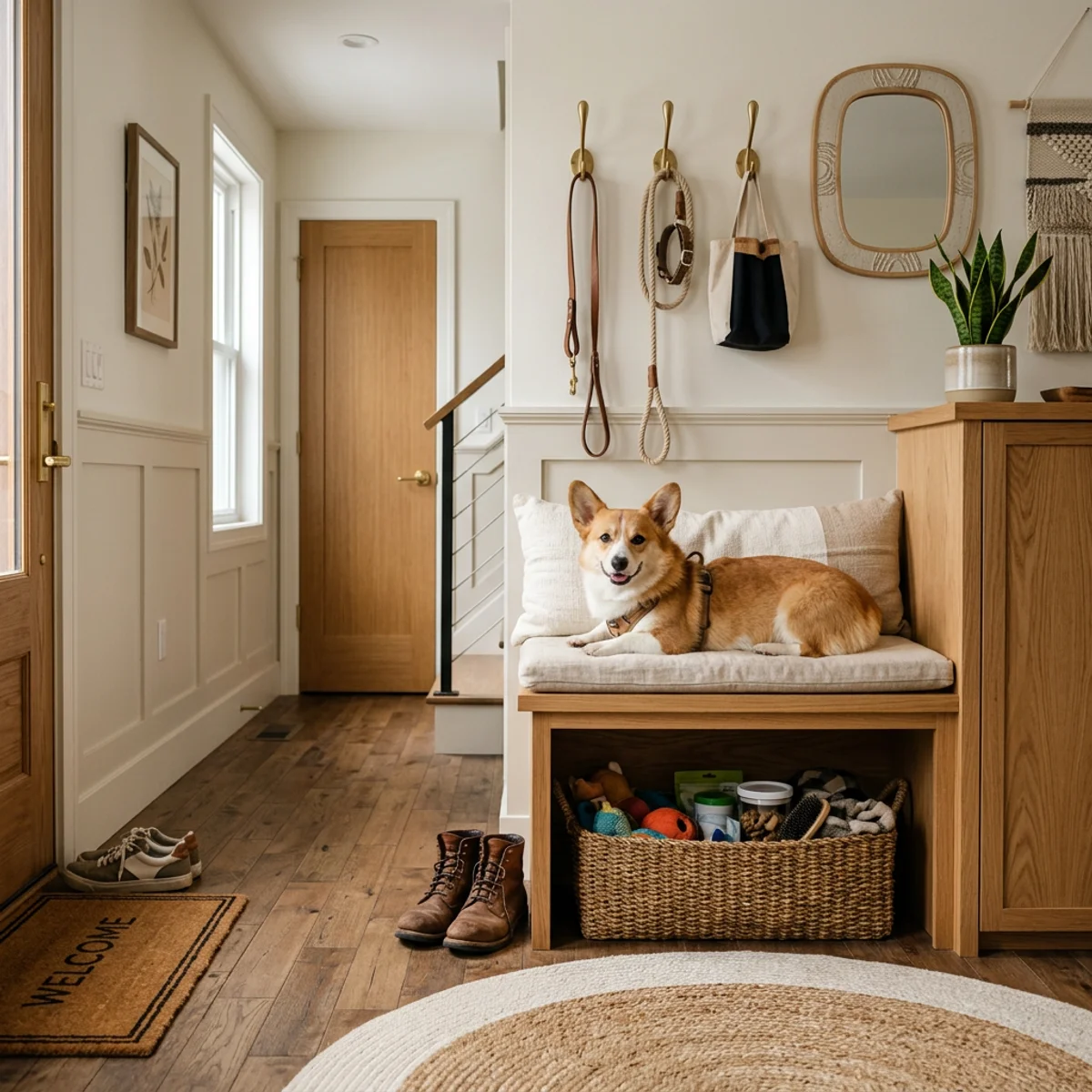
Bench-style storage with a built-in pet bed is our single favorite small-space piece. It sits in your entryway or at the foot of your bed, holds leashes and grooming supplies inside, provides a seat for you, and gives your dog a designated spot. We've seen this work beautifully for corgis, beagles, and even a 30-kg Labrador whose owner chose a sturdier wooden bench with a custom cushion.
Litter-box enclosures that double as side tables or credenzas are non-negotiable for cat owners in condos. A standalone plastic dome eats up floor space and announces itself visually. A cabinet-style enclosure with a top surface lets you display a lamp or books, tucks the mess out of sight, and contains litter scatter better than any open box. Look for designs with proper ventilation, an entry large enough for a 6-kg cat to turn around comfortably, and a removable top for easy scooping. For more on setup, see our guide to litter box setup and maintenance.
Wall-mounted feeding stations free up floor space and keep bowls at a comfortable height for medium and large dogs. We like them in kitchens or mudroom nooks; fold-down versions can be tucked away entirely when not in use. Pair them with a small cabinet or wall-mounted basket underneath for food storage. More ideas on thoughtful feeding setups in our feeding stations guide.
What You Don't Need
Skip oversized pet beds "for room to stretch." A 25-kg dog curls into a ball most of the time; a round bed 75 cm in diameter is plenty, and it won't dominate your living room. Also skip dedicated toy boxes. Use a slim storage basket that slides under a console table instead.
Vertical Space: The Secret Weapon for Apartment Living with Pets
Cats need vertical territory. In a small apartment, walls and unused upper zones are gold.
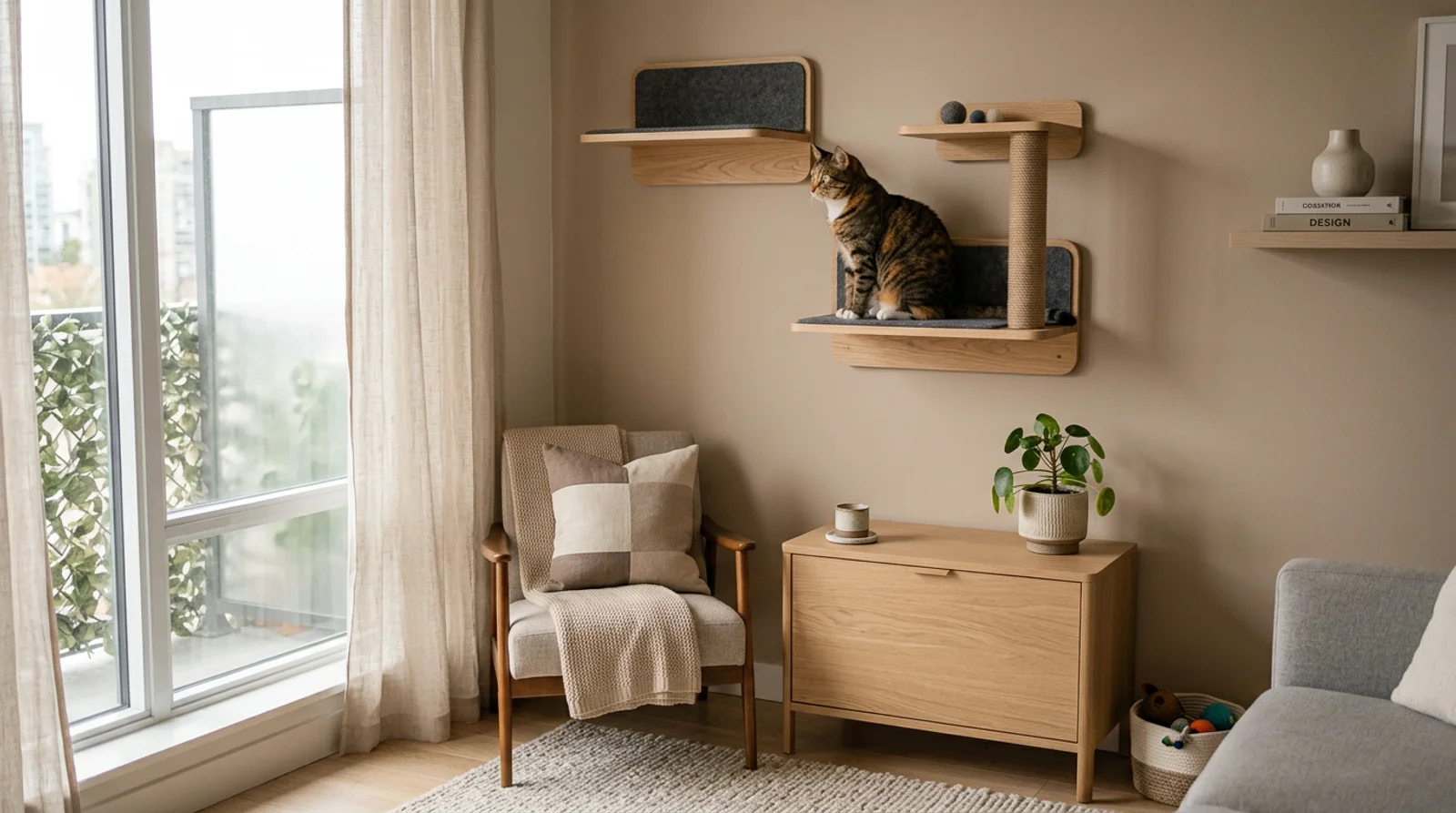
Cat shelves and wall-mounted perches let your cat patrol, nap, and survey from above—satisfying instincts without claiming floor space. We've installed simple floating shelves in a zigzag up a hallway wall for under $100, and it became the favorite highway for a young Bengal. Space shelves 30–45 cm apart vertically so your cat can leap comfortably, and anchor them properly; a 5-kg cat generates surprising force mid-jump.
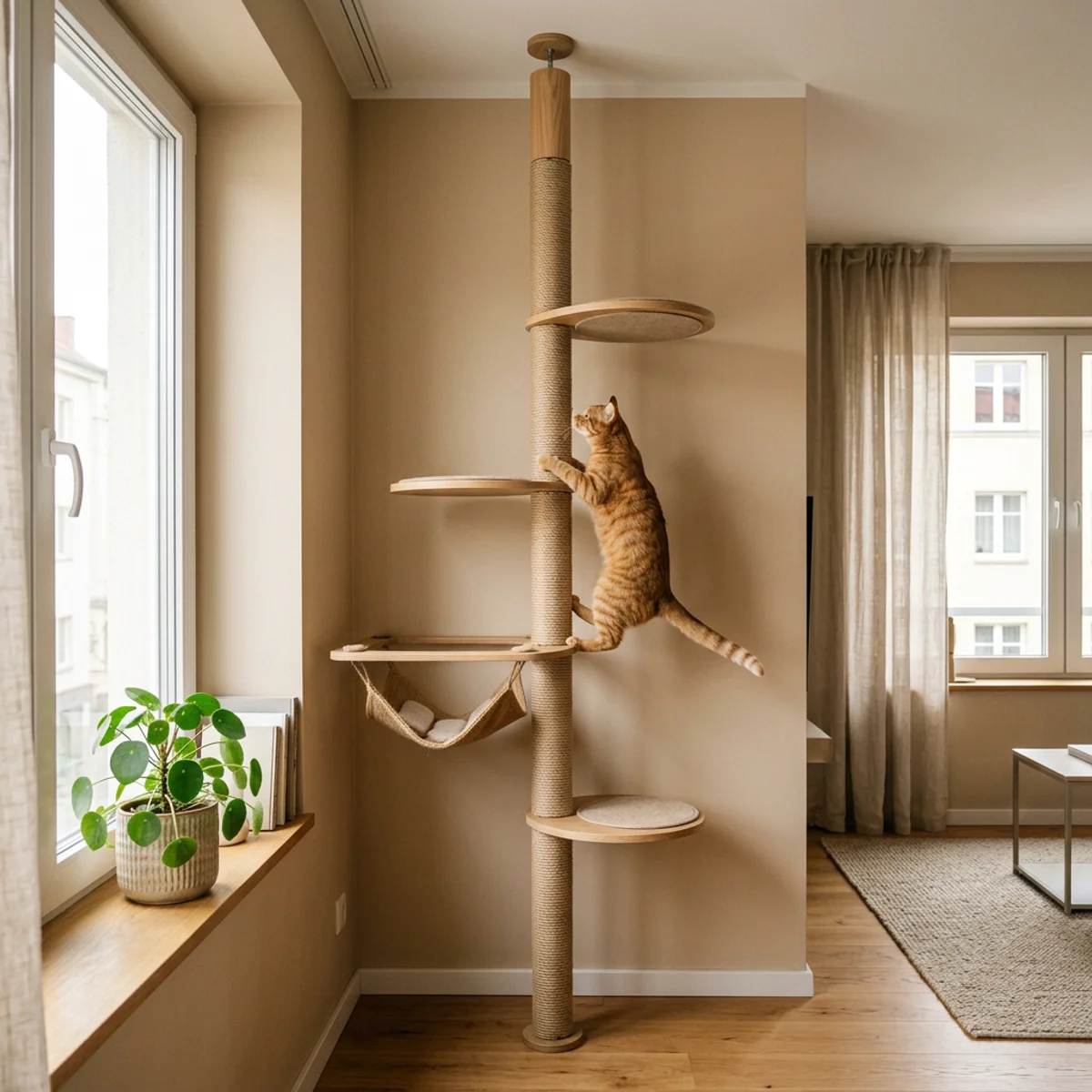
Tall cat trees (floor-to-ceiling tension models) are surprisingly space-efficient. A narrow 40 cm footprint reaches the ceiling and offers multiple levels. Compare that to a sprawling carpeted tree that takes up a square meter of floor. For ideas on keeping indoor cats engaged, read our indoor cat enrichment guide.
Over-door scratchers and mounted scratch pads claim unused door or wall real estate. We've mounted sisal pads in corners where two walls meet—cats love the angle, and it keeps them off the sofa arm.
Hidden Storage and Smart Pet Storage Ideas
Pet gear multiplies. Leashes, harnesses, waste bags, grooming tools, food, treats, coats, extra bedding—it adds up fast. If it's all visible, your condo feels chaotic.
Entryway Command Center
Wall-mounted hooks and a small basket keep leashes, harnesses, and waste-bag dispensers by the door without requiring a coat closet. We use adhesive hooks rated for 2 kg each—no drilling, and they hold up.
A slim drawer cabinet (20 cm deep) can tuck into an entryway nook and hold everything from nail clippers to flea combs. IKEA's shallow shoe cabinets work perfectly; one of our team stores all her grooming supplies in two compartments.
Kitchen and Pantry
Airtight storage bins stacked vertically keep kibble fresh and take up less visual space than crinkly bags. A 10-kg bin fits neatly in a lower cabinet or tucked beside the fridge. Label them if you have multiple pets.
Treat jars on a high shelf keep snacks accessible to you, not to a counter-surfing terrier. Glass or ceramic looks better than plastic baggies.
Living Areas
Ottoman storage hides toys, spare blankets, or a dog coat for winter walks. Choose one large enough to sit on—it's seating and storage.
Under-sofa bins (the low-profile kind, 15 cm tall) can slide out of sight and hold seasonal gear or backup supplies. Measure your sofa clearance first.
Space-Saving Pet Furniture: What Actually Works
| Furniture Type | Best For | Footprint | Why We Recommend It |
|---|---|---|---|
| Litter-box credenza | Cats (small apartments) | 60–80 cm W × 50 cm D | Hides mess, adds surface, contains scatter |
| Wall-mounted feeding station | Medium/large dogs | Zero floor space | Keeps bowls off the floor, foldable options available |
| Bench with storage + dog bed | Dogs up to ~25 kg | 90–120 cm W × 40 cm D | Entryway seating + leash storage + dog bed in one |
| Floor-to-ceiling cat tree | Cats | ~40 cm diameter | Vertical territory, minimal floor footprint |
| Ottoman with storage | Dogs or cats | 50–60 cm diameter | Toy/blanket storage + extra seating |
Condo Pet Ideas: Layout and Zoning Tricks
Think in zones, not rooms.
Create a "pet corner" even in a studio. A cat tree, a small mat, and a wall-mounted water fountain claim a 1-square-meter zone that becomes your cat's base. Dogs benefit from a designated bed area—ideally not in heavy traffic, where they're constantly stepped over.
Use rugs to define pet zones. A washable runner in the entryway catches mud and signals "this is where we deal with paws and leashes." A small rug under feeding bowls contains spills and can go right in the washing machine.
Separate litter and food. Even in a tiny space, don't put the litter box next to the food bowl. Cats instinctively avoid eating near their waste. A bathroom for the litter box and a kitchen nook for food works in most layouts.
Keep a pet-free zone if you can. Maybe it's your bedroom or your home-office corner. One space that stays fur- and toy-free helps you breathe, especially in a small apartment.
Reducing Visual Clutter While Keeping Gear Accessible
Accessibility matters. If the nail clippers are buried in a hall closet, you won't trim your cat's claws. If the leash is tangled in a drawer, your morning walk starts with frustration.
Use drawer dividers in a single dedicated pet drawer. Grooming tools in one section, waste bags in another, spare collar in the third. Takes ten seconds to set up, saves you a hundred small annoyances. For grooming basics, check our guide to grooming your dog at home.
Clear bins or open baskets work better than lidded totes for daily-use items. You can see what's inside, grab it fast, and put it back just as easily.
Rotate toys. Keep half in storage, half out. Swap them every two weeks. Your dog or cat gets "new" toys without you buying more, and your apartment doesn't look like a pet store exploded.
Real-Life Small-Space Wins from Our Team
Mika (cat, 4 kg) in a 480-square-foot Toronto studio: Three wall-mounted shelves along the hallway, litter box inside a narrow cabinet in the bathroom, and a small corner cat tree. Mika has more vertical space than she did in her owner's previous two-bedroom.
Benny (terrier mix, 10 kg) in a 650-square-foot Montreal one-bedroom: Storage bench in the entryway holds leashes, waste bags, winter coat, and grooming supplies. Benny's bed tucks under the dining nook bench during the day. No visible pet clutter except his water bowl.
Two cats (5 kg and 7 kg) in a 550-square-foot Vancouver condo: Litter box in a credenza-style enclosure in the living room, doubles as a TV stand. Wall-mounted feeding shelf in the kitchen. Cat tree by the window. Both cats are healthy, active, and the space feels surprisingly open.
FAQ
Can large dogs live comfortably in a small apartment?
Yes, if they get enough exercise. A 30-kg Labrador can thrive in a one-bedroom if she gets two solid walks and some mental enrichment daily. Size matters less than energy level and routine—a working-line Border Collie will struggle in a small space without serious outlets, while a senior Newfoundland might be perfectly content. For exercise needs by breed, see our article on how much exercise dogs need.
How do I keep a litter box in a studio without the smell taking over?
Choose a high-quality clumping litter, scoop daily, and use an enclosed cabinet-style box with ventilation. A small air purifier nearby helps. Avoid placing the box near heating vents, which spread odors. Deep-clean the box weekly with unscented soap—residual perfume can deter your cat from using it.
What's the best way to store a month's worth of pet food in a tiny kitchen?
Airtight bins stacked vertically. A 10–15 kg bin fits in a lower cabinet or a narrow pantry slot. Buy smaller bags more frequently if storage is truly tight—a 5 kg bag of kibble fits under most sinks. Avoid storing food in the bag alone; it goes stale faster and attracts pests.
Do cats really need vertical space, or is it just nice to have?
Cats need it. Vertical territory provides security, exercise, and enrichment—especially for indoor-only cats in small spaces. A cat without vertical access often becomes stressed, bored, or destructive. Even one wall-mounted perch and a modest cat tree make a measurable difference in behavior and happiness.
Making It Work
Small-space living with pets isn't about compromise—it's about precision. Every piece of furniture, every storage solution, every inch of wall space gets a job. When you design thoughtfully, your 600-square-foot condo can feel more functional and calmer than a cluttered 1,500-square-foot house.
We've built Studio Bleuet around this philosophy: curating gear that works hard, looks good, and respects the reality of how Canadians actually live. If your space is tight and your pet's happiness isn't negotiable, you're in the right place. Browse our pet-friendly home decor ideas for more inspiration, or reach out—we love solving small-space puzzles.
Sources
- American Kennel Club — Best Dogs For Apartments
- American Kennel Club — Making Your Balcony Safe and Dog-Friendly
- American Kennel Club — How to Prepare Your Apartment for a New Puppy
- Canadian Veterinary Medical Association — Code of Practice for the Care of Domestic Cats
- DND Living Accommodations Instruction — Responsible Pet Ownership