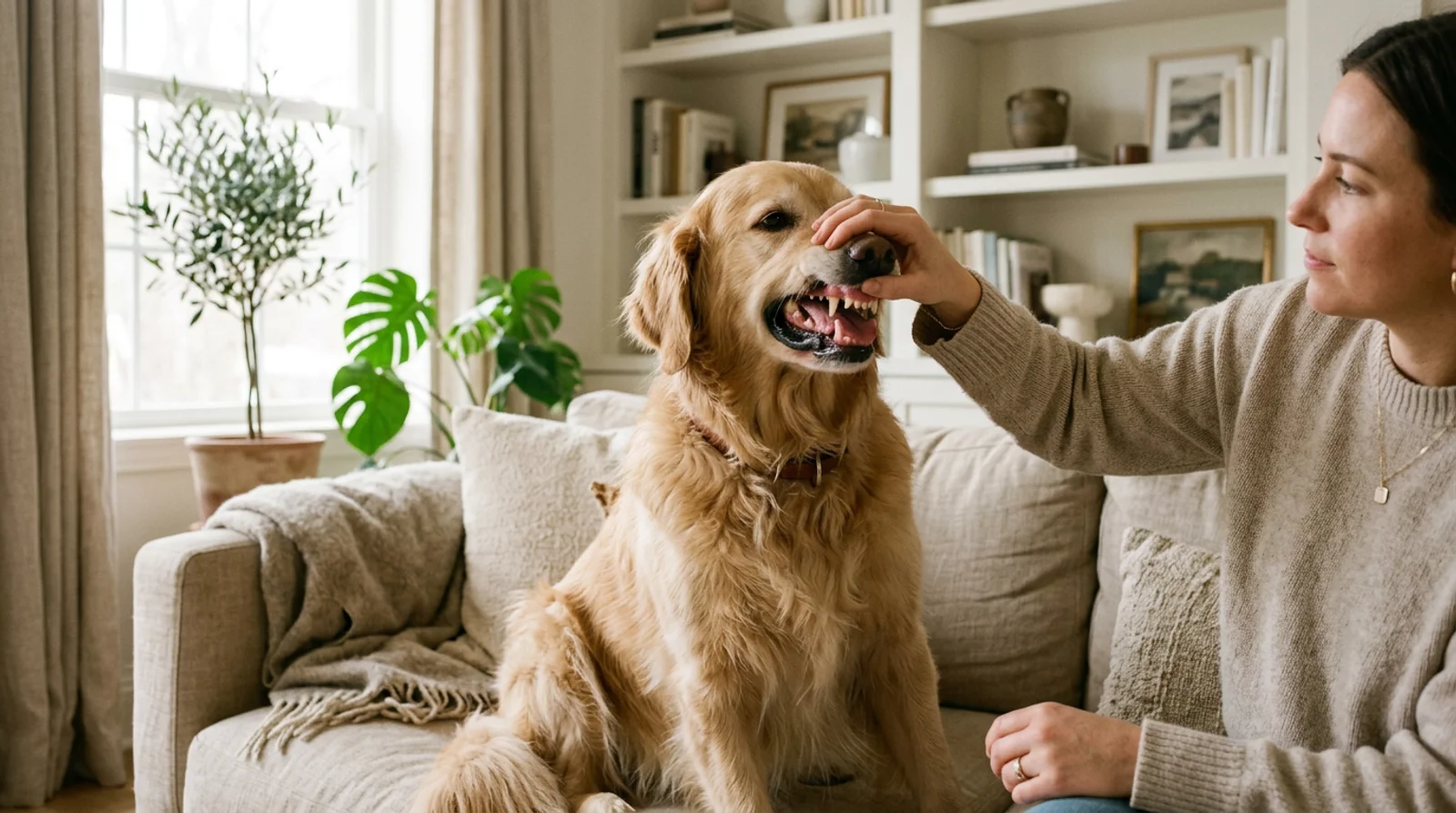
Dog Dental Care at Home: How to Keep Your Dog's Teeth Healthy
Dog Dental Care at Home: How to Keep Your Dog's Teeth Healthy
Your dog's breath shouldn't clear a room. If it does, you're looking at the early signs of dental disease—and by age three, most dogs show some signs of dental disease—studies suggest 60-80% have periodontal issues to varying degrees. The fix? A consistent dog dental care routine at home: daily brushing, the right tools, and knowing what a healthy mouth looks like. We're not talking about expensive sedated cleanings every year. We mean ten minutes a week that can save you $2,000–$4,000 in emergency extractions and spare your dog real pain. Here's how we keep our own dogs' teeth clean and why it matters more than most pet parents realize.
Why Dog Oral Health Matters More Than You Think
Dental disease isn't cosmetic. Bacteria from infected gums enter the bloodstream and damage the heart, liver, and kidneys. We've watched clients face $2,000–$4,000 bills for emergency extractions that ten minutes a week would have prevented.
The tartar you see above the gum line is only part of the problem. Plaque forms within hours of eating and begins to mineralize into tartar within 24-72 hours, which is why frequent brushing disrupts this cycle. Once tartar builds up, it pushes gums away from teeth. Once pockets form, infection sets in. Dogs are stoic. Many eat normally even with fractured teeth or abscesses. By the time you notice reluctance to chew or pawing at the mouth, the damage is advanced.
Prevention is wildly cheaper and kinder. A toothbrush costs $8. A dental cleaning under anaesthesia starts around $800 in most Canadian cities—more if extractions are needed.
How to Brush Dog Teeth: Step-by-Step
Brushing is the gold standard for dog dental care. Nothing else—not chews, not water additives—removes plaque as effectively. If you do one thing, make it this.
Choose the Right Tools
You need a soft-bristled dog toothbrush (or a finger brush for small mouths) and enzymatic dog toothpaste. Never use human toothpaste—it contains foaming agents dogs shouldn't swallow, and many brands contain xylitol, which is highly toxic to dogs. Always use toothpaste formulated for dogs. We use poultry- or beef-flavoured enzymatic pastes; the enzymes break down plaque even without scrubbing, so imperfect brushing still helps.
For large breeds, a long-handled brush with angled bristles reaches the back molars. For toy breeds or puppies, a finger brush or gauze pad wrapped around your finger works better.
Desensitize First
If your dog has never had their teeth brushed, don't start with a full scrub. Spend three to five days getting them comfortable:
- Let them lick toothpaste off your finger.
- Rub your finger gently along their gums and outer teeth.
- Introduce the brush—no paste—and let them sniff and lick it.
- Brush one or two teeth, reward heavily, and stop.
Short, positive sessions win. A 22-kg terrier who hates restraint will tolerate fifteen seconds if you stop before he's stressed and follow with a treat.
The Brushing Technique
Once your dog accepts the brush:
- Lift the lip on one side. You don't need to open the mouth fully.
- Angle the bristles toward the gum line at about 45 degrees.
- Use small circular motions, spending a few seconds per tooth.
- Focus on the outer surfaces—that's where 80% of plaque lives. Most dogs won't let you brush the tongue side, and that's fine.
- Work along the canines, premolars, and big molars at the back. Those back teeth collect the most tartar.
- Aim for 30 seconds per side. If you can only manage ten seconds at first, that's still useful.
Daily is ideal. Three times a week is the minimum to disrupt plaque before it mineralizes. We brush our dogs' teeth every evening after their last meal; it's part of the bedtime routine now, like letting them out one more time.
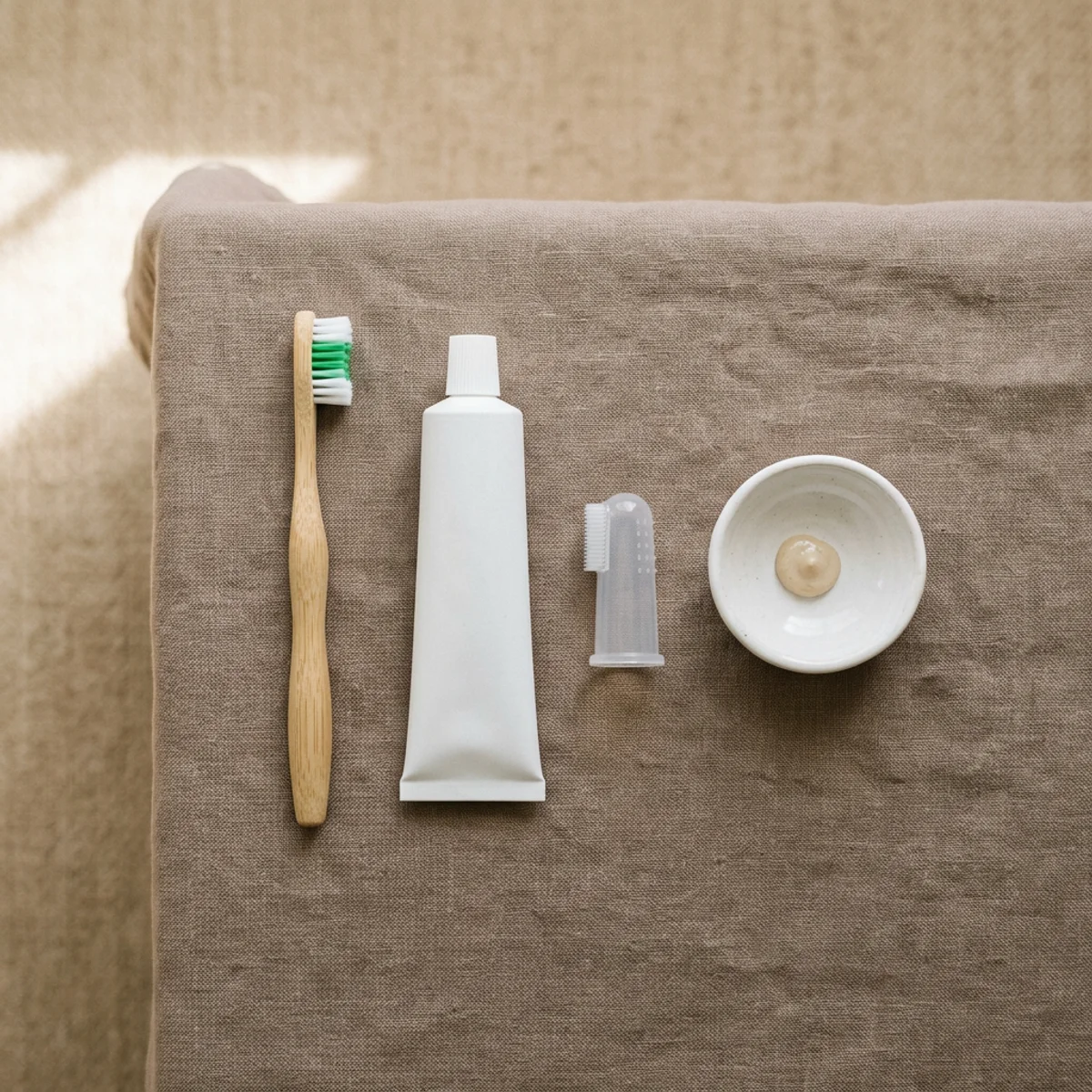
Building a Dog Teeth Cleaning Routine That Sticks
Consistency beats perfection. We'd rather you brush badly three times a week than plan to do it perfectly and never start.
Anchor it to an existing habit. Brush right after your own bedtime routine, or before their evening walk. The cue makes it automatic.
Keep supplies visible. If the toothbrush lives in a drawer, you'll forget. Ours sits in a cup on the kitchen counter next to the treat jar.
Start young if you can. Puppies who learn toothbrushing during socialization accept it for life. If you're working through our puppy socialization guide, add mouth handling to the checklist. Lift lips, touch teeth and gums, reward. Do this daily for two weeks and brushing becomes trivial.
For older or resistant dogs, break the task into smaller pieces. One side today, the other tomorrow. Brush just the big canines at first. Pair it with something they love—our border collie tolerates brushing because she knows a frozen carrot stick comes after.
What If Your Dog Really Won't Tolerate Brushing?
Some dogs—especially rescues with prior rough handling—never fully accept it. Don't force a battle. A terrified dog and bleeding gums help no one. If your dog is extremely resistant despite gradual desensitization, consult your veterinarian or a veterinary behaviourist—they can provide strategies or mild sedation options for necessary dental care. In that case:
- Try a dental wipe or gauze pad instead of a brush.
- Use a water additive with the Veterinary Oral Health Council (VOHC) seal; they reduce bacteria but don't remove existing tartar.
- Offer dental chews daily (look for the VOHC seal here, too).
- Schedule professional cleanings more frequently.
These are compromise solutions. They help, but they're not substitutes for brushing.
Signs of Dental Disease and When to See Your Vet
Even with diligent home care, check your dog's mouth weekly. Catch problems early and you'll avoid pain and cost.
Healthy gums are pale pink (or pigmented in some breeds), with no swelling or bleeding. Teeth should be white or lightly cream-coloured at the gum line, with no brown crust.
Red flags:
- Red, swollen, or bleeding gums, especially along the margin where tooth meets gum.
- Yellow or brown tartar building up, particularly on the upper premolars (the teeth just behind the big canines).
- Persistent bad breath that smells rotten or metallic, not just "dog breath."
- Loose or broken teeth, or any tooth that looks darker than the others (a sign of a dead root).
- Reluctance to eat hard food or chew toys, favouring one side, or dropping food.
- Pawing at the mouth or rubbing the face on the floor.
- Excessive drooling or blood-tinged saliva.
If you see any of these, book a vet visit. Don't wait for the next annual checkup. An infected tooth is agony, even if your dog doesn't yelp.
How to Prevent Dog Dental Disease: Beyond the Toothbrush
Brushing is the cornerstone, but a few other strategies help.
Dental Chews and Toys
Offer a VOHC-accepted dental chew daily. These scrape plaque as the dog chews. They're most effective for the back teeth if the dog actually chews rather than gulping. A 30-kg Labrador who swallows a dental stick in three bites gets minimal benefit; freeze it or choose a larger size to slow him down.
Rubber chew toys with ridges or nubs massage gums and dislodge some plaque. We like ones you can stuff with a bit of wet food or peanut butter—the chewing action is what counts. Avoid hard objects like antlers, hooves, or real bones that can fracture teeth. We've seen too many broken carnassials (the big upper molars) from elk antlers.
Diet and Water Additives
Dry kibble provides slightly more abrasion than wet food, but the difference is minor—kibble alone won't keep teeth clean. Some prescription dental diets have larger, textured kibbles that force more chewing; they help, but they're not magic.
Water additives with the VOHC seal reduce bacteria in the mouth. Pour the recommended dose into the water bowl daily. Our dogs don't seem to notice the taste. It's a passive addition, not a substitute for mechanical cleaning, but it tilts the odds in your favour.
Raw Bones: Proceed With Caution
Some pet parents swear by raw meaty bones (never cooked—those splinter). A raw chicken neck or turkey neck offers chewing resistance and scrapes teeth. We've given them occasionally, supervised, to our larger dogs. The risk is obstruction, choking, or a fractured tooth on dense bone. Before offering raw bones, consult your veterinarian to determine if they're appropriate for your dog based on size, chewing style, and health history. If you try this, choose bones appropriate to your dog's size, always supervise, and take it away once it's small enough to swallow. Not every dog is a good candidate; gulpers and dogs with a history of pancreatitis should skip bones.
Professional Cleanings
Even with perfect home care, most dogs eventually need a professional cleaning under anaesthesia. Tartar below the gum line can only be removed with ultrasonic scaling and polishing. How often? It depends on genetics, diet, and your brushing routine. Some dogs go five or six years before they need one. Others need it every 18 months.
Your veterinarian will assess your dog's dental health at annual exams and recommend the appropriate timing for professional cleanings based on your dog's individual needs. A cleaning in a dog's middle years, before disease is advanced, is safer and cheaper than waiting until teeth are loose and infected.

FAQ
How often should I brush my dog's teeth?
Daily is ideal. Plaque starts forming within hours of a meal and begins to mineralize into tartar within 24-72 hours. Brushing daily keeps you ahead of that cycle. If daily feels impossible, aim for at least three times a week—that's the threshold where you'll see real improvement. Twice a week is better than nothing, but you'll still get tartar buildup.
Can I use human toothpaste on my dog?
No. Human toothpaste contains foaming agents dogs shouldn't swallow, and many brands contain xylitol, which is highly toxic to dogs. Always use toothpaste formulated for dogs. The enzymatic formulas work even without perfect brushing, and dogs tolerate the flavours.
My dog's breath smells bad even after brushing. Is that normal?
No. Brushing should noticeably improve breath within a week or two. Persistent foul breath suggests existing dental disease—infected gums, tartar below the gum line, or a rotten tooth. It can also signal gastrointestinal or metabolic issues, especially if the odour is unusually sweet or foul. Consult your veterinarian for a thorough examination to determine the cause and appropriate treatment.
At what age should I start brushing my puppy's teeth?
As soon as you bring them home, usually around eight weeks. You're not fighting tartar yet—you're building tolerance. Puppies learn quickly that mouth handling is normal and even pleasant if you pair it with treats. Start with just lifting the lips and touching teeth and gums for a few seconds, then reward. Introduce the toothbrush and paste by 12 weeks. This early work pays off for the next 12–15 years.
A Few Minutes Now Saves Pain and Money Later
Dog dental care isn't glamorous, but it's one of the highest-return investments you can make in your dog's health. Brushing three times a week costs you less than an hour a month and can prevent thousands of dollars in emergency vet bills—and spare your dog real suffering.
Start small. Pick up a toothbrush and enzymatic paste this week. Brush just the front canines tonight, reward your dog, and repeat tomorrow. In a month, it'll feel as routine as refilling the water bowl.
If you're overhauling your dog's wellness routine, pair this with our guide to grooming your dog at home and senior dog care tips—preventive care at every age keeps them comfortable and by your side longer.