
How to Socialize Your Puppy: A Complete Guide for the Critical Window
How to Socialize Your Puppy: A Complete Guide for the Critical Window
To socialize a puppy effectively, expose them to diverse people, animals, environments, sounds, and surfaces between 3 and 14 weeks of age—the critical socialization window—using positive, controlled introductions that build confidence without triggering fear. This early work determines whether your dog will relax at the vet, greet strangers calmly, or panic around traffic for the next decade.
We've watched too many adolescent dogs struggle with fear-based reactivity because their early weeks were spent in one quiet house with minimal exposure. Our own Border Collie mix came to us at 8 weeks having never heard a vacuum or met a child. The catch-up work was hard. Socialization isn't about forcing your puppy into scary situations—it's about thoughtful, incremental introductions that teach them the world is safe and interesting. A well-socialized puppy doesn't just tolerate new experiences. They recover quickly from surprises and approach novelty with curiosity instead of shutdown.
Understanding the Puppy Socialization Window
Between 3 and 14 weeks, puppies are most receptive to new experiences and show increased willingness to explore, though they can still experience fear. This sensitive period is when positive exposure has the greatest impact on preventing fear-based behaviors later in life.
Socialization doesn't end at 14 weeks—we continue exposures well into adolescence—but that early window is irreplaceable. A 16-week-old puppy who's never heard a garbage truck or met someone in a wheelchair will find those experiences far more frightening than an 8-week-old would.
The timeline is tight. Most puppies don't come home until 8 weeks, leaving you roughly six weeks of prime opportunity. That sounds stressful, but the goal isn't to check off 100 experiences in a frenzy. Quality matters more than quantity. Three calm, positive encounters with children beat one chaotic, overwhelming playdate.
One complicating factor: most puppies don't achieve full immunity until about 2 weeks after their final vaccination at 14-16 weeks of age. You'll need to balance socialization with infection risk. Carry your puppy in busy areas, invite vaccinated dogs to your home, choose low-traffic outdoor spots. Avoid dog parks and places where unknown dogs eliminate. Veterinary behaviorists and the AVMA emphasize that when properly managed, the disease risks during early socialization can be minimized while avoiding the serious behavioral consequences of inadequate socialization. Always consult your veterinarian to create a safe socialization plan that considers your puppy's health status, vaccination schedule, and local disease prevalence.
Building Your Puppy Socialization Checklist
A good checklist isn't just a list of things to expose your puppy to. It's a framework for covering the sensory and social categories that shape how your dog navigates the world. We break ours into five areas:
People and Appearance Diversity
- Different ages: infants, toddlers, teenagers, elderly adults
- People in hats, sunglasses, hoods, uniforms, or costumes
- People using mobility aids: wheelchairs, walkers, canes
- Different gaits and body language: joggers, someone limping, a person carrying a large box
- Beards, long hair, and varied skin tones
Your puppy doesn't generalize well. A Golden Retriever puppy who adores your bearded husband might still startle at a bearded stranger in a baseball cap. Make each exposure brief and positive—a treat, a gentle word, then move on before the puppy gets overwhelmed.
Other Animals
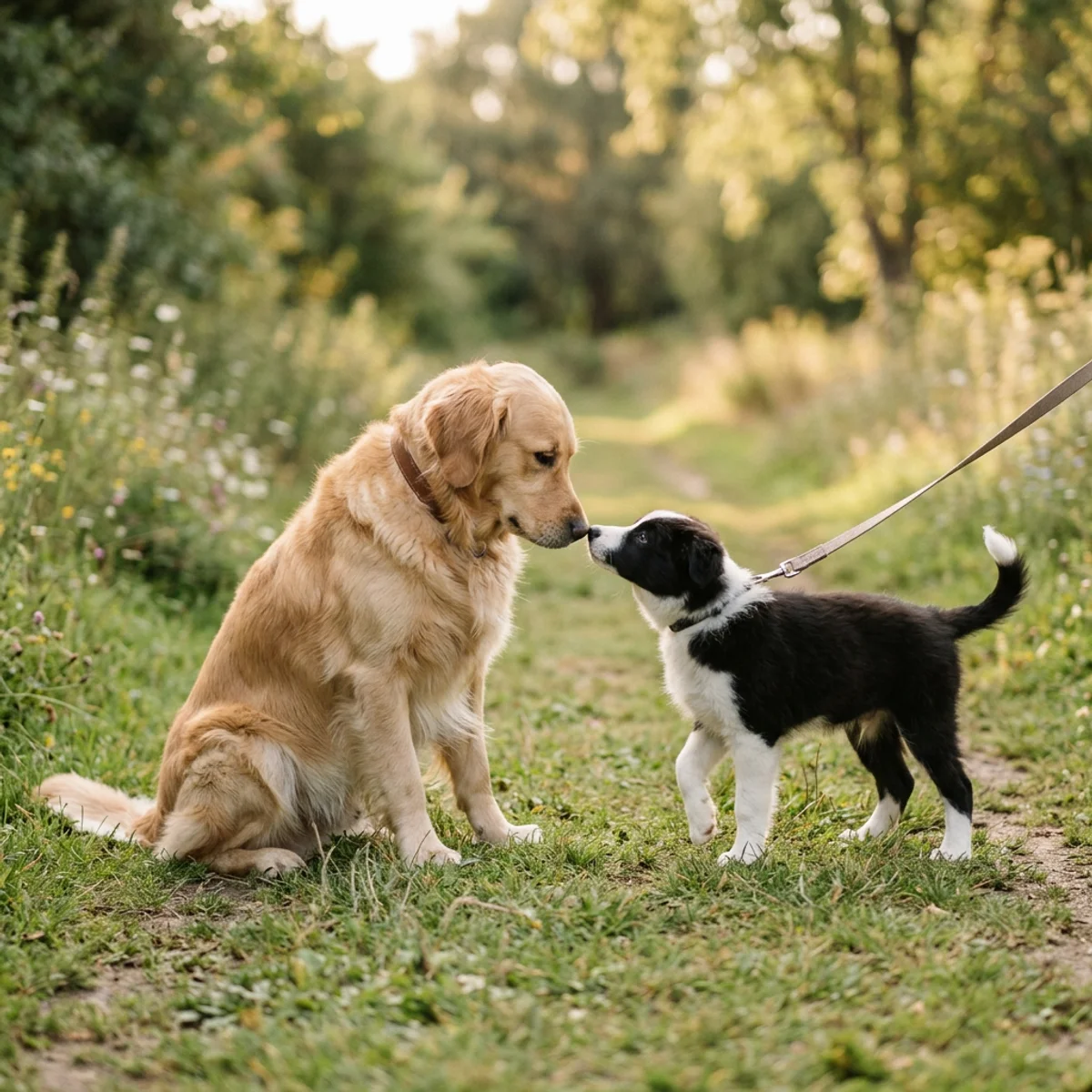
- Friendly adult dogs with good manners (vaccinated and known to you)
- Puppies their own age during supervised play
- Cats, if you can arrange it safely
- Livestock, small animals, or birds if relevant to your lifestyle
Don't let your puppy rehearse rude behavior. If they're lunging, barking, or fixating, they're too close or too aroused. Create distance, reward calm attention on you, try again another day.
Environments and Surfaces
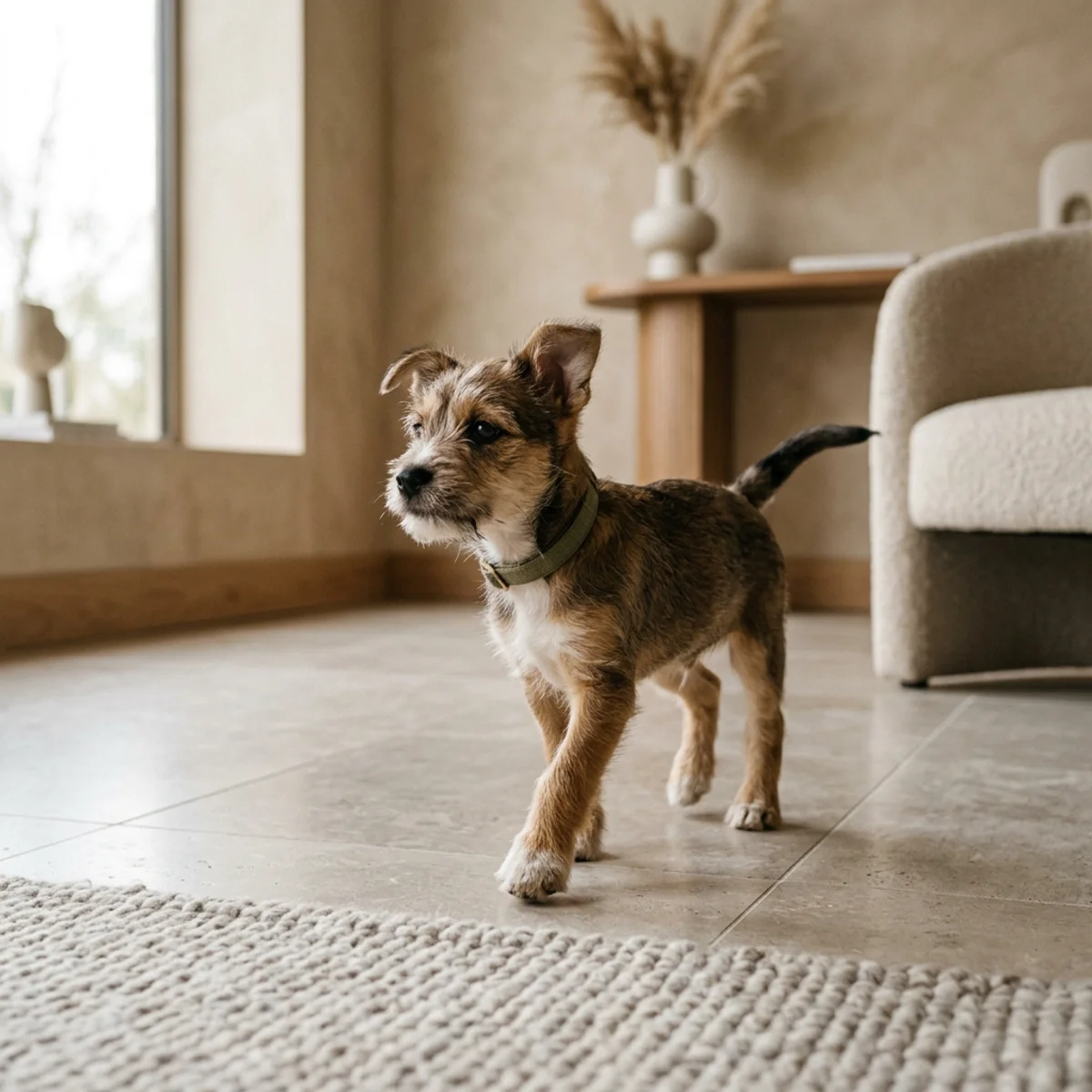
- Different flooring: tile, hardwood, carpet, metal grates, gravel, grass, sand
- Stairs, elevators, and narrow passages
- Car rides to varied destinations
- Urban settings with traffic, sirens, and crowd noise
- Quiet natural areas: trails, parks, beaches
- Vet clinic and groomer (even just for a visit and treats, no procedure)
Our Border Collie mix was terrified of shiny floors at 10 weeks. We spent two weeks rewarding her for walking across our kitchen tile, then expanded to the vet's lobby, then a pet store. She's now confident on any surface, but we had to build that step by step.
Sounds and Stimuli
- Household appliances: vacuum, blender, washing machine, doorbell
- Outdoor noises: lawn mowers, garbage trucks, construction, thunder recordings
- Crowds, children playing, dogs barking in the distance
- Bicycles, skateboards, strollers rolling past
Start sounds at low volume or from a distance. Pair them with something wonderful—a meal, a favorite toy. Gradually increase intensity as your puppy stays relaxed. If they startle, you've moved too fast.
Handling and Husbandry
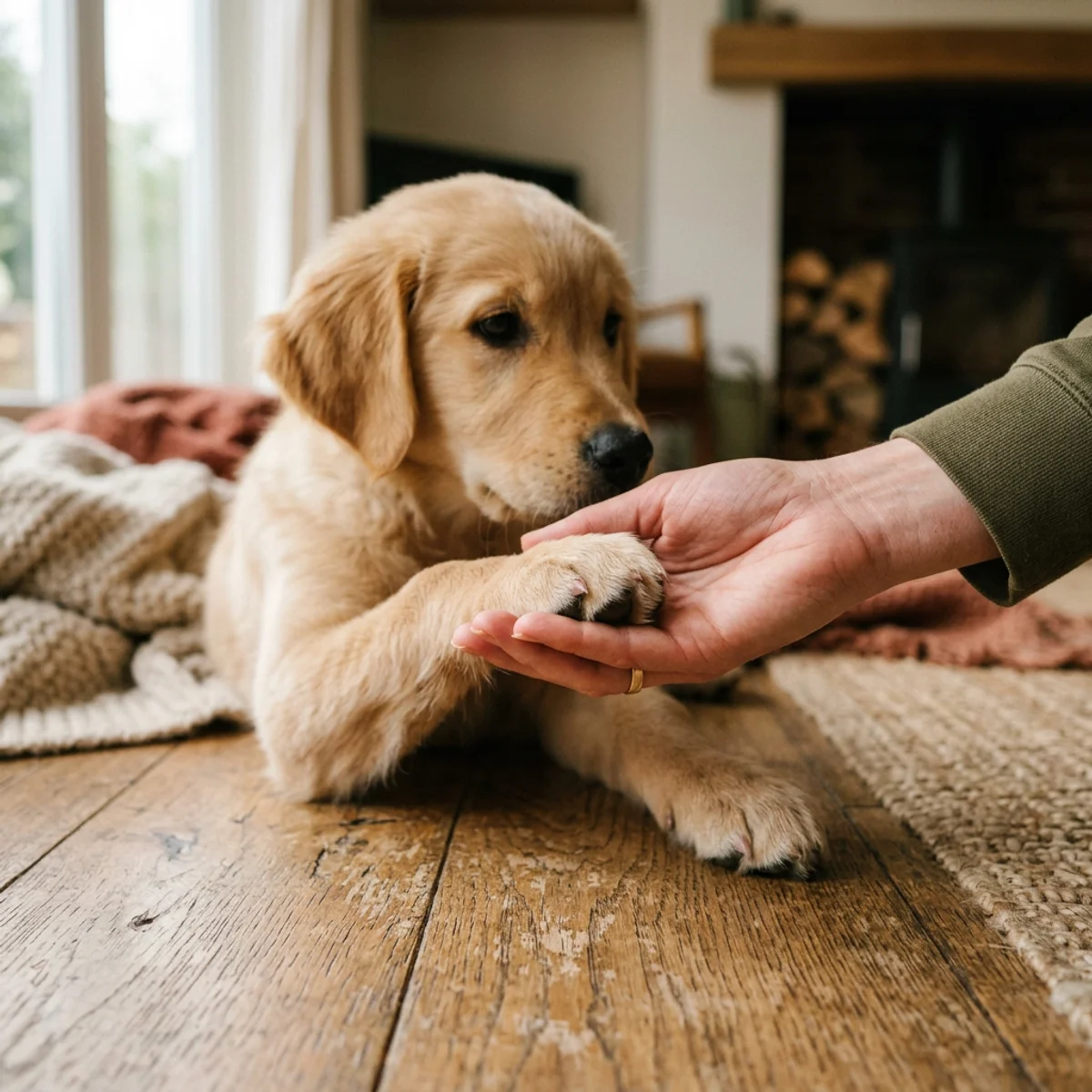
- Touching ears, paws, tail, and mouth gently
- Brushing, nail trims (or nail-grinding tools if that's your plan), and mock vet exams
- Collar and harness on and off
- Bathing and drying
- Being gently restrained for short periods
This isn't about dominance. It's about teaching your puppy that human hands predict good things, even during weird tasks. Every puppy should tolerate paw handling before their first nail trim and mouth exams before their first tooth-brushing. A 6-month-old Labrador who's never had their paws touched will make nail trims a wrestling match.
How to Introduce Puppy to People Safely
People are often too enthusiastic. They lean over, reach down, make high-pitched noises, and try to hug your puppy—all of which can be intimidating to a cautious pup.
We coach people before they meet a new puppy: crouch or sit to their level, let the puppy approach, offer a treat from an open palm. No looming, no grabbing. If the puppy backs away, that's information. Give them space and try again later.
For puppies who are naturally bold, this feels unnecessary. But even confident puppies benefit from learning that new people follow predictable, gentle patterns. It builds a foundation of trust that pays off when your dog meets a nervous child or an elderly person who moves unpredictably.
Invite friends over in small numbers rather than throwing a puppy party. Two or three calm visitors at a time let your puppy greet everyone without becoming overstimulated. If your puppy starts jumping, mouthing, or zooming frantically, they're past their threshold. Crate them for a break or move the gathering outside where they can decompress.
Children need special guidance. Teach them to be "tree friends"—stand still, hands at their sides, let the puppy sniff. No shrieking, no chasing, no grabbing. Supervise every interaction. A puppy who's harassed by a toddler can develop a lifelong wariness of kids.
Puppy Behavioral Development: What to Expect
Puppy socialization doesn't happen in a vacuum. It overlaps with other developmental stages, each with its own quirks.
8–12 Weeks: The Sweet Spot
This is your golden period. Puppies are curious, resilient, and bounce back quickly from mild surprises. They're also starting to learn bite inhibition, house training, and basic manners. Don't let socialization crowd out crate training or alone-time practice, but do prioritize getting out into the world.
12–16 Weeks: Growing Caution
After 14 weeks, puppies become naturally more cautious around unfamiliar experiences, and socialization becomes more challenging. Research shows puppies may develop lasting fearfulness if they don't receive adequate socialization by this age, though continued positive exposure remains important throughout their first year and beyond. Around 12 weeks, some puppies hit a fear period—they suddenly spook at things that didn't bother them before. A garbage can that was fine last week is now terrifying. Don't coddle or force. Stay calm, give space, let them approach on their terms. Reward brave behavior, then move on. This phase passes, usually within a week or two.
4–6 Months: Adolescent Chaos
Your once-polite puppy may turn into a hooligan. They're testing boundaries, easily distracted, and hormonally chaotic. Keep up the socialization work—walks, outings, meet-and-greets—but add in more leash training and impulse control. A 5-month-old Labrador who lunges at every dog on the street isn't undersocialized; they're undertrained in self-control.
6–18 Months: Ongoing Maturity
Some breeds don't mentally mature until two or three years old. Continue exposing them to novelty throughout this period. A dog who stops encountering new things at six months can still become reactive or anxious as an adult. Regular vet visits, grooming appointments, trips to pet-friendly stores, and playdates with stable adult dogs all help cement the lessons from puppyhood.
Positive Exposure Techniques That Build Confidence
Socialization is not flooding. Flooding means forcing a puppy into a situation until they shut down or "get over it." It's the opposite of what we want. Instead, use these principles:
Threshold awareness: Every puppy has an invisible line. On one side, they're curious or calm. On the other, they're anxious, reactive, or frozen. Work just inside that line. If your puppy stiffens at the sight of a bike 20 feet away, reward them at 25 feet and gradually close the gap over days or weeks.
Counterconditioning: Pair the new thing with something your puppy loves. Truck drives past? Treats rain from the sky. Stranger approaches? Out comes the favorite toy. The goal is for your puppy to predict good stuff when the scary thing appears.
Short sessions: Five minutes of high-quality exposure beats an hour of overwhelm. Watch for stress signals—yawning, lip licking, whale eye, tucked tail, refusal to take treats. If you see them, end the session on a positive note before things spiral.
Variety within categories: Don't just meet one calm Labrador and assume your puppy is "good with dogs." They need to meet a Chihuahua, a Husky, a Poodle, a three-legged mutt, and a dog wearing a coat. Each teaches something different.
Let the puppy lead: If your puppy wants to retreat and observe from a distance, let them. Forcing interaction backfires. Confidence comes from realizing they have agency and that you'll respect their pace.
We've raised puppies in both urban and rural settings, and the challenges differ. City puppies need desensitization to traffic and crowds; country puppies might never see a bus but need exposure to livestock, wildlife, and the occasional loud tractor. Tailor your checklist to the world your dog will actually live in.
Common Mistakes to Avoid
Even experienced puppy owners slip up. Here's what we see most often:
Skipping alone-time practice: A puppy who's constantly with people or other dogs can develop separation anxiety. Balance socialization with solo crate time or quiet play in a pen.
Only socializing with puppies: Puppy playdates are fun, but your dog also needs to learn how to read adult dog body language. Seek out calm, well-mannered older dogs who will gently correct rude behavior without bullying.
Overexposure: Three outings in one day can fry a puppy's brain. They need downtime to process. If your puppy is clingy, hyperactive, or bitey after an outing, they're overstimulated. Scale back.
Ignoring breed tendencies: A Livestock Guardian Dog puppy will likely be more cautious with strangers than a Golden Retriever. A terrier might be more reactive to small animals. Work with your dog's nature, not against it.
Reassuring fear: "It's okay, it's okay!" in a soothing voice can accidentally reward anxious behavior. Stay matter-of-fact. Reward your puppy for looking at you or taking a step forward, not for trembling.
FAQ
When should I start socializing my puppy?
Start the day they come home, usually around 8 weeks. The critical socialization window closes at roughly 14 weeks, so every day counts. Before they're fully vaccinated, focus on controlled environments—your home, friends' yards, car rides where you carry them—and avoid areas where unknown dogs have been.
Can I socialize a puppy that's already fearful?
Yes, but it requires more patience. Work with a certified dog trainer or veterinary behaviorist who uses positive reinforcement. You'll need to move much more slowly, keep distances greater, and possibly use higher-value rewards. Some fearful puppies blossom with the right approach; others remain cautious adults but learn to cope.
How do I socialize a puppy during winter in Canada?
Canadian winters limit outdoor time, but socialization can still happen. Invite people over, take short car trips to pet-friendly stores, practice winter paw care and coat wearing at home, and use indoor spaces like quiet mall corners or vet lobby visits. Recorded sounds—played softly during mealtime—help with noise desensitization when you can't get outside.
What if my puppy had a bad experience?
One negative encounter won't ruin your puppy, but don't dismiss it. Give them a break from that specific trigger for a few days, then reintroduce it at a much lower intensity with very high-value rewards. If a large dog scared them, arrange meetings with small, calm dogs first. Build positive experiences to outweigh the bad one. If fear persists or worsens, consult a professional before it becomes entrenched.
Socialization Is an Investment, Not a Checklist
The difference between a dog who's anxious at the vet and one who wags their way through an exam often comes down to what happened in those first few months. We've seen it again and again: puppies who experience the world thoughtfully and positively grow into dogs who are easier to live with, safer in public, and far less stressed.
You won't get every exposure perfect. Your puppy will have an off day, or you'll misjudge a situation. That's fine. What matters is the overall pattern—weeks of varied, positive experiences that teach your puppy the world is navigable and you're a trustworthy guide through it. If you're putting in the work now, your future self (and your dog) will thank you every time you walk past a construction site without a meltdown or visit the vet without a struggle.
We design our studio around dogs and cats who are confident in their homes, and that confidence starts early. Whether you're setting up a calm feeding station or choosing gear that makes outings easier, the goal is the same: a pet who feels secure in their environment and ready for whatever comes next.