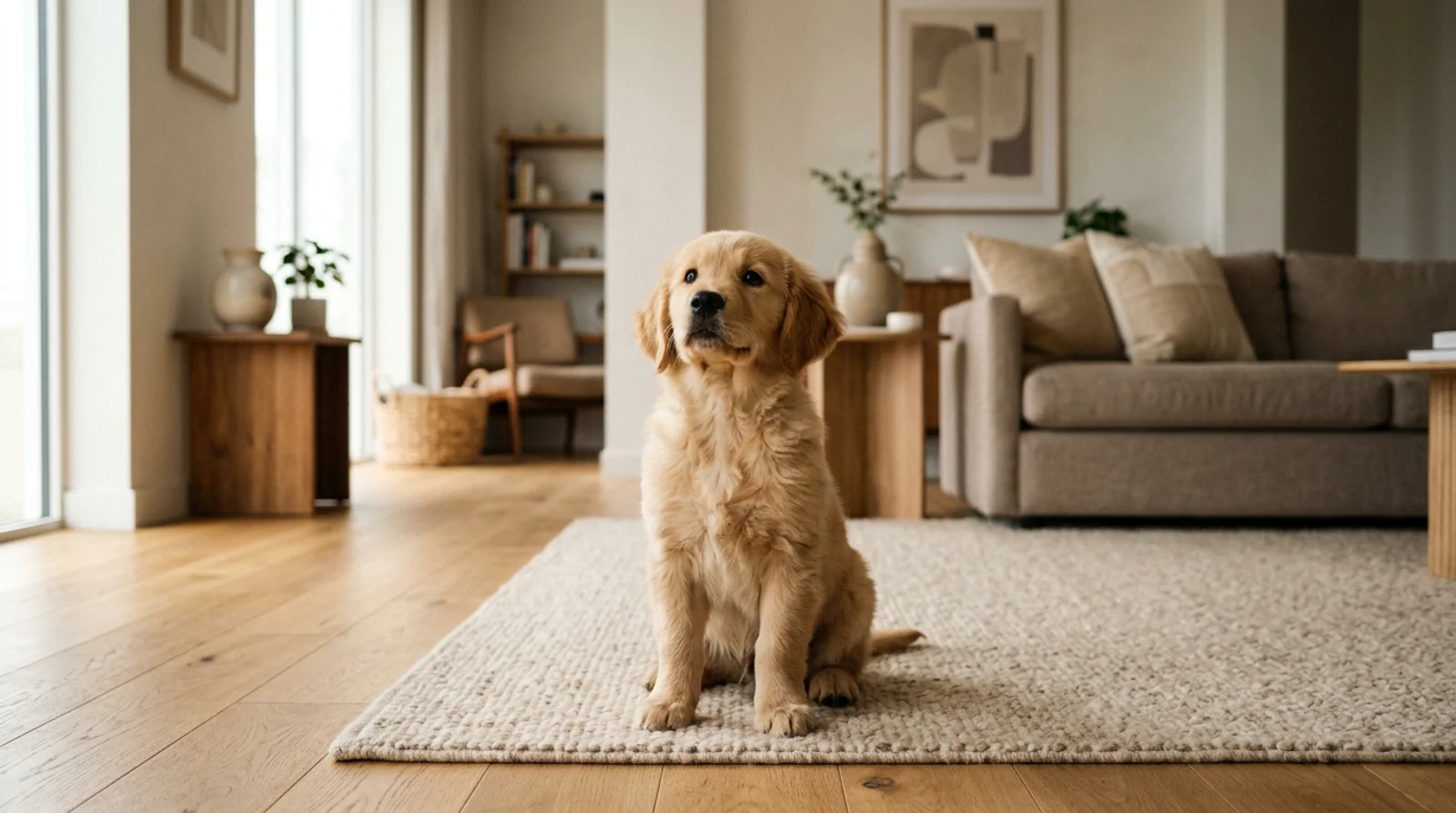
How to House Train Your Puppy: A Complete Potty Training Guide
How to House Train Your Puppy: A Complete Potty Training Guide
You can house train your puppy in 4 to 6 months by following a consistent bathroom schedule, supervising closely, rewarding outdoor elimination immediately, and preventing accidents through smart management. An 8-week-old puppy needs trips outside every 1 to 2 hours; older pups gradually build bladder control. The math is unforgiving at first, but it works.
We've guided hundreds of puppy parents through housebreaking, and the ones who succeed fastest all do the same things: they commit to a rigid schedule in the early weeks, they never punish accidents, and they celebrate every single outdoor success like their puppy just won Best in Show. It's not complicated, but it does require patience and roughly three weeks of your life where you become mildly obsessed with your dog's bathroom habits. We've been there. You're standing in the backyard at 6 a.m. in February, no coffee yet, watching a 9-week-old golden retriever sniff the same patch of snow for the fourth minute straight. Then they pee, you cheer like a lunatic, and somehow it's all worth it.
Understanding Your Puppy's Bathroom Schedule
A puppy's bladder is tiny. An 8-week-old Labrador retriever can hold it for roughly two hours max, and that's being generous. The general rule: a puppy can control their bladder for one hour per month of age, plus one. So a 3-month-old pup can theoretically wait four hours, but we don't recommend pushing that limit during active training.
Your puppy needs to go outside:
- Immediately after waking up (every single time, including naps)
- Within 15 minutes of eating or drinking
- After play sessions or excitement
- Before bed
- Every 1–2 hours during the day for puppies under 12 weeks
- Every 3–4 hours for puppies 3 to 6 months old
Set alarms on your phone. Yes, really. We've watched too many frustrated owners insist their puppy "has accidents for no reason" when the real issue is inconsistent timing. Puppies thrive on predictability, and a rigid schedule is the fastest path to success.
One of our team members took her 9-week-old border collie out 14 times in a single day during the first week. Exhausting? Absolutely. But the pup was fully reliable by 4 months, and now that border collie herds her own breakfast bowl to the mat every morning with zero accidents. Worth it.
Supervision Techniques That Actually Work
You cannot house train a puppy you are not watching. Full stop. Every accident that happens out of sight reinforces the wrong behaviour and sets you back.
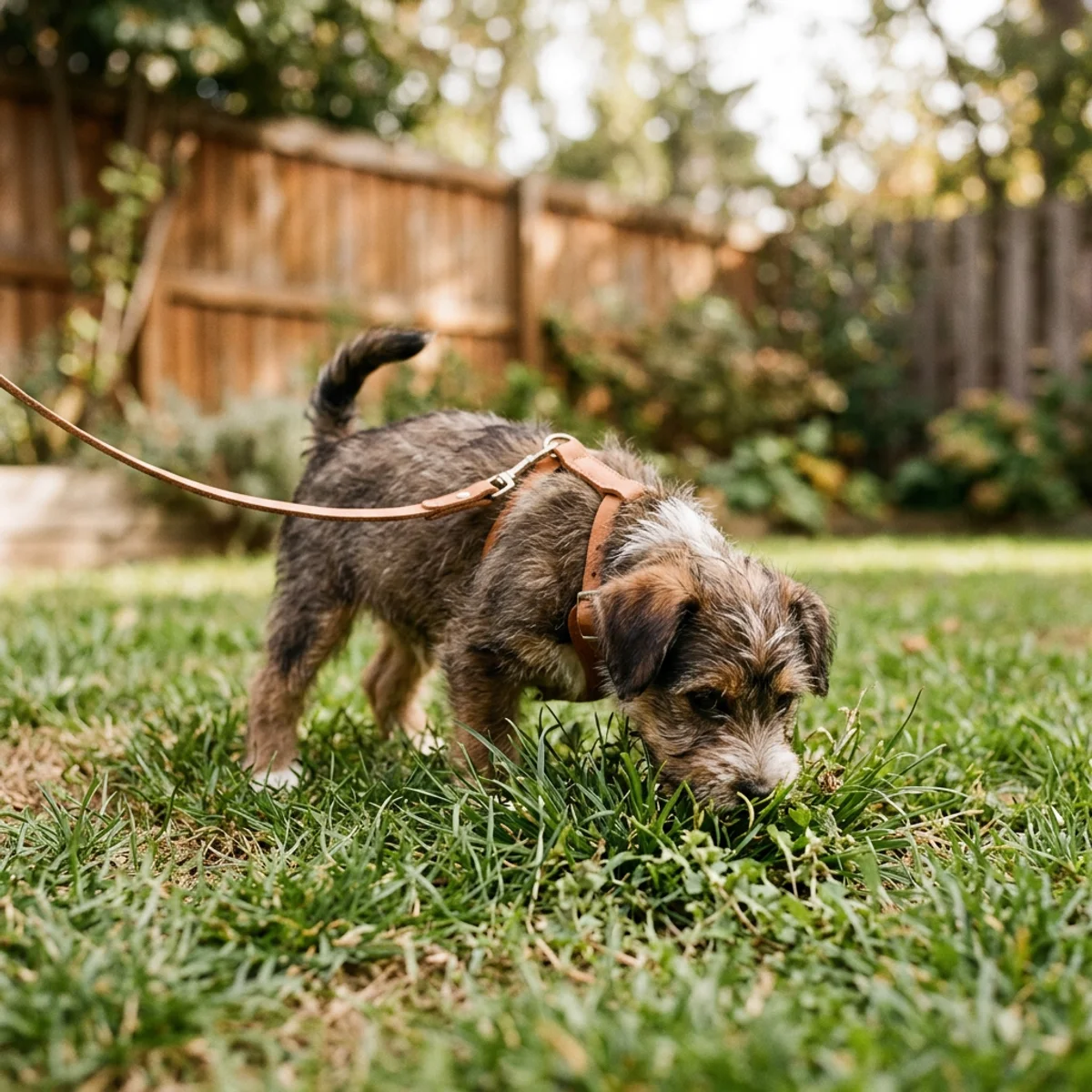
Tether your puppy to you. Attach a lightweight leash to your belt loop and let your pup drag it around the house. This forces you to notice the sniffing, circling, or sudden stillness that signals an imminent accident. The second you see it, scoop them up mid-squat if you have to and hustle outside.
Use baby gates and closed doors. Restrict your puppy to the room you're in. We love exercise pens for creating a safe zone in the kitchen or living room. If your pup has free run of a 2,000-square-foot house, they will find a quiet corner in the guest bedroom and use it as their personal bathroom. Guaranteed.
Crate training is your friend. Dogs instinctively avoid soiling their sleeping area. A properly sized crate—just large enough for your puppy to stand, turn around, and lie down—becomes a management tool when you can't actively supervise. We've written a full crate training guide that pairs beautifully with housebreaking. Never use the crate as punishment, and don't leave a young puppy crated longer than they can physically hold it. A 10-week-old in a crate for six hours is being set up to fail.
Positive Reinforcement Methods for Puppy Potty Training
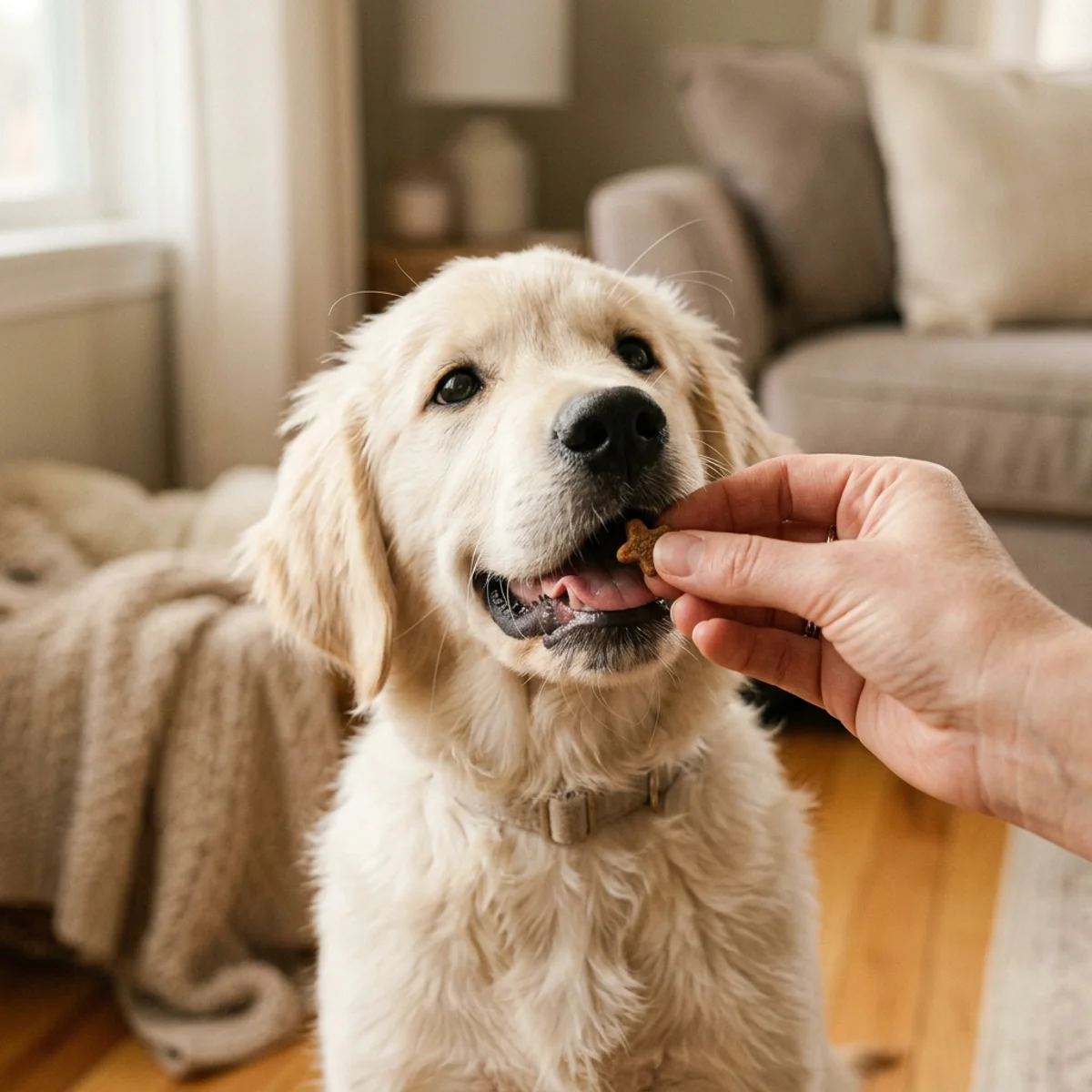
The moment your puppy finishes peeing or pooping outside, you throw a party. Use a happy voice, offer a high-value treat—small, soft, smelly, think freeze-dried liver or cheese—and give genuine praise. Timing matters: reward within 3 seconds of completion so your pup connects the dots between the action and the reward.
Pick a cue word or phrase—"go pee," "do your business," "get busy"—and say it gently while your puppy is eliminating. Over time, this becomes a command you can use on road trips or in unfamiliar places. One of our border terriers will now pee on cue in airport pet relief areas, which is a very specific superpower we're grateful for when you're racing to make a connection in Toronto Pearson.
What not to do: Do not punish accidents. Yelling, rubbing a puppy's nose in urine, or dragging them to the spot after the fact teaches them nothing except that you are unpredictable and scary. Puppies who are punished for accidents often start hiding to eliminate—behind furniture, in closets—which makes housebreaking infinitely harder.
If you catch your puppy mid-accident, interrupt with a calm "oops!" or a hand clap, then immediately carry them outside to finish. If they do finish outside, reward them. If you find an accident after the fact, clean it silently with an enzymatic cleaner and resolve to supervise more closely. That's it. No drama, no lecture your puppy can't understand anyway.
Cleaning Up Accidents the Right Way
Regular household cleaners mask odours to human noses but leave scent markers that scream "bathroom here!" to your dog. You need an enzymatic cleaner specifically designed for pet urine—these break down the uric acid crystals that cause lingering smell.
Blot up as much liquid as possible with paper towels, soak the area with enzymatic cleaner, let it sit for the time specified on the bottle (usually 10–15 minutes), then blot again. For carpets, you may need to treat the padding underneath. We've seen families replace expensive rugs because they didn't use the right cleaner in the first week.
Avoid ammonia-based products. Urine contains ammonia, so you're essentially marking the spot yourself and telling your puppy, "Yes, more here, please."
Troubleshooting Common Housebreaking Challenges
Your puppy pees outside, then comes inside and pees again within 20 minutes. They didn't fully empty their bladder. Young puppies get distracted by leaves, birds, their own feet, a mysterious sound three houses over. Stay outside longer—10 to 15 minutes if needed—and keep them in a boring part of the yard until they've eliminated. Then you can allow sniffing and play as a reward.
Accidents happen in the same spot repeatedly. You didn't fully neutralize the odour. Re-treat with enzymatic cleaner, and block access to that area for a few weeks using furniture, a baby gate, or an exercise pen.
Your puppy was doing great, then suddenly regressed. Regression around 4 to 6 months is common, often coinciding with adolescence or a growth spurt. Go back to basics: tighter supervision, more frequent trips outside, higher-value rewards. Medical issues—urinary tract infections, parasites—can also cause sudden accidents, so if regression is severe or accompanied by straining, blood, or excessive thirst, call your veterinarian.
Your puppy only has accidents when you're not home. They're being left alone longer than they can hold it, or they haven't generalized that the entire house is their den. Shorten your absences, use the crate appropriately, and consider a dog walker or neighbour to let them out mid-day.
Small breeds seem harder to house train. They are, slightly. A Chihuahua's bladder is the size of a walnut at 8 weeks, and they can't physically hold it as long as a larger breed. Cold or rainy weather is also more miserable for a 2-kg dog than a 20-kg one—try convincing a Yorkshire terrier to pee in a January windstorm in Winnipeg. Be patient, keep the schedule tight, and consider indoor potty options like pee pads or artificial grass patches if you live in a high-rise or face harsh winter weather.
Transitioning to More Freedom
Once your puppy has gone 4 to 6 weeks without an accident, you can start giving them more unsupervised freedom—slowly. Open up one additional room for a week. If no accidents occur, add another. If an accident happens, you've moved too fast; go back to closer supervision for another few weeks.
Full reliability usually arrives between 6 and 12 months, though small breeds and some individuals take longer. Even after your dog is "trained," life happens: a stomach bug, a change in routine, extreme weather. Stay flexible and don't interpret the occasional accident as total failure. Our 8-year-old springer spaniel had a spectacular accident last winter during an ice storm because she refused to go outside for 14 hours. We cleaned it up, moved on, and she's been perfect since.
FAQ
How long does it take to house train a puppy?
Most puppies are reliably house trained by 4 to 6 months old if you follow a consistent schedule and supervise closely. Small breeds and some individuals may take up to 8 or 9 months. The timeline depends more on your consistency than your puppy's intelligence.
Should I use pee pads to house train my puppy?
We generally recommend outdoor training from day one if possible, because pee pads teach your puppy that eliminating indoors is acceptable. That said, pads can be useful for apartment dwellers, small breeds in harsh climates, or owners with mobility challenges. If you do use them, place the pad in one designated spot and transition outdoors as soon as feasible.
What's the best age to start house training?
Start the day you bring your puppy home, typically around 8 weeks old. Younger puppies have less bladder control, but the habits you establish early matter. Waiting only makes the process longer.
Can you house train an older puppy or adult dog?
Yes. The same principles apply—schedule, supervision, rewards—but an older dog may have ingrained habits to unlearn, especially if they lived in a kennel or were previously allowed to eliminate indoors. It may take a bit longer, but it's absolutely doable.
Bringing It All Together
House training a puppy is one of those tasks that feels monumental at 2 a.m. when you're standing in the yard in your pyjamas, pleading with a 10-week-old to please just pee already. But it's also temporary. In a few months, you'll barely remember the early chaos—you'll just have a dog who politely asks to go outside.
Stick to the schedule. Supervise like your rugs depend on it, because they do. Reward every success. Clean accidents without drama. And if your puppy's housebreaking journey overlaps with their critical socialization window, check out our puppy socialization guide to make sure you're covering all the bases during these formative weeks.
You've got this. And when it clicks, it really clicks.