How to Bathe a Cat: A Stress-Free Guide for Pet Parents
How to Bathe a Cat: A Stress-Free Guide for Pet Parents
Most cats will never need a bath. They're meticulous self-groomers, and their sandpaper tongues do a remarkably thorough job. But sometimes—after a litter box mishap, a roll in something foul, or when a senior cat can no longer groom properly—you need to know how to bathe a cat without turning your bathroom into a war zone.
We've bathed plenty of cats over the years: placid Ragdolls who merely sighed through the process, a long-haired Persian who needed help with matted hindquarters, and one particularly outraged tabby who taught us the value of keeping the bathroom door closed. The truth is, with the right preparation and a calm approach, most cats can get through a bath with minimal drama. Here's how we do it.
When to Bathe a Cat (and When to Skip It)
Before you fill the sink, ask whether your cat actually needs a bath. A healthy indoor cat with normal mobility rarely does.
You should consider bathing when:
- Your cat has gotten into something toxic, greasy, or sticky—motor oil, tree sap, certain foods. If your cat has been exposed to a potentially toxic substance, contact your veterinarian or the nearest veterinary emergency clinic BEFORE bathing. If you need a hotline, Pet Poison Helpline (1-855-764-7661) serves Canada 24/7. Some toxins require specific treatment, and bathing without guidance could worsen the situation. Never attempt to induce vomiting unless instructed by a veterinarian.
- A senior or arthritic cat can no longer reach their hindquarters to groom
- Your cat has severe diarrhea or a litter box accident that matted their fur
- A hairless breed like a Sphynx may need regular bathing (typically every 1-2 weeks, but consult your veterinarian) to manage oil buildup
- Your vet recommends medicated baths for a skin condition—always follow your veterinarian's specific instructions for medicated baths, including water temperature, shampoo contact time, and bathing frequency, as these factors affect treatment success
Skip the bath if:
- Your cat just smells a bit musky (that's normal)
- There's a small dirty spot you can wipe with a damp cloth
- Your cat is elderly or unwell and the stress outweighs the benefit
- You're bathing "just because" or on a schedule borrowed from dog care
Cats don't need routine baths the way some dogs do. If you're dealing with everyday grooming needs—mats, shedding, or minor dirt—brushing and spot-cleaning are almost always enough. For stubborn mats, check out our guide on how to groom your dog at home for techniques that translate well to cats, too.
Bathing Cats Safely: Gather Everything First
A chaotic, last-minute bath is stressful for everyone. We gather everything before we even think about turning on the tap.
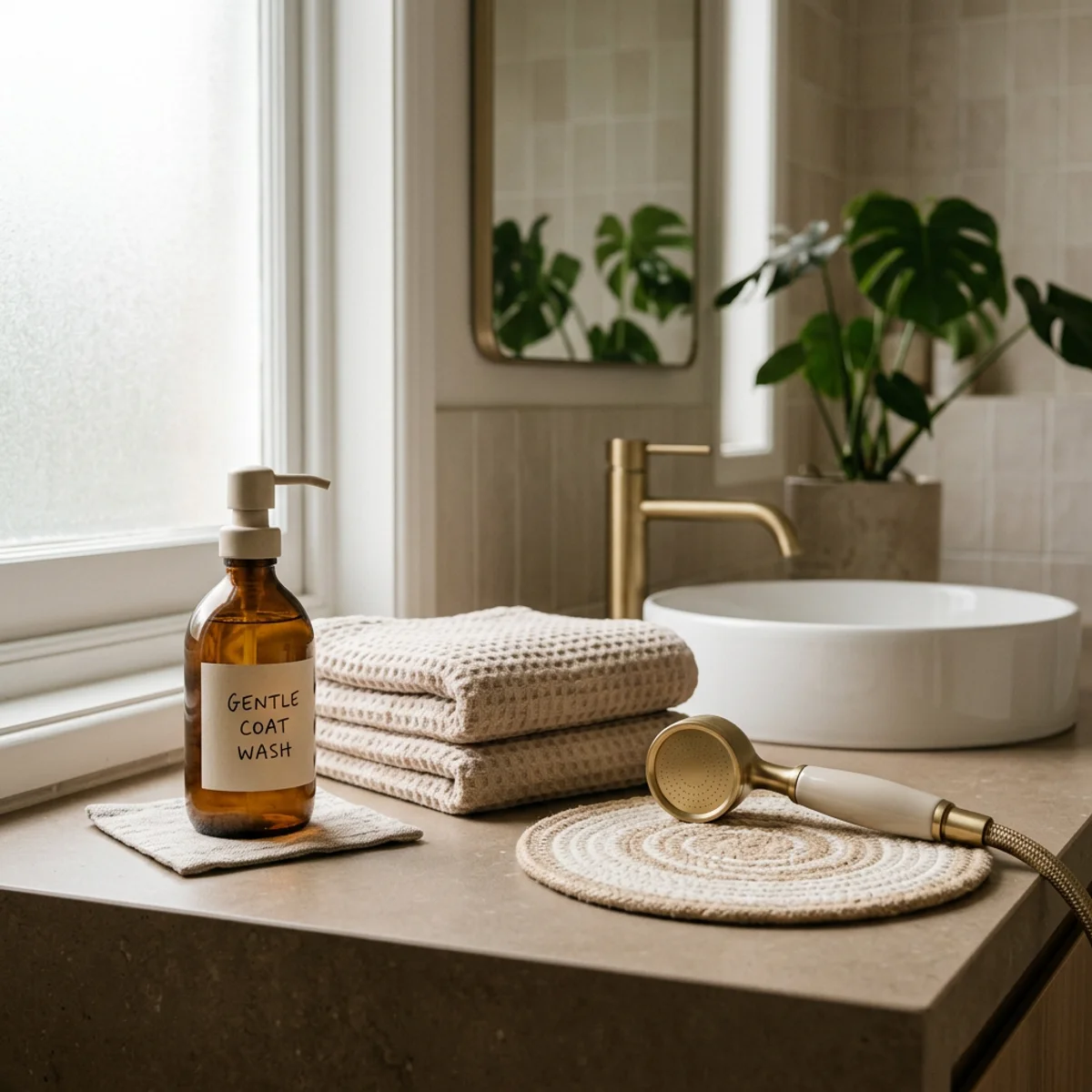
What you'll need:
- A cat-safe shampoo (never use human or dog formulas—cats groom themselves and will ingest residue)
- Two large, soft towels (one for immediate drying, one as backup)
- A non-slip mat for the sink or tub
- A handheld sprayer or a large cup for rinsing
- A small washcloth for the face
- Cotton balls (optional, to keep water out of ears)
- Treats or a lick mat with wet food as a distraction
Choose your location carefully. A kitchen or bathroom sink works beautifully for most cats. The smaller space feels more secure than a big tub, and you're not bending over. If you have a 7-kg Maine Coon, a bathtub with a handheld sprayer might be more practical.
We always close the door. Even the calmest cat may bolt mid-bath, and a wet, soapy cat loose in your home is not a scenario you want.
Timing Matters
Bathe your cat when they're naturally calm—after a meal, or after a play session when they're a bit tired. Never attempt a bath when your cat is already wound up or anxious.
Trim nails a day or two before if you can (here's our full guide on how to trim cat nails safely). It's not mandatory, but it does reduce the chance of accidental scratches when your cat braces against the sink.
How to Bathe a Cat: Step-by-Step
The goal is calm, quiet efficiency. No sudden movements, no raised voices.
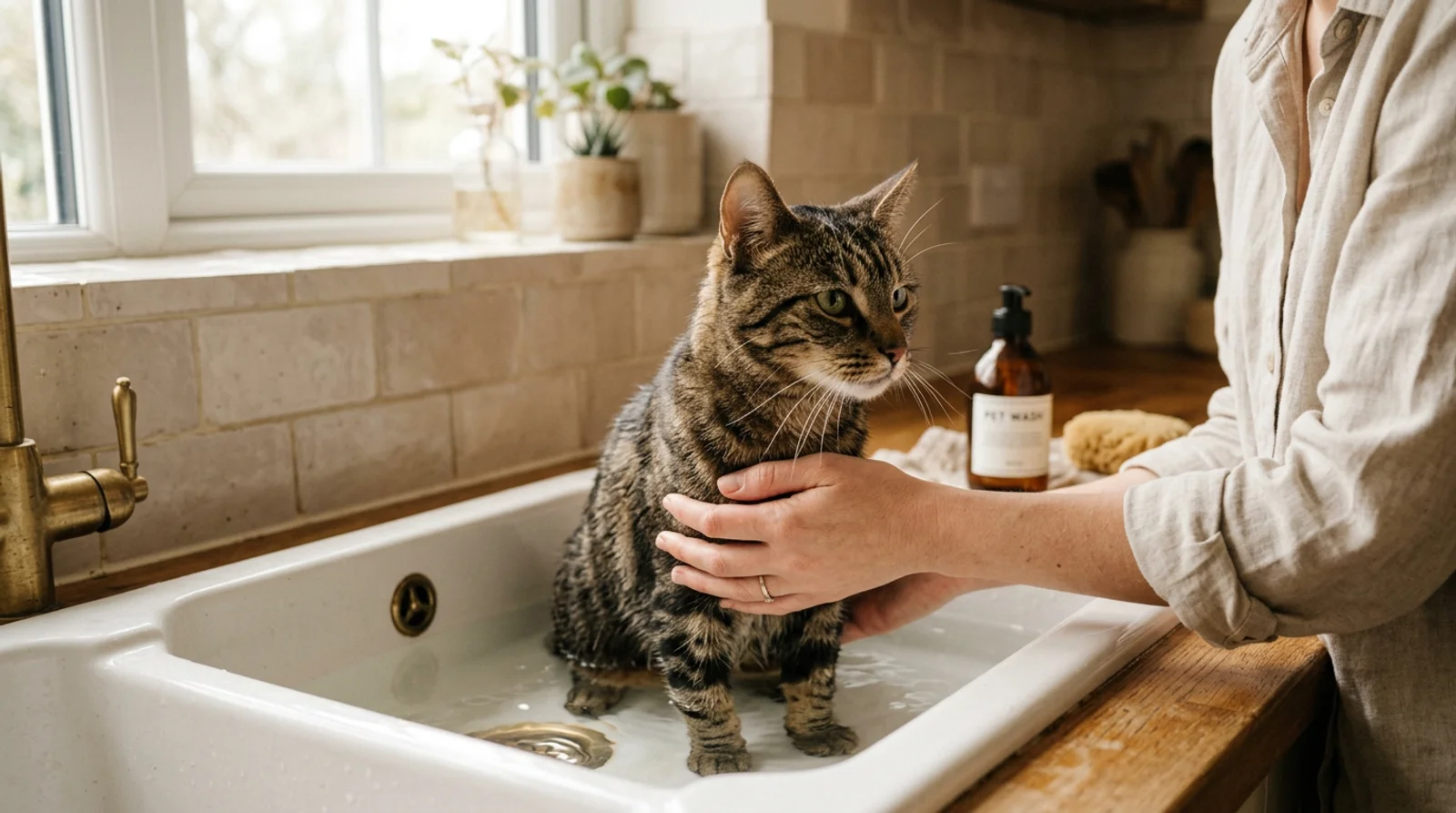
Step 1: Fill the sink first. Run lukewarm water—test it on the inside of your wrist, like you would for a baby. It should feel neutral, not hot. Fill the sink about 7–10 cm deep. Running water while your cat is in the sink sounds like Niagara Falls to them and amps up anxiety.
Step 2: Gently place your cat in the water. Support their chest and hindquarters. Speak in a low, soothing voice. Some cats freeze; others will try to climb you. Stay calm and firm.
Step 3: Wet the body, avoiding the head. Use a cup or a handheld sprayer on the gentlest setting to wet their fur, starting at the neck and working back. Keep one hand on your cat at all times—a reassuring touch on the scruff or chest helps them feel anchored. Most cats panic when water hits their face, so leave the head for last (or skip it entirely if it's not dirty).
Step 4: Apply shampoo sparingly. A small amount goes a long way. Work it into a lather, focusing on any soiled areas. If you're dealing with grease or oil, you may need to shampoo twice.
Step 5: Rinse thoroughly. This is the most important step. Any leftover shampoo will irritate skin and get ingested during grooming. Rinse until the water runs completely clear and the fur feels squeaky.
Step 6: Wash the face with a damp cloth. If the face needs cleaning, use a washcloth dampened with plain water (no soap). Wipe gently around the eyes, nose, and chin.
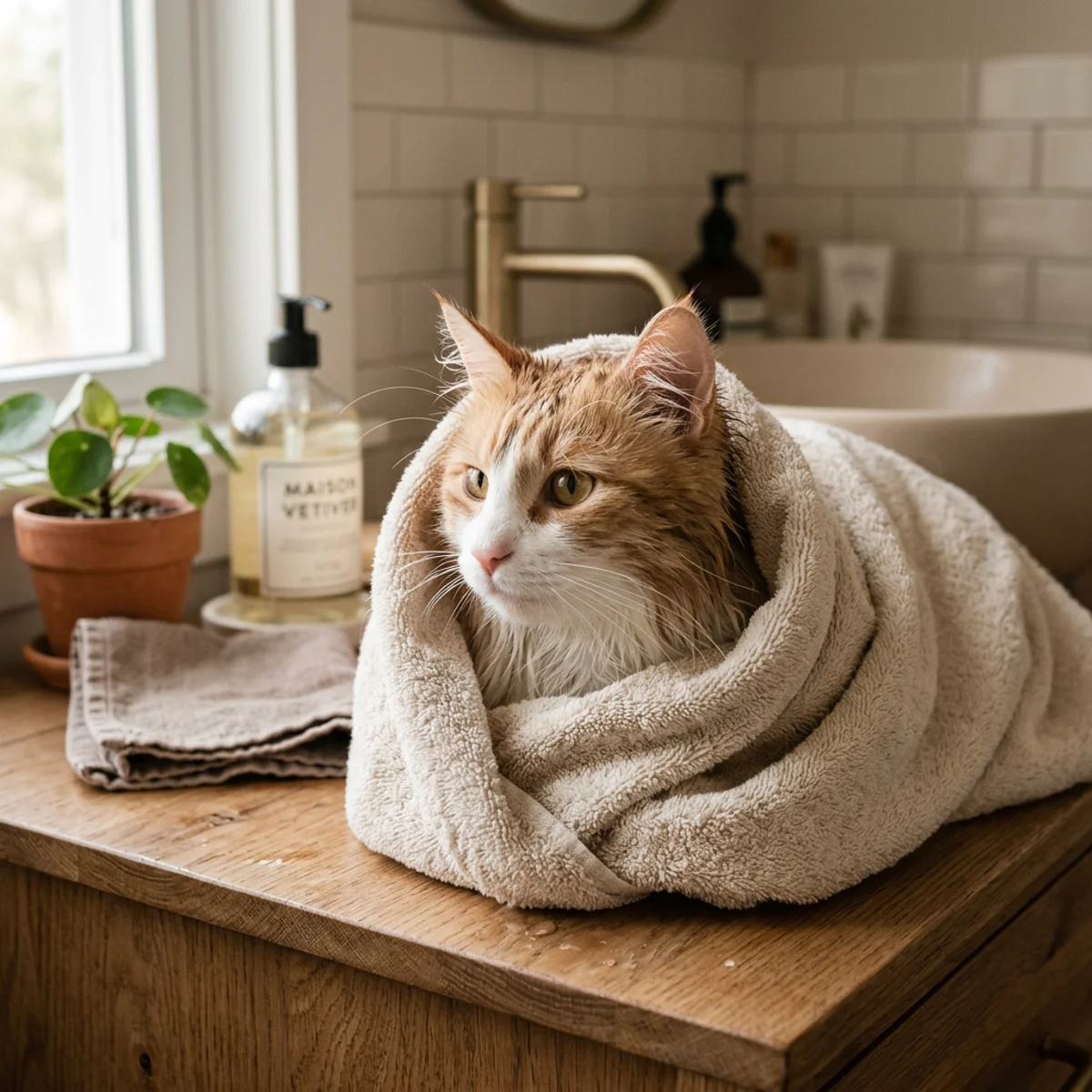
Step 7: Lift your cat out and wrap immediately. Have a towel ready. Wrap your cat snugly (like a burrito) and blot—don't rub—to absorb as much water as possible. Rubbing can mat long fur.
One of our team members swears by having a second person present for especially anxious cats—one to gently restrain, one to wash. If you're solo, work quickly and stay matter-of-fact.
Cat Bath Tips: What We've Learned from Reluctant Felines
Even with perfect technique, some cats will protest. Here's what actually helps.
Stay calm. Your cat reads your energy. If you're tense and braced for a fight, they'll pick up on it. Breathe slowly, keep your movements smooth, and don't react dramatically if they yowl or struggle.
Use distractions. A lick mat smeared with a bit of wet food or squeeze-up treat, stuck to the side of the sink, can work wonders. Some cats will lick contentedly through the entire bath.
Never restrain by the scruff alone. Scruffing—gently holding the loose skin at the back of the neck—can help calm some cats, but always support their body weight with your other hand. Dangling a cat by the scruff is painful and terrifying for an adult.
Keep the water level low. Cats are strong swimmers, but they don't want to be submerged. A few centimeters of water is enough.
Skip the blow dryer unless your cat is habituated to it. The noise and hot air terrify most cats. Towel-dry thoroughly, then let them finish air-drying in a warm, draft-free room. Long-haired breeds like Persians may need a second towel or a quick comb-through to prevent mats from forming as they dry.
If your cat is extremely aggressive or panicked—hissing, biting, or thrashing violently—stop. If your cat requires bathing for medical reasons but cannot tolerate it, consult your veterinarian. They can perform a medicated bath with appropriate sedation if necessary, which is safer than forcing a traumatized cat through the process at home. A bath is not worth injuring yourself or traumatizing your cat. In those cases, a professional groomer with feline experience or a vet visit is the better choice.
Drying and Aftercare
Once your cat is out of the water, the goal is warmth and calm.
Towel-drying: Blot gently, working from head to tail. Pay extra attention to the belly and armpits, where water pools. If your cat tolerates it, wrap them in a fresh, dry towel and hold them for a few minutes—your body heat helps.
Air-drying: Place your cat in a warm room (not hot) with no drafts. Close windows, and if it's winter, consider a space heater set to low (never pointed directly at your cat). Most cats will immediately start grooming themselves, which is normal and helps them regain a sense of control.
Brush long-haired cats: Once they're mostly dry, a quick brush prevents tangles. Use a wide-toothed comb or a slicker brush, working gently through any damp clumps.
Reward generously. Treats, playtime, a favorite meal—whatever your cat loves, offer it. You want them to associate the end of the bath with something positive.
Some cats will hide for an hour or two afterward. That's fine. Others will strut around, grooming furiously, as if to erase every trace of the indignity. Both reactions are normal.
Cat Grooming Bath Alternatives
Not every dirty cat needs a full bath. We reach for these alternatives often.
Waterless shampoo: Foam or spray formulas designed for cats can handle light dirt or odor. You massage it in, then towel it off. It's not as thorough as water, but it's far less stressful.
Grooming wipes: Pre-moistened wipes made for pets are handy for spot-cleaning paws, rear ends, or small soiled areas.
Cornstarch or baking soda: For greasy spots, sprinkle a bit of cornstarch or baking soda on the area, work it in gently, then brush it out. It absorbs oil surprisingly well.
Professional grooming: If your cat needs regular baths (due to a medical condition or breed requirement) and you dread the process, a groomer who specializes in cats is worth every dollar. They have the tools, the table height, and the experience to make it faster and safer.
For cats who simply can't be bathed at home—the truly feral-at-heart or those with severe anxiety—talk to your vet. In rare cases, a sedated bath under veterinary supervision is the kindest option.
FAQ
How often should I bathe my cat?
Most cats never need bathing. Hairless breeds may need a bath every few weeks to manage skin oils. Cats with mobility issues or certain skin conditions may need occasional baths as recommended by a vet. Healthy, mobile cats groom themselves adequately.
Can I use dog shampoo on my cat?
No. Many dog shampoos contain ingredients like permethrin that are toxic to cats. If your cat is exposed to toxic substances or shows signs of poisoning (drooling, vomiting, tremors, difficulty breathing), contact your veterinarian or the nearest veterinary emergency clinic immediately. If you need a hotline, Pet Poison Helpline (1-855-764-7661) serves Canada 24/7. Always use a shampoo specifically formulated for felines.
My cat hates water. Is there any way to make baths easier?
Start with shallow water, use a calm voice, and keep the process short. Distraction (lick mats, treats) helps. Some cats tolerate baths better if you bathe them regularly from kittenhood, but most adult cats will simply tolerate it at best. If your cat is truly terrified, consider waterless alternatives or professional help.
What temperature should the bath water be?
Lukewarm—around 37-38°C (just below normal cat body temperature of 38-39°C). Test it on the inside of your wrist; it should feel neutral to barely warm, never hot.
A Clean Cat, a Calmer You
Bathing a cat is rarely fun, but it doesn't have to be a nightmare. With the right setup, a calm approach, and realistic expectations, you can get your cat clean and keep your stress (and theirs) to a minimum. Most of the time, a little patience and a lot of towels will see you through.
If you're looking for more ways to keep your home calm and organized around your cat's needs, explore our litter-box setup and maintenance guide or browse our curated selection of thoughtful grooming tools. We're here to make life with cats a little easier—one careful, patient step at a time.