Best Dog Beds for Large Breeds: Comfort & Support Guide
Best Dog Beds for Large Breeds: Comfort & Support Guide
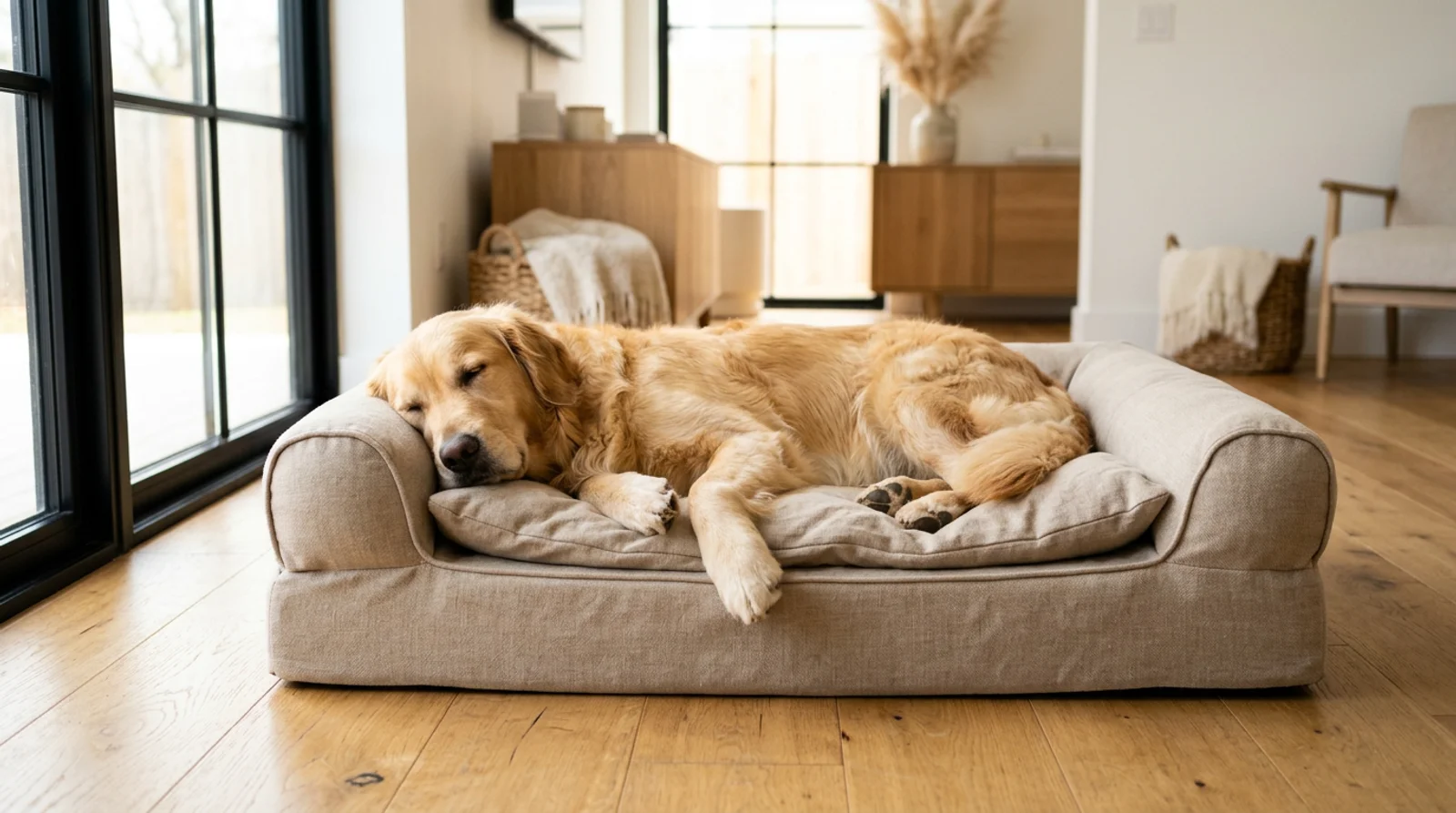
The best dog beds for large breeds need to do more than accommodate size—they require genuine engineering to support 30, 40, even 60 kilograms of dog without bottoming out, distribute joint pressure to protect hips and elbows, and survive years of heavy use. A 35-kg Bernese Mountain Dog trying to curl up on a medium bed is heartbreaking: half the dog draped over the edge, the whole thing shoved across the floor by morning.
We've spent years outfitting our own Newfoundlands, Great Danes, and Labrador Retrievers. Size is the starting point, but material density, edge support, washability, and yes, how the bed looks in your living room all matter when you're dedicating serious floor space to a piece of furniture your dog will use sixteen hours a day.
Why Large Breed Dog Beds Need Different Engineering
A 50-kg Rottweiler exerts far more pressure per square centimetre than a 7-kg Shih Tzu. Standard foam compresses and bottoms out within months under that kind of sustained weight, leaving your dog on what amounts to a fabric-covered floor.
Large and giant breeds are also disproportionately prone to hip dysplasia, elbow dysplasia, and arthritis. While a proper orthopedic bed cannot prevent these conditions, it can help manage symptoms and improve comfort. If your dog shows signs of joint problems, consult your veterinarian for diagnosis and a comprehensive treatment plan. Orthopedic support distributes weight evenly, reduces pressure on joints, and isn't a luxury—it's an important part of joint health management that can significantly improve your dog's comfort and quality of life, especially as they age.
Durability is the other non-negotiable. A bed that works beautifully for a Cavalier will disintegrate under a Golden Retriever who flops down with abandon twenty times a day. Reinforced seams, heavy-gauge zippers, and dense, resilient foam are essential.
Sizing and Space: Measure First, Buy Once
Measure your dog from nose to base of tail while they're lying stretched out, then add 20–25 cm. A dog who measures 90 cm needs at least a 110 cm bed. Most large breeds also appreciate width—a dog who likes to splay out needs room to do so without limbs hanging off.
Don't rely on weight-based sizing charts alone. A lean 32-kg Vizsla has a very different sleep style than a compact 32-kg Bulldog. Watch how your dog sleeps: curlers can size down slightly, sprawlers cannot.
Common Large Breed Bed Sizes (Canadian Market)
- Large: ~90 × 70 cm — suits most Labradors, Boxers, and Border Collies
- Extra-large: ~110 × 80 cm — fits German Shepherds, Golden Retrievers, and Bernese Mountain Dogs
- Giant/XXL: ~130+ × 90+ cm — necessary for Great Danes, Mastiffs, Newfoundlands, and Irish Wolfhounds
In our Toronto studio, we see plenty of downtown condo dwellers hesitate at the footprint of a properly sized bed. Understandable—but a too-small bed means your dog will choose the sofa or your bed instead. Better to commit the space once and get it right.
Orthopedic Dog Beds: What Actually Matters
The term "orthopedic" is unregulated in pet products, so it appears on everything from legitimate therapeutic beds to glorified cushions. Here's what we look for:
A note before we go further: if your dog shows signs of joint pain, stiffness, limping, or difficulty getting up, consult your veterinarian for proper diagnosis and treatment. An orthopedic bed is a supportive tool, but it is not a substitute for veterinary care.
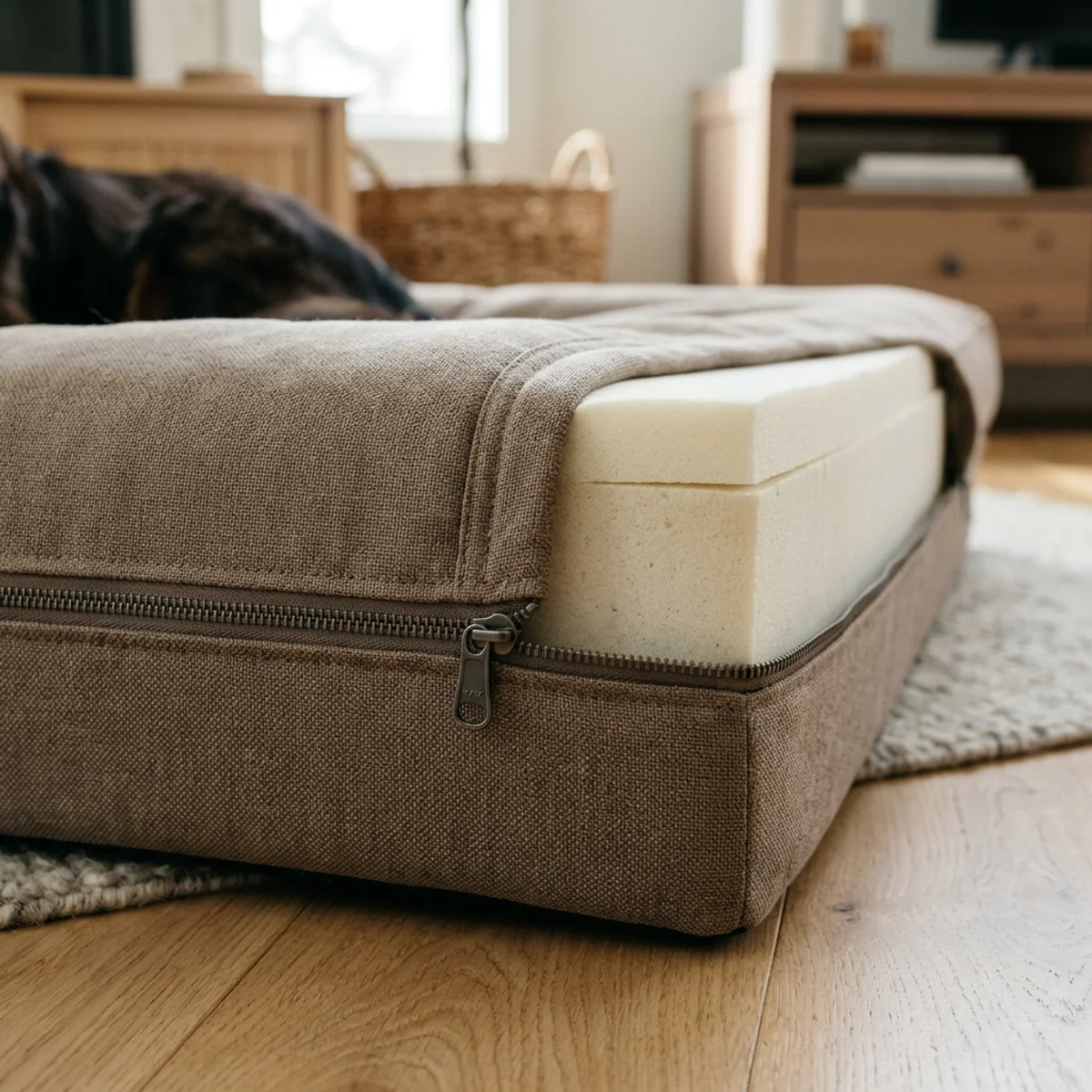
Memory foam density: Quality orthopedic beds use high-density memory foam that resists compression. Foam density for pet beds isn't standardized the way it is for human mattresses, so look for beds from reputable manufacturers that specify their foam density and offer warranties against permanent compression. The best designs layer memory foam over a supportive base foam to prevent that "sinking to the bottom" feeling.
Egg-crate or convoluted foam: The bumpy texture improves airflow and provides gentle joint cushioning, but it's a supplement to primary support, not a replacement for adequate foam depth.
Bolsters and edges: Raised edges offer neck support and a sense of security, but only if they're structurally reinforced. Flimsy bolsters collapse under a heavy head within weeks. Look for bolsters with internal support structures or dense fill—or skip them entirely in favour of a flat orthopedic platform if your dog doesn't use them.
Thickness: For large breeds, we recommend at least 10–12 cm of total foam depth. Less than that and a heavy dog compresses through to the floor, negating any orthopedic benefit.
One note from experience: true orthopedic beds are heavy. A giant-sized memory foam bed can weigh 8–10 kg. That's actually a good sign—it means there's enough material to do the job.
Supportive Dog Beds: Materials and Construction
Cover Fabrics
We're firm believers in removable, machine-washable covers—non-negotiable for large dogs, who track in mud, snow, and the occasional decomposing thing from the yard. Look for:
- Canvas or heavy-duty polyester blends: durable, stain-resistant, and stand up to repeated washing at 60°C
- Microsuede or faux linen: softer and more home-friendly if your dog isn't a heavy chewer or scratcher
- Water-resistant liners: an inner waterproof layer between foam and outer cover is invaluable for senior dogs with occasional incontinence
Avoid delicate fabrics, anything labelled "spot clean only," and covers without robust zippers. YKK zippers are worth seeking out—they simply don't fail the way cheaper hardware does.
Fill Types Beyond Foam
Shredded memory foam: more breathable than solid foam and easier to adjust or replace over time, though it can shift and require occasional redistribution.
Polyfill or polyester fibre: inexpensive, lightweight, and easy to wash, but compresses quickly under large dogs. Fine for a secondary bed in the car or cottage; insufficient as a primary bed for a 40-kg dog.
Elevated or cot-style beds: a taut fabric platform on a raised frame keeps dogs off cold floors and allows airflow underneath. Excellent for summer or for dogs prone to overheating (Newfoundlands, Saint Bernards). Not ideal for dogs with advanced arthritis who struggle to climb onto even a low platform.
Dog Bed Buying Guide: What to Prioritize by Life Stage
Puppies and Young Adults (Under 2 Years)
Large-breed puppies grow shockingly fast and are often clumsy, destructive, and not yet house-trained. We typically recommend a durable, budget-friendly bed for the first year—something you won't mourn if it's shredded during teething or has an accident.
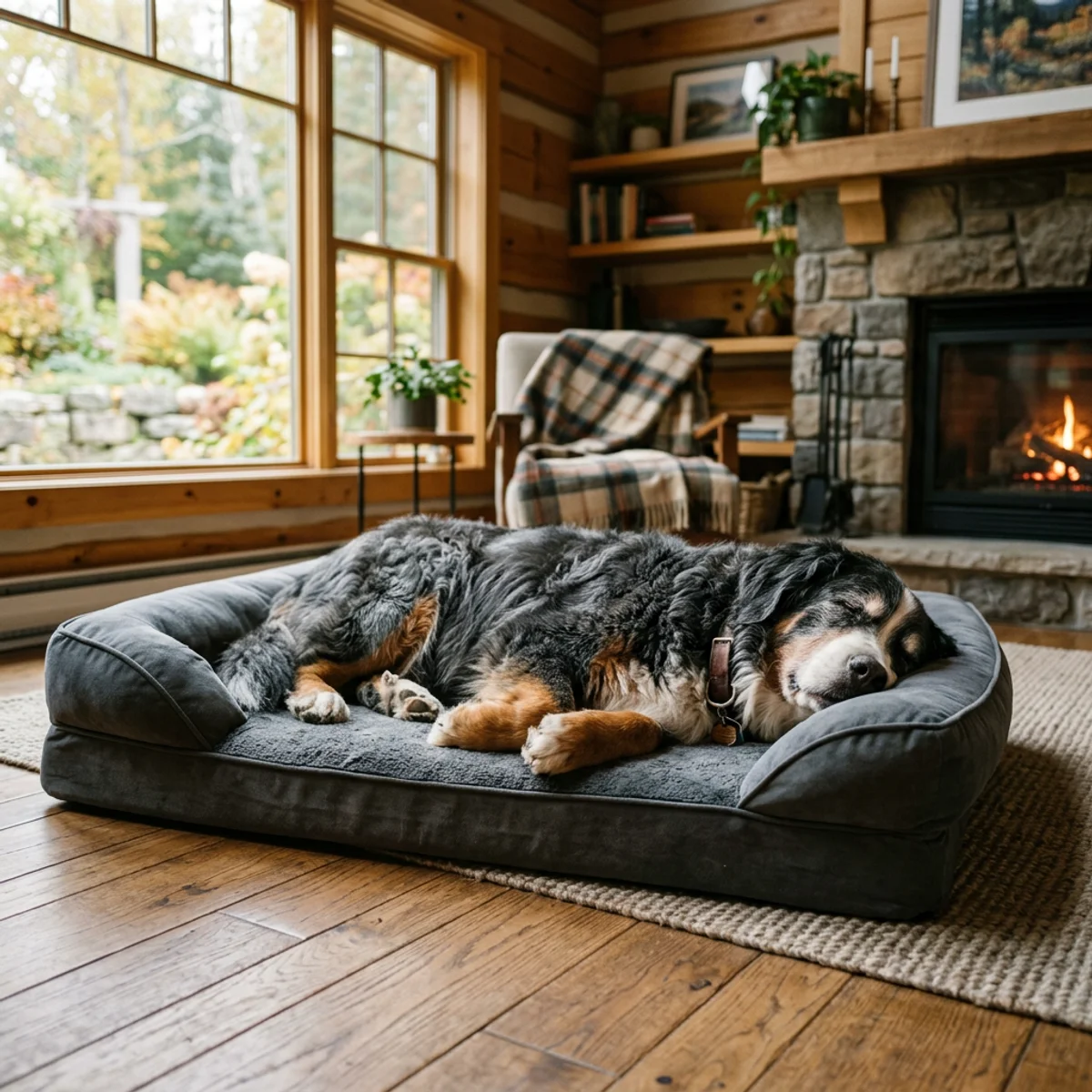
Once your dog is reliably house-trained and past the destructive chewing phase, invest in the long-term orthopedic bed. Our own Bernese destroyed two beds before his first birthday; the third, purchased at 18 months, is still going strong four years later.
Adults in Their Prime (2–6 Years)
This is when you want a balance of comfort, durability, and aesthetics. Your dog will use this bed heavily, and it will likely occupy a prominent spot in your living space. Prioritize quality materials and a design that genuinely fits your home—you'll be looking at it every day for years.
Don't cheap out here. A well-made large breed dog bed from a reputable brand costs $200–$400 CAD but will outlast three or four budget beds.
Senior Dogs (7+ Years)
Orthopedic support becomes critical. Many large breeds start showing signs of arthritis by age seven, and any joint condition should be diagnosed and managed by your veterinarian—a supportive bed complements that care, it doesn't replace it. A thick memory foam bed can visibly improve your dog's mobility and willingness to get up and move.
Consider a bed with lower or no sides for easier access—climbing over a tall bolster can be painful for a dog with hip dysplasia. Non-slip bases are also helpful, as older dogs sometimes struggle with their footing. If your dog has significant mobility challenges, consult your veterinarian about whether a heated orthopedic bed might provide additional comfort during Canadian winters. (And for more guidance on senior care, see our senior dog care guide.)
Durability and Longevity: What We've Learned
Even the best bed requires maintenance. Wash covers monthly or more often if your dog swims or hikes regularly. Vacuum the foam itself (without the cover) every few months to remove embedded hair and dander.
Flip and rotate the bed quarterly to distribute wear. Memory foam will develop body impressions over time—that's normal—but rotating extends usable life.
Expect to replace a heavily used large-breed bed every 3–5 years, even a high-quality one. Foam degrades, fabrics pill and thin, and zippers eventually give out. If your dog is waking stiff or avoiding the bed, it's time for a replacement regardless of how the bed looks.
Design-Forward Options That Don't Compromise Function
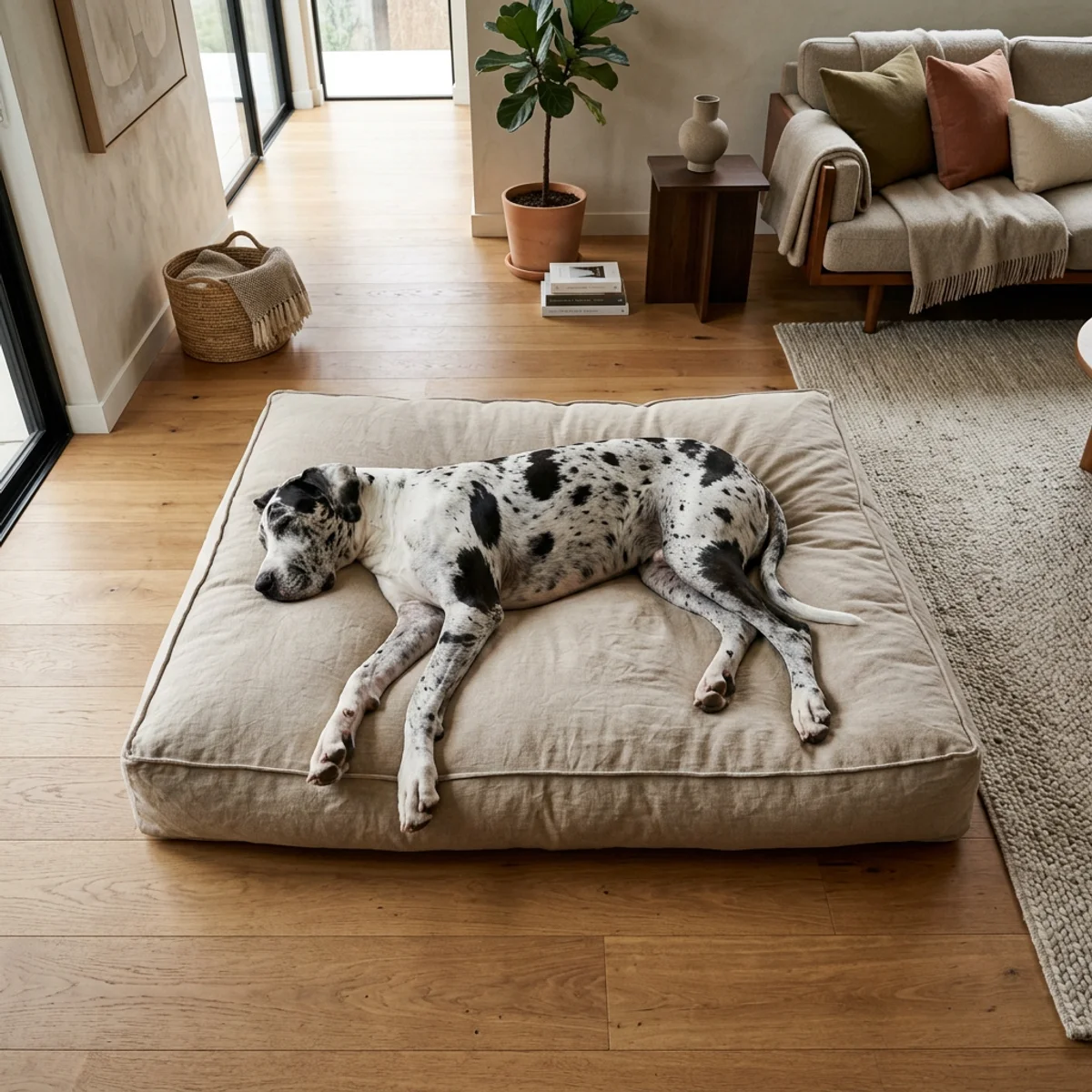
We refuse to accept the premise that a functional large dog bed must be an eyesore. The Canadian market has improved dramatically in recent years, with several brands offering genuinely attractive designs in neutral linens, textured weaves, and soft heathered tones.
Look for beds with wooden or powder-coated metal frames if you want a furniture-quality piece, though be prepared to pay $400–$600 CAD. For a more budget-conscious approach, a high-quality foam bed with a simple linen-look cover in sand, charcoal, or warm grey blends seamlessly into most interiors.
If aesthetics matter to you—and they matter to us—the bed's visual footprint is worth considering during the decision process. A well-chosen dog bed can anchor a room rather than detract from it. (For more thoughts on blending pet gear into your space, visit our pet-friendly home decor ideas article.)
FAQ
How thick should a dog bed be for a large breed?
At minimum, 10 cm of quality foam. We prefer 12–15 cm for dogs over 35 kg, especially for senior dogs or breeds prone to joint issues. Thinner beds simply compress too much under sustained weight, leaving your dog on the floor.
Can I use a human mattress topper as a dog bed?
Yes, and we've done it. A twin or double memory foam topper (at least 7–10 cm thick) can work beautifully if you add a durable, washable cover. It's often more cost-effective than a purpose-made giant dog bed. The downside: toppers aren't designed for the localized pressure of a dog's paws and joints, so longevity can be hit or miss.
Are elevated dog beds better for large breeds?
They're excellent for airflow and keeping dogs cool, and many large breeds appreciate being slightly off the ground. However, they're not ideal for dogs with significant arthritis or mobility limitations—the step up can be painful. They also lack the cushioning of an orthopedic foam bed. We see them as a complementary second bed rather than a primary option for most large breeds.
How do I stop my large dog from destroying their bed?
If your dog is past the puppy stage and still shredding beds, it's usually boredom, anxiety, or both. Address the root cause—more exercise, mental enrichment, or anxiety management—rather than simply cycling through beds. (Our calming dog anxiety naturally guide may help.) For determined chewers, look for beds marketed as "chew-resistant" with reinforced seams and ripstop fabrics, though nothing is truly indestructible if a dog is motivated.
A Final Word on Investment
A large dog will spend 12–16 hours a day on their bed. Over a decade-plus lifespan, that's thousands of hours of use—more than most human furniture endures. Spending $300 on a bed that supports your dog's joints, survives years of use, and looks good in your home isn't extravagance; it's pragmatism.
We encourage you to measure your dog, assess their sleep style, and choose a bed sized and constructed for their actual needs—not the size the packaging suggests. Your dog's comfort and your own peace of mind are worth getting it right the first time.
Browse our curated collection of large breed dog beds at Studio Bleuet, selected for Canadian homes and the dogs who truly run them.