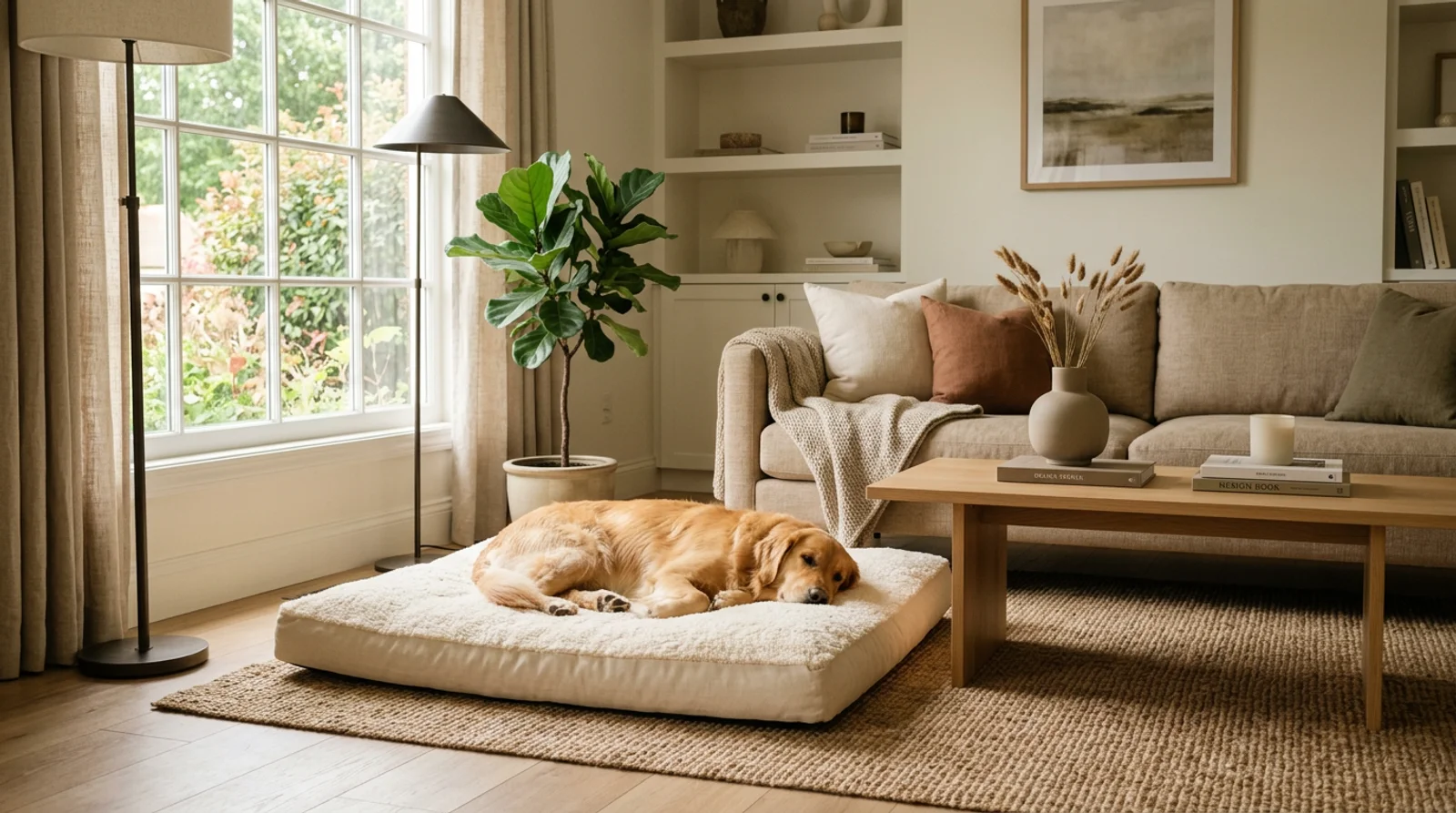
Pet-Friendly Home Decor: Stylish Ideas That Work With Pets
Pet-Friendly Home Decor: Stylish Ideas That Work With Pets
You can have the linen sofa and the Labrador. Pet-friendly home decor means choosing materials and layouts that survive claws, fur, and the occasional accident while still looking intentional—not like a vet clinic waiting room. The trick is knowing which fabrics actually repel stains, where to put the litter box so it doesn't dominate your sightline, and how to make a dog bed look like furniture instead of an eyesore you're apologizing for.
We've spent years watching clients agonize over whether to keep the beautiful couch or rehome the dog. The answer is neither. A few strategic choices up front—performance upholstery, washable rugs, furniture with legs—mean you get both the aesthetic and the animals. Here's what actually works when you share your space with cats, dogs, or both.
Choosing Pet-Friendly Furniture That Lasts
The single biggest mistake: buying delicate furniture and then acting surprised when a 30-kg dog destroys it in six months. Start with the assumption that your pets will use your furniture, whether you're on board or not.
Upholstery fabric matters more than style. Tight-weave performance fabrics—Crypton, Sunbrella, synthetic microfiber—resist stains, repel moisture, and don't snag under claws the way linen, velvet, or loose weaves do. Our own sofas are covered in performance fabric. We've cleaned red wine, muddy paws, and cat vomit off them without a trace. Leather and faux leather can work, but cats will scratch them eventually, and some dogs chew. If you go that route, choose full-grain leather in a distressed finish that hides small scratches, or budget for repair.
Furniture with legs is easier to clean under. Low-profile platform sofas look sleek until you realize they trap pet hair, lost toys, and dust underneath where you can't reach. Furniture raised at least 10–12 cm off the floor lets you vacuum or run a robot vac freely. It also discourages cats from treating the underside as a scratching post.
Avoid tufted buttons and deep crevices. Pet hair burrows into any seam, pleat, or button. Smooth, tight upholstery with minimal stitching is far easier to wipe down or lint-roll. Our go-to test: run your hand across the fabric. If it catches, pet hair will too.
Wood, Metal, and Other Hard Surfaces
Wood furniture will get scratched. Accept it or choose something else. We love the look of live-edge walnut as much as anyone, but if your dog's tail whacks the coffee table ten times a day, that finish won't stay pristine. Opt for harder woods—oak, maple—over soft pine, and consider a matte or oiled finish that can be spot-repaired instead of high-gloss lacquer that shows every mark.
Metal and glass are nearly indestructible and easy to clean, though glass shows nose prints and drool. Stone, concrete, and ceramic side tables are cat-proof. Just make sure they're stable and won't tip if a cat launches onto them.
Designing a Dog-Friendly Living Room
Dogs are messy. They track in mud, shed constantly, and knock things over with their tails. A dog-friendly living room prioritizes cleanable surfaces, clear pathways, and contained chaos. Layout and material choices make all the difference.
Rugs should be washable or cheap enough to replace. We've tried every type. Jute and sisal trap odors and stain easily—skip them. Flatweave cotton or wool rugs are easier to clean than shag or high-pile, but anything under $300 in a high-traffic dog zone will need replacing every few years. Our favorite compromise: machine-washable rugs (Ruggable-style or small cotton dhurries you can toss in the wash) layered over hard floors. If your dog has accidents, you'll thank yourself.
Create a designated dog zone. Even if your dog has free rein, a specific corner with their bed, a basket for toys, and a feeding station keeps clutter from spreading. We use low storage baskets in the living room to corral tennis balls, chew toys, and leashes so they're accessible but not scattered across the floor. Woven seagrass or canvas baskets look intentional and blend with most styles.
Window height matters if you have a barker. Our border collie mix spends half her day surveying the street. Positioning a dog bed or low bench near a window gives dogs something to do and often reduces boredom barking. Just make sure the fabric on any window-facing furniture can handle paws and nose smudges.
Flooring That Survives Dogs
Carpet and dogs rarely mix well unless you own a Bissell and don't mind using it twice a week. Hard flooring—engineered hardwood, luxury vinyl plank, tile—is exponentially easier to clean and doesn't trap odors. LVP is our top recommendation for dog owners: waterproof, scratch-resistant, warm underfoot, and far cheaper than hardwood. If you already have hardwood, area rugs in washable materials protect the floor and define spaces without wall-to-wall commitment.
Cat-Friendly Decor Without Sacrificing Style
Cats are climbers, scratchers, and occasionally jerks who will push your favorite mug off the counter just to watch it fall. Cat-friendly decor means thinking vertically, protecting surfaces, and giving them appropriate outlets so they leave your stuff alone.
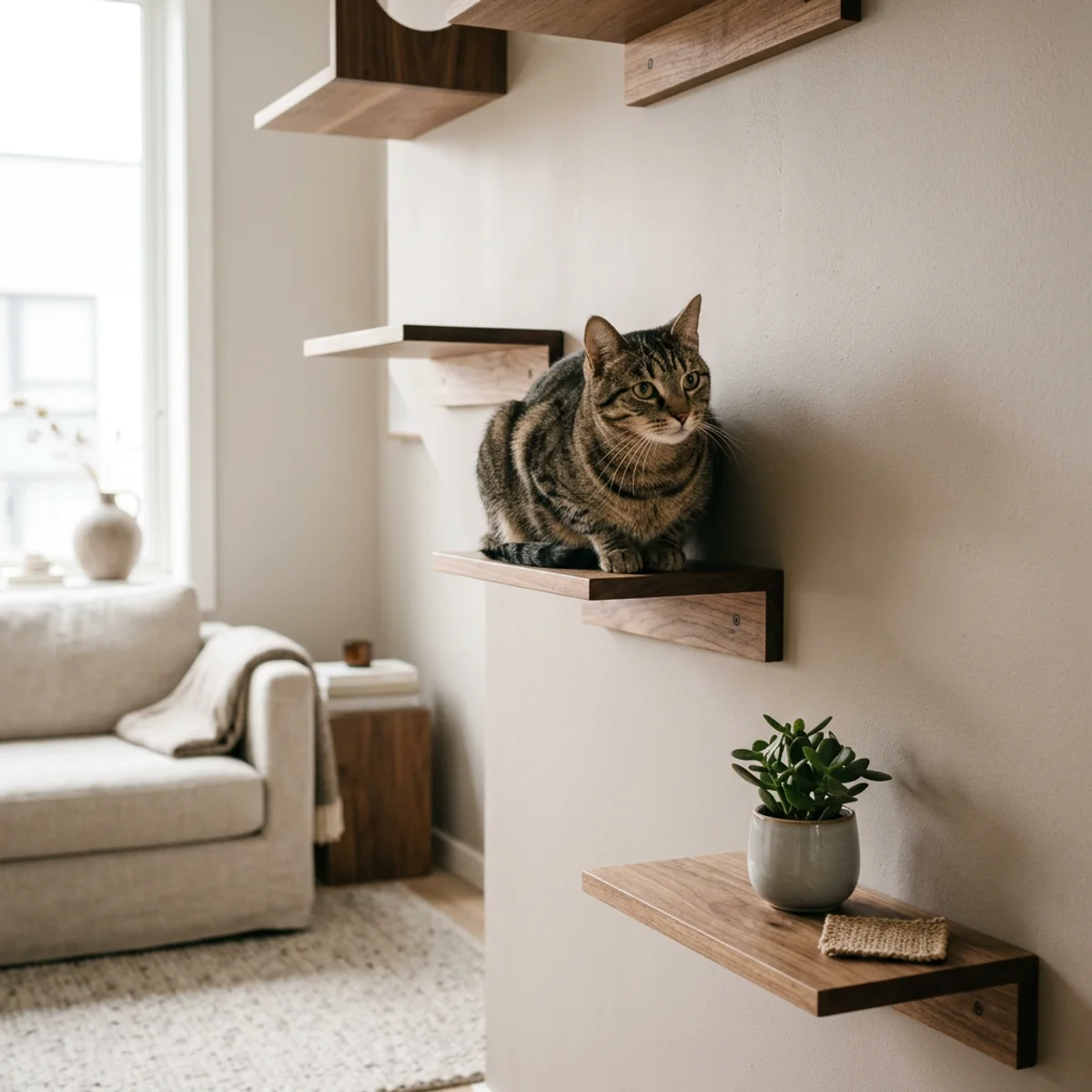
Provide vertical space that looks intentional. Cats want high perches. If you don't give them one, they'll claim your bookshelf or kitchen cabinets. Wall-mounted shelves arranged as a climbing path, a tall bookcase with a cleared top shelf, or a modern cat tree that doesn't look like carpeted beige scaffolding all work. We've seen beautiful floating walnut shelves installed as a cat highway in a mid-century living room—the cats use them constantly, and guests assume they're just architectural detail.
Anchor everything. Cats will jump on it. Bookcases, floor lamps, tall plants—anything taller than a meter should be secured to the wall or weighted at the base. We use museum putty under vases and picture frames on open shelves. It's invisible and holds objects in place even when a cat lands nearby.
Choose scratchable or scratch-proof materials. Cats scratch to mark territory and shed claw sheaths. They prefer vertical surfaces with texture—sisal, wood grain, cardboard, tight-weave fabric. Place a tall scratching post next to any furniture you want to protect, and choose upholstery that either won't snag (performance microfiber) or is already textured enough that a few scratches won't show (nubby linen, distressed leather). Smooth, shiny fabrics like silk or sateen are the worst possible choice.
Hiding the Litter Box
The litter box is the hardest pet item to integrate aesthetically, and we'll be honest: most "furniture" litter boxes are too small and poorly ventilated. Cats need a box at least 1.5× their body length, which rules out most decorative cabinets. Our best solutions:
- A large cabinet with the door removed or a cat door cut in. IKEA hacks are popular for a reason. A sideboard with one shelf removed and an entrance cut into the side hides the box while giving the cat plenty of room.
- A dedicated closet or mudroom corner with a pet door and good ventilation.
- A large top-entry box tucked beside furniture in a low-traffic corner, with a small mat to catch litter scatter.
Whatever you choose, keep it accessible for daily scooping. For more on setup and keeping odors under control, we've covered the details in litter box setup and maintenance.
Pet Beds That Match Your Decor
Pet beds are furniture. If your dog or cat spends twelve hours a day in theirs, it's as much a part of your living room as the sofa. Choosing one that complements your aesthetic instead of clashing with it makes a surprising difference.
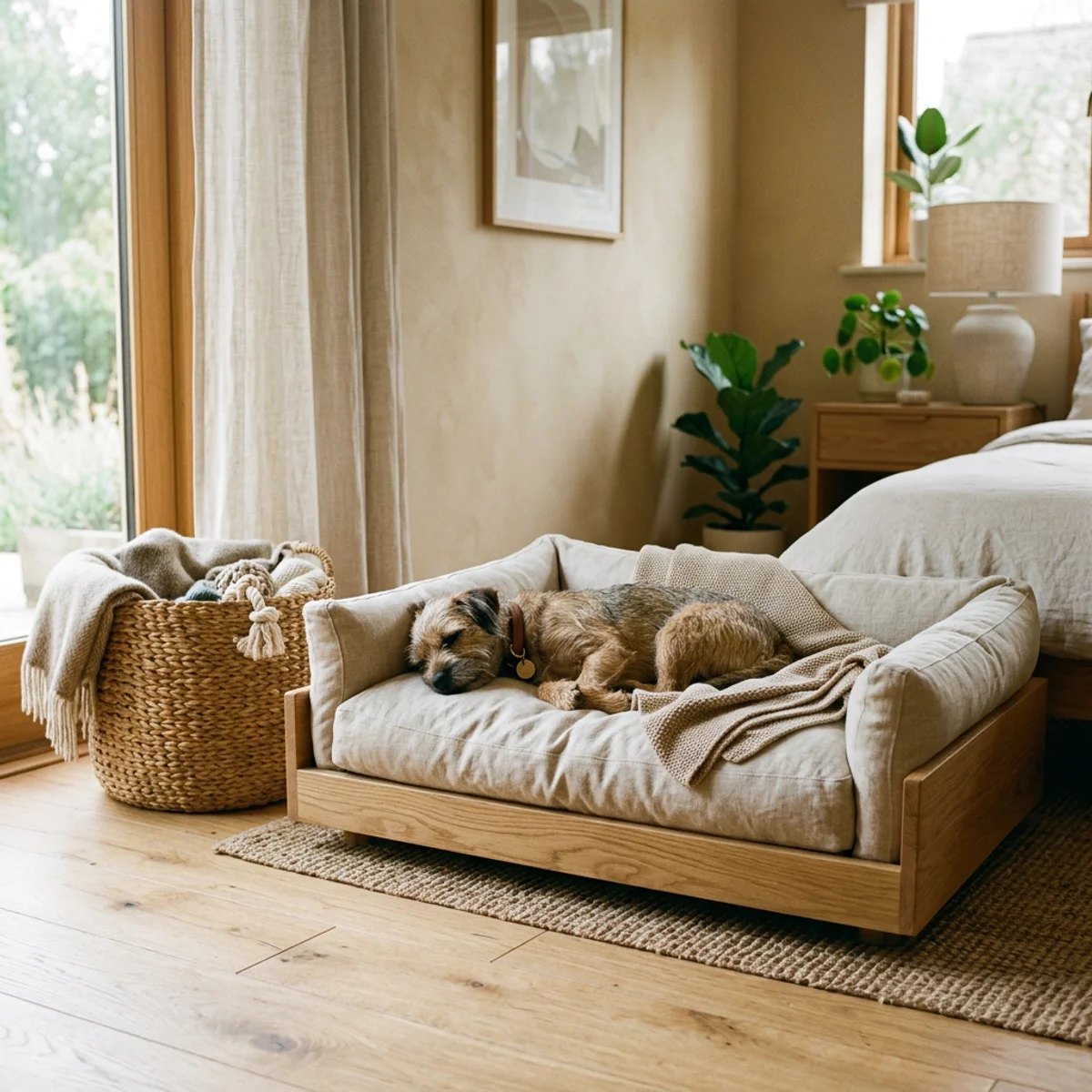
We stock elevated wood-frame beds, linen bolster beds in neutral tones, and curved felted-wool cocoons because they look like intentional design objects, not afterthoughts. The key is shape, material, and color that echo the rest of your space. A low-profile rectangular bed in charcoal linen fits into a minimalist living room. A round, oatmeal-colored bolster works in a Scandinavian bedroom. A rattan-frame bed with a cushion blends into coastal or boho styles.
Match material and palette, not pattern. Solid neutrals—taupe, charcoal, cream, warm grey—work in nearly any room and hide light pet hair better than black or white. Washable covers are non-negotiable. Memory foam or orthopedic fill matters for older or large-breed dogs; younger, smaller pets are fine with simpler padding.
Size honestly. A 25-kg dog curled up might fit in a medium bed, but if they like to sprawl, they need a large. Cats often prefer beds with sides or hoods for security. Watch how your pet actually sleeps before you buy.
For more advice on keeping those beds fresh, see how to clean a pet bed.
Smart Storage and Organization for Pet Gear
Pet gear multiplies. Leashes, harnesses, grooming tools, toys, treat bags, poop bags, winter coats, spare collars—it all needs a home, or it ends up in a pile by the door.
Use closed storage wherever possible. Open baskets look casual and approachable, but closed cabinets, drawers, or lidded bins keep visual clutter down. We keep a small drawer in the entryway for leashes, waste bags, and a lint roller, and a larger bin in the mudroom for seasonal gear and grooming supplies.
Create a landing zone by the door. Hooks for leashes and coats, a tray or bin for boots (yours) and paw towels, and a small bench or mat for post-walk cleanup keep the mess contained. If you have space, a shallow cabinet or wall-mounted organizer with cubbies works beautifully.
Rotate toys. Instead of leaving every toy out, keep half in a bin and swap them weekly. Dogs stay more interested, and your living room looks less like a daycare.
Fabrics, Finishes, and Textures That Work
Beyond furniture, the finishes you choose on walls, windows, and soft goods determine how well your home holds up.
Performance fabrics aren't just for upholstery. Crypton and Sunbrella make throw pillows, blankets, and even curtains. They clean with a damp cloth and don't absorb odors. We keep a washable canvas throw on the sofa that we toss in the machine weekly—it catches fur and protects the upholstery underneath.
Washable paint or satin/semi-gloss finishes on walls let you wipe off nose prints, drool, and the occasional muddy tail wag without scrubbing the paint off. Matte paint looks beautiful but stains easily.
Curtains and blinds: Cats climb curtains. If you have climbers, skip floor-length drapes or use tension rods that pop off harmlessly. Faux-wood blinds or roller shades are cat-proof and easy to clean. Linen or cotton curtains work if they're washable and you don't mind the occasional snag.
Throws and pillows as buffers. Layering a washable throw over your dog's favorite sofa corner is simpler than re-cleaning the whole couch. Outdoor-fabric pillows in the living room resist stains and don't pill under paw traffic.
What You Can Skip (Honest Opinions)
Not everything marketed as "pet-friendly" is worth the money or the compromise.
Elaborate "hidden" litter-box furniture: Most are too small, poorly ventilated, and a hassle to clean daily. A simple cabinet hack or a good-looking top-entry box is usually better.
Fancy "designer" pet feeders at 3× the price: Elevated feeders have their place for large or older dogs, but most pets do fine with a simple stainless or ceramic bowl. Save your money unless there's a medical reason or you genuinely love the look. A well-chosen feeding station is about function and placement, not price.
Pet-specific rugs that claim to be indestructible: They often look industrial or synthetic. A good-quality washable rug or a flatweave you don't mind replacing is more versatile.
FAQ
What is the most pet-friendly couch fabric?
Tight-weave performance fabrics like Crypton, Sunbrella, or synthetic microfiber are the most durable and stain-resistant. They don't snag under claws, repel moisture, and clean easily with mild soap and water. Avoid velvet, linen, and silk.
How do I make my living room dog-friendly without it looking like a kennel?
Choose durable, cleanable materials (performance upholstery, hard or washable flooring, wipeable paint), designate a tidy storage spot for toys and leashes, and pick a dog bed in a neutral color and shape that complements your furniture. Keep clutter contained and clean up daily—it's the mess, not the dog gear, that makes a space look chaotic.
Can you have nice furniture with cats?
Yes, with the right materials and setup. Provide tall scratching posts and vertical climbing space so cats leave your furniture alone. Choose snag-resistant upholstery (performance microfiber or textured weaves), anchor tall objects, and keep fragile decor out of reach. Cats are predictable once you understand what they need.
Where should I put my dog's bed in the living room?
Place it in a corner or against a wall where your dog can see the room but isn't in the main traffic path. Dogs like to observe without being stepped over. Near a window is ideal for dogs who enjoy watching outside. Make sure the spot is away from drafts and heating vents, and that the bed is large enough for your dog to stretch out fully.
Living Well With Pets and Style
You don't have to choose between a beautiful home and the animals who make it feel like one. The best pet-friendly spaces are designed with honest use in mind—durable where it counts, washable where it matters, and thoughtful enough that the dog bed or cat tree feels like part of the room, not an apology for it.
We've built Studio Bleuet around the idea that pet products and home decor shouldn't be separate categories. The pieces we curate are chosen because they work in real homes, with real shedding, real muddy paws, and real furniture-scratching cats—and they still look good. Browse our collection of beds, bowls, and storage designed to fit your life, not fight it.