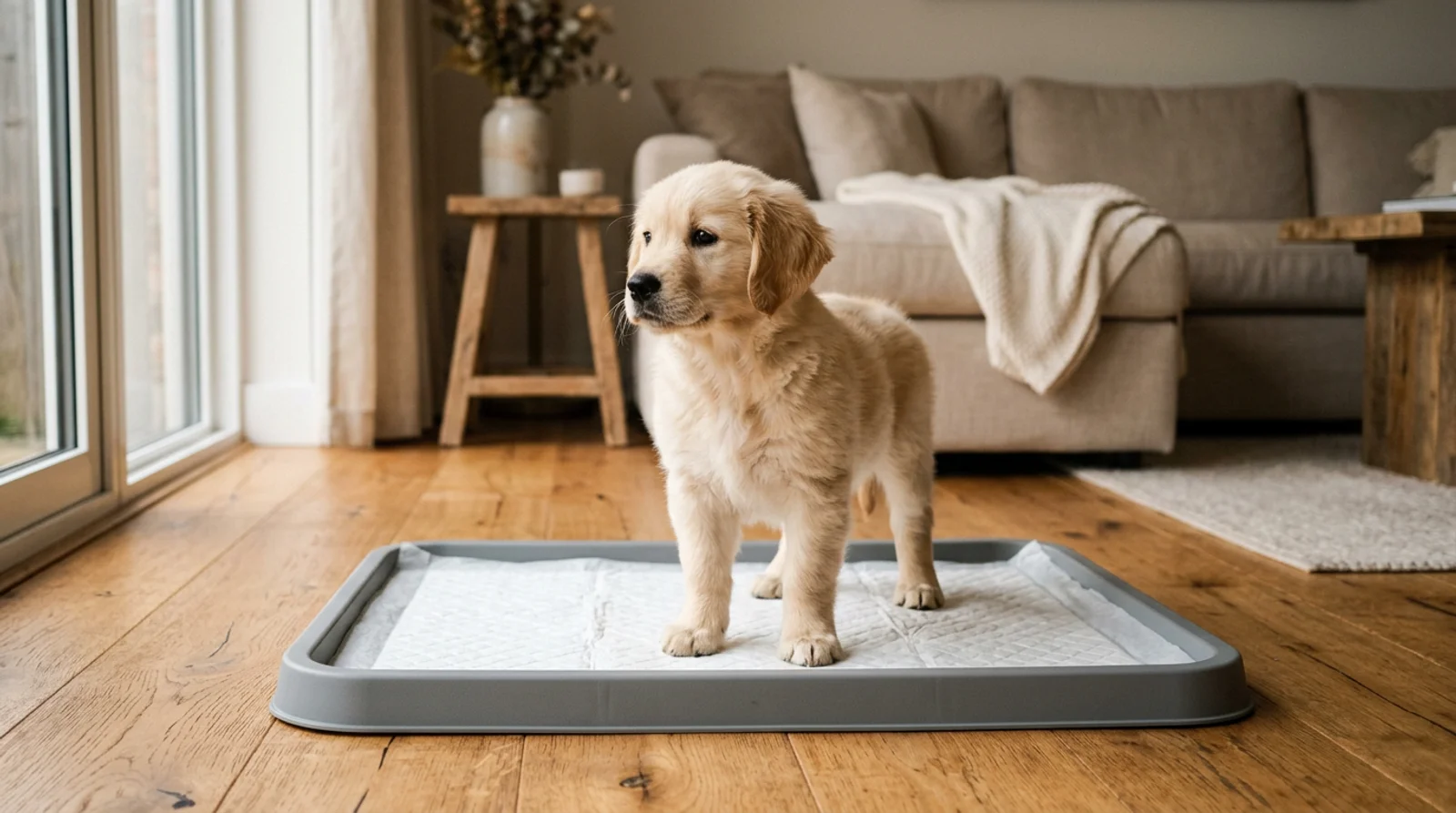
Best Puppy Training Pads & Holders for House Training Success
Best Puppy Training Pads & Holders for House Training Success
You've brought home an eight-week-old puppy, and your hardwood is suddenly a high-stakes zone. The best puppy training pads combine serious absorbency, reliable odour control, and a surface texture that actually encourages your pup to use them—not your rug two metres away. We've tested stacks of disposables, washed reusables dozens of times, and watched puppies ignore, shred, and (occasionally) use them correctly.
House training is as much about setup as consistency. A great pad in the right holder, placed strategically, makes those first few months vastly easier. A flimsy pad that leaks or shifts? You'll be cleaning floors and second-guessing your sanity. Here's what works, what doesn't, and how to choose.
Disposable vs. Washable Puppy Pads: Which Should You Choose?
This is the first fork in the road, and there's no universally correct answer—it depends on your household, your puppy's bladder capacity, and your tolerance for laundry.
Disposable pads are convenient. You use them, roll them up, toss them. If you're housebreaking a Labrador puppy who pees every two hours, you'll go through several per day. They're ideal for the early weeks when accidents are frequent, for apartment dwellers without in-suite laundry, or if you're mixing pad training with outdoor trips and need flexibility. Look for pads with at least five layers: a quick-dry top sheet, absorbent core (often polymer crystals), waterproof backing, and sticky corner tabs to anchor them. Cheaper pads skimp on the core, and you'll know it the first time pee pools on top instead of wicking down.
The downside? Cost and waste add up. A 100-pack might last two weeks with a young puppy. Multiply that across three or four months, and you're looking at significant landfill contribution and expense.
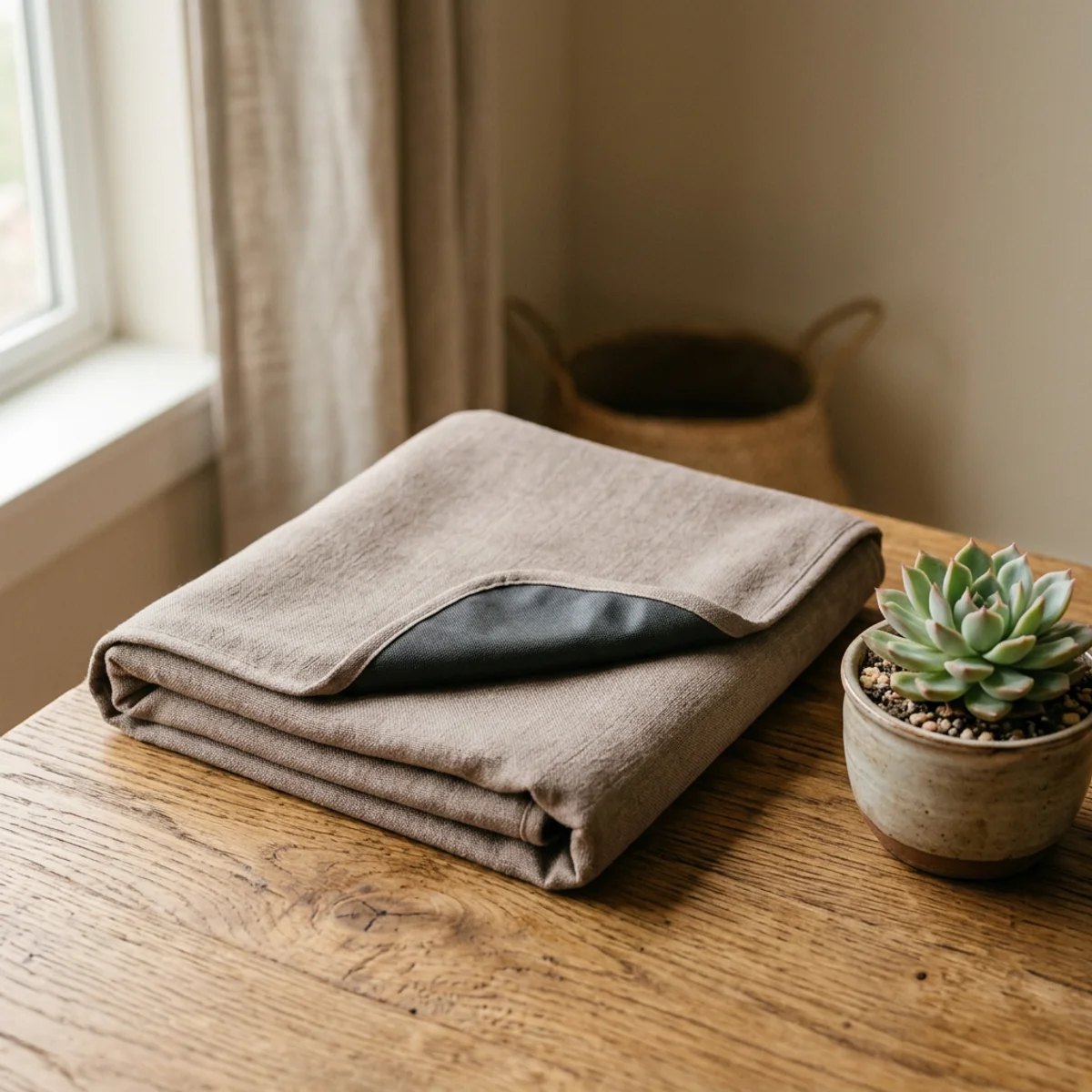
Washable puppy pads are the reusable alternative. Typically four layers of absorbent fabric (cotton, microfibre, or bamboo blends) with a waterproof base, they're designed to be machine-washed and air- or tumble-dried. We've found them excellent for overnight containment in a crate or playpen, or for older puppies who've mostly grasped the concept and only need a backup pad in one spot. You'll want at least three in rotation: one down, one in the wash, one clean and ready.
Washable pads are quieter underfoot, less crinkly, and many dogs prefer the fabric texture. They pay for themselves within a few months. The catch: you're committing to regular laundry (we pre-rinse in the utility sink, then wash on hot with enzyme detergent), and if your puppy is a shredder, they'll destroy a $30 washable pad faster than a disposable.
Our Take
Start with disposables for the first four to six weeks—you need speed and volume. Once your puppy is reliably using the pad and accidents are down to one or two per day, introduce washable pads in predictable spots (overnight crate, one corner of the playpen). By three to four months, you can often transition entirely to washables if you're home enough to manage the laundry cycle. If you work long hours or travel frequently, disposables remain the pragmatic choice.
What Makes a Training Pad Actually Work: Absorbency, Odour Control & Surface Texture
Not all puppy pee pads are created equal. Here's what separates effective housebreaking tools from glorified paper towels.
Absorbency
A quality disposable pad will hold at least 3–4 cups (700–950 mL) of liquid without leaking. Small-breed puppies (a 3-kg Pomeranian) produce less volume per void than a 12-week-old Golden Retriever, but even tiny pups can saturate a thin pad quickly if it's left down too long. Check the specs: pads marketed as "super absorbent" should list their capacity. If the manufacturer won't say, assume it's low.
Washable pads vary more. Look for at least four layers, and pay attention to GSM (grams per square metre) if listed—higher is denser and more absorbent. We've had good luck with bamboo-topped washables; they wick moisture efficiently and resist odour better than plain cotton.
Odour Control
Puppy urine smells stronger than you expect, and if a pad doesn't lock in odour, your entire living room will announce it. Disposable pads often incorporate baking soda, activated charcoal, or odour-neutralizing polymers in the core. Cheap pads do not, and the difference is immediate and unpleasant.
Washable pads rely on fabric choice and how quickly you launder them. Bamboo and microfibre blends resist bacterial growth better than cotton alone. We wash ours within 24 hours and add a splash of white vinegar to the rinse cycle—it's a simple, effective odour killer. For more strategies, our guide on how to reduce pet odour in your home covers broader tactics that pair well with pad training.
Surface Texture & Attractants
Some disposable pads are treated with a pheromone attractant meant to encourage puppies to eliminate there. Does it work? Sometimes. We've seen puppies ignore treated pads and reliably use untreated ones, and vice versa. It's worth trying if your pup seems confused about where to go, but it's not a magic bullet.
Texture matters more. Puppies quickly develop substrate preferences. If your pad feels identical to your bath mat, don't be surprised when your bathroom becomes a secondary target. Disposables with a quilted or textured top sheet provide a distinct tactile cue. Washable pads with a soft fleece or sherpa top are appealing, but some puppies treat them like a cozy bed and curl up instead of peeing. Microfibre or flat-weave tops are safer bets.
Training Pad Holders: Why You Need One (and Which Style Works Best)
A loose pad is an invitation for your puppy to bunch it up, chew the corners, or miss the target entirely because it slid across the floor mid-squat. A training pad holder solves this.
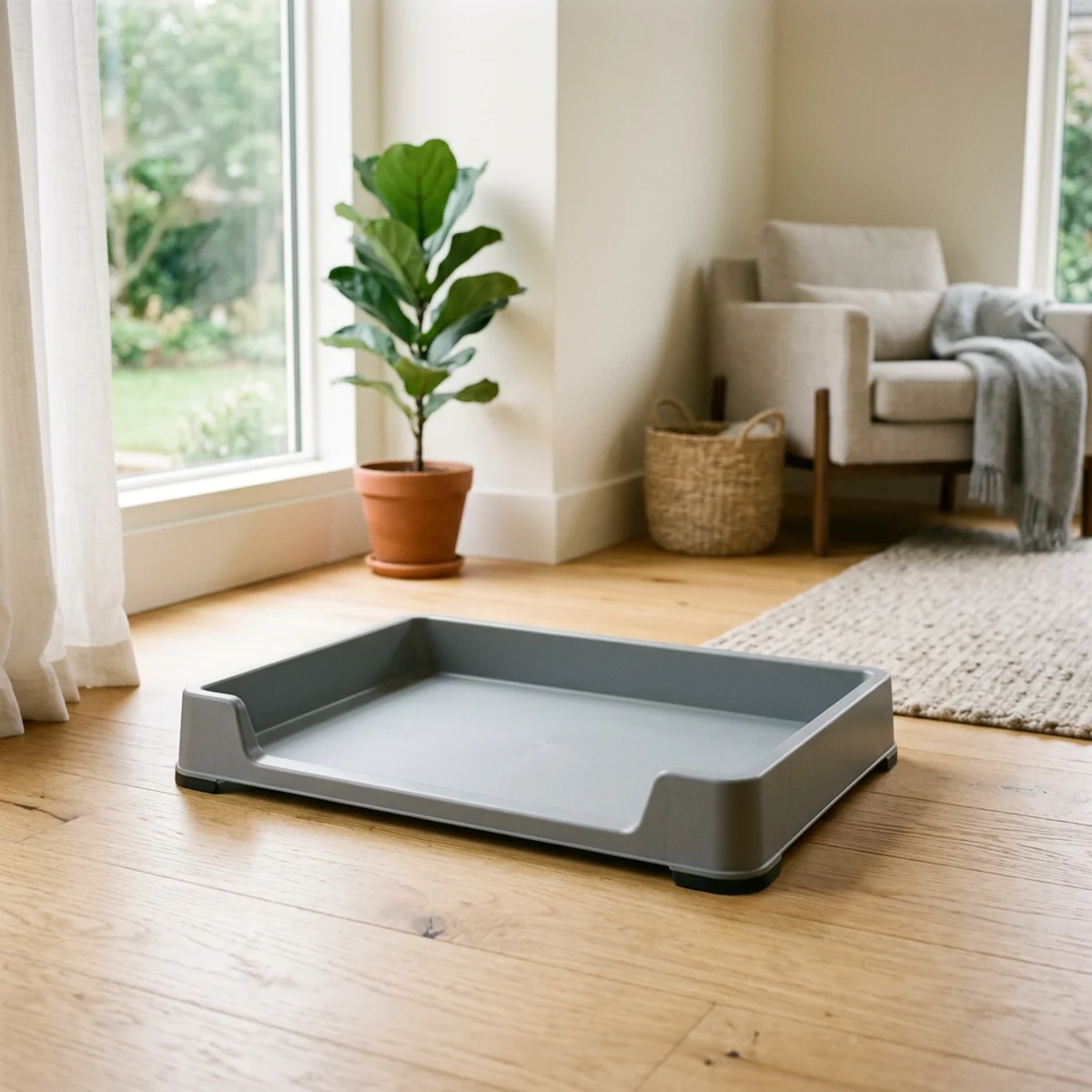
Tray-style holders have low walls (usually 2–4 cm high) and a flat base. You lay the pad inside; the edges hold it taut. These are our favourite for housebreaking because the raised rim contains any overflow and gives a clear visual boundary. Plastic trays are lightweight and cheap; look for one with rubberized feet so it doesn't skate across tile or hardwood. Sizes range from small (45 × 60 cm, suitable for toy breeds) to large (60 × 90 cm, better for medium and large puppies).
Grate-top holders add a plastic grate over the pad, so your puppy stands on the grate and urine drains through to the pad below. In theory, this keeps paws drier and discourages shredding. In practice, many puppies dislike the grate texture and avoid the holder altogether, or they pee just outside it. We've had mixed success—some dogs adapt immediately, others refuse. If your puppy is a chronic pad-shredder, a grate holder is worth testing. Otherwise, a simple tray does the job with less fuss.
Adhesive corners and tape: If you don't want a holder, at minimum choose pads with sticky tabs on each corner, or use double-sided pet-safe tape to anchor the pad to the floor. This prevents the worst sliding, though it doesn't contain leaks the way a tray does.
Sizing Your Holder
Match the holder to your puppy's adult size and your pad dimensions. Standard disposable pads are 56 × 56 cm or 60 × 60 cm; large sizes run 60 × 90 cm. A Shih Tzu puppy can manage a small holder; a Bernese Mountain Dog puppy needs the largest you can find, or they'll overshoot the edges. Measure your pad, then buy a holder 5 cm larger on each side for margin.
Setting Up for Housebreaking Success: Placement, Routine & Realistic Expectations
Even the best puppy pee pads won't work if they're in the wrong spot or introduced inconsistently. Here's how we set up our own foster puppies—and what we tell new puppy parents.
Placement
Put the pad where your puppy already wants to go. Most puppies instinctively avoid soiling their sleeping area and will move a few metres away. In a playpen or gated kitchen, place the pad in the corner farthest from the bed and food bowls. If your puppy has access to a larger area, observe where accidents happen—that's your pad zone.
Avoid high-traffic areas where the pad might be walked over or where your puppy will be distracted. A quiet corner near the door you'll eventually use for outdoor potty trips is ideal; it builds a spatial association.
Routine
Consistency is everything. Take your puppy to the pad first thing in the morning, after every meal, after naps, and after play sessions—basically every 1–2 hours for young pups. Stand nearby but don't hover or make a fuss. When they use the pad, quiet praise and a small treat. No scolding for misses; clean them up with an enzyme cleaner and move on.
For a deeper dive into the full housebreaking process, routines, and troubleshooting stubborn accidents, read our complete house training puppy guide. It pairs perfectly with the gear advice here.
Realistic Expectations
Puppies under 12 weeks have limited bladder control—physically, they cannot hold it for long stretches. Even with perfect pad placement, expect accidents. Pad training is often a bridge strategy: you use pads while your puppy is too young for reliable outdoor training, then phase them out as bladder capacity and signalling improve. Some small-breed owners keep a pad long-term as a backup for bad weather or long work days, and that's fine. There's no single "right" timeline.
Comparing Popular Puppy Training Pad Options
| Type | Best For | Absorbency | Odour Control | Cost (Approx.) | Eco Impact |
|---|---|---|---|---|---|
| Disposable (Standard) | Early training, high-frequency use, apartments | Moderate (2–3 cups) | Basic | $0.30–$0.50/pad | High waste |
| Disposable (Premium) | Larger puppies, overnight, odour-sensitive homes | High (4+ cups) | Excellent | $0.60–$1.00/pad | High waste |
| Washable (Cotton) | Budget-conscious, eco-focused, moderate use | Moderate | Good (with regular washing) | $15–$25/pad | Low waste |
| Washable (Bamboo/Microfibre) | Odour control priority, frequent use, long-term | High | Excellent | $25–$40/pad | Low waste |
| Grass Patch Trays | Balcony training, transition to outdoor grass | N/A (real or synthetic grass) | Variable | $30–$80 (plus upkeep) | Moderate |
Prices in CAD, approximate retail as of 2025.
Grass patch trays deserve a mention: they're small squares of real or synthetic grass in a tray, designed for balcony use or to teach puppies that grass = bathroom. They're niche—best for apartment dwellers training small breeds to use a balcony long-term—but they're not a replacement for traditional pads during the mobile, indoor housebreaking phase.
FAQ
How many puppy training pads do I need?
For disposables, budget at least 4–6 per day in the early weeks (8–12 weeks old), tapering to 2–3 per day by 16 weeks. A 100-pack will last roughly two weeks initially. For washables, buy at least three so you always have one in rotation.
Can I use puppy pads and crate training at the same time?
Yes, and we recommend it. Crate training teaches bladder control and provides a safe sleep space; pads offer a legal bathroom spot when your puppy is out of the crate in a supervised, confined area. Never put a pad inside the crate—it undermines the principle that the crate is a no-elimination zone. For full crate-training mechanics, see our crate training puppy guide.
My puppy keeps shredding the pads. What do I do?
Shredding usually means boredom, teething, or the pad texture is irresistible. Increase exercise and provide appropriate chew toys (our dog toy safety guide has good options). Switch to a tray-style or grate-top holder to make shredding harder. If the behaviour persists, washable pads with tougher fabric or a grass patch may be better bets.
When should I stop using puppy pads entirely?
Most puppies can transition fully outdoors by 4–6 months, once they have reliable bladder control and consistently signal to go out. If you live in a high-rise or have mobility challenges, keeping one pad as a permanent backup is practical—many small-breed owners do this lifelong. Trust your pup's progress, not a rigid schedule.
Final Thoughts
The best puppy training pads are the ones your puppy actually uses—and that means pairing the right product with thoughtful placement, a consistent routine, and realistic patience. Disposables offer speed and convenience when accidents are frequent; washables save money and waste once you're past the chaos of the first month. A good holder keeps everything tidy and teaches clear boundaries.
We've cleaned up after enough puppies to know that no pad is magic, but the right setup makes a measurable difference in how quickly your pup grasps the concept—and how much of your sanity you preserve in the process. Browse our curated selection of training pads and holders at Studio Bleuet, and give yourself and your puppy the tools to succeed from day one.
Sources
- Canadian Veterinary Medical Association - Humane Training of Dogs Position Statement
- American Kennel Club - How to Potty Train a Puppy: A Step-by-Step Guide
- PetMD - How To Potty Train a Puppy, According to a Dog Trainer
- VCA Animal Hospitals - Housetraining for Puppies and Dogs
- American Kennel Club - Puppy Potty Training Timeline