Cat Water Fountains: Benefits & How to Choose the Best One
Cat Water Fountains: Benefits & How to Choose the Best One
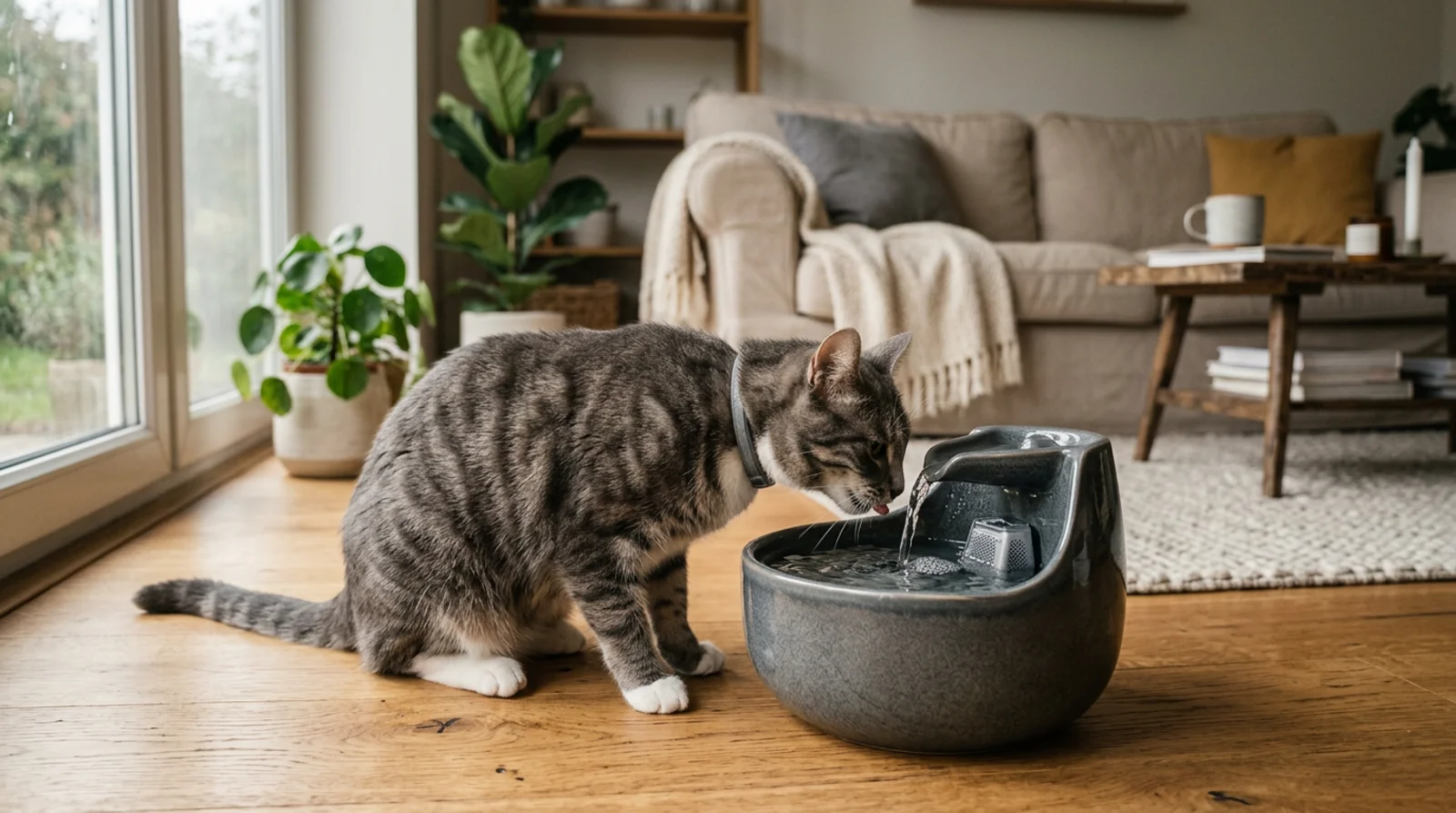
Our tabby, Margot, used to ignore her water bowl for hours, then drink from the bathroom tap the moment anyone turned it on. We'd find her perched on the vanity, waiting. That behaviour—the preference for running water—is hardwired into most cats, and it's exactly why cat water fountain benefits extend far beyond convenience. A quality drinking fountain can transform a reluctant sipper into a well-hydrated cat, and the health payoff is real: fewer urinary crystals, better kidney function, and cats who actually drink enough.
Why Cats Prefer Flowing Water (and Why It Matters)
Cats evolved as desert hunters. Their ancestors drank from streams and moving water sources, which were less likely to harbour bacteria than stagnant pools. That instinct persists: flowing water signals freshness. A still bowl, especially one that's been sitting for hours, doesn't trigger the same drinking response.
We see this play out constantly. Cats who barely touch a ceramic dish will spend minutes lapping from a fountain. The movement catches their eye, the sound cues them to drink, and the oxygenation makes the water taste better. It's not fussiness—it's biology.
Chronic low-grade dehydration is surprisingly common in cats, especially those on dry kibble. Over time, that deficit stresses the kidneys and bladder, setting the stage for urinary crystals, stones, and chronic kidney disease (CKD). Encouraging more water intake is one of the simplest, most effective preventive steps you can take.
Cat Water Fountain Benefits for Health and Behaviour
Urinary Tract and Kidney Health
Increased water consumption dilutes urine, which reduces the concentration of minerals that form crystals and stones. For cats prone to feline lower urinary tract disease (FLUTD) or those with early-stage CKD, a fountain can make a genuine difference. Our own vet has recommended fountains to clients as part of a broader hydration strategy, alongside wet food.
Kidney disease is the leading cause of death in senior cats. While a fountain won't prevent it outright, better hydration helps kidneys function more efficiently and may slow progression. If your cat has been diagnosed with any urinary or renal issue, consult your veterinarian about hydration goals—but a fountain is almost always part of the plan.
Behavioural Enrichment
Cats are sensory creatures. A fountain provides visual stimulation (the ripple and flow), auditory interest (the gentle burble), and a novel texture (moving water on the tongue). For indoor cats especially, that low-level enrichment matters. We've noticed our cats check the fountain throughout the day, even when they're not thirsty—it's a point of interest in their environment.
For ways to layer in more engagement, our indoor cat enrichment ideas article offers dozens of practical tips.
Cleanliness and Freshness
Circulating water stays cooler and more oxygenated. Most fountains include a replaceable carbon or foam filter that traps hair, debris, and particulates, keeping the water cleaner between refills. That's a marked improvement over a static bowl that collects dust, food crumbs, and backwash within hours.
How to Choose the Best Cat Water Fountain
Not all fountains are created equal. We've tested (and cleaned) more than a few, and the differences in design, noise, and maintenance are significant. Here's what to prioritize.
Material: Ceramic, Stainless Steel, or BPA-Free Plastic?
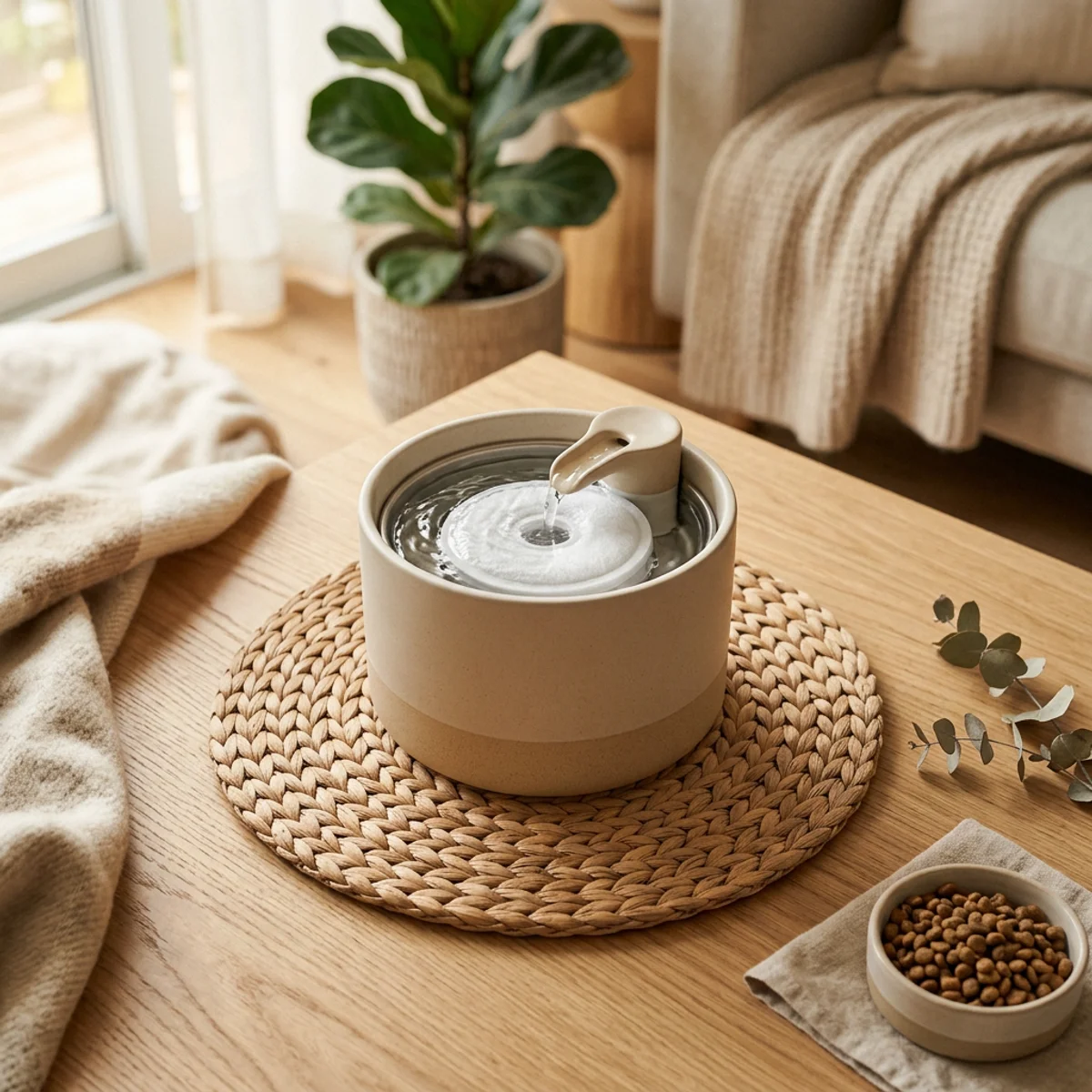
Ceramic is our top pick for most households. It's non-porous, dishwasher-safe, heavy enough that cats won't tip it, and aesthetically neutral—it doesn't scream "pet product" in your kitchen. The main trade-off is fragility; drop it and it's done.
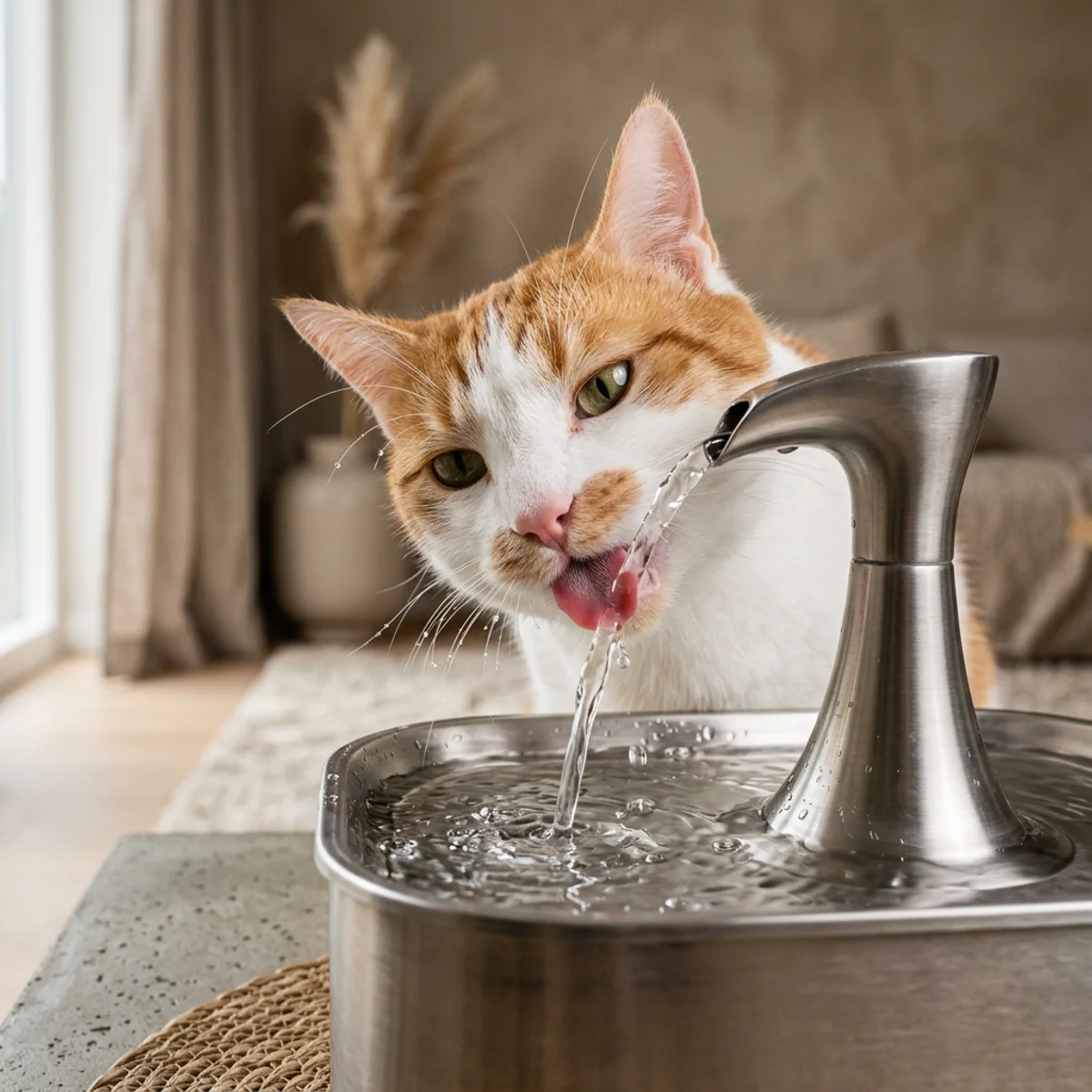
Stainless steel is nearly indestructible, dishwasher-safe, and ideal if you have a cat with feline acne (plastic and some glazes can harbour bacteria that aggravate chin breakouts). It's lighter than ceramic, so younger, more boisterous cats may nudge it around.
BPA-free plastic is budget-friendly and lightweight, but it scratches easily—those micro-scratches trap bacteria and develop a slimy biofilm even with regular cleaning. Plastic fountains also discolour over time and may retain odours. If you go plastic, commit to meticulous weekly scrubbing and filter changes.
Capacity and Refill Frequency
Most fountains hold 1.5 to 3 litres. For a single cat, 2 litres is plenty; multi-cat homes or anyone who travels frequently should look for 3+ litres to reduce refill frequency. Check how easy it is to see the water level—translucent reservoirs or external windows are helpful.
Remember, you'll still need to top up between deep cleans. Fountains lose water to evaporation and, obviously, drinking. Plan on a quick refill every two to three days.
Pump Noise and Reliability
A good fountain is nearly silent—a soft trickle, not a grinding hum. Cheap pumps get louder over time as mineral deposits and debris build up. Look for models with submersible, low-voltage pumps (usually USB or 12V adapter). Read reviews specifically for noise complaints; this is where budget models often fail.
Pump longevity varies. Expect to replace the pump (or the entire unit) every one to three years, depending on water hardness and maintenance. Descaling the pump monthly with a vinegar soak extends its life.
Filter Type and Replacement Cost
Most fountains use activated carbon filters (sometimes combined with foam or ion-exchange resin). These trap debris and reduce chlorine taste. Filters need replacing every two to four weeks—check the ongoing cost before you buy. We've seen fountains with $8/filter running costs; over a year, that adds up.
Some newer models use washable pre-filters or omit filters entirely, relying on circulation alone. These work if you're diligent about cleaning, but we find a filter makes a noticeable difference in water clarity.
Design: Flow Style and Ease of Cleaning
Fountains come in several flow configurations:
- Bubbler/fountain top: water wells up from a dome or spout. Cats can drink from the stream or the basin.
- Free-falling stream: water cascades from an upper tier. Visually appealing, but splashier.
- Gentle flow or surface ripple: quieter, less dramatic. Good for timid cats or noise-sensitive homes.
Pick the style your cat prefers. Some cats love batting at a stream; others want a calm, wide basin. If you're unsure, start with a multi-level design that offers options.
Cleaning ease is critical. Look for dishwasher-safe parts (top rack), minimal crevices where slime accumulates, and a pump that disassembles easily for descaling.
We deep-clean our fountain weekly: disassemble, scrub every surface with hot soapy water, rinse the pump, and replace the filter. It takes ten minutes. Neglect this and you'll have a slimy, smelly fountain that defeats the purpose.
Power Source
Most plug into a wall outlet. A few battery-operated models exist, but they're uncommon and less reliable. If you place the fountain away from an outlet, you'll need an extension cord—just make sure it's pet-safe and secured so no one chews it.
USB-powered fountains are handy near desks or in spots where a low-voltage adapter is easier to hide. Check the cable length.
Cat Hydration Tips Beyond the Fountain
A fountain is a powerful tool, but it's not the only one. Layer these strategies for maximum impact:
- Feed wet food. Canned or raw diets contain 70–80% moisture, compared to roughly 10% in kibble. Even one wet meal a day makes a difference.
- Multiple water stations. Place bowls or a second fountain in different rooms. Cats drink more when water is convenient.
- Wide, shallow dishes. Whisker fatigue is real. Deep, narrow bowls irritate sensitive whiskers; wide dishes are more comfortable.
- Fresh water daily. Even without a fountain, dump and refill bowls every day. Cats are picky.
- Ice cubes or water additives. Some cats enjoy a few ice cubes in summer. Flavourless hydration supplements (check with your vet first) can entice reluctant drinkers.
For cats with weight or health concerns, our cat weight management guide discusses diet and hydration in tandem—both are part of the picture.
Comparing Popular Fountain Styles
| Feature | Ceramic Fountain | Stainless Steel Fountain | Plastic Fountain |
|---|---|---|---|
| Durability | Fragile if dropped; lasts years otherwise | Nearly indestructible | Scratches easily; shorter lifespan |
| Hygiene | Non-porous, dishwasher-safe | Non-porous, dishwasher-safe | Porous; can harbour bacteria |
| Weight | Heavy, stable | Moderate, may slide | Lightweight, easily tipped |
| Aesthetics | Premium, home-friendly | Modern, sleek | Varies; often looks utilitarian |
| Price (approx.) | $60–$120 CAD | $50–$100 CAD | $30–$60 CAD |
| Best For | Design-conscious homes, single/multi-cat | Cats with feline acne, frequent travellers | Budget-conscious, trial purchase |
Common Mistakes to Avoid
Skipping the weekly clean. Biofilm—the slimy coating—develops fast. If you let it build, the fountain becomes a bacteria incubator, not a health asset.
Using tap water without considering hardness. If you have very hard water (common in parts of the Prairies and Ontario), mineral deposits will clog the pump quickly. Use filtered or bottled water, or plan on monthly descaling.
Placing the fountain on carpet. Splashing happens. Put it on tile, laminate, or a waterproof mat. We learned this the hard way.
Ignoring your cat's preferences. If your cat still won't drink, try a different flow style, move the fountain to a quieter spot, or switch materials. Some cats are spooked by the sound or don't like the location near their litter box (fair enough—would you eat next to a toilet?).
For multi-cat households managing territorial stress, our cat stress signs and solutions article covers placement and resource distribution.
FAQ
How often should I clean a cat water fountain?
Disassemble and deep-clean weekly with hot, soapy water. Rinse the pump, wipe all surfaces, and replace the filter every two to four weeks. Daily top-ups and a quick wipe of the basin help between deep cleans. Skipping this turns the fountain into a slime factory.
Will a water fountain help my cat with kidney disease?
It can support better hydration, which helps kidney function, but it's not a cure or substitute for veterinary treatment. If your cat has been diagnosed with chronic kidney disease, work with your vet on a complete hydration and diet plan—fountains are usually part of that plan. Monitor water intake and report changes.
My cat won't use the fountain. What should I try?
First, make sure it's clean and the flow isn't too strong or noisy. Try moving it to a quieter, low-traffic area away from the litter box. Some cats need a few days to adjust—leave the old water bowl nearby during the transition. Experiment with flow settings if your model offers them. A few cats simply prefer still water; that's okay.
Do I still need to provide a regular water bowl if I have a fountain?
We recommend keeping at least one backup bowl, especially during the adjustment period or if the fountain fails (power outage, pump quits). Multiple water sources are always a good idea. Cats appreciate choice.
Our Take: Is a Cat Drinking Fountain Worth It?
Absolutely. We've watched reluctant drinkers transform into cats who actively seek out their fountain multiple times a day. The kidney and urinary health benefits alone justify the investment, and the reduction in stale-water smell is a nice bonus for us humans.
Yes, fountains require regular maintenance—but so does a litter box, and you wouldn't skip that. If you choose a well-designed model in ceramic or stainless steel, commit to weekly cleaning, and place it thoughtfully, a fountain will serve your cat (and your peace of mind) for years.
Browse our curated selection of cat hydration solutions at Studio Bleuet—we stock fountains that meet our own standards for design, durability, and functionality. Your cat's kidneys will thank you.