Essential Dog Grooming Tools Every Pet Parent Needs
Essential Dog Grooming Tools Every Pet Parent Needs
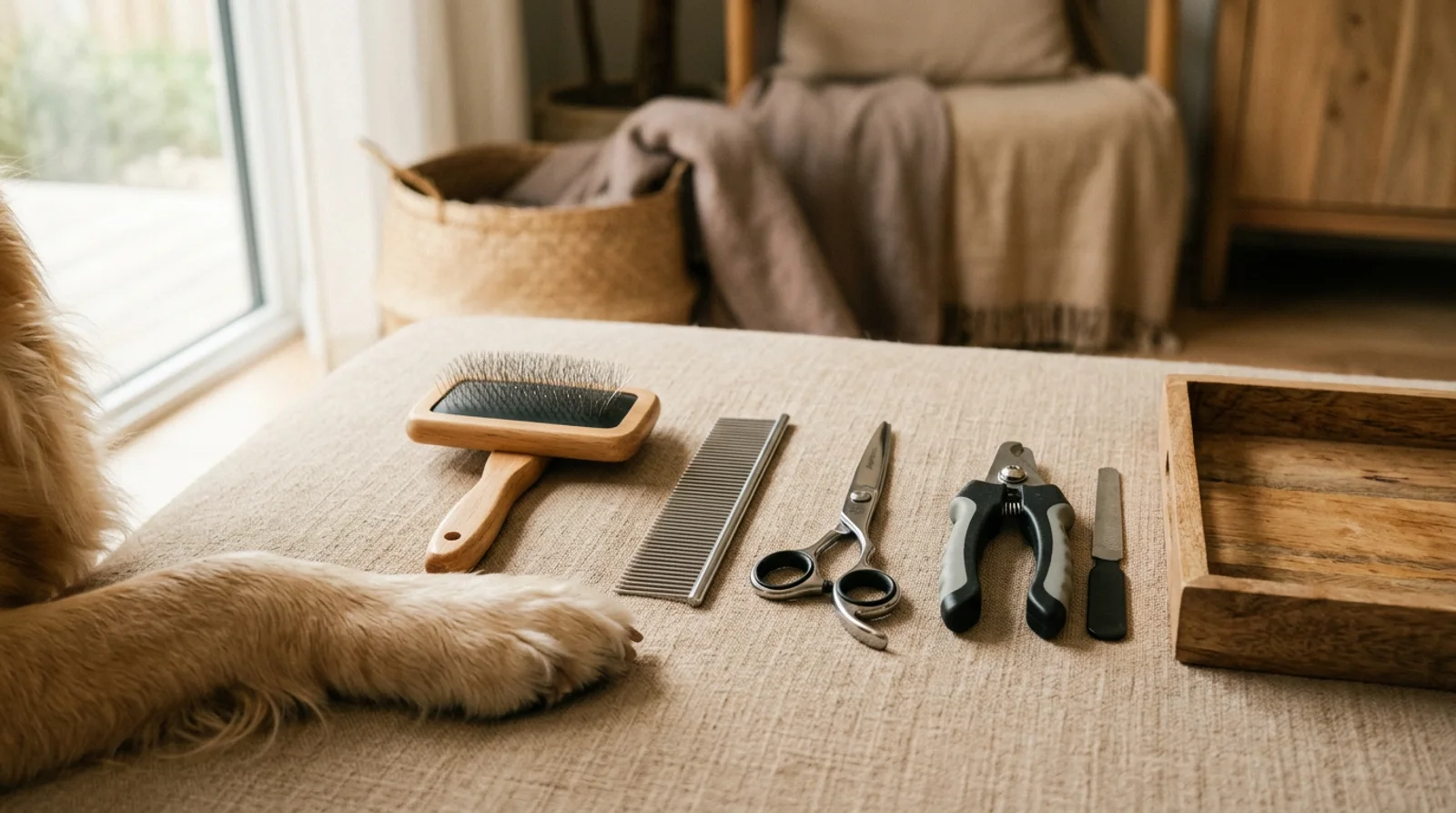
Every functional dog grooming kit needs five core tools: a slicker brush, metal comb, nail clippers, an undercoat rake or deshedding tool (for double coats), and blunt-tipped scissors. But here's what matters more than the list—matching those tools to your dog's actual coat. What works brilliantly for a Poodle will frustrate you with a Golden Retriever, and vice versa.
We've watched too many pet parents waste money on grooming tools that don't match their dog's needs. One of our team members bought three different brushes before realizing her Border Collie needed an undercoat rake, not another pin brush. Another kept fighting with dull nail clippers that crushed rather than cut, making every trim stressful for both dog and human. A third gave up on at-home grooming entirely because her Doodle's slicker brush couldn't touch the mats forming at skin level.
Building a kit that actually gets used isn't about buying everything the pet store offers. It's about understanding your dog's coat, investing in quality where it matters, and skipping tools you'll never touch.
Understanding Your Dog's Coat Type Before You Buy Anything
Coat type dictates everything. A short-coated Boxer needs completely different grooming tools for dogs than a long-haired Shih Tzu or a wire-coated terrier.
Short, smooth coats (Beagles, Boxers, Boston Terriers) shed constantly but need minimal brushing—a rubber curry brush or hound glove works perfectly. These dogs benefit more from regular bathing and nail care than extensive brushwork.
Double coats (Golden Retrievers, Huskies, German Shepherds, Corgis) have a soft undercoat beneath longer guard hairs. They blow their coat twice a year and shed moderately year-round. You need an undercoat rake or deshedding tool to reach that dense underlayer. Surface brushes barely touch it.
Long, silky coats (Yorkies, Maltese, Afghan Hounds) mat easily and require daily attention with a pin brush and metal comb. These coats grow continuously like human hair and need regular trimming.
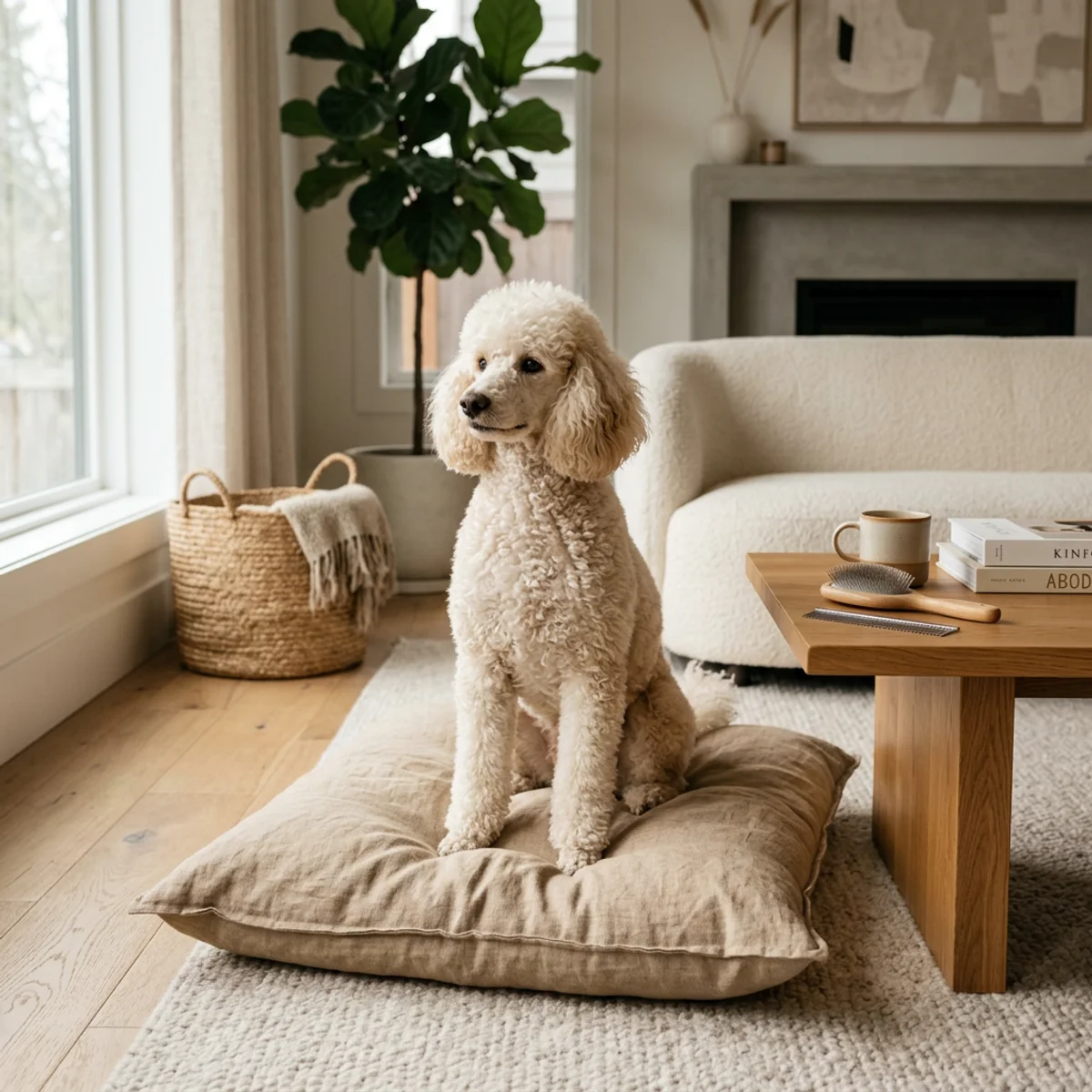
Curly or wool coats (Poodles, Bichons, Doodles of all kinds) don't shed much but mat terribly if neglected. A slicker brush is non-negotiable, and you'll use it every single day if you keep your dog in anything longer than a short clip.
Wire coats (most terriers, Schnauzers) need hand-stripping or clipping to maintain texture, plus a slicker brush and stripping knife for proper grooming.
One quick note: if your dog is a mixed breed, look at the coat itself rather than guessing ancestry. A Labradoodle with a fleece coat needs Poodle tools; one with a wiry coat needs terrier tools.
The Best Dog Brush for Every Coat
Brushes are where most grooming kits start, and where most confusion happens.
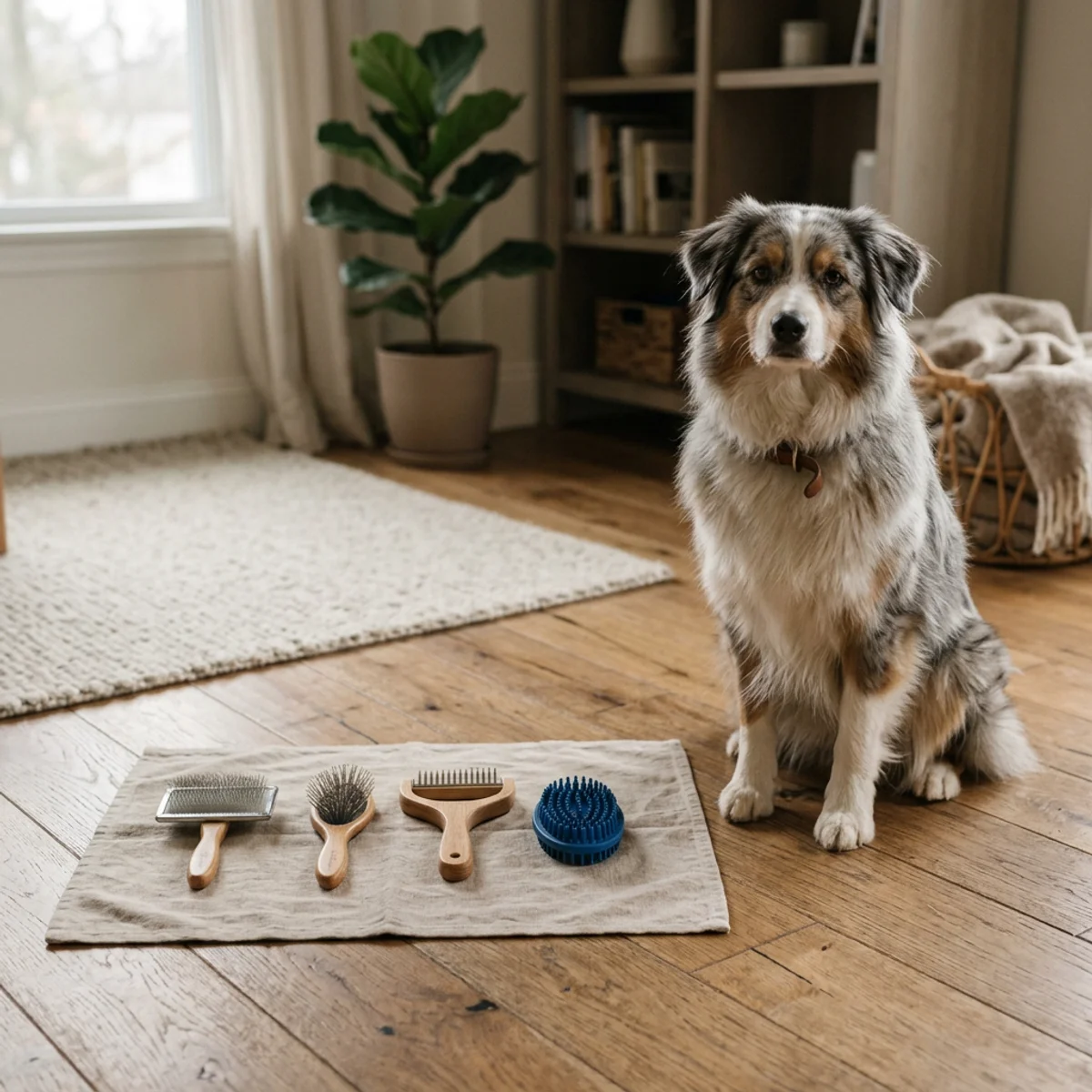
Slicker Brushes
These rectangular brushes with fine, bent wire pins are the workhorses of dog grooming. We reach for slicker brushes on Poodles, Doodles, Spaniels, and any long or curly coat prone to mats. The bent pins penetrate deep and grab loose hair without scratching skin—if you use them correctly.
Technique matters here. Brush in sections, working from skin outward in short strokes. Pressing too hard causes brush burn; too light and you're only skimming the surface. Our team prefers slickers with flexible heads that contour to the dog's body.
For heavy coats, get a firmer slicker. For sensitive dogs or puppies, choose one labelled "soft" or "gentle."
Pin Brushes
Pin brushes look like human brushes with rounded metal pins set in rubber. They're ideal for long, silky coats (Yorkies, Setters) and the final finish brushing on fluffed coats. They don't remove much undercoat, so they're useless on double-coated breeds during shedding season.
We use pin brushes for daily maintenance on dogs already mat-free, or after we've done the real work with a slicker or comb.
Undercoat Rakes and Deshedding Tools
If you own a Husky, Shepherd, or any double-coated breed, this is your most important tool. Undercoat rakes have long, widely-spaced teeth that reach through the topcoat to pull dead undercoat without cutting guard hairs.
Deshedding tools—the popular ones with a blade edge—work slightly differently. They catch and remove loose undercoat efficiently but can damage the coat if overused. We use them once or twice a week during heavy shedding seasons, never daily. They're magic on Labradors and Corgis in spring, pulling out handfuls of fluff in minutes.
Don't use deshedding tools on curly, wire, or single coats. They'll wreck the texture.
Rubber Curry Brushes
These simple rubber nubs are perfect for short, smooth coats. They massage skin, loosen dead hair, and distribute oils. Our Boxer-owning editor uses one in the bath to work shampoo through, then again while blow-drying.
They're inexpensive and last forever. Every dog grooming kit should have one, even if it's just for bath time.
Building Your Dog Grooming Kit: The Must-Haves
Here's what actually earns its space in a functional kit, based on years of grooming our own dogs and testing products for the boutique.
Metal Combs
A good metal comb is non-negotiable. We use ours to check for mats the brush missed, work through tangles near ears and armpits, and finish delicate areas around the face. Look for one with both wide and narrow spacing—wide teeth for initial detangling, narrow for final passes and flea detection.
Greyhound combs (long, tapered combs) are our favourite. They're comfortable to hold and the length lets you work efficiently through larger areas.
Nail Clippers or Grinders
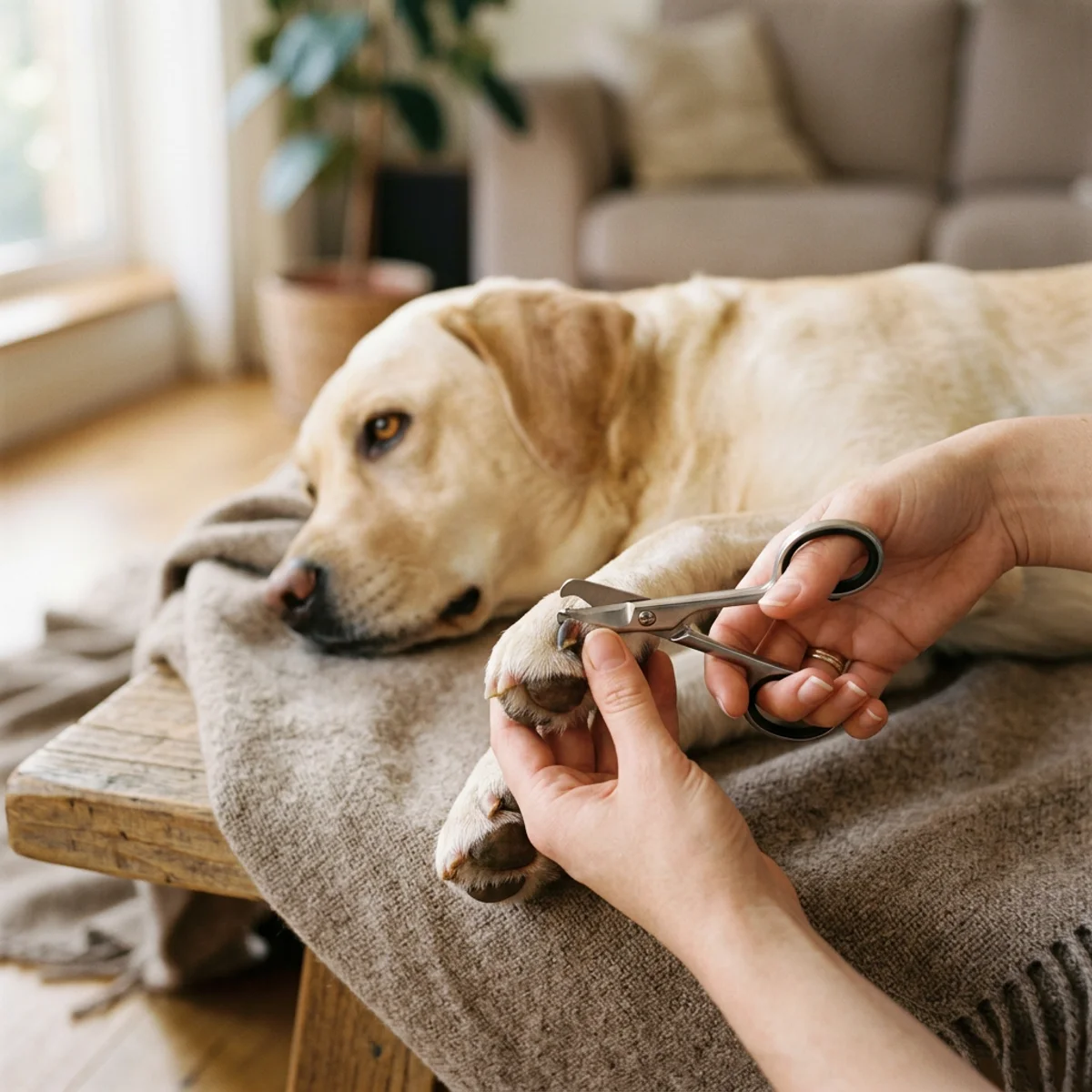
Nail care stresses out more pet parents than any other grooming task, but overgrown nails cause real problems—splayed toes, joint pain, torn nails. Most dogs need trimming every three to four weeks.
Guillotine clippers have a hole you insert the nail through; a blade slides across when you squeeze. They're fine for small to medium dogs with thin nails but struggle with large, thick nails.
Scissor-style clippers work like regular scissors and give you more control. We prefer these for dogs over 15 kg and for anyone nervous about trimming—you can take smaller bits with each cut.
Grinders file the nail smooth using a rotating drum. Some dogs tolerate the vibration and noise better than clipping pressure; others hate it. Grinders are excellent for smoothing sharp edges after clipping and for gradual shortening if the quick has grown long. They're slower than clippers but nearly impossible to cause a bleed with.
Buy quality here. Cheap clippers dull quickly and crush the nail instead of cutting cleanly, which hurts and splinters. We've seen $12 clippers from discount stores that were dull out of the package.
For detailed guidance on the full trimming process, our dog paw care routine walks through technique, what to do if you hit the quick, and how to help anxious dogs.
Grooming Scissors
You don't need professional shears for basic tidying. Blunt-tipped scissors let you safely trim around paws, sanitary areas, and faces without risking a poke if your dog moves suddenly.
We keep a small pair (around 12–15 cm) for detail work and a larger pair for body work on longer coats. Thinning shears are useful for blending and removing bulk without leaving scissor lines, but they're optional unless you're maintaining a specific style.
Ear Cleaning Supplies
Ear infections are common, expensive, and often preventable with regular cleaning. You need a veterinary ear cleanser (never use water, alcohol, or hydrogen peroxide) and cotton balls or gauze.
Floppy-eared breeds (Spaniels, Bassets) and dogs who swim need weekly cleaning. Prick-eared breeds with good air circulation might only need it monthly. Our full dog ear cleaning guide covers technique and red flags that mean it's time for a vet visit.
Detangling Spray or Conditioning Spray
This isn't just about making your dog smell nice. A good leave-in conditioning spray helps brushes glide through the coat, reduces static, and prevents breakage on long or dry hair. We use it on every dog before brushing—it makes the job faster and more comfortable.
Look for products without heavy perfumes. Your dog's nose is far more sensitive than yours.
At-Home Dog Grooming: What You Can Do Yourself
Most pet parents can handle routine maintenance between professional appointments: brushing, nail trims, ear cleaning, paw pad trimming, and sanitary trims. This keeps your dog comfortable and can stretch professional grooming from every six weeks to every eight to ten weeks, saving hundreds of dollars annually.
What we don't recommend doing yourself, unless you've been trained: full haircuts on coated breeds, hand-stripping wire coats, or expressing anal glands. A bad haircut grows out. A grooming injury or a terrified dog who now hates being handled? Those are harder to fix.
Brushing frequency depends entirely on coat type:
- Daily: Poodles, Doodles, long silky coats, and any dog prone to mats
- 2–3 times weekly: Double coats year-round; increase to daily during spring and fall sheds
- Weekly: Short smooth coats, mostly for bonding and distributing oils
We've learned that consistent short sessions work better than infrequent marathon grooming. Five minutes every evening prevents the mats that require an hour of painful dematting later.
For a complete walkthrough of the bathing and drying process plus coat-specific techniques, our article on how to groom your dog at home provides step-by-step guidance.
Grooming Tools for Dogs: What You Can Skip
The pet industry wants you to believe you need dozens of specialized tools. You don't.
Dematting tools and mat splitters have sharp blades that cut through mats. They're useful if your dog already has mats, but if you're brushing properly, you won't need them. Prevention beats intervention.
Shedding shampoos don't reduce shedding—they just help loosen dead coat so it comes out in the bath instead of on your sofa. A good deshedding tool does the same thing without the bath. They're not bad, just not necessary.
Fancy brush cleaners—your fingers and a comb work fine to pull hair from brushes.
Coat-specific shampoos for every colour—unless you're showing your dog, a quality general-purpose or sensitive-skin shampoo is plenty. We've never met a pet parent who regretted skipping the "bright white" or "deep black" formulas.
Coat Type Tool Quick Reference
| Coat Type | Primary Brush | Secondary Tool | Frequency | Special Needs |
|---|---|---|---|---|
| Short smooth | Rubber curry | Bristle brush (optional) | Weekly | More baths, less brushing |
| Double coat | Undercoat rake or deshedding tool | Slicker brush | 2–3× weekly; daily during shedding season | Focus on undercoat removal |
| Long silky | Pin brush | Metal comb | Daily | Detangling spray essential |
| Curly/wool | Slicker brush | Metal comb | Daily | Professional clips every 6–8 weeks |
| Wire | Slicker brush | Stripping knife (advanced) | 2–3× weekly | Hand-stripping for show texture |
FAQ
How often should I replace my dog's grooming tools?
Brushes last years if you clean them regularly—remove hair after each use and wash with warm soapy water monthly. Replace them when pins bend, break, or the rubber base cracks. Nail clippers need replacing when they no longer cut cleanly, usually every one to two years depending on use. Combs can last a decade or more unless you lose them. Scissors need professional sharpening annually if you use them frequently.
Can I use human brushes or nail clippers on my dog?
Human hairbrushes don't have the pin length or spacing to work on dog coats—they'll only skim the surface. Human nail clippers work in an emergency on small dogs with thin nails, but dog nails are thicker and shaped differently. Human clippers tend to crack and splinter the nail rather than cutting cleanly. Spend the $15 on proper dog clippers; your dog's comfort is worth it.
My dog hates being brushed. How do I make grooming less stressful?
Start with short sessions—even 30 seconds—and pair them with high-value treats. Touch the brush to your dog, treat, done. Gradually increase duration. Make sure you're using the right brush (a slicker on sensitive skin or a rake on a mat pulls painfully). Brush gently; you shouldn't be scraping skin. Some dogs do better on a non-slip mat on a table rather than the floor, where they feel more secure. If your dog is truly panicked, work with a trainer or ask your vet about desensitization protocols. Forcing it will make the fear worse.
Do I need different tools for puppies?
Puppies have softer coats and more sensitive skin, so choose gentler versions—a soft slicker, a rubber curry, a fine-toothed comb. The goal with puppies is less about actual grooming (their coats don't need much) and more about teaching them that handling is safe and pleasant. Short, treat-filled sessions now prevent grooming battles later. Puppy nail grinding is excellent for desensitization since their nails are soft and quick to trim. Our how to socialize a puppy guide includes handling exercises that set the foundation for cooperative grooming.
Building a Kit That Actually Gets Used
The best grooming tools are the ones you'll use consistently, not the ones that sit in a drawer because they're uncomfortable to hold or too complicated. Start with the basics for your dog's coat type—one excellent brush, a metal comb, quality nail clippers, and ear cleaner. You can always add specialized tools later if you discover you need them.
We stock grooming tools at Studio Bleuet that we'd use on our own dogs—well-designed, durable, and actually pleasant to hold for more than five minutes. A good tool makes grooming faster and more comfortable for both of you, which means you're more likely to do it regularly. That consistency is what keeps coats healthy, nails short, and ears clean.
Your dog's grooming needs will probably evolve. Coats change as puppies mature, senior dogs develop sensitivities, and seasons shift. Pay attention to what's working and what's frustrating, and adjust your kit accordingly. There's no prize for struggling with the wrong tool when the right one would make everything easier.