Best Dog Raincoats & Waterproof Gear for Wet Weather Walks
Best Dog Raincoats & Waterproof Gear for Wet Weather Walks
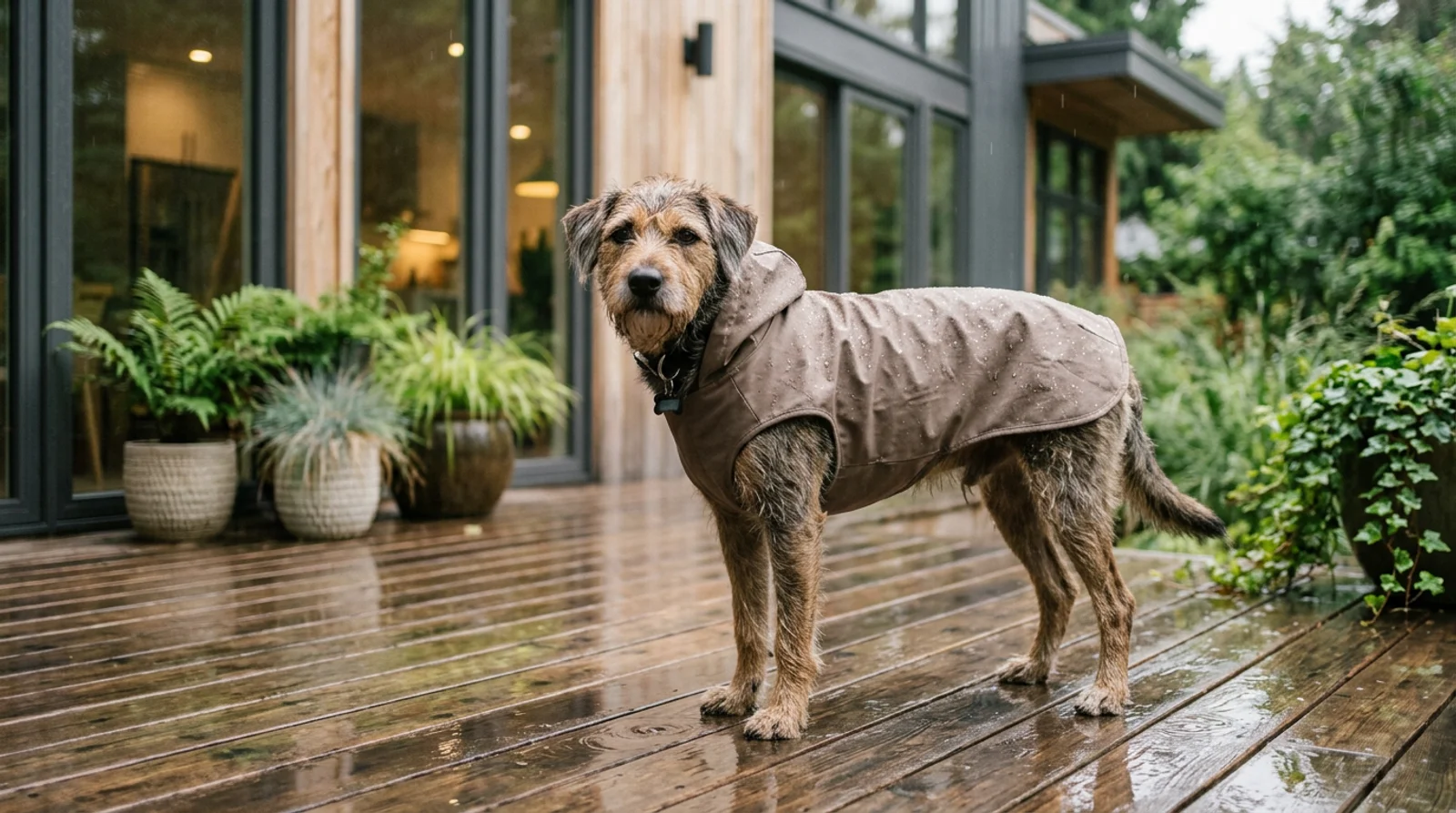
Our border collie mix used to come home from October walks looking like she'd gone swimming fully clothed. Undercarriage soaked through, mud splattered up her chest, and that distinct wet-dog smell filling the entryway before we'd even kicked off our boots. A good raincoat changed everything.
The best dog raincoats combine genuinely waterproof fabric, thoughtful coverage that protects chest and belly, secure closures that stay put during movement, and a cut that doesn't restrict your dog's gait or bathroom posture. For Canadian pet parents facing months of drizzle, downpours, and slushy spring melt, the right gear means longer, happier walks and far less post-walk cleanup.
What Makes a Dog Raincoat Actually Waterproof
Not all rain gear is created equal. The difference between water-resistant and waterproof matters when you're out for 30 minutes in steady Vancouver rain or a Maritime squall.
Waterproof means the fabric has a laminated membrane or coating that blocks water penetration entirely, with sealed or taped seams. These coats keep your dog dry in sustained, heavy rain. Water-resistant fabrics repel light moisture but will eventually soak through during longer exposure or driving rain. For serious wet-weather protection, look for materials like nylon or polyester with PU (polyurethane) coating, or technical fabrics with waterproof-breathable membranes.
We've found that cheaper raincoats often skip seam sealing, which means water sneaks in at the stitching lines even if the main fabric holds up. Check that critical seams—especially along the spine and chest panel—are taped or welded.
Breathability is the other half of the equation. A plastic poncho will technically keep rain out, but your dog will end up damp from condensation and overheating, especially if they're an active walker. Breathable waterproof fabrics let moisture vapour escape while blocking liquid water. Your 25-kg retriever working through a November trail hike will stay far more comfortable in a breathable shell than a non-breathable slicker.
Choosing the Right Waterproof Dog Coat: Fit and Coverage
A raincoat that shifts, rides up, or leaves half your dog exposed is worse than useless. Fit determines whether your investment actually works.
Measure carefully. You need three key measurements: length from the base of the neck (where the collar sits) to the base of the tail, girth around the widest part of the chest just behind the front legs, and neck circumference. Every brand sizes differently. Our team has learned the hard way that "medium" can mean a 40 cm back length in one brand and 50 cm in another.
For barrel-chested breeds like bulldogs or basset hounds, prioritize chest girth and look for adjustable straps. For deep-chested sighthounds and large breeds with tuck-up, a coat with belly coverage and leg straps prevents the back end from flapping up during a trot.
Coverage zones that matter:
- Chest and belly panels — The undercarriage gets the worst of splashback and puddling. A coat that only covers the back leaves your dog's belly and chest soaked. Look for wrap-around designs or attached belly bands.
- Neck closure — A high collar or adjustable neck keeps rain from running down onto the shoulders. Velcro, snaps, or toggles should be secure but easy to operate with cold, wet fingers.
- Tail opening — Should be positioned so the coat doesn't slip backward when your dog lifts their leg or squats. Some coats include a leash port if you prefer to attach your lead to a harness worn underneath.
- Leg freedom — Armholes affect gait. Raglan or set-in sleeves give more range of motion than straight-cut sides. Watch your dog walk in the coat before committing. Any bunching at the shoulder or restriction in the rear legs will lead to resistance.
We don't love coats that require complicated threading of legs unless you have an extremely patient dog. Front-leg sleeves offer maximum coverage and work beautifully for calm dogs or smaller breeds, but a wiggly 30-kg field spaniel at 6:30 a.m. in the rain is not interested in threading four legs through anything. For those dogs, a step-in or over-the-head design with a single belly strap is far more practical.
Dog Rain Jacket Features: Reflectivity, Pockets, and Practicality
The details separate a functional rain jacket from one that lives in the closet after two walks.
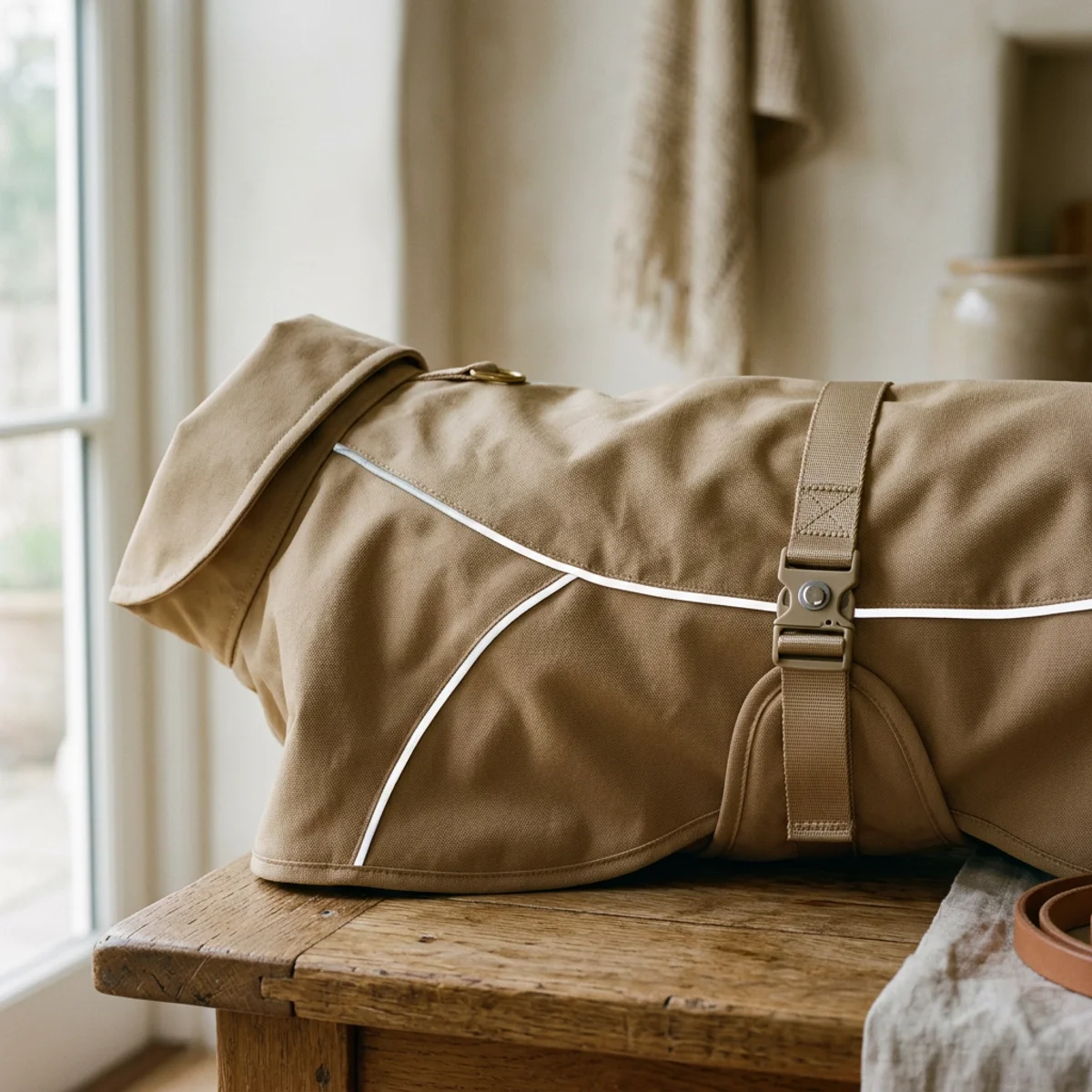
Reflective trim or piping is non-negotiable if you walk at dawn, dusk, or during our long Canadian winter evenings. A dark dog in a dark coat on a rainy November morning is nearly invisible to drivers. Look for reflective strips along the spine, sides, or hem. 3M Scotchlite is the gold standard, but any quality reflective material helps. Some jackets also come in high-visibility colours—neon yellow, orange—which we appreciate for trail walks during hunting season.
Harness compatibility matters if your dog wears a harness under their coat. Some raincoats include a leash-attachment opening or built-in D-ring; others are designed to go over a harness with strategic slits. If you use a harness for better walk control, confirm the coat works with your setup. Fumbling with layers in the rain is miserable.
Packability and weight: If you hike or travel, a jacket that stuffs into its own pocket or rolls small is a gift. Lightweight ripstop fabrics pack down to almost nothing. Heavier rubberized coats offer bombproof waterproofing but add bulk.
Pockets? Honestly, we've never missed them. A small zippered pocket for waste bags can be handy, but it's hardly essential. Don't let it be a deciding factor.
Dog Raincoat Sizing: Breed-Specific Considerations
Some body types make raincoat shopping straightforward. Others require trial, error, and sometimes custom options.
Long-bodied, short-legged breeds (dachshunds, corgis, basset hounds) need coats that offer enough length without excess fabric dragging or bunching at the legs. Look for brands that specifically design for low-riders. Standard sizing often leaves a corgi's rear half exposed or a dachshund tripping over surplus material.
Barrel-chested and bully breeds (English bulldogs, French bulldogs, pugs, American Staffordshire terriers) have wide chests and thick necks relative to their back length. Adjustable chest straps and generous girth measurements are critical. A coat sized for back length may not close around the chest.
Deep-chested large breeds (Great Danes, greyhounds, Weimaraners, Dobermans) often have significant tuck-up and long legs. A coat that fits the chest may be too short in the back, or belly straps may not reach. Some brands offer "sighthound" cuts; otherwise, sizing up in length and cinching at the chest can work.
Double-coated breeds (huskies, malamutes, Newfoundlands, retrievers) have natural water resistance, but they still benefit from a raincoat in sustained wet weather. It drastically reduces drying time and the amount of water they track indoors. Make sure to measure over their full coat, not compressed. A coat that fits a slick-coated dog of the same weight will be too snug on a fluffy Samoyed.
Small and toy breeds often get cold as well as wet. For them, a waterproof coat with a fleece or insulated lining gives dual-season use. In our experience, a 4-kg Yorkie or Chihuahua in a lightweight shell alone may still shiver in October drizzle. Layering a sweater underneath is an option, but an all-in-one insulated waterproof coat is tidier. For colder months, see our full guide to winter dog coats.
Cleaning and Care: Keeping Waterproof Gear Functional
A muddy raincoat is a badge of honour after a good walk, but proper care extends its waterproof life.
Most dog raincoats are machine washable, but always check the label. Use cold water, a gentle cycle, and a mild detergent. Avoid fabric softener and bleach, which break down waterproof coatings. We wash our dogs' rain gear every few weeks during heavy-use season, or whenever it's visibly filthy.
Line-dry or tumble on low heat if the care tag allows. High heat can damage waterproof membranes and laminated fabrics. Some technical fabrics benefit from a low-heat tumble dry to reactivate the DWR (durable water repellent) finish—the coating that makes water bead up and roll off.
If water stops beading and starts soaking in, the DWR may need refreshing. Spray-on or wash-in DWR treatments (available at outdoor retailers) can restore performance. Clean the coat thoroughly first; dirt interferes with reapplication.
Store raincoats hung or loosely folded in a dry spot, not crammed into a damp bin. Mildew loves wet fabric left in a heap. If your entryway storage tends toward chaos (ours does), a wall hook dedicated to the dog's rain gear helps.
Other Wet Weather Dog Gear Worth Considering
A raincoat is the cornerstone, but a few extras make wet-weather walks genuinely pleasant.
Dog boots keep paws dry, protect pads from salt and de-icer, and prevent your dog from tracking half the park into your home. Not every dog tolerates boots, and frankly, some will never accept them. But for dogs with sensitive paws, arthritis, or those prone to interdigital cysts, waterproof boots are transformative. Sizing is fussy—measure paw width at its widest point when your dog is standing and bearing weight.
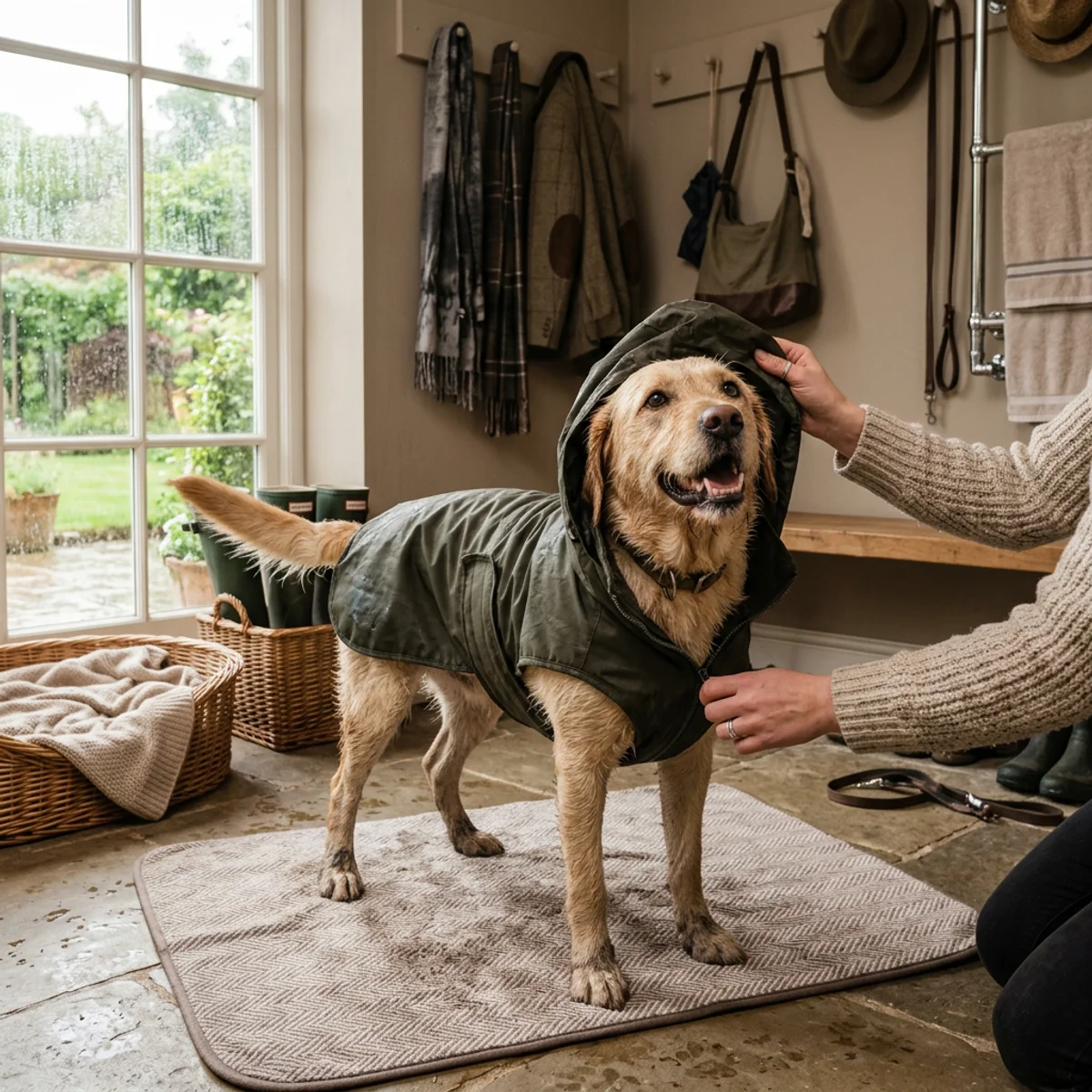
Drying coats and towels: Microfibre or chenille dog towels absorb far more water than a standard bath towel and speed up post-walk cleanup. Drying coats (sometimes called dog robes) slip on after the walk and wick moisture while your dog settles. We keep one by the door during rainy season. See our guide to dog blankets and throws for more options.
Paw-cleaning tools: A paw-washer cup or silicone brush makes quick work of muddy feet before they hit the floor. For real mud monsters, a dedicated paw-rinse station in the mudroom or a shallow bin of water and a towel near the door saves your floors.
Visibility accessories: In addition to reflective trim on the coat, a light-up collar or clip-on LED greatly increases visibility during dark, rainy walks. Drivers' reaction distances are longer in wet conditions, and a little extra light is cheap insurance.
What About Dogs Who Hate Wearing Coats?
Some dogs take to a raincoat immediately. Others act like you've wrapped them in a medieval torture device. If your dog freezes, backs up, or tries to Houdini out of their coat, desensitization helps.
Start indoors with the coat laid on the floor, rewarding your dog for sniffing or stepping near it. Progress to draping it over their back for a second, treat, remove. Gradually work up to fastening it loosely, then snugly, pairing every step with high-value treats and a cheerful tone. Keep sessions short and positive. Once the coat is on and secured, immediately do something your dog loves—a game, a walk, dinner. The coat predicts good things.
Some dogs will simply never enjoy clothing, and that's okay. Breeds with heavy double coats or dogs who genuinely don't seem bothered by rain may not need a coat. Prioritize comfort over aesthetics. If your dog is miserable and constantly trying to remove their jacket, forcing it isn't worth the stress. A quick post-walk towel-dry and keeping walks shorter in heavy rain can be a better solution. For tips on making walks enjoyable regardless of weather, check out how much exercise your dog actually needs.
FAQ
Do short-haired dogs need raincoats more than long-haired dogs?
Not necessarily based on coat length alone, but rather coat type and your dog's tolerance for wet and cold. Short-haired dogs with single coats (like greyhounds, Weimaraners, or pit bulls) often have less natural insulation and can get chilled quickly when wet. Long-haired double-coated breeds (huskies, retrievers) have better built-in water resistance but still get soaked in prolonged rain, and a wet double coat takes forever to dry and brings a lot of water indoors. In our experience, almost any dog benefits from a raincoat during sustained wet weather—it's more about comfort and convenience than strict necessity.
How do I know if a raincoat fits my dog properly?
A properly fitted raincoat covers the back from the base of the neck to the base of the tail (not over the tail itself), wraps around the chest and belly without gaping, and allows free movement of all four legs without bunching at the shoulders or restricting the hindquarters. Your dog should be able to walk, trot, sit, and squat naturally. Check that neck and leg openings aren't too tight—you should be able to slip two fingers under any strap or closure. Watch for any rubbing, especially under the arms or at the neck, which can cause irritation on longer walks.
Can I put a raincoat on a dog with a harness underneath?
Yes, and many dogs wear both. Look for raincoats designed with harness access—either a leash port (a slit or grommet along the back) or a cut that accommodates a back-clip harness underneath. Some coats are made to go over a harness with the leash attaching through the coat; others have a built-in attachment point so the harness stays under the coat. If your current raincoat and harness setup don't play nicely together, you may need to switch one or the other for compatibility. Avoid any configuration that causes the coat to pull unevenly or the harness to shift.
How often should I replace my dog's raincoat?
Replace a raincoat when the waterproof coating breaks down (water soaks in instead of beading off, even after cleaning and re-treating), seams start to leak, closures fail, or the fit no longer works due to wear or your dog's size change. A well-made raincoat properly cared for can last several seasons. We've had budget coats delaminate after one wet autumn and technical shells still going strong after four years. Signs it's time: persistent wet patches on your dog's back or chest after a rainy walk, torn fabric or broken buckles, or your dog has outgrown it.
Walk Longer, Dry Faster
A good raincoat doesn't just keep your dog dry—it extends your walks, reduces the dreaded wet-dog smell, and spares you 20 minutes of toweling and blow-drying after every outing. In a country where rain, drizzle, and slush define much of the year, the right waterproof gear is one of the most useful investments you'll make.
Focus on true waterproof fabric with sealed seams, a fit that covers chest and belly without restricting movement, and features like reflectivity that match how and when you actually walk. Measure carefully, allow for adjustment, and don't be swayed by looks alone—the cutest coat is useless if it leaks or your dog refuses to wear it.
We stock a curated selection of waterproof dog coats and wet-weather accessories at Studio Bleuet, chosen for Canadian conditions and real-world performance. Browse our collection and find the gear that turns rainy days into just another great walk.