Dog Harness vs Collar: Which Is Best for Your Dog?
Dog Harness vs Collar: Which Is Best for Your Dog?
Most dogs benefit from a harness for walking—especially pullers, brachycephalic breeds, small dogs prone to tracheal collapse, and puppies in training. Collars work beautifully for calm, trained dogs who walk politely on leash, and every dog should wear one for ID tags. Many of our own dogs wear both: a collar 24/7 for identification, and a harness clipped on for walks.
Last week, a regular customer told us her 18-month-old Vizsla finally stopped pulling after she switched to a front-clip harness. The same dog had spent six months practically strangling himself on a flat collar, coughing through every walk around their Vancouver neighbourhood. That conversation reminded us why we get asked about the dog harness vs collar question almost daily—the right choice genuinely changes how both you and your dog experience the world outside your front door.
But that's only the beginning. Your 6-kg Maltese and your neighbour's 35-kg Bernese Mountain Dog have completely different needs. Let's walk through when each option makes sense, what we've learned from years of fitting dogs in-store and living with our own, and how to decide what belongs on your dog.
Why the Harness vs Collar Debate Actually Matters
A collar sits around the neck, concentrating all leash pressure on the trachea, throat, and cervical spine. A harness distributes force across the chest and shoulders. That difference is not trivial.
We've seen too many small-breed owners unaware their dog's honking cough stems from a collapsing trachea, worsened by years of collar pressure. Veterinary research consistently shows that leash pressure on a collar can spike intraocular pressure in dogs and damage delicate throat structures. For a Pomeranian who lunges at squirrels or a Frenchie with an already-compromised airway, a collar can be genuinely dangerous.
On the other hand, a poorly fitted harness can chafe under the legs, encourage pulling if it's a back-clip design, or even interfere with a dog's gait if the chest strap sits wrong. Neither tool is universally superior—context is everything.
When to Use a Dog Harness (and Which Type)
Harnesses shine in specific, common scenarios. Here's when we recommend them without hesitation.
Pullers and Dogs in Training
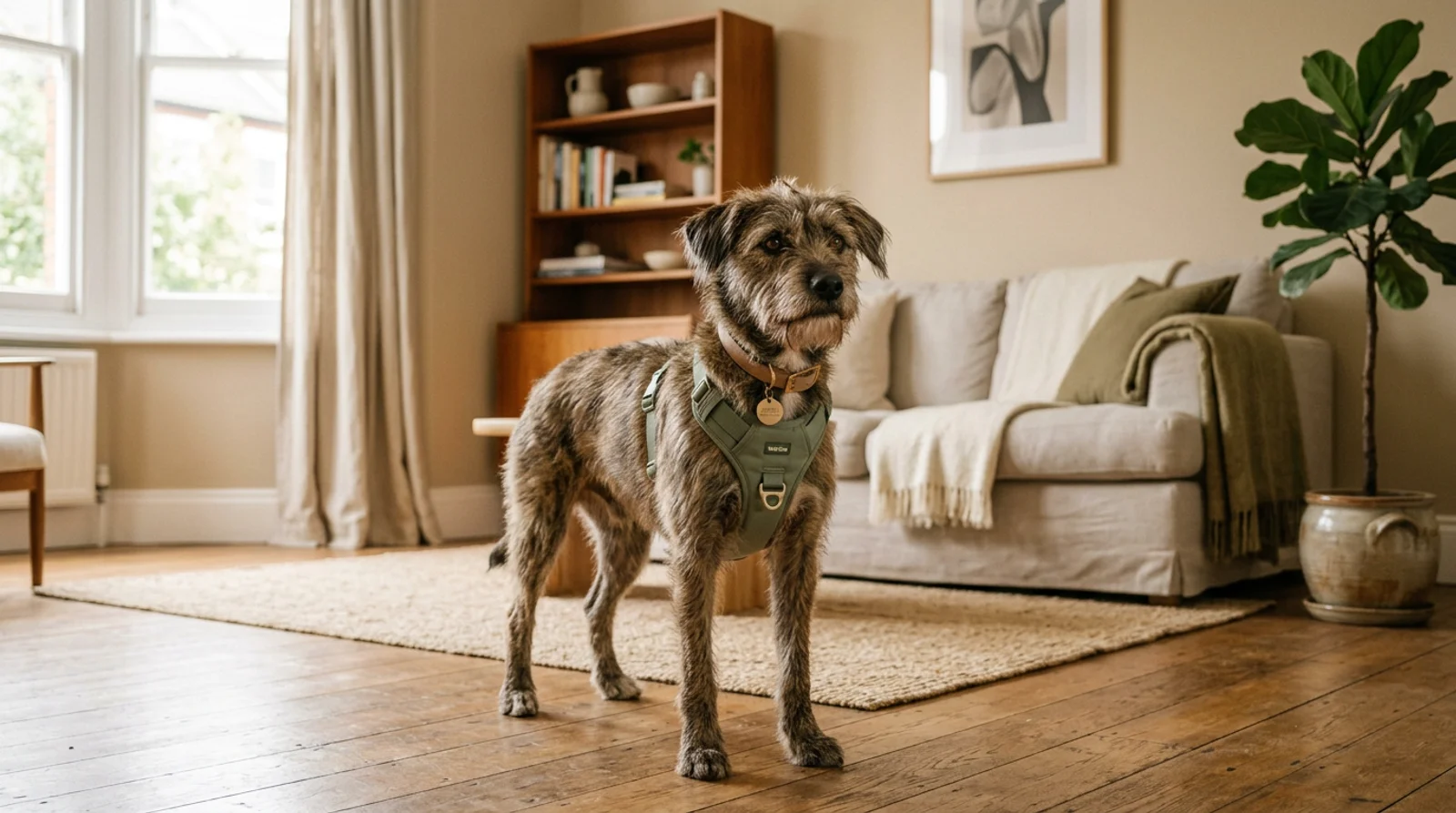
If your adolescent Labrador hauls you down the sidewalk like a sled dog, a no-pull dog harness with a front chest clip (sometimes called a front-attachment or front-clip harness) redirects their momentum toward you when they pull. The physics are simple: pull forward, get steered to the side. It doesn't punish, it just makes pulling unrewarding.
We've watched first-time puppy parents regain control within one walk after switching from a collar to a front-clip harness. It buys you time to work on loose-leash skills without your dog learning that dragging you is an effective strategy. Pair it with the techniques in our leash training guide and you'll see faster progress.
Back-clip harnesses (where the leash attaches between the shoulder blades) are comfortable and low-pressure, but they do the opposite of discouraging pulling—sled dogs wear back-clip harnesses for a reason. Reserve them for dogs who already walk politely or for off-leash hiking when you just need a grab handle.
Small Breeds and Brachycephalic Dogs
Toy and small breeds—Chihuahuas, Yorkies, Pomeranians, Maltese, Shih Tzus—are prone to collapsing trachea, a progressive condition where the cartilage rings of the windpipe weaken. Collar pressure makes it worse. A harness removes that risk entirely.
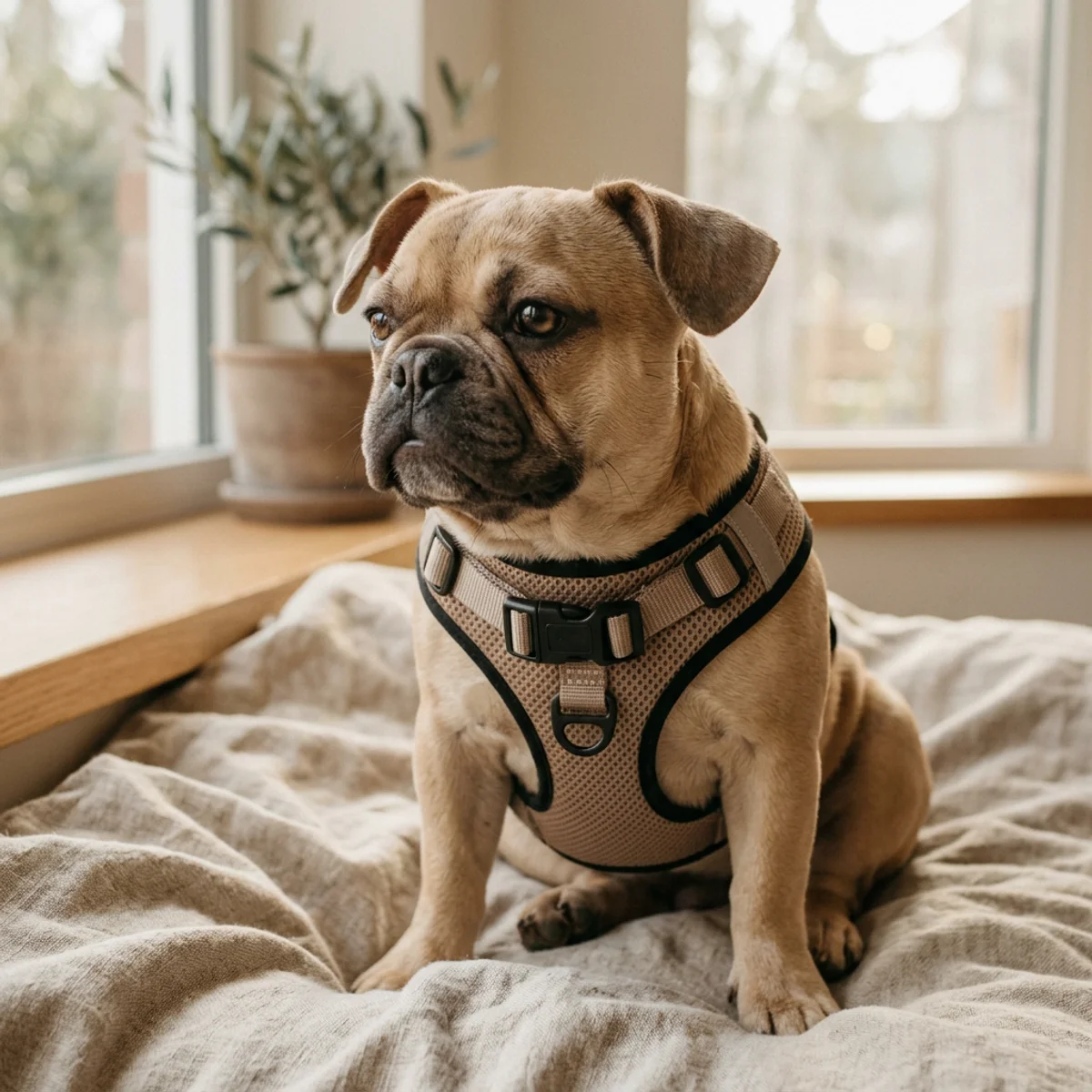
Brachycephalic breeds (Pugs, French Bulldogs, Boston Terriers, English Bulldogs) already struggle to breathe. A collar adds pressure exactly where they can least afford it. Use a well-fitted harness, every walk, no exceptions.
Puppies Learning the World
Collar or harness for puppy? We lean heavily toward harness during the first year. Puppies are erratic—they lunge at leaves, freeze at skateboards, and ricochet between sniffing and sprinting. A harness protects their developing throat and spine while you work through early socialization and house training.
Start with an adjustable step-in or overhead harness that can grow with them through those first few months. Once they're walking calmly and reliably on leash—usually sometime after adolescence—you can reassess.
Dogs with Neck or Spine Issues
If your dog has intervertebral disc disease (IVDD), a history of neck injury, or chronic coughing, your vet has likely already told you: harness only. We'll echo that. There's no scenario where risking further damage is worth the convenience of clipping a leash to a collar.
When a Collar Is the Right Choice
Collars aren't obsolete. For many dogs, they're simpler, lighter, and perfectly safe.
Trained, Calm Walkers
If your dog walks on a loose leash and rarely pulls, a flat collar works beautifully. One of our team members has a 9-year-old Border Collie who has never worn a harness—he heels without prompting and puts zero pressure on the leash. Why add bulk and hardware he doesn't need?
This is the real test: does your dog's collar stay slack during the entire walk? If yes, a collar is fine. If no, switch.
Quick Bathroom Breaks and ID
Every dog should wear a collar 24/7 with an ID tag, even if they're microchipped. (Microchips require a vet or shelter to scan; a tag gets your dog home faster.) For a three-minute predawn pee in the backyard or a quick trip to the car, unclipping and re-clipping a harness is overkill. Keep a leash on the collar for convenience.
Large, Strong, Confident Dogs Who Don't Pull
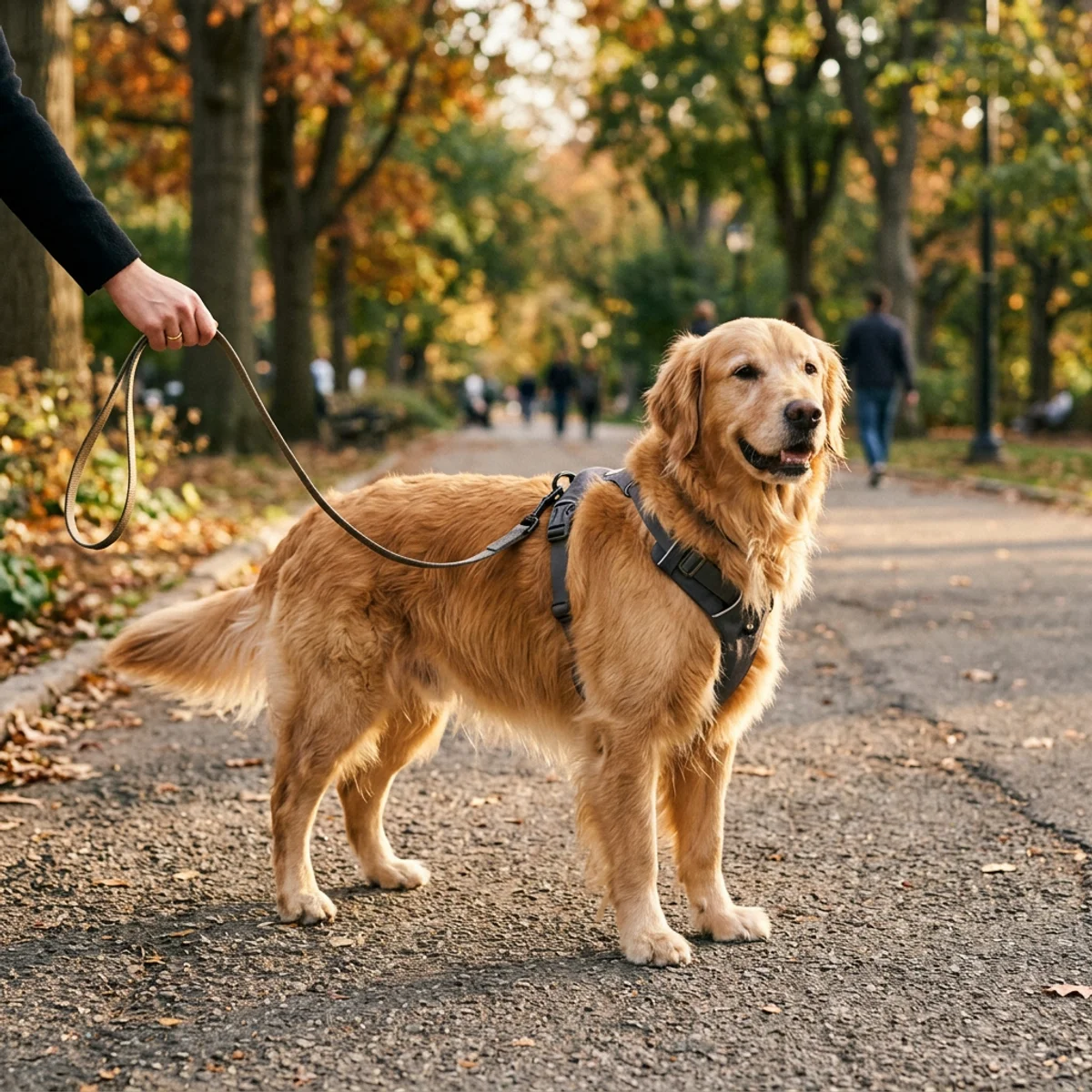
A well-trained 30-kg German Shepherd or Golden Retriever who walks politely can absolutely wear just a collar. In fact, some large dogs find harnesses restrictive or annoying, especially if they have deep chests or thick coats. If it's not solving a problem, don't create one.
Collar or Harness? A Side-by-Side Comparison
| Factor | Harness | Collar |
|---|---|---|
| Safety for pullers | Excellent—distributes pressure, protects throat | Poor—concentrates force on trachea and neck |
| Small/brachy breeds | Strongly recommended | Risky, especially for tracheal or airway issues |
| Ease of use | Slightly more steps to put on and take off | Fast—clip leash and go |
| Control | Front-clip offers excellent steering and redirection | Minimal control if dog pulls |
| Training stage | Ideal for puppies and dogs still learning leash manners | Best for trained dogs who walk calmly |
| Comfort for long walks | Distributes weight; comfortable for hours | Can chafe or press on throat if any tension |
| ID tag carrier | Awkward—tags jingle against chest hardware | Perfect—collar stays on 24/7 |
| Best for off-leash hiking | Back-clip offers a grab handle and control | Collar alone is fine if dog has solid recall |
Finding the Best Dog Harness for Your Needs
Not all harnesses are created equal. Here's what to look for.
Fit is everything. Measure your dog's chest circumference at the widest part (just behind the front legs) and refer to the manufacturer's size chart. A properly fitted harness should allow two fingers of slack under every strap but not rotate or slide around. Chafing under the armpits means it's too loose or too tight, or the chest strap is sitting too far back.
Adjustability matters for growing puppies. Step-in harnesses (where the dog steps into two leg holes) are fast to put on, but overhead styles often offer more adjustment points. We prefer harnesses with at least three or four points of adjustment so you can dial in a custom fit.
Material and hardware. Look for breathable mesh or padded nylon, especially if you live somewhere warm. Plastic buckles are lighter; metal hardware is burlier. Reflective stitching is a nice bonus for early-morning or evening walks during Canadian winter when it's dark by 5 p.m. (More cold-weather advice in our winter care guide.)
Front-clip, back-clip, or dual-clip? For training and control, front-clip or a dual-clip design (leash attaches to both front and back via a Y-junction) is your best bet. Reserve back-clip for trained dogs or for use with a hands-free waist leash on hikes.
What About Martingale, Choke, and Prong Collars?
We don't stock them, and we don't recommend them. Martingale collars (which tighten slightly when the dog pulls) are sometimes used for sighthounds with narrow heads, but a well-fitted harness is safer and just as escape-proof. Choke chains and prong collars work through discomfort or pain, and the training fallout—fear, stress, aggression—isn't worth it. Positive reinforcement and a good no-pull harness will get you further, faster, with a dog who trusts you.
If you're struggling with reactivity or aggression, work with a certified trainer or veterinary behaviourist. Our calming anxiety guide has some starting points, but serious behaviour challenges need professional eyes.
Switching from Collar to Harness (or Vice Versa)
Dogs adapt quickly. If you're moving from a collar to a harness, give your dog a few minutes to sniff it, then practice indoors with high-value treats. Slip it on, reward, take it off. Repeat until putting on the harness predicts good things. Most dogs accept a harness within one or two sessions.
Going the other direction—from harness to collar for a trained dog—is even easier. Clip the leash to the collar, head out, and see how it goes. If your dog stays calm and loose, you're done. If they start pulling, go back to the harness. There's no shame in that; it just means they're not ready yet.
FAQ
Is it okay to leave a harness on my dog all day?
No. Harnesses should come off indoors. Constant wear can cause chafing, matting under the straps (especially on long-haired breeds), and some dogs find them annoying once the walk is over. Collars with ID tags can and should stay on 24/7, but harnesses are for outings only.
Can a harness help with pulling, or does it make it worse?
It depends entirely on the attachment point. A front-clip harness actively discourages pulling by redirecting your dog's forward momentum. A back-clip harness can encourage pulling because it mimics the design of working sled harnesses. If pulling is your main issue, front-clip or dual-clip is the only way to go.
My puppy keeps backing out of their harness—what am I doing wrong?
The harness is either too loose or not designed to prevent escape. Tighten the chest and belly straps (you should fit two fingers underneath, no more), and consider switching to a step-in or Y-shaped front-clip style that's harder to wriggle out of. Some determined puppies—especially sighthounds and anxious rescues—need a martingale-style safety loop added, but a proper fit solves the problem 95 per cent of the time.
Should I use a collar or harness for a puppy who's just learning to walk on leash?
Harness, without question. Puppies are clumsy, distractible, and prone to sudden stops and lunges. A harness protects their delicate neck and throat during this chaotic learning phase. Once they're older, calmer, and walking reliably without pulling—often 12 to 18 months, depending on breed—you can reassess. But for now, harness every time.
The Bottom Line
The dog harness vs collar debate isn't about one being universally better—it's about matching the tool to your dog's body, behaviour, and training stage. A 4-kg Yorkie who pulls and a 40-kg Mastiff who walks like a show dog need completely different solutions.
In our experience, most dogs are safer, more comfortable, and easier to train when they wear a harness for walks and a collar for identification. If your dog pulls, has a compromised airway, or is still learning leash manners, a no-pull harness isn't just helpful—it's essential. If your dog walks calmly and has no health concerns, a flat collar works just fine.
Try both. Watch how your dog moves, listen to their breathing, and pay attention to your own stress level on walks. The right answer will become obvious quickly. And if you're still unsure, we're always happy to help you troubleshoot fit and function—that's what we're here for.