Complete Cat Grooming Routine: Brushing, Bathing & Care Tips
Complete Cat Grooming Routine: Brushing, Bathing & Care Tips
Even the most fastidious cat needs your help. A solid cat grooming routine prevents mats, cuts down on tumbleweeds of fur under your couch, and gives you a chance to spot lumps, ear mites, or skin changes before they become problems. Last Tuesday, our office cat Miso spent twenty minutes grooming his paws on my desk—cats devote up to half their waking hours to self-cleaning—but he still can't reach behind his ears or trim his own claws.
We've groomed short-haired tabbies who tolerate a brush for exactly forty-five seconds and Persians whose coats mat if you so much as look away. Grooming isn't one-size-fits-all. Your routine hinges on coat type, age, health, and whether your cat thinks the slicker brush is a medieval torture device. But every cat benefits from regular brushing, nail trims, and occasional checks of ears and eyes. Here's how we approach it.
How to Groom a Cat: Start Slow, End with a Treat
Kittens who learn that brushes and clippers aren't threats grow into cooperative adults. If you're working with an older cat who's never been groomed, patience is everything. Five seconds of brushing followed by a piece of freeze-dried salmon beats a ten-minute wrestling match that teaches your cat to hide under the bed.
Pick a time when your cat is calm—after a meal or a good play session, not during the 3 a.m. zoomies. Sit on the floor or couch in a quiet room. Keep your first sessions short: one or two minutes is plenty. You're building trust, not aiming for perfection.
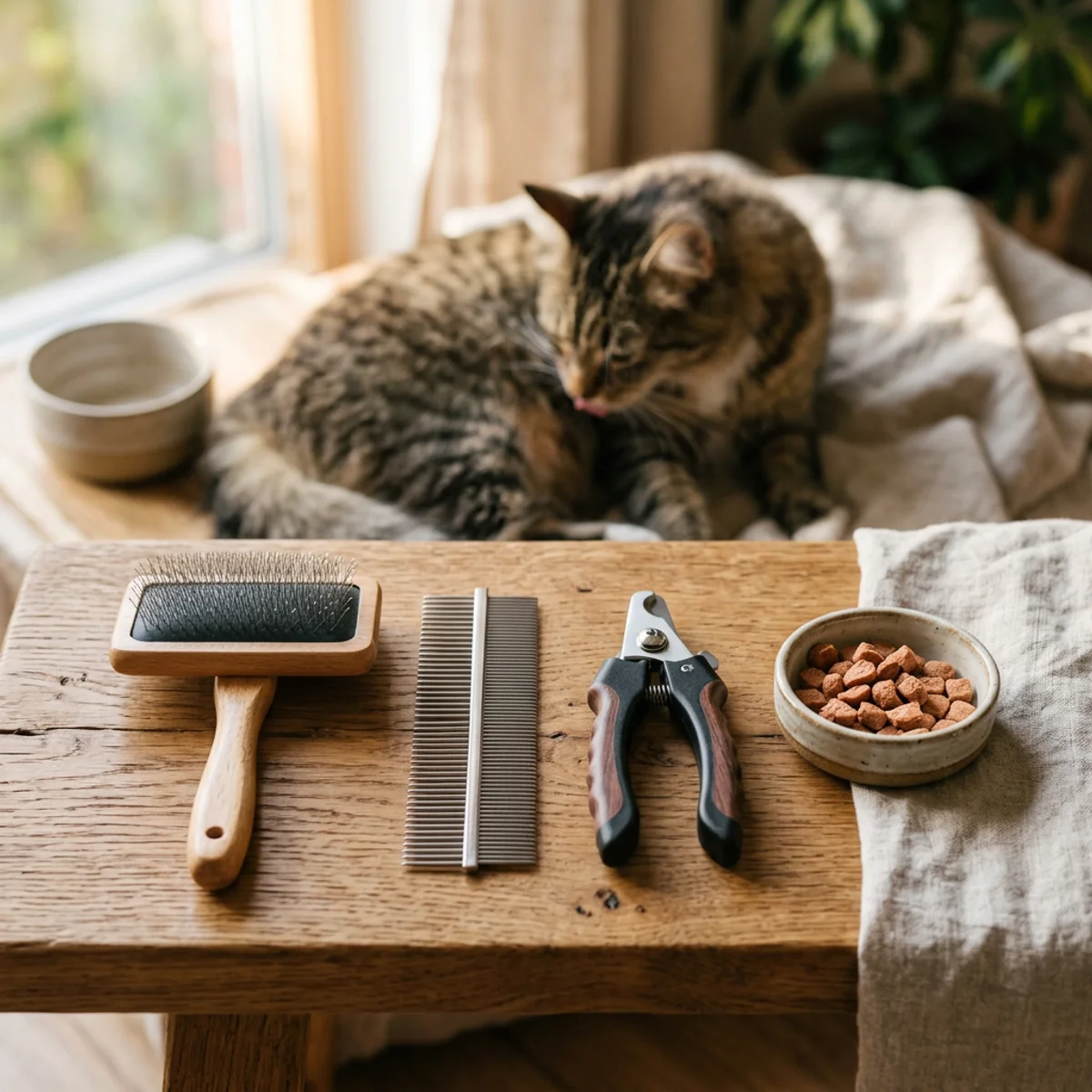
Have your tools within reach but out of sight until you need them. We keep ours in a shallow basket: slicker brush, steel comb, nail clippers, and a small jar of treats. If your cat bolts, let them. Forcing it guarantees they'll remember grooming as something to dread.
Cat Brushing Tips: Frequency, Tools & Technique
How Often Should You Brush?
Short-haired cats need brushing once or twice a week. Long-haired breeds—Persians, Maine Coons, Ragdolls—need daily attention, especially during spring and fall sheds. Even five minutes prevents the mats that form under the arms, behind the ears, and along the belly.
Older or overweight cats who can't twist to groom their hindquarters need extra help. Cats with arthritis simply can't reach the way they used to, and their coats show it.
The Right Brush Matters
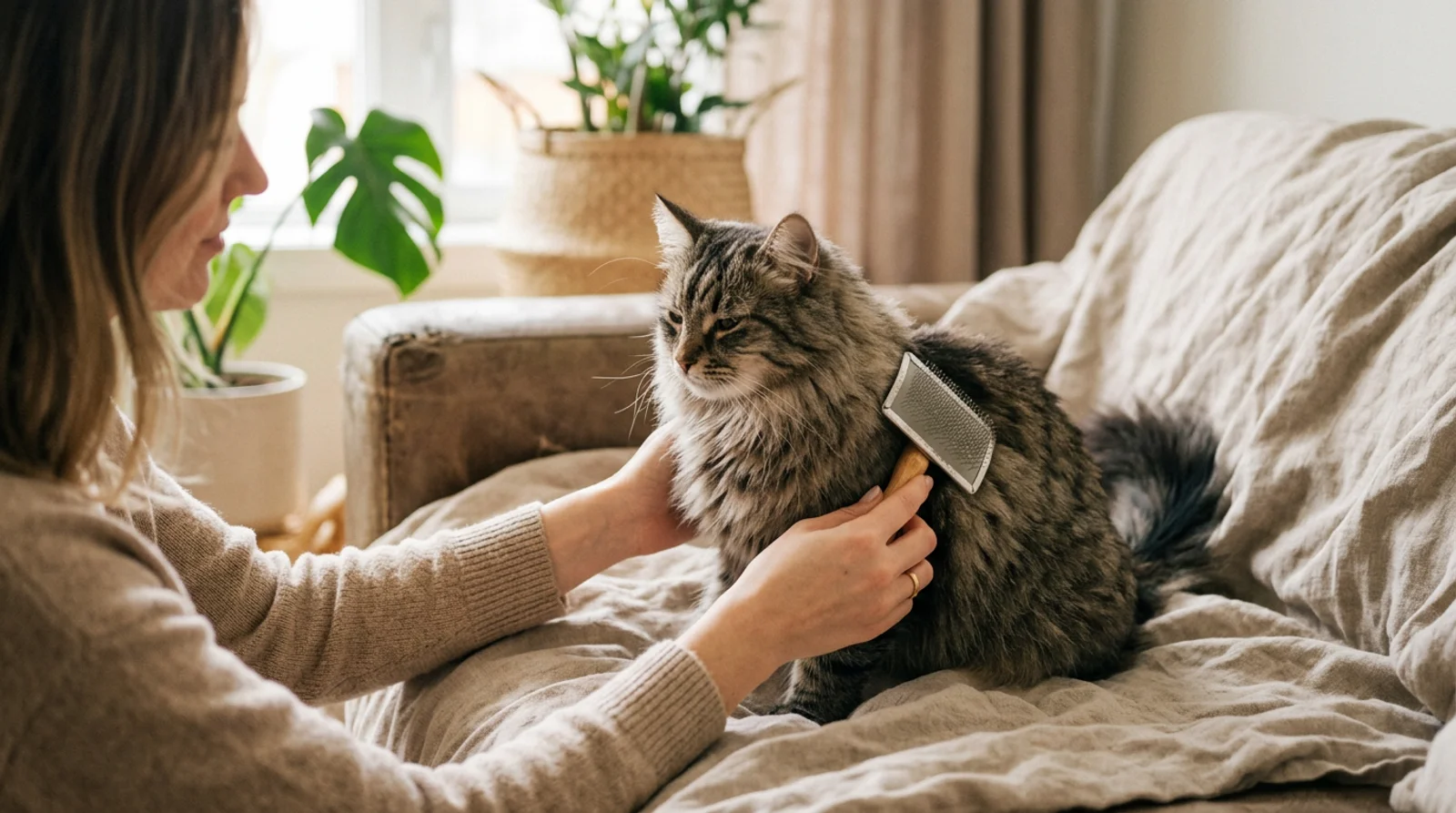
We reach for a slicker brush for most cats. The fine, bent wires catch loose undercoat without scratching skin. Brush in the direction of hair growth, using light pressure—think massage, not scrubbing. If your cat has a thick double coat, follow up with a steel comb to check for hidden mats close to the skin.
For short-haired cats, a rubber curry brush or grooming glove works beautifully. They love the massage-like feel, and you'll pull off more fur than you'd expect from a cat you thought barely shed.
Skip human hairbrushes. They're too gentle to catch undercoat and too rough on sensitive skin.
Tackling Mats and Tangles
Small mats can be gently teased apart with your fingers or a steel comb. Hold the skin taut below the mat so you're not pulling, then work from the tip of the fur toward the skin.
Larger, tight mats require a mat splitter or blunt-tipped scissors. Cut through the mat vertically—parallel to the skin, never across—then comb out the pieces. If a mat sits close to the skin or your cat won't tolerate handling, call your vet or a professional groomer. We've seen too many accidental cuts from well-meaning owners trying to shave mats at home.
Mats aren't just cosmetic. They pull on skin, trap moisture, and create breeding grounds for infections.
Long-Haired Cat Care: Daily Brushing Is Non-Negotiable
Long-haired cats are gorgeous. They're also high-maintenance. Daily brushing is the price of admission unless you're prepared to pay a groomer every six weeks for a full shave-down.
Friction zones mat first: under the front legs, the belly, the backs of the thighs, behind the ears. We also trim the fur around the back end—a sanitary trim—on our long-haired fosters to keep things tidy after litter box visits. Use blunt-tipped scissors and work slowly, or ask your vet to do it during a wellness check.
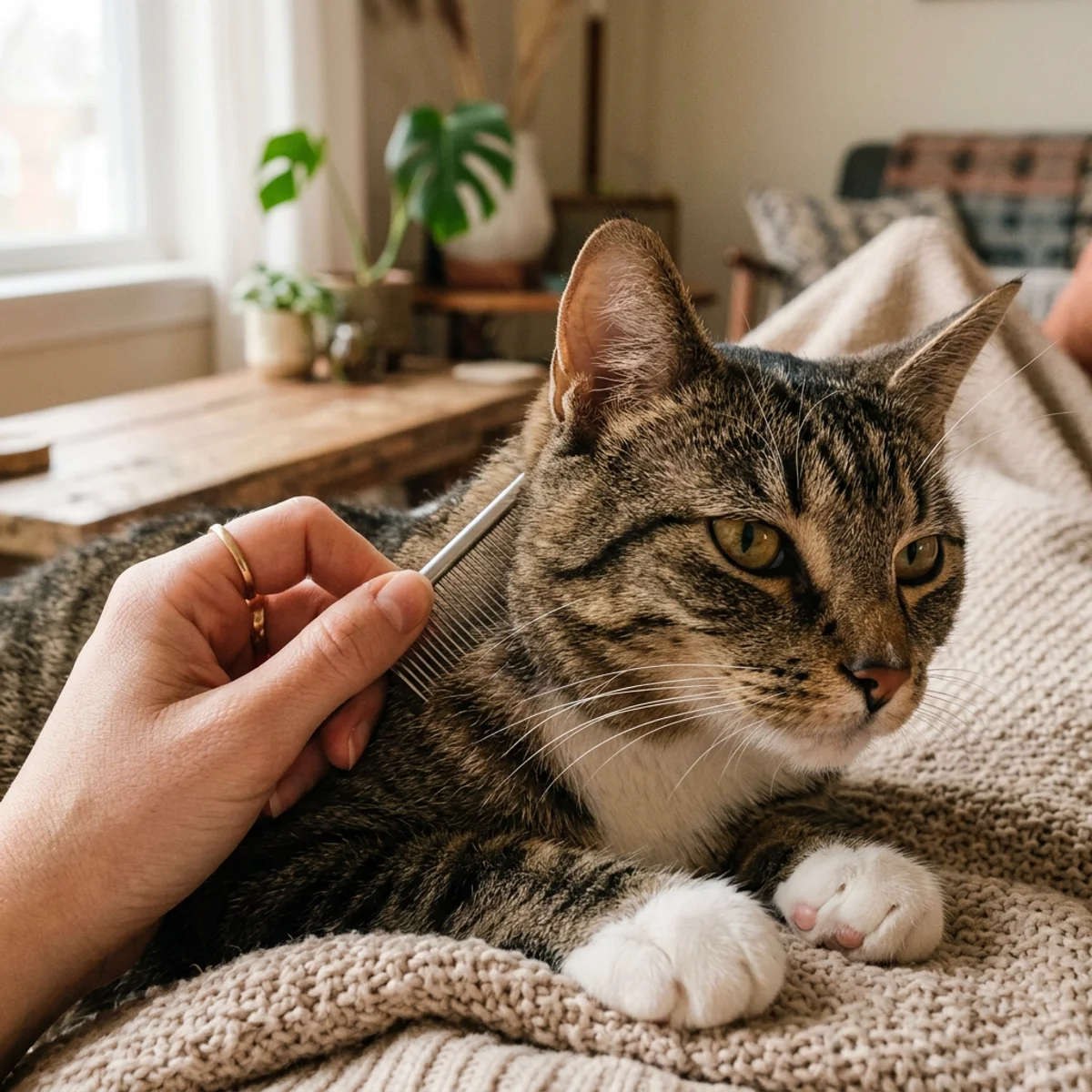
A steel comb is your secret weapon for long coats. After brushing, run the comb through the entire coat. If it glides smoothly, you're done. If it snags, you've found a hidden mat.
Bathing Your Cat: When It's Actually Necessary
Most cats never need a bath. Their self-grooming works, and water stresses them out. But there are exceptions: if your cat gets into something toxic or greasy, has a severe flea infestation, or suffers from a skin condition your vet is treating, a bath may be necessary.
We've written a full guide on how to bathe a cat that covers the process step-by-step, from choosing a shampoo to drying techniques. The short version: use a cat-specific shampoo, keep water lukewarm, work quickly, and have towels staged.
Senior or obese cats who can't groom themselves may need occasional baths or regular wipe-downs with unscented pet wipes. Hairless breeds like Sphynx cats need weekly baths to remove oil buildup on their skin.
If your cat's coat looks greasy or smells off despite regular brushing, don't mask it with a bath. Talk to your vet. It can signal dental disease, diabetes, or other health problems.
Cat Grooming at Home: Eyes, Ears & Nails
Eye Care
Healthy cat eyes are bright and clear. You might see a bit of dark discharge in the inner corners, especially in flat-faced breeds like Persians. Wipe it away gently with a damp cotton pad—one pad per eye.
If you see redness, swelling, cloudiness, squinting, or excessive tearing, call your vet. Never use human eye drops.
Ear Cleaning
Most cats don't need routine ear cleaning. Check weekly when you brush. Healthy ears are pale pink inside with minimal wax. If you see dark, coffee-ground-like debris, suspect ear mites and book a vet visit.
If your vet recommends cleaning, use a cat-safe ear cleaner and cotton pads—never cotton swabs, which can damage the ear canal. We follow the same gentle technique outlined in our dog ear cleaning guide; the anatomy differs slightly, but the principles hold.
Nail Trimming
Indoor cats need nail trims every two to four weeks. Overgrown nails curl into paw pads, catch on fabric, and make walking uncomfortable. We've covered the full technique in our article on how to trim cat nails safely.
The key: trim only the clear, pointed tip. Avoid the pink quick, which contains blood vessels and nerves. If your cat won't tolerate all four paws in one session, do one paw a day. Progress over perfection.
Creating a Positive Grooming Experience
Grooming shouldn't be a battle. Pair every session with something your cat loves—treats, play, or chin scratches. Keep a consistent schedule so it becomes routine, not a surprise ambush every third Sunday.
If your cat becomes aggressive or panics, stop. Some cats genuinely can't tolerate home grooming due to temperament or past trauma. A professional groomer or your vet clinic can help. Many offer low-stress grooming appointments or light sedation for cats who need it.
Watch your own stress level. Cats read our tension. If you're anxious, they'll be anxious. Take a breath, move slowly, and remember: even a partial grooming session beats none.
Grooming Tools We Keep on Hand
Here's what lives in our grooming kit:
- Slicker brush for daily brushing
- Steel comb (medium/fine teeth) for mat checks
- Nail clippers (scissor or guillotine style)
- Styptic powder in case we nick the quick
- Cat-safe ear cleaner and cotton pads
- Blunt-tipped scissors for trimming mats or sanitary areas
- High-value treats (freeze-dried chicken or salmon)
- Grooming glove for cats who hate brushes
You don't need expensive tools. A $15 slicker brush works as well as a $40 one. Invest in quality nail clippers, though—dull blades crush the nail instead of cutting cleanly.
FAQ
How do I groom a cat who hates being brushed?
Start with your hands. Pet your cat, then run your fingers through their fur as if you're brushing. Once they're comfortable, introduce a grooming glove—it feels like petting. Graduate to a soft brush for short sessions (30 seconds), always ending on a positive note with a treat. Some cats never love it, but most tolerate it once they learn it doesn't hurt.
Can I use dog grooming tools on my cat?
Brushes and combs are generally interchangeable, but check the size and wire stiffness. Tools designed for large dogs may be too harsh for a cat's delicate skin. Never use dog shampoo on a cat—some ingredients (like permethrin) are toxic to cats. Nail clippers are fine to share if they're cleaned between pets.
My cat's fur is greasy and clumps together. What's wrong?
Greasy, unkempt fur often signals that your cat has stopped grooming properly. Common causes include obesity (they can't reach), dental pain (grooming hurts), arthritis, or illness. Schedule a vet appointment. In the meantime, use unscented pet wipes to gently clean the coat, and check for fleas or skin issues.
How do I know if my cat needs professional grooming?
If your cat has severe matting you can't safely remove, a long coat you can't keep up with, or they become aggressive during home grooming, a professional groomer is worth it. Many groomers offer lion cuts for long-haired cats in summer or when mats are out of control. Ask your vet for a referral to a low-stress or cat-only grooming facility.
A Routine That Works for Both of You
Grooming is one of those quiet, repetitive ways we care for our cats. It's not glamorous—there's fur everywhere, the occasional scratch, and that one cat who vanishes the moment you pull out the brush. But it's also a chance to notice the small things: a new lump that needs checking, a flea you can tackle early, or simply the way your cat leans into the brush once they realize it feels good.
Find a rhythm that suits your cat's coat and temperament. Keep sessions short, stay patient, and remember that brushing once a week beats waiting until mats form. Your furniture, your vacuum, and your cat's skin will all thank you.
If you're looking for more ways to keep your home comfortable and fur-free, our guide on how to reduce pet odour in your home pairs perfectly with a solid grooming routine.