How to Introduce a New Dog to Your Resident Dog Safely
How to Introduce a New Dog to Your Resident Dog Safely
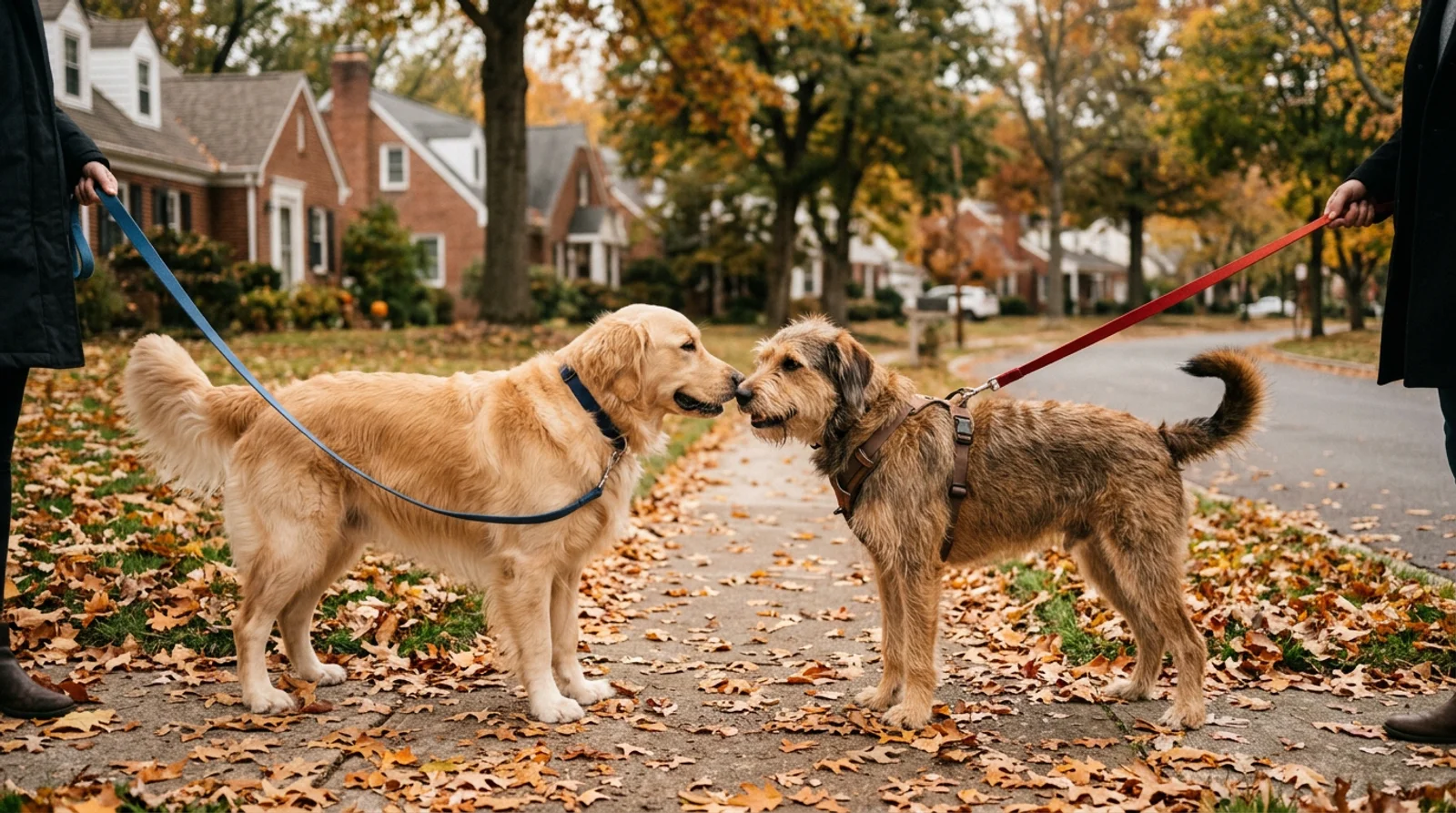
The safest way to introduce a new dog to your resident dog is on neutral territory—a park or quiet street neither dog claims as theirs—using parallel walking before any nose-to-nose greeting. That single strategy prevents most first-meeting disasters.
We've watched too many well-meaning adopters bring a new dog straight through the front door, only to see their resident dog stiffen, growl, or lunge. Your home is your current dog's kingdom. Every corner smells like them. Walking in with a stranger triggers territorial behaviour even in the gentlest Lab. The fix? Take the introduction outside, keep it calm, and let the dogs tell you when they're ready for more.
Why Neutral Territory Matters for Dog Introductions
Your resident dog has spent months or years marking, napping, and eating in your home. When a new dog crosses that threshold without a proper introduction, your resident dog reads it as an invasion—not a welcome party.
Neutral ground levels the field. Neither dog feels defensive. We've seen reactive dogs who guard their yard act like puppies at the local park when meeting another dog. That shift in environment changes everything.
Pick a spot both dogs have never visited, or at minimum, a place your resident dog doesn't patrol daily. A quiet side street works better than your usual walking route. If your resident dog lunges at every passerby on your driveway, don't start there.
Step-by-Step Guide to Introducing Dogs Safely
Before the First Meeting
Gather two handlers—one per dog—and the right gear. Each dog needs a well-fitting harness or flat collar (we prefer a secure harness for better control without throat pressure) and a standard 1.8-metre leash. No retractables. You need precision, not 7.5 metres of tangled nylon.
Both dogs should be exercised beforehand—not exhausted, but not buzzing with pent-up energy either. A 30-minute walk for your resident dog before the introduction burns off the jittery anticipation. If your new dog just spent six hours in a car from the rescue, give them 20 minutes to sniff and pee before the big moment.
Leave toys, treats, and food at home for now. You're not bribing anyone yet; you're simply letting two dogs exist near each other without competition.
The Parallel Walk Technique
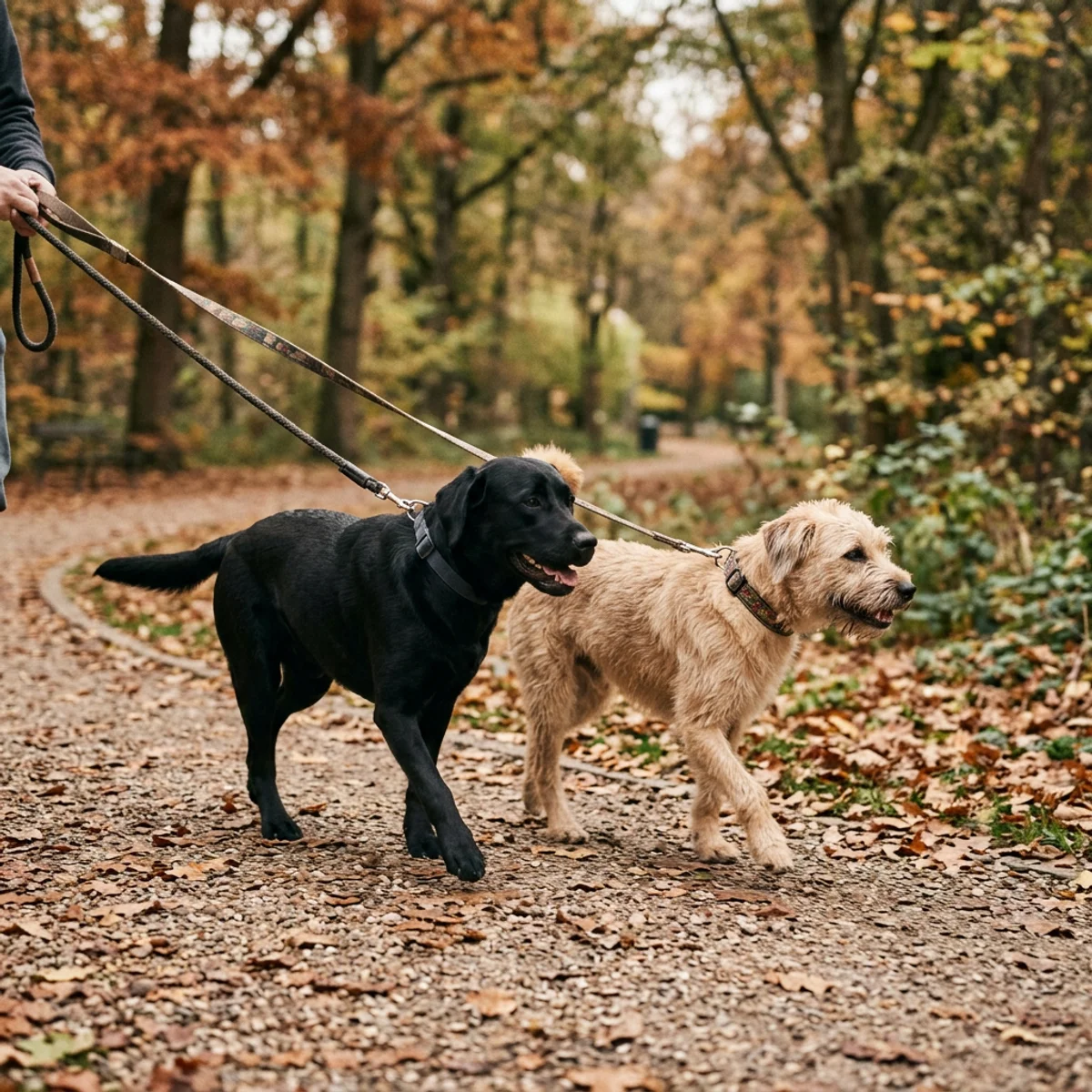
Start with the dogs on opposite sides of the street or path, walking in the same direction. They should be able to see each other but not close enough to touch—about 6 to 10 metres apart, depending on their reaction. This is not a face-to-face greeting. They're simply walking.
Watch their body language. Soft eyes, loose tails, and quick glances at the other dog are green lights. If one dog stares, stiffens, or pulls hard toward the other, add more distance. You're looking for curiosity, not intensity.
After five minutes of calm parallel walking, narrow the gap slightly—maybe down to 4 metres. Keep moving forward. The motion gives anxious dogs something to do besides fixate on each other. We've used this technique with a fearful Border Collie and a bouncy Boxer, and the forward momentum kept both dogs from escalating.
The First Nose-to-Nose Meeting
Once both dogs have walked calmly side-by-side for at least 10 to 15 minutes with loose leashes and relaxed bodies, you can try a brief face-to-face sniff. Keep leashes loose—tension travels down the leash and tells the dog something's wrong.
Let them sniff for three to five seconds. Not three minutes. A polite canine greeting is quick: nose, then rear, then done. If tails are wagging in loose, wide arcs (not stiff flagging), ears are forward but soft, and mouths are open and relaxed, let them continue for another few seconds.
If either dog freezes, growls, lunges, or shows whale eye (whites of the eyes visible), calmly interrupt by calling them apart and walking away. No punishment, no yelling. Just create distance and try another parallel walk. Some dogs need three or four sessions on neutral ground before they're ready to share space indoors.
Bringing Both Dogs Home
After a successful neutral-ground meet—calm sniffing, maybe a play bow, no stiffness—you're ready to bring the new dog home. But don't walk straight inside together.
First, bring the new dog into your yard or entryway while your resident dog waits outside or in another room. Let the newcomer sniff around for a few minutes, then remove them. Bring your resident dog back in to investigate the new smells. This scent-swapping dials down the shock.
Then bring both dogs into the home together, on leash, with baby gates or closed doors blocking off bedrooms and high-value areas. Let them roam the main space under supervision. Keep the vibe calm. No excited baby-talk, no hovering. Ignore both dogs and let them figure it out.
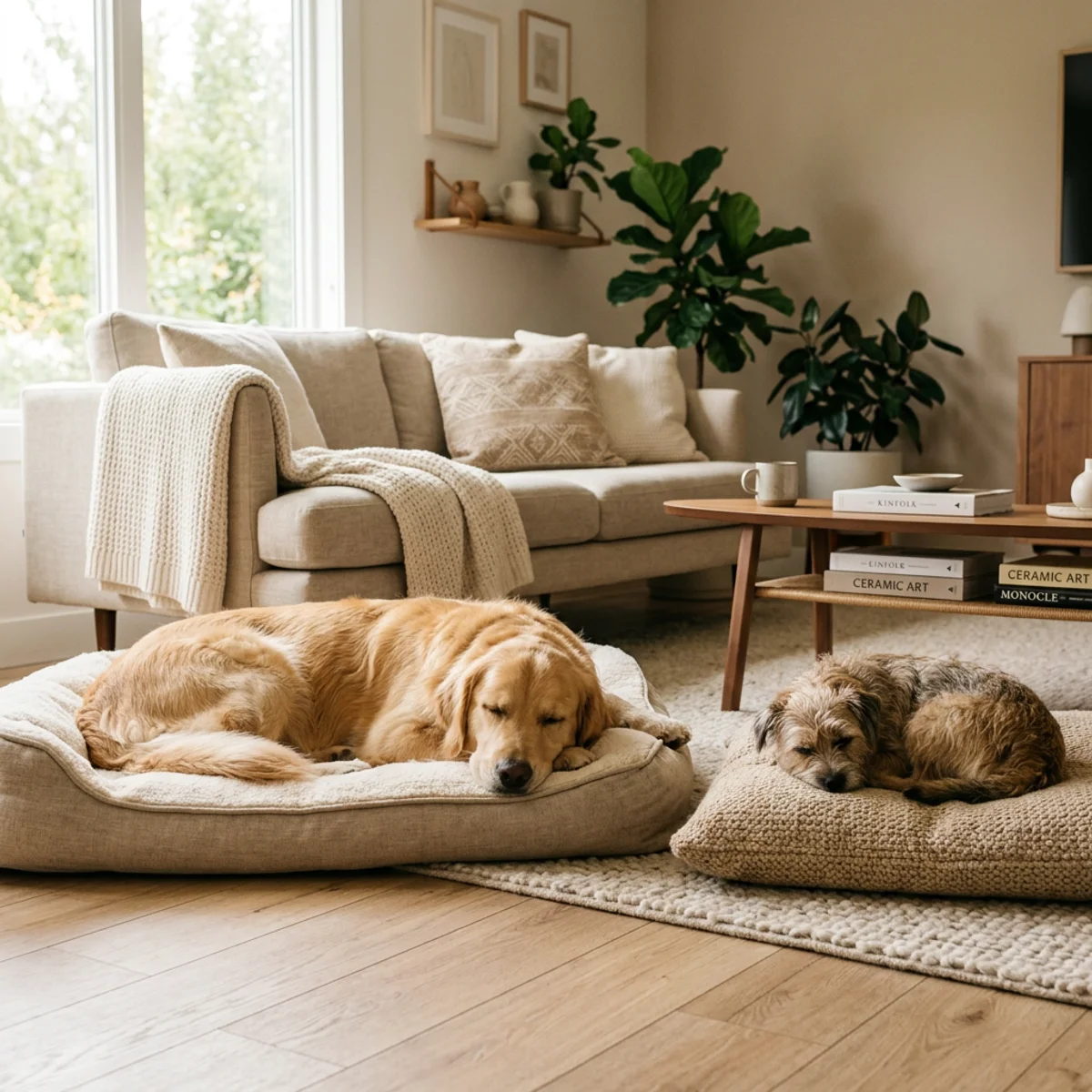
For the first week, separate the dogs whenever you leave the house or can't supervise. Crate one, gate off another room, or rotate who gets the living room. A properly introduced crate becomes a peaceful refuge, not a punishment.
Reading Dog Body Language During Introductions
You don't need a PhD in animal behaviour, but you do need to read the room—or in this case, the wagging tail.
Green lights (keep going):
- Loose, wiggly body
- Soft eyes with normal blinking
- Play bows (front legs stretched, rear in the air)
- Brief sniffing followed by disengagement
- Wide, sweeping tail wags at mid-height
Yellow lights (slow down, add distance):
- Stiff body or legs
- Hard stare, no blinking
- Raised hackles (not always aggression—can be arousal or fear)
- Tight mouth, pulled-back lips without showing teeth
- Tail high and stiff, or tucked tight
- One dog trying to mount or persistently herd the other
Red lights (separate immediately, calmly):
- Prolonged freezing
- Growling, snarling, snapping
- Lunging with intent
- Whale eye (whites of eyes visible, head turned away but eyes locked)
- Piloerection (hackles up) combined with stiff posture and hard stare
When in doubt, end the session early. You can always try again tomorrow. Pushing through yellow or red lights is how dogs get hurt and how fear turns into long-term aggression.
Managing the First Week in a Multi-Dog Household
The introduction doesn't end after the first sniff. The real work happens in the first seven to fourteen days, when both dogs are figuring out who gets the sunny spot on the couch and who eats first.
Separate Resources
Feed the dogs in separate rooms or at opposite ends of the kitchen with a baby gate between them. Food is the fastest way to start a fight, even between dogs who played nicely an hour earlier. We've seen a 7-kg terrier launch at a 35-kg Shepherd over a dropped kibble.
Each dog needs their own bed, their own water bowl, and their own toys. If your resident dog has a favourite plush squeaky, put it away for now. Reintroduce high-value items only after both dogs can coexist calmly around food.
For more ideas on separate feeding zones that don't look like a daycare explosion, see our guide to feeding stations.
Supervised Interaction
For the first week, the dogs should never be alone together. If you're showering, one dog goes in a crate or behind a gate. If you're answering the door, the dogs are separated. It sounds extreme, but this is when most injuries happen—when humans assume everything's fine and stop watching.
Watch for mounting, prolonged chasing, or one dog who won't let the other rest. These aren't always aggression, but they create tension. Interrupt calmly and redirect.
Give Your Resident Dog Priority
Your resident dog was here first. Greet them first, feed them first (in their separate space), and let them through doorways first. This isn't about dominance hierarchies—it's about reassuring your original dog that their life hasn't been turned upside down.
The new dog will figure out the routine soon enough. Rushing equity often backfires.
When the Introduction Isn't Going Well
Sometimes, despite your best efforts, the dogs simply don't like each other. That's not your fault, and it's not rare. Dogs have preferences, just like humans.
If after two weeks of careful, gradual introductions you're still seeing stiff postures, growling, or one dog who won't relax in the other's presence, call in a certified professional dog trainer or veterinary behaviourist. In Canada, look for credentials like CPDT-KA (Certified Professional Dog Trainer–Knowledge Assessed) or members of the Canadian Association of Professional Pet Dog Trainers.
Don't wait until a fight breaks out. Prevention is cheaper—and safer—than rehabilitation.
Some dogs do better as only dogs. If you adopted from a rescue, many have policies that allow returns if the match isn't working. That's not failure; it's responsible guardianship. We'd rather see a dog returned safely than kept in a home where everyone's miserable.
Dog Introduction Tips for Specific Situations
Introducing a Puppy to an Adult Dog
Puppies have no manners. They jump on faces, bite ears, and don't understand when an adult dog signals "back off." Most adult dogs will tolerate this for a while, then correct the puppy with a growl or snap. That's normal and necessary—assuming the adult doesn't escalate beyond a warning.
Give your adult dog breaks. A baby gate lets the puppy see the older dog without pestering them. Puppies need socialization, but they also need to learn boundaries.
Introducing Two Adult Dogs of the Same Sex
Same-sex pairings can be trickier, especially two females or two intact males. It's not a universal rule—plenty of same-sex pairs live happily together—but if you're adopting and have a choice, an opposite-sex pairing often smooths the early weeks.
If you're set on same-sex, just go slower. Add an extra week of parallel walking and gated separation.
Introducing a Dog to a Senior Dog
Older dogs have less patience and often less mobility. A bouncy 2-year-old Labrador can overwhelm a 12-year-old dog with arthritis who just wants to nap. Watch that your senior has escape routes, quiet zones, and isn't being trampled during play.
If your senior dog is losing hearing or vision, approach introductions even more carefully—they startle more easily and can't read body language as quickly.
For more on keeping older dogs comfortable, see our senior dog care guide.
FAQ
How long does it take for two dogs to get along?
Most dogs settle into a comfortable routine within two to four weeks if the introduction is done carefully. Some pairs click in days; others need two months of managed separation before they're trustworthy alone together. The timeline depends on each dog's temperament, past experiences, and how well you manage resources and space in the early weeks. Don't rush it.
Should I let the dogs "work it out" on their own?
No. Letting dogs fight or intensely posture without intervention doesn't teach them to get along—it teaches them that conflict works. Small scuffles can escalate, and once dogs have a serious fight, rebuilding trust becomes much harder. Always supervise, interrupt tension early (by calmly calling one dog away or creating distance), and separate if either dog looks uncomfortable.
What if my resident dog growls at the new dog?
A single growl is communication, not necessarily aggression. Your resident dog might be saying "that's my bed" or "you're too close." Watch the context. If the new dog backs off and your resident dog relaxes, that's a successful conversation. If the growling is constant, paired with stiff body language, or escalates to snapping, you need more separation and slower reintroductions. Never punish a growl—it's your early warning system.
Can I introduce dogs if one is reactive on leash?
Yes, but you'll need extra distance and possibly professional help. Start parallel walks at a distance where the reactive dog can see the other dog without going over threshold (barking, lunging). This might be 15 or 20 metres at first. Gradually decrease distance over multiple sessions, rewarding calm behaviour. If your dog is severely reactive, work with a trainer experienced in desensitization before bringing a new dog home.
Building a Harmonious Multi-Dog Household
The introduction is just the beginning. A peaceful multi-dog home is built on routine, clear boundaries, and enough resources that no one feels squeezed.
Make sure both dogs get one-on-one time with you. A solo walk, a training session, or even just 10 minutes of calm petting keeps each dog feeling secure. When dogs compete for your attention, tension builds.
Watch for signs of stress in either dog even after the first month: changes in appetite, excessive panting, pacing, or withdrawal. If one dog starts resource guarding or the other stops eating, don't ignore it. Address the behaviour early with management (more separation, separate feeding) and, if needed, professional guidance.
The effort you invest in the first few weeks pays off in years of companionship—dogs who nap side-by-side, play without conflict, and make your home feel fuller in the best way. Take it slow, trust what the dogs are telling you, and remember that a cautious introduction is always safer than a rushed one.
If you're setting up your home for two dogs, explore our curated collections of durable, design-forward essentials that make multi-dog life a little more beautiful—and a lot more organized.