How to Organize Pet Supplies: Storage Ideas for a Tidy Home
How to Organize Pet Supplies: Storage Ideas for a Tidy Home
If you live with pets, you already know: supplies multiply like rabbits. One week you own three toys and a bag of kibble. The next, you're tripping over rope toys in the hallway, fishing dental sticks from under the sofa, and wondering how grooming brushes colonized three different bathrooms. The good news? You can organize pet supplies without sacrificing style or convenience—and we've spent years helping Canadian pet parents do exactly that.
We've watched clients nearly faceplant over squeaky toys on their way to answer the door. We've seen beautiful living rooms transformed into pet-store explosions. And we've built storage systems that actually hold up against the chaos of real life with dogs and cats. Here's how.
Start with a Supply Audit
Before you buy a single basket, pull everything out. Everything. The leashes on doorknobs, treats jammed in kitchen drawers, grooming tools scattered across bathrooms, toys wedged under furniture.
Sort into categories:
- Daily essentials – food, bowls, leashes, poop bags, medications
- Toys – active play, puzzles, chews, comfort items
- Grooming supplies – brushes, clippers, shampoo, towels, ear cleaner
- Health & wellness – first aid, supplements, flea and tick prevention
- Seasonal gear – winter coats, raincoats, boots
- Extras – spare collars, travel gear, training pads
Now be ruthless. Most households have a dozen ignored toys and multiple half-empty treat bags gone stale. Donate what's still good, toss what's broken or expired. Suddenly you're organizing half as much.
Food Storage: Keep It Fresh and Accessible
Kibble and treats lose freshness fast in our Canadian humidity swings, so airtight containers aren't optional. We prefer wide-mouth bins that fit a full bag of food and let you scoop without gymnastics—trying to funnel a 15-kg bag into a narrow opening at six in the morning guarantees spilled kibble and a bad mood.
Store dry food in a cool, dark spot away from heat vents. A pull-out pantry drawer or a cabinet near your feeding station keeps bags accessible but out of sight. For multi-pet homes, label every container. We learned this when a friend accidentally fed her senior dog the high-protein puppy formula for three days straight.
Canned food and pouches stack neatly in shallow bins or drawer organizers. Group by protein if your pet rotates recipes. Keep a few days' worth near the feeding area so you're not making pantry runs three times daily.
Pet Storage Solutions for Toys
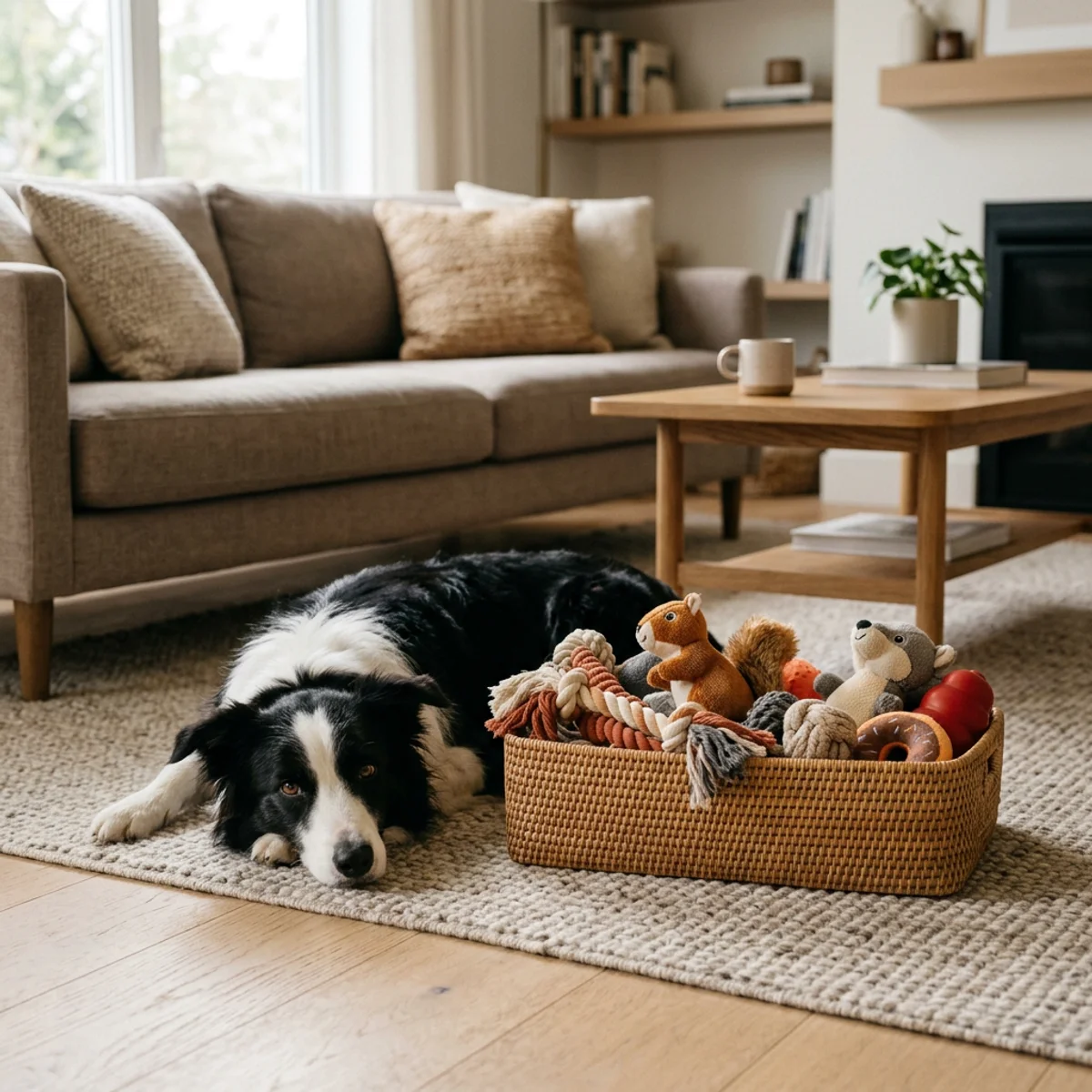
Most dogs and cats engage better when they're not drowning in choice. We recommend rotation: keep four to six toys accessible in a low basket, store the rest, and swap weekly.
For daily storage, choose something your pet can raid independently. A shallow rattan basket in the living room or a fabric bin beside the sofa lets your retriever grab a ball when inspiration strikes. Accept that "tidy" is temporary—if your dog actually plays, the bin empties within an hour. That's fine. The goal is a designated home, not a museum.
Store backup toys, seasonal items, and puzzles requiring supervision in labelled bins on a closet shelf. Keep anything with small parts or batteries out of paw's reach.
For cats, wall-mounted organizers near favourite play zones work beautifully. A small basket hung at human height keeps feather wands and interactive toys ready without tempting unsupervised shredding.
Grooming Tool Central: Build a Kit
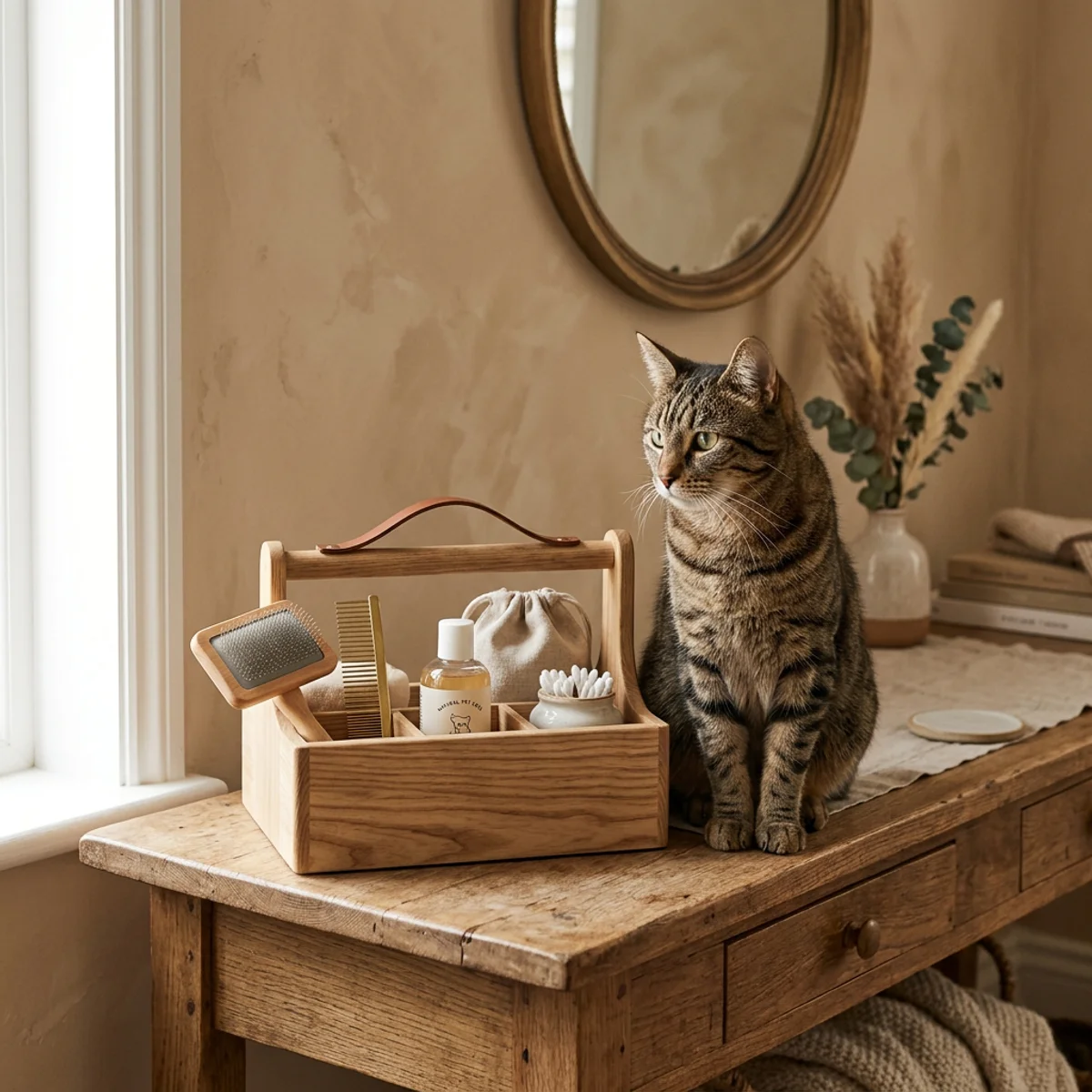
Instead of chasing grooming supplies around the house, assemble a complete kit in a portable caddy or handled basket. Ours includes:
- Slicker brush or comb
- Nail clippers and styptic powder
- Ear cleaner and cotton pads
- Toothbrush and pet toothpaste
- Small towel
- Treats for bribery
Store the caddy in a bathroom cabinet, linen closet, or mudroom shelf—wherever you typically groom. If you bathe pets at home, keep shampoo, a separate towel, and a non-slip mat in the same zone. For detailed routines, we've covered dog grooming essentials and cat grooming separately.
Bulky items like blow dryers or grooming tables can live in basement or garage storage if you only use them monthly.
Leashes, Collars, and Walk Gear
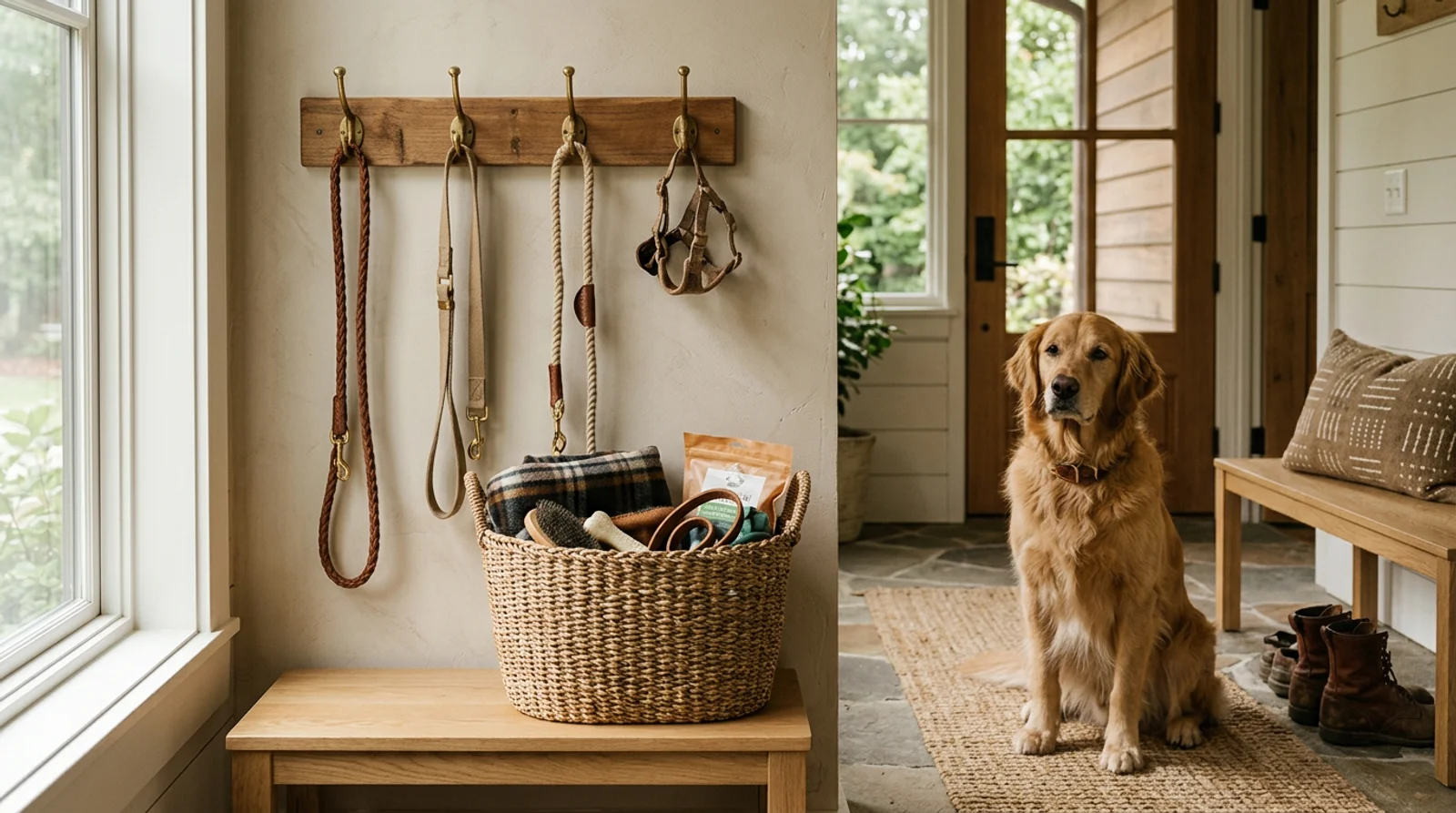
Command centres near your main exit are game-changers. Install sturdy hooks at eye level for leashes and harnesses—one hook per dog prevents the tangled mess that makes you late for every walk. Add a small wall-mounted basket or shelf below for poop bags, a spare collar, and your dog's fetch ball.
If space allows, a narrow console table or bench with storage underneath keeps walk gear contained while offering a spot to sit and wrangle boots onto a wriggly spaniel. Tuck winter gear in a labelled bin during summer, then swap it to prime real estate come November.
Pet Organization Ideas for Small Spaces
Living in a Toronto condo or Vancouver apartment? We understand cramming pet supplies into 600 square feet. The trick is vertical storage and furniture that multitasks.
Use vertical wall space. Floating shelves above feeding areas hold food containers and supplements. Picture ledges display ceramic bowls while keeping backups tucked behind. In tight quarters, every square centimetre of wall counts.
Choose furniture with hidden storage. Ottoman benches, console tables with doors, and sideboards disguise surprising amounts of pet gear. We know one couple who stores their cat's entire supply stash—food, litter, toys, carrier—inside a vintage credenza in their entryway. From outside, it's just stylish mid-century furniture.
Claim awkward corners. That odd nook beside the fridge or under the stairs? Perfect for a tall, narrow cabinet holding kibble bins and grooming supplies. Corners go unused in small homes, but a well-chosen shelving unit turns dead space into storage.
Install over-door organizers. The back of a closet or pantry door holds leashes, brushes, and small toys in clear pockets. Just make sure it's a door your pets can't push open—cats are shockingly good at break-ins.
For more small-space strategies, see our full guide to small space solutions for pet owners.
Creating a Tidy Pet Area
If you have square footage, a dedicated pet zone simplifies organization dramatically. Not a fancy "pet room"—just a consistent spot where most pet activities happen.
Mudrooms and laundry rooms are ideal. There's usually plumbing for water bowls, tile or vinyl flooring that handles spills and mud, and space for a feeding station, storage cabinet, and maybe a dog bed. Install a wall-mounted paper towel holder and keep cleaning supplies within reach—accidents happen.
Kitchen corners work if you lack a separate utility room. A corner feeding station with a mat underneath defines the space visually and contains kibble scatter. Store food in a nearby cabinet or a slim rolling cart that tucks beside the fridge.
Laundry room litter box setups keep odour and tracking away from main living areas. If your washer and dryer sit side-by-side with space above, a countertop over them creates storage for litter supplies and cleaning products. For setup details and odour control, check our guides to litter box setup and reducing pet odour.
Consistency matters more than perfection. When your dog knows meals happen in the mudroom and toys live in the living room basket, routines stick. Routines keep systems organized long-term.
Pet Supply Storage Furniture Worth Considering
You don't need specialized "pet furniture," but a few pieces genuinely earn their space.
Storage benches near entryways hold leashes, poop bags, and seasonal gear while giving you a place to sit and wrestle boots onto muddy paws. Look for flip-top designs or cubbies underneath.
Tall narrow cabinets fit slim gaps—beside the fridge, in a hallway, next to the washing machine—and hold a remarkable amount. We use one that's 30 cm wide and stores a 10-kg bin of kibble, canned food, supplements, and all our grooming tools.
Rolling carts bring storage wherever needed. Roll it to the living room for grooming, then back to the closet. Three-tier wire carts are especially handy for multi-pet homes juggling different foods, medications, or supplies.
Credenzas and sideboards with doors keep clutter hidden while blending into your décor. This is our favourite approach for design-conscious homes: beautiful furniture that secretly stores 20 kilograms of dog food and a basket of tennis balls. For more ideas, see our thoughts on pet-friendly home décor.
Maintenance: The System That Sustains Itself
Organization isn't a one-time project. But you can design systems requiring minimal upkeep.
One in, one out. When you buy a new toy or treat bag, remove one. This prevents endless accumulation.
Weekly five-minute reset. Every Sunday evening—or whatever day works—spend five minutes returning stray items to their homes: toys to baskets, grooming tools to the caddy, leashes to hooks. Set a timer. You'll reset more than you expect in 300 seconds.
Refresh expired items quarterly. Every season, check food expiration dates, toss dried-out treats, and remove toys worn beyond safe use. Canadian weather changes align with this schedule anyway—spring and fall are natural times to rotate gear.
Label everything. Especially in multi-pet homes, labels prevent "which food for which dog?" confusion. Even if you live alone with one cat, a label on your grooming caddy reminds house-sitters where things belong.
FAQ
How do I organize pet supplies in a small apartment?
Prioritize vertical storage and multi-use furniture. Wall-mounted shelves, over-door organizers, and furniture with hidden compartments (storage ottomans, benches, credenzas) maximize space without cluttering floors. Keep only daily essentials accessible and store backups in closets or under-bed bins. A slim rolling cart holds food, bowls, and toys in less than 40 cm of floor space and tucks into a corner when not in use.
What's the best way to store dry dog or cat food?
Use airtight containers made of food-safe plastic or metal to protect against moisture, pests, and oxidation. Choose a size that fits an entire bag—you can pour kibble in with the original bag to preserve lot numbers for recalls, or transfer directly for easy scooping. Store in a cool, dark cabinet or pantry away from heat sources. Label the container with the food brand and your pet's name if you have multiple animals.
How can I keep pet toys organized when my dog pulls them all out?
Accept that active play means temporary mess—it's a good sign. Use a large, shallow basket or bin your dog can access independently, and choose a spot in your main living area. At day's end (or whenever clutter bothers you), do a quick toy sweep and return them to the basket. Rotate toys weekly so only four to six are available at a time; your dog will engage more enthusiastically with "new" toys, and you'll manage less chaos.
Should I store pet supplies in the garage or basement?
Food, medications, and anything affected by temperature swings should stay inside your climate-controlled home. Garages and basements in Canada experience humidity and temperature extremes that degrade kibble, cause treats to go rancid, and reduce medication efficacy. Bulk backup supplies, seasonal gear like winter coats, extra blankets, and rarely used items (a spare carrier, an old crate) are fine in a dry basement or insulated garage, but keep active-use items in main living areas.
Making It Work for Your Home
The best organization system is the one you'll actually use. Don't aim for Instagram-perfect labelled bins if you know you'll never maintain them. Start with one zone—the feeding area or the toy scatter in your living room—and build from there.
Our own homes aren't magazine shoots. We have a dog who redistributes toys across three rooms and a cat who knocks things off shelves for sport. But with consistent homes for essentials, quick daily resets, and storage that matches how we really live, chaos stays manageable.
Take a look around your space this week. What's the biggest pain point—the leash tangle by the door? Treat bags spilling from the pantry? Start there. One small system, done well, makes everything else easier.
Browse our curated selection of storage solutions, feeding stations, and home organization essentials designed for Canadian pet parents who refuse to compromise on style. We've done the work to find pieces that look beautiful and actually function in real homes with real pets.